The Volkswagen Beetle is one of the most recognizable cars in automotive history. Its unique shape, friendly personality, and simple engineering have won the hearts of millions worldwide. While many Beetles are known for their reliability and charm, not every year is created equal. Some Beetle models come with issues that can lead to frustration, expensive repairs, and even safety concerns. If you’re thinking about buying a used Beetle, it’s important to know which years to avoid and why.
Let’s explore the details, highlight the most problematic Beetle years, and offer useful guidance for anyone considering this iconic car.
Why Some Volkswagen Beetle Years Are Best Avoided
All cars have good and bad years. The Volkswagen Beetle is no exception. Certain model years are known for mechanical issues, electrical problems, and expensive repairs. These problems happen for different reasons:
- Design flaws: Some years introduced new features that didn’t work as planned.
- Cost-cutting: Efforts to save money sometimes led to lower-quality parts.
- Changing regulations: Updates for emissions or safety sometimes caused reliability issues.
- Complex technology: New electronics and engines can bring new problems.
Understanding which years are more trouble-prone helps you make a smart purchase and avoid common headaches.
A Brief History Of The Volkswagen Beetle
The Beetle’s story began in the late 1930s. Over the decades, it evolved through several major versions:
- Classic Beetle (1938–2003): Air-cooled engine, simple mechanics, produced in many countries. The last classic Beetle rolled off the line in Mexico in 2003.
- New Beetle (1998–2010): Front-wheel drive, water-cooled engine, modern styling but inspired by the original.
- Beetle A5 (2012–2019): More powerful engines, better safety, but still keeps the iconic look.
Each generation has its own strengths and weaknesses. Most “years to avoid” are from the New Beetle and Beetle A5 generations, where modern features sometimes caused new problems.
Volkswagen Beetle Years To Avoid: Model Year Breakdown
Not every Beetle is a problem waiting to happen. However, there are certain years that stand out for their frequency of complaints, costly repairs, or major defects. Here’s a closer look at the Beetle years you should approach with caution.
1. 1999 Volkswagen Beetle
The 1999 Beetle was one of the first years for the New Beetle generation. Owners loved its retro style, but many faced frustrating issues:
- Electrical problems: Power windows and door locks often failed.
- Ignition coil failures: The engine would misfire, run rough, or not start.
- Transmission issues: Some owners reported sudden failures, sometimes before 100,000 miles.
Repairs for these problems can add up quickly. The 1999 model is often cited as one of the least reliable Beetles in the modern era.
2. 2000–2001 Volkswagen Beetle
The following two years continued to struggle with reliability:
- Check engine light: Frequent false alarms, often hard to diagnose.
- Window regulators: Prone to breaking, making windows fall inside the door.
- Coolant leaks: Water pumps and hoses had a high failure rate.
Many owners spent thousands on repairs, especially as the cars aged. The 2000 and 2001 models are best avoided if you want a trouble-free experience.
3. 2003 Volkswagen Beetle
By 2003, many early bugs had been fixed, but new problems appeared:
- Timing belt failures: If not changed on time, engine damage could be severe.
- Airbag light issues: Electrical faults sometimes disabled the airbag system.
- Power window failures: Still common, despite earlier improvements.
Owners also reported continued problems with the automatic transmission. The 2003 model is not the worst, but it remains one of the riskier Beetle years.
4. 2004–2006 Volkswagen Beetle
These years brought some improvements, but several major issues remained:
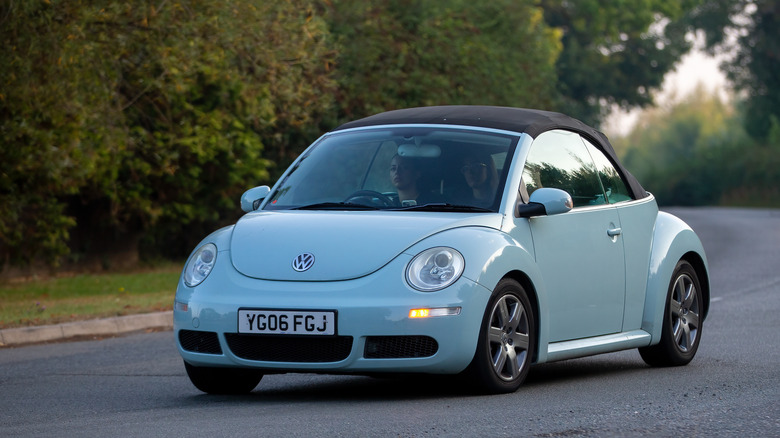
- Convertible roof problems: The soft top on convertible models often leaked or failed to open/close.
- Electrical gremlins: Dashboard warning lights and sensor failures were common.
- Transmission problems: The automatic transmission sometimes failed without warning.
These models may look attractive due to their newer style and features, but the repair bills can stack up quickly.
5. 2012 Volkswagen Beetle
The 2012 Beetle marked a major redesign (A5 generation). While the new look was well received, reliability dropped:
- Turbo engine failures: Many 2.0L turbo engines suffered from oil leaks and timing chain issues.
- Infotainment system glitches: The new touchscreen system often froze or malfunctioned.
- Fuel system problems: Owners reported fuel leaks and faulty sensors.
The 2012 model is often cited in owner forums as a “year to avoid” due to these expensive and sometimes dangerous faults.
6. 2013–2015 Volkswagen Beetle
Some of the worst Beetle years are found in this period:
- Transmission failures: The DSG dual-clutch transmission failed more often than average.
- Diesel engine problems: TDI models were affected by the Dieselgate emissions scandal, leading to recalls and expensive repairs.
- Electrical issues: Headlights, taillights, and wipers sometimes failed without warning.
As these cars age, repair costs rise. If you’re considering a 2013–2015 Beetle, be aware of these risks.
7. 2017–2018 Volkswagen Beetle
The last generation Beetles (A5) are generally better, but some years still have issues:
- Turbocharger problems: The 1.8T engine is known for turbo failures, especially if oil changes are missed.
- Paint quality: Some owners report peeling or fading paint, even on newer cars.
- Sensor failures: Modern safety systems sometimes malfunction, leading to false warnings.
These problems aren’t as severe as earlier years, but they’re still worth considering if you want the most reliable Beetle.
Summary Table: Volkswagen Beetle Years To Avoid And Common Issues
Here’s a quick reference to help you compare the most problematic Beetle years and what goes wrong with each:
| Model Year | Major Issues | Estimated Repair Cost |
|---|---|---|
| 1999 | Electrical failures, ignition coil, transmission | $1,500–$4,000 |
| 2000–2001 | Check engine light, window regulator, coolant leaks | $1,200–$3,500 |
| 2003 | Timing belt, airbag light, power windows | $1,000–$2,800 |
| 2004–2006 | Convertible roof, electrical, transmission | $1,300–$3,700 |
| 2012 | Turbo engine, infotainment, fuel system | $1,800–$4,500 |
| 2013–2015 | Transmission, diesel engine, electrical | $1,900–$4,800 |
| 2017–2018 | Turbocharger, paint, sensors | $1,000–$3,200 |
Why Do These Years Have More Problems?
It’s natural to wonder why certain Beetle years are riskier. There are a few main reasons:
- First-year redesigns: Major updates often bring new technology, but not all bugs are worked out right away.
- Complex electronics: Later Beetles added more features (navigation, Bluetooth, turbo engines), which increased the chance for failures.
- Supplier changes: Volkswagen sometimes switched suppliers for parts, which affected quality.
- Cost pressures: As competition increased, VW sometimes cut corners to keep prices down.
The combination of these factors makes some Beetle years more expensive to own and repair. It’s not just bad luck—these are patterns seen across many owner reports and professional reviews.
Data Table: Beetle Reliability Scores By Year
To give you a clearer picture, let’s look at average reliability ratings from trusted sources (like Consumer Reports and J. D. Power) for Beetle models from 1998 to 2019.
| Year | Reliability Score (1–5) | Notes |
|---|---|---|
| 1998 | 2.0 | Many early issues, especially electrical |
| 1999 | 1.5 | One of the worst years for repairs |
| 2001 | 2.2 | Some improvements, but still below average |
| 2003 | 2.4 | Timing belt and airbag light issues |
| 2006 | 3.0 | Better, but convertible roof issues |
| 2012 | 2.3 | Turbo engine and infotainment faults |
| 2015 | 2.6 | Diesel engine and transmission problems |
| 2019 | 3.6 | One of the most reliable modern Beetles |
Beetle Years With Fewer Problems
Not every Beetle is a headache. While this article focuses on years to avoid, it helps to know which years are generally safer choices. According to owner surveys and repair data, the following years have better reliability:
- 2007–2010: Fewer major issues, especially with the 2.5L five-cylinder engine.
- 2016–2019: Improved build quality, updated electronics, and more reliable turbo engines.
If you find a well-maintained Beetle from these years, you’re less likely to face big problems. Still, always check the car’s service history.
Common Problems Across Bad Beetle Years
Some issues appear over and over in the worst Beetle years. Here’s what to watch out for:
1. Electrical System Failures
The electrical system is the Beetle’s most common weak point. Problems include:
- Power window and lock failures
- Malfunctioning dashboard lights
- Short circuits affecting headlights or wipers
Repairs can be time-consuming and expensive, sometimes requiring entire modules to be replaced.
2. Transmission Issues
Automatic transmissions in some Beetle years are known to fail early. Symptoms include:
- Rough shifting
- Slipping out of gear
- Complete loss of drive
Transmission rebuilds or replacements can cost over $3,000, making this one of the most expensive risks.
3. Engine And Timing Problems
Turbo engines (especially the 1.8T and 2.0T) are prone to:
- Oil leaks
- Timing chain tensioner failures
- Overheating
If the timing chain or belt fails, it can destroy the engine. Proper maintenance is critical, but even well-maintained cars can have issues.
4. Convertible Top Malfunctions
If you’re interested in a convertible Beetle, check the roof carefully. Common problems include:
- Leaking seals
- Motors that fail to raise or lower the top
- Broken latches
Repairs are often complex, and replacement tops are expensive.
5. Sensor And Electronics Faults
Modern Beetles have lots of sensors for safety and emissions. Faulty sensors can cause:
- False warning lights
- Poor engine performance
- Failed emissions tests
These problems are sometimes hard to diagnose, leading to repeated visits to the mechanic.
Credit: www.copilotsearch.com
Hidden Costs: What Many Buyers Miss
Many first-time Beetle buyers focus only on the purchase price. However, the real cost of ownership comes from maintenance and repairs. Some hidden costs you should be aware of:
- Specialized service: Not all shops can repair Beetle engines or electronics. VW dealers charge high rates.
- Parts availability: Some parts are hard to find, especially for older or low-production Beetles.
- Insurance: Some years have higher insurance rates due to theft risk or accident history.
A common mistake is underestimating these hidden costs. Always set aside a repair budget if you buy an older Beetle.
How To Spot A Bad Beetle Before You Buy
Avoiding the worst Beetle years is only the first step. Even within better years, individual cars can have problems. Here’s how to protect yourself:
- Check the vehicle history report: Look for accidents, flood damage, or repeated repairs.
- Have a mechanic inspect the car: A pre-purchase inspection can catch hidden problems.
- Test all electronics: Try every window, lock, light, and infotainment feature.
- Drive the car: Listen for odd noises, rough shifting, or warning lights.
- Ask for maintenance records: A well-documented service history is a good sign.
If the seller can’t provide these, consider walking away. There are plenty of Beetles to choose from.
Credit: www.slashgear.com
Should You Ever Buy A “bad” Beetle Year?
Some enthusiasts still buy Beetles from problematic years because they love the look or find a good deal. If you’re considering this, keep these tips in mind:
- Negotiate the price: Use known issues as leverage for a lower price.
- Budget for repairs: Expect higher costs and plan for them.
- Choose a manual transmission: Manuals are often more reliable than automatics in these years.
- Join a Beetle community: Forums and clubs can help you find solutions and trustworthy mechanics.
If you’re handy and enjoy working on cars, a troubled Beetle can be a fun project. If you just want a reliable daily driver, stick to the better years.
Is The Classic Beetle A Better Choice?
Many people wonder if the classic Beetle (pre-1998) is more reliable than newer models. The answer is “it depends.” Classic Beetles are simple, with fewer electronics and easy-to-fix engines. However, they are much older, with less safety and comfort. Rust and age-related issues are common.
Classic Beetles can be reliable if restored and maintained. But for most buyers, a later model (from a reliable year) offers better safety, comfort, and everyday usability.

Credit: olive.com
How The Beetle Compares To Other Small Cars
If you’re still deciding, it’s useful to compare the Beetle to other popular small cars from the same era.
| Car Model | Average Reliability | Repair Cost (10 yrs) | Notable Issues |
|---|---|---|---|
| Volkswagen Beetle | Below Average | $6,800 | Electrical, transmission |
| Honda Civic | Above Average | $5,200 | Minor engine, transmission |
| Toyota Corolla | Excellent | $4,800 | Few minor issues |
| Mini Cooper | Below Average | $8,000 | Engine, electrical |
| Ford Fiesta | Average | $6,000 | Transmission |
The Beetle’s repair costs are higher than many competitors, especially in bad years. If low-cost ownership is your top priority, consider alternatives like the Toyota Corolla or Honda Civic.
What Matters Most When Choosing A Used Beetle
If you still love the Beetle’s style and personality, focus on these key factors:
- Model year: Avoid the worst years listed above.
- Engine type: The 2.5L five-cylinder is more reliable than the 1.8T or 2.0T turbo.
- Transmission: Manuals are usually more durable.
- Maintenance history: Regular service is a must, especially for timing belts and oil changes.
- Rust and body condition: Even newer Beetles can rust if not cared for.
Don’t let a low price tempt you into buying a problematic car. A little research goes a long way.
Practical Advice: Buying The Best Beetle For You
Here’s how to find a Beetle that will make you smile, not stress:
- Search for 2016–2019 Beetles if your budget allows.
- If you want an older model, target 2007–2010 with the 2.5L engine.
- Avoid convertibles from 2004–2006 unless the top was recently serviced or replaced.
- Get a pre-purchase inspection from a mechanic who knows VWs.
- Join online forums to learn about common fixes and support.
If you want more background on the Beetle’s long history, check the official Volkswagen Beetle Wikipedia page for more details.
Frequently Asked Questions
Why Are Some Volkswagen Beetle Years So Unreliable?
Certain years, especially those with new designs or new technology, had issues that weren’t fully tested before release. Cost-cutting and changing suppliers also played a role. The most common problems are electrical and transmission failures.
Is It Worth Buying A Used Beetle From A “bad” Year If It’s Cheap?
It depends on your skills and budget. If you’re comfortable with repairs and can get the car for a low price, it might be worthwhile. But most buyers will spend more on repairs than they save on the purchase price.
Are Newer Beetles (2016–2019) More Reliable?
Yes, later models improved in build quality and electronics. The 1. 8T turbo engine is more reliable if maintained well. These years also have better safety features and modern comfort.
What’s The Most Reliable Engine And Transmission For A Beetle?
The 2.5L five-cylinder engine (found in 2007–2014) is generally the most reliable. Manual transmissions usually last longer than automatics or DSG dual-clutch units.
How Can I Avoid Buying A Beetle With Hidden Problems?
Always get a vehicle history report and a mechanic’s inspection before buying. Check that all electronics work, and walk away if the seller can’t provide maintenance records.
The Volkswagen Beetle is a special car that can bring years of fun and nostalgia. But not every year is a safe bet. With the right research and a careful approach, you can find a Beetle that fits your life and your budget—without surprise repair bills.