

The Jaguar X-Type is a car that always gets attention. For some, it’s a stylish, affordable way to own a luxury brand. For others, it’s a reminder that not every Jaguar model is a safe bet. If you’re thinking about buying a used X-Type, knowing which years to avoid can save you a lot of trouble and money.
This guide explains the most problematic years, why they cause issues, and how to make a smarter choice. You’ll find data, real examples, and advice you won’t hear at the dealership.
What Makes The Jaguar X-type Unique
When Jaguar launched the X-Type in 2001, it was their answer to the BMW 3 Series and Mercedes-Benz C-Class. Jaguar wanted to reach more drivers, especially those looking for a smaller, more affordable luxury sedan. The X-Type came with classic styling, a comfortable interior, and the famous Jaguar badge.
But the X-Type was different from earlier Jaguars. It was built using many parts from the Ford Mondeo, since Jaguar was owned by Ford at the time. Some people liked this because parts were easier to find and repairs were cheaper.
Others felt it made the car less “special. ” Over its production run from 2001 to 2009, the X-Type had several updates, but not all of them solved key problems.
Common Problems With Jaguar X-type
Before diving into which years to avoid, it’s important to understand the main issues that affected the X-Type. These problems often appeared regardless of trim or engine type, but some model years suffered more than others.
Reliability Concerns
Jaguar has a reputation for style, but not always for reliability. The X-Type was no exception. Owners reported problems with the transmission, all-wheel-drive system, and electrical components. These weren’t minor annoyances — they could mean expensive repairs.
Transmission Issues
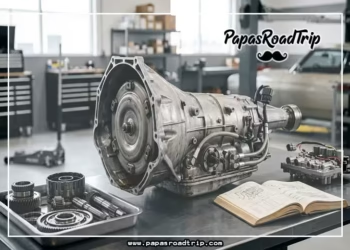
Early X-Types (especially 2002–2004) suffered from automatic transmission failure. Drivers reported harsh shifting, slipping out of gear, or complete failure. Repairs could cost $2,000–$5,000 depending on where you lived.
Awd System Failures
Many X-Types came with all-wheel drive (AWD). While this sounded good, the system was known for transfer case failures and leaks. If ignored, it could lead to loss of drive or damage to the transmission.
Electrical Problems
The X-Type had a long list of electrical issues, including failing window regulators, central locking, and dashboard warning lights that would not turn off. Some of these problems were due to poor wiring harness design.
Rust
Unlike many modern cars, the X-Type was especially vulnerable to rust. Wheel arches, doors, and the underside were common trouble spots, especially in areas with road salt.
Interior Quality
While the X-Type looked luxurious, the interior materials did not always hold up over time. Peeling trim, broken switches, and sagging headliners were often reported.

Credit: www.youtube.com
Jaguar X-type Years To Avoid
Not every Jaguar X-Type year is a disaster, but some are much riskier than others. Here’s a detailed look at the years you should avoid and why.
1. 2002 Jaguar X-type
The 2002 model was the first full production year, and it showed. This year had the highest number of complaints according to several car reliability databases.
- Transmission failures were extremely common.
- Electrical glitches plagued the dashboard and comfort features.
- Many owners reported water leaks into the cabin due to poor door seals.
- Early AWD models often needed expensive repairs before 100,000 miles.
2. 2003 Jaguar X-type
The 2003 model fixed some minor issues but introduced new ones.
- Transmission and AWD failures remained frequent.
- Cooling system leaks caused overheating, sometimes leading to engine damage.
- The ABS system could fail unexpectedly.
- Rust started to become a problem, especially around the trunk and rear fenders.
3. 2004 Jaguar X-type
The 2004 X-Type continued to suffer from reliability problems.
- Electrical faults increased, especially with the central locking and alarm system.
- Window regulators often failed, leaving windows stuck open or closed.
- Heater core leaks were reported, causing foggy interiors and coolant loss.
- Many owners noted premature brake wear.
4. 2005 Jaguar X-type
Jaguar made updates in 2005, but not all were successful.
- Automatic transmission failures still occurred, although less often.
- Steering rack leaks began appearing in higher numbers.
- Rust issues persisted, sometimes worse due to poor quality control.
- Some owners experienced timing chain tensioner failure, risking engine damage.
5. 2006 Jaguar X-type
This year saw improvements, but several problems remained.
- Sunroof leaks became common, causing water damage to the headliner and electronics.
- Ignition coil failures led to rough running or no-start situations.
- Owners still reported electrical gremlins, though less than earlier models.
- Rust was still a concern, particularly in colder climates.
Comparison Of Problem Frequency By Year
To visualize which years had the most problems, see the data below:
| Model Year | Transmission Issues | Electrical Problems | Rust | Other Major Issues |
|---|---|---|---|---|
| 2002 | High | High | Medium | Water leaks |
| 2003 | High | Medium | Medium | Cooling, ABS |
| 2004 | Medium | High | Medium | Heater, brakes |
| 2005 | Medium | Medium | High | Steering, timing chain |
| 2006 | Low | Medium | Medium | Sunroof, ignition coil |
Key insight: The first four years (2002–2005) are the riskiest. Later years are better, but still not perfect.
Years That Are Safer Bets
Not all X-Type models are bad news. If you want a Jaguar X-Type, the 2007, 2008, and 2009 models are usually the best choices. These years benefited from Jaguar’s efforts to improve quality before ending production.
- Fewer transmission failures were reported.
- Rust protection was better, though not perfect.
- Electrical issues dropped, though some minor glitches remained.
- Interior quality improved slightly, with fewer complaints of trim falling off.
A well-maintained 2007–2009 X-Type can be a decent used luxury car. However, even these are not as reliable as some German or Japanese rivals.
Which Engines And Trims To Avoid
Jaguar offered the X-Type with several engine options: a 2.5L V6, a 3.0L V6, and later a 2.2L diesel (in Europe). In the US, most X-Types came with the V6.
- 2.5L V6 models often had less power and more transmission issues.
- 3.0L V6 was stronger and tended to have fewer problems.
- Manual transmission models are much rarer, but often more reliable than automatics.
If you’re in Europe, avoid the early diesels (2003–2005). They had turbo and fuel system failures. In the US, stick to later V6 models with automatic transmissions from 2007 onward, and check for a full maintenance history.
Jaguar X-type: What To Check Before You Buy
If you still want an X-Type, do a careful inspection before buying. Many problems are expensive and hard to spot on a short test drive. Here’s what you should do:
- Check for rust. Inspect wheel arches, sills, doors, and trunk. Use a flashlight if needed.
- Test all electronics. Try every window, lock, and button. Make sure warning lights turn off after starting.
- Listen to the transmission. Automatic X-Types should shift smoothly without clunks or slips.
- Look for leaks. Check under the car for oil or coolant. Open the trunk and check for water.
- Inspect service records. A well-cared-for X-Type should have records of regular oil changes and repairs.
How The X-type Compares To Rivals
Many buyers consider the X-Type because of its price and luxury badge. But how does it stack up against other cars from the same era? Here’s a quick comparison:
| Car Model | Common Problems | Average Repair Cost (per year) | Reliability Rating (1–5) |
|---|---|---|---|
| Jaguar X-Type (2002–2006) | Transmission, electrical, rust | $900 | 2.5 |
| BMW 3 Series (E46, 1999–2006) | Cooling system, window regulators | $800 | 3.5 |
| Mercedes-Benz C-Class (W203, 2001–2007) | Rust, electronics, suspension | $950 | 3.0 |
| Lexus IS (XE10, 2001–2005) | Minor electrical, suspension bushings | $600 | 4.0 |
Non-obvious insight: The X-Type is not always more expensive to repair than German rivals, but its problems tend to be more serious when they do occur.

Credit: www.aronline.co.uk
Real-world Owner Experiences
Hearing from actual X-Type owners gives a clearer picture. Many love the car’s looks and comfort but warn about its costs.
- One 2003 owner noted, “I spent more fixing the transmission than I paid for the car.”
- A 2005 owner said, “Mine ran well for 50,000 miles, but rust ruined the rear doors.”
- A 2008 owner reported, “No big issues after 120,000 miles, just normal maintenance.”
These stories show that with luck (and the right year), an X-Type can be trouble-free. But early models are a gamble.
Cost Of Ownership
Owning a Jaguar X-Type is not just about the purchase price. Maintenance and repairs can add up quickly, especially for problematic years.
- Oil changes: $100–$150, needed every 6,000 miles.
- Transmission service: $300–$500 (if done before failure).
- Major repairs: Transmission or AWD failure can cost $2,000–$4,000.
- Minor electrical repairs: $200–$400 each.
Insurance is usually moderate, but some parts are hard to find. You may need to wait for special orders.
Most Common Buyer Mistakes
Many buyers make the same errors when shopping for a used X-Type. Avoid these to save yourself from headaches:
- Ignoring rust: Even small rust spots can grow quickly and become expensive to fix.
- Skipping the test drive: Some issues (like transmission slipping) only appear when the car is fully warmed up.
- Trusting a “low mileage” claim: Low miles do not always mean fewer problems. Lack of use can cause leaks and electrical issues.
- Not checking service records: Many X-Types with few records have hidden neglect.
- Choosing the cheapest car: Bargain prices often mean expensive repairs are just around the corner.
Should You Buy A Jaguar X-type?
If you want a classic Jaguar look and are willing to take some risks, a late-model X-Type (2007–2009) can be a fun car. But if you need reliable daily transport or have a limited repair budget, you’ll probably be happier with a BMW 3 Series or Lexus IS from the same era.
Always have a trusted mechanic inspect any X-Type before you buy.
Two Insights Beginners Miss
- Not all mechanics can fix X-Type problems. Many issues require Jaguar-specific tools or software. Always check if your local garage can handle these repairs.
- Rust can hide under trim and plastic covers. Even if the outside looks clean, rust may be attacking from underneath. Ask for a lift inspection if possible.

Credit: classicsworld.co.uk
Essential Maintenance Tips For X-type Owners
If you already own a Jaguar X-Type or decide to buy one, following these steps will help you avoid the most common problems:
- Underbody washing: Especially in winter, clean the car’s underside to slow rust.
- Transmission service: Change the fluid every 30,000 miles — more often than Jaguar suggests.
- Check drains: Make sure sunroof and door drains are clear to prevent leaks.
- Battery health: Replace the battery before it fails. Weak batteries cause many electrical glitches.
- Use high-quality parts: Cheap replacement parts often fail quickly, especially for suspension and electrical systems.
Jaguar X-type Market Value
The X-Type’s reputation for problems means prices are often low. But values can vary a lot depending on year, mileage, and condition. Here’s a snapshot:
| Model Year | Average Price (Good Condition) | Mileage Range |
|---|---|---|
| 2002–2004 | $2,000–$3,500 | 80,000–120,000 |
| 2005–2006 | $3,000–$4,500 | 70,000–110,000 |
| 2007–2009 | $4,500–$7,000 | 60,000–100,000 |
Expect to pay more for wagons (rare in the US) or cars with full service histories.
Final Thoughts
The Jaguar X-Type is a car that divides opinion. It’s affordable, attractive, and offers genuine luxury feel for less money. But some years are much riskier than others, with serious issues that can empty your wallet. Avoid 2002–2005 models if you want fewer headaches.
Choose 2007–2009 if you want the best chance of reliable motoring. No matter which year, always get a thorough inspection and service records.
If you want a Jaguar but also peace of mind, consider other models or brands. But for those who love the X-Type’s style and driving feel, smart buying and careful maintenance can make ownership rewarding.
For more detailed specs and history, visit the Jaguar X-Type Wikipedia page.
Frequently Asked Questions
What Are The Worst Years For The Jaguar X-type?
The 2002, 2003, 2004, and 2005 Jaguar X-Type models are the worst years to buy. These cars are known for frequent transmission failures, electrical issues, and rust. They are more likely to need expensive repairs compared to later models.
Is The Jaguar X-type Reliable?
The X-Type is not as reliable as many of its competitors. Early models have a reputation for serious mechanical and electrical problems. Later models (2007–2009) are better, but the X-Type still ranks below average for reliability among used luxury cars.
How Much Does It Cost To Fix Common X-type Problems?
Repair costs for the X-Type can be high. Transmission repairs often cost $2,000–$4,000. Electrical issues range from $200–$1,000 depending on the problem. Rust repairs can be very expensive if the damage is advanced, sometimes costing more than the car’s value.
Are There Any Years Of The X-type That Are Good To Buy?
The 2007, 2008, and 2009 X-Type models are generally the safest to buy. These years have fewer major problems and better build quality. However, they are still not as reliable as some German or Japanese rivals.
What Should I Check Before Buying A Used Jaguar X-type?
Check for rust, especially underneath and around the wheel arches. Test all electronics, including windows and locks. Make sure the transmission shifts smoothly. Review service records to confirm regular maintenance. If possible, have a Jaguar specialist inspect the car before buying.