

If you’re searching for a luxury SUV that combines sporty handling, a premium cabin, and strong performance, the Porsche Cayenne probably landed on your shortlist. Since its debut in 2002, the Cayenne has attracted drivers who want a Porsche badge with everyday practicality. But not every Cayenne model year delivers the same reliability or ownership experience. Some years are praised for their dependability, while others are known for expensive issues and headaches.
Choosing the right used Cayenne can mean years of enjoyable driving. Picking the wrong one can lead to costly repairs and frustration. This guide will help you understand which Porsche Cayenne years to avoid, why they’re problematic, and how to find a great example that fits your needs.
Why Some Cayenne Years Are Risky
Porsche builds high-performance vehicles, but not every model year is perfect. Even luxury brands like Porsche face challenges with new technologies, engine designs, and manufacturing processes. Certain Cayenne years, especially in the first and second generations, suffer from recurring mechanical problems, high repair costs, and sometimes poor build quality.
Understanding these risks can save you thousands of dollars. Let’s break down the main reasons why some Cayenne years are best left alone.
Common Issues In Problematic Years
- Engine failures: Some Cayenne V8 engines, especially in early years, are known for catastrophic failures.
- Coolant pipe leaks: Plastic coolant pipes in first-generation models often crack, causing leaks and overheating.
- Electrical problems: Faulty wiring and failing control modules can lead to annoying and expensive repairs.
- Transmission issues: Certain years had unreliable transmissions, sometimes requiring full replacements.
- Expensive maintenance: Even minor problems can become costly due to the Cayenne’s complex engineering.
Breakdown Of Porsche Cayenne Generations
Before diving into the years to avoid, it helps to know how the Cayenne evolved. This context will make it clearer why some years stand out as risky.
| Generation | Model Years | Main Features |
|---|---|---|
| First (955/957) | 2003–2010 | Original V8/V6, off-road focus, known issues with engines and cooling |
| Second (958) | 2011–2017 | Lighter, better handling, improved reliability but some new problems |
| Third (9Y0/9Y3) | 2018–present | Modern tech, improved engines, generally more reliable |
Porsche Cayenne Years To Avoid
Not all Cayenne years are equal. Based on real-world owner experiences, repair data, and expert analysis, here are the main Porsche Cayenne years to avoid if you want a trouble-free ownership experience.
1. 2003–2004 Porsche Cayenne
The first-generation Cayenne launched in 2003, and these early years are the most problematic. Porsche was new to SUVs, and these models suffered from several “teething problems. ”
- Engine problems: The V8 engines (especially in the Cayenne S and Turbo) are infamous for engine bore scoring and coolant pipe failures. Bore scoring means the cylinder walls inside the engine get scratched, leading to oil consumption, smoke, and eventually total engine failure.
- Plastic coolant pipes: Porsche used plastic for the engine’s main coolant pipes. Over time, these pipes crack, leading to severe coolant leaks. If not fixed quickly, overheating can destroy the engine.
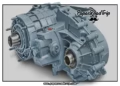
- Drivetrain issues: Transfer case failures and differential problems are not uncommon, especially in high-mileage examples.
- Electrical gremlins: Owners report frequent issues with the central locking system, windows, and instrument cluster.
If you’re considering an early Cayenne, be ready for expensive repairs or avoid these years entirely.
2. 2005–2006 Porsche Cayenne
While Porsche improved some problems by 2005, many issues from the first years persisted.
- Continued engine issues: Bore scoring and plastic coolant pipes remained concerns in these years, though Porsche started using aluminum pipes around 2006.
- Drivetrain and suspension problems: Air suspension systems, if equipped, often fail and are expensive to replace.
- Interior wear: The interior materials in early Cayennes wear quickly, especially the soft-touch plastics.
- High repair costs: Even minor fixes are pricey due to the complexity of these early models.
Unless you find one with extensive documented repairs and upgrades (like replaced coolant pipes and a rebuilt engine), it’s best to look elsewhere.
3. 2011–2012 Porsche Cayenne
The second generation (958) marked a big leap in handling and comfort. However, the first two years of this generation brought their own problems.
- Transfer case failures: Many owners report the transfer case (which sends power to the front and rear wheels) fails prematurely, leading to jerky acceleration and eventually needing a costly replacement.
- Timing chain tensioner issues: Early V6 engines can develop timing chain tensioner failures, risking severe engine damage if not repaired.
- Electronics and infotainment bugs: Newer tech meant new glitches, especially with the navigation and entertainment systems.
- Diesel models: The 2012 Cayenne Diesel was later involved in the Volkswagen diesel emissions scandal (“Dieselgate”). These models have uncertain long-term support and resale value.
While these Cayennes are more modern, the potential repair costs should make buyers cautious.
4. 2019 Porsche Cayenne (third Generation, First Year)
The third generation (9Y0) brought advanced technology and improved reliability overall. However, the very first year of any new generation often has “first-year bugs. ”
- Software glitches: Owners of 2019 models report frequent software problems with the infotainment system, adaptive cruise control, and driver assistance features.
- Electrical issues: Some vehicles suffered from faulty sensors and warning lights.
- Build quality problems: Early production models sometimes had panel fit issues or rattles that Porsche resolved in later years.
If you want the latest Cayenne, consider waiting until the 2020 model year or later for improved reliability.
Table: Major Issues By Model Year
Understanding which problems are most common in each risky year can help you spot red flags when shopping.
| Model Year | Engine Problems | Transmission/Drivetrain | Electrical/Tech | Other Issues |
|---|---|---|---|---|
| 2003–2004 | Bore scoring, coolant pipe failures | Transfer case, differential | Central locking, instrument cluster | Fast interior wear |
| 2005–2006 | Bore scoring, coolant pipes (improving in 2006) | Air suspension | Electrical gremlins | High repair costs |
| 2011–2012 | Timing chain tensioner (V6) | Transfer case | Infotainment bugs | Dieselgate (2012 Diesel) |
| 2019 | None major | None major | Software, sensors | Build quality |

Credit: www.reddit.com
Years With The Most Expensive Repairs
When buying a used Cayenne, it’s not just about reliability. The cost of repairs can be much higher in certain years because of complex engineering and the price of Porsche parts. Let’s look at which years are most likely to hit your wallet hard.
First Generation (2003–2006): Engine And Cooling Problems
- V8 engine rebuild: If the engine suffers from bore scoring, a full rebuild can cost $10,000–$15,000 or more. Used replacement engines are rare and often not much cheaper.
- Coolant pipe replacement: Plastic pipes are a known weak point. Upgrading to aluminum pipes costs $2,000–$3,000 at a specialist shop.
- Drivetrain repairs: Transfer case or differential work can cost $3,000–$6,000.
Second Generation (2011–2012): Drivetrain And Electronics
- Transfer case replacement: $4,000–$5,000 at a Porsche dealer, due to labor and parts costs.
- Timing chain tensioner repair: $2,500–$4,500 depending on engine and labor.
- Infotainment module: $1,500–$3,000 if the main unit fails.
Third Generation (2019): Electronics And Sensors
- Infotainment system bugs: Mostly fixed under warranty, but out-of-warranty repairs can reach $2,000–$4,000 for major issues.
- Sensor/driver aid repairs: Adaptive cruise or lane-keep assist sensors cost $1,500–$3,000 to fix.
Years That Are Generally Safe To Buy
Not every Cayenne year is risky. Some are well-regarded for their reliability and value. If you want a more worry-free experience, consider these years:
- 2009–2010: The end of the first generation. By now, most problems were fixed or updated, and many used examples have already had major repairs completed.
- 2013–2016: The second generation matured, and most early bugs were resolved. These years offer a good balance of modern tech and improved reliability.
- 2020–present: Third-generation Cayennes have few major issues reported so far. Their advanced tech and engines are proving reliable.
How To Spot A Problematic Cayenne
Even if you avoid the riskiest years, it’s smart to check any used Cayenne carefully before buying. Here’s how to protect yourself:
- Get a pre-purchase inspection (PPI): Always have a Porsche specialist inspect the car. They know where to look for hidden issues.
- Check service records: A well-maintained Cayenne with a stack of receipts is less risky than a neglected one. Look for evidence of major repairs (engine work, coolant pipes, transfer case).
- Listen for engine noises: Ticking, knocking, or rattling sounds from the engine could signal bore scoring or timing chain problems.
- Test all electronics: Make sure every button, screen, and feature works as it should. Repairs can be expensive.
- Drive at different speeds: Transfer case problems often appear as shuddering or jerky acceleration, especially at low speeds.
- Check for warning lights: Modern Cayennes will show error messages if something is wrong. Don’t ignore these.
Misconceptions About Porsche Cayenne Reliability
Many buyers believe all Porsches are bulletproof or that high maintenance costs are exaggerated. Here are two non-obvious insights:
- Not all Porsche engines are the same: The V8 in early Cayennes is much more prone to expensive problems than the later V6. Don’t assume “it’s a Porsche, it must be reliable.”
- Dealer vs. independent repair costs: Porsche dealers often charge more for labor and parts. Many independent specialists can repair Cayennes for less, sometimes using improved aftermarket parts (like aluminum coolant pipes).
What Makes A Good Used Cayenne Purchase
If you want to enjoy Cayenne ownership without worry, focus on the following:
- Look for updated parts: Many early Cayennes have had plastic coolant pipes replaced with aluminum ones. This is a good sign.
- Prioritize maintenance history: The best used Cayenne is one with a documented, consistent service record.
- Avoid high-mileage, low-price traps: If a Cayenne looks cheap compared to others, there’s usually a reason. These cars don’t tolerate neglect.
- Consider certified pre-owned (CPO): CPO cars from Porsche come with warranties that cover many expensive repairs.
Comparison: Cayenne Vs. Other Luxury Suvs (reliability Focus)
Wondering how the Cayenne stacks up against rivals like the BMW X5 or Mercedes GLE for reliability? Here’s a comparison:
| Model | Known Issues | Average Repair Cost (Major) | Best Years to Buy |
|---|---|---|---|
| Porsche Cayenne | Engine, transfer case, electronics | $4,000–$8,000 | 2009–2010, 2013–2016, 2020+ |
| BMW X5 | Turbo, suspension, electronics | $3,000–$7,000 | 2015–2018 |
| Mercedes GLE | Air suspension, engine oil leaks | $2,500–$6,000 | 2017–2020 |
Real-world Owner Experiences
Many buyers are drawn to older Cayennes for their value, but regret the decision after facing expensive repairs. For example, an owner of a 2004 Cayenne S described spending over $12,000 in the first two years of ownership on engine and cooling system repairs.
Another driver with a 2012 model had to replace the transfer case and infotainment system within 60,000 miles, costing nearly $9,000.
On the other hand, owners of 2014–2016 Cayennes frequently praise the smooth driving experience and relatively low maintenance needs, as long as regular service is kept up. These stories underline how important it is to pick the right year.
Is It Ever Worth Buying A Risky Year?
Some buyers still consider the “years to avoid” because they find a cheap example or hope to fix issues themselves. While it’s possible to get a bargain, you must be realistic:
- Parts and labor are expensive: Even if you do some work yourself, parts for a Porsche cost much more than for mainstream brands.
- Future resale value: Problematic years lose value faster. It can be hard to sell them later, especially if they develop major issues.
- Insurance: Older, riskier Cayennes can cost more to insure due to their reputation for expensive claims.
Unless you are a skilled DIY mechanic with access to parts and tools, it’s usually better to pay more upfront for a safer year.

Credit: www.reddit.com
How Porsche Addressed Known Problems
To their credit, Porsche responded to many early issues:
- Updated coolant pipes: By 2006, aluminum pipes became standard, greatly improving reliability.
- Improved engines: Later V6 and V8 engines were redesigned to reduce the risk of bore scoring and timing chain failures.
- Better electronics: As technology matured, infotainment and driver assistance systems became more reliable.
- Recalls and extended warranties: Porsche issued recalls for some major faults, especially for transfer case problems in the second generation.
For the latest information on Porsche recalls and technical updates, the official NHTSA recall database is a valuable resource.
What To Do If You Already Own A Risky Cayenne
If you already have a Cayenne from a problematic year, don’t panic. Many owners keep these SUVs running for years with proper care. Here are some smart steps:
- Stay ahead on maintenance: Don’t skip oil changes, fluid flushes, or regular inspections.
- Address known weak spots: If you haven’t already, upgrade plastic coolant pipes, monitor engine noise, and service the transfer case.
- Find a good specialist: A Porsche-trained independent mechanic can often save you money and spot problems early.
- Budget for repairs: Set aside extra funds for unexpected costs. Even well-maintained Cayennes can surprise you.
Buying Tips For First-time Porsche Owners
If the Cayenne is your first Porsche, keep these extra tips in mind:
- Test drive as many as possible: You’ll quickly learn what feels “right” and spot any warning signs.
- Avoid private sellers with incomplete records: These cars are too complex to buy without proof of good maintenance.
- Factor in insurance and taxes: Luxury SUVs can be expensive to insure and register, especially in some states.
- Don’t rush: The used Cayenne market is large. Wait for the right example, not just the best price.
Frequently Asked Questions
What Is The Worst Porsche Cayenne Year For Engine Problems?
2003–2004 models are the worst for engine issues, especially with the V8. Problems like bore scoring and coolant pipe failures are common, leading to expensive engine rebuilds or replacements.
Are High-mileage Cayennes Worth Considering?
A high-mileage Cayenne can still be a good buy if it has a detailed service history and has had major known issues repaired. Without records, high mileage increases your risk of expensive surprises.
Is The 2012 Cayenne Diesel A Good Buy?
The 2012 Cayenne Diesel was affected by the Volkswagen Dieselgate scandal. While some were repaired and certified, long-term support and resale value remain uncertain. Only buy if you understand the risks and have access to Porsche service.
How Expensive Is Cayenne Maintenance Compared To Other Suvs?
Cayenne maintenance is more expensive than most mainstream SUVs and often higher than BMW or Mercedes. Typical yearly costs range from $1,000 to $3,000, not including major repairs.
Should I Buy A Cayenne With Replaced Coolant Pipes?
A Cayenne with aluminum coolant pipes (instead of plastic) is much safer, especially in the 2003–2006 models. Always ask for receipts and proof of the work before buying.

Credit: www.reddit.com
Final Thoughts
The Porsche Cayenne can deliver thrilling performance and luxury, but only if you choose the right year. Avoiding the most problematic model years—especially 2003–2006, 2011–2012, and the 2019 launch year—can save you from headaches and high costs. Focus on well-maintained examples with documented repairs and updated parts. Take your time, do your research, and consider a pre-purchase inspection from a Porsche specialist.
With a careful approach, you can enjoy the best of what the Cayenne offers—without the worst surprises.