

When you’re looking for a used mid-size SUV, the Mercury Mountaineer might catch your eye. It looks like a cousin of the Ford Explorer, but with a touch of luxury. Many people remember it for its comfortable ride, solid V8 engine options, and spacious interior.
But not every Mountaineer year is a safe bet. Some models have costly problems or annoying defects that make them worth avoiding—especially if you want a reliable, stress-free vehicle.
If you’re thinking about buying a used Mountaineer, this guide will help you make a smarter choice. We’ll highlight the years you should avoid, explain why they are problematic, and offer advice on what to look for instead. By the end, you’ll know which Mercury Mountaineer years are best left off your shopping list—and which ones might still be a bargain.
Quick History Of The Mercury Mountaineer
The Mercury Mountaineer was produced from 1997 to 2010. It shared most parts with the Ford Explorer but aimed for a more upscale feel. Over its lifespan, the Mountaineer saw three generations:
- First Generation (1997–2001): Boxy styling, rear-wheel and all-wheel drive options, and standard V8 power in later years.
- Second Generation (2002–2005): Smoother design, independent rear suspension, more advanced features.
- Third Generation (2006–2010): Refined looks, improved safety, more tech, but the model was eventually discontinued as Mercury closed.
Like many SUVs, the Mountaineer had its highs and lows. Some years stand out as trouble-prone, while others are respected for their durability.
Mercury Mountaineer Years To Avoid
Certain model years of the Mercury Mountaineer have a reputation for major problems. Let’s look at the key years to avoid and why.
2002 Mercury Mountaineer
The 2002 Mountaineer, part of the second generation, is widely regarded as one of the worst years you can buy. Reports from owners and repair shops point to several serious issues.
Common Problems
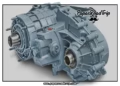
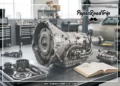
- Transmission failure: Many owners report that the transmission fails before 100,000 miles. The cost to rebuild or replace can reach $3,000 or more.
- Rear differential noise: A loud humming or whining noise from the rear end often signals expensive repairs.
- Electrical system glitches: Dashboard warning lights, faulty gauges, and random electrical failures are common.
- Plastic rear window panel cracking: The panel below the rear window is known to crack, which is mostly cosmetic but frustrating and expensive to fix.
Why Avoid?
The combination of expensive transmission and rear end repairs makes the 2002 Mountaineer a risky purchase. Even well-maintained models can suddenly develop these issues.
2003 Mercury Mountaineer
The 2003 Mountaineer carries over many of the 2002’s problems. Despite minor updates, reliability did not improve much.
Common Problems
- Transmission issues: Slipping, rough shifting, and total failure remain common.
- Rear liftgate cracking: The rear hatch panel continues to crack in cold weather or over time.
- Suspension wear: Premature ball joint and control arm failure, leading to clunking sounds and unsafe handling.
Why Avoid?
If you’re hoping for a more reliable experience than the 2002, you’ll be disappointed. Costs for repairs remain high, and the electrical and cosmetic issues persist.
2004 Mercury Mountaineer
The 2004 model tried to address some earlier issues, but the main problems were not fixed.
Common Problems
- Transmission failure is still a major concern.
- Rear axle seal leaks: Leaking seals can lead to differential damage if not repaired quickly.
- Timing chain rattle: Especially on V8 models, the timing chain can become noisy, indicating internal engine wear.
Why Avoid?
The 2004 Mountaineer is only slightly better than its predecessors. Transmission and axle issues can appear suddenly, and engine repairs are costly.
2005 Mercury Mountaineer
As the last year of the second generation, the 2005 Mountaineer still suffers from many old problems. Some issues are less frequent, but the model isn’t fully reliable.
Common Problems
- Transmission problems: Less common than 2002–2004, but still present.
- Cracked rear panels: The liftgate still cracks, frustrating many owners.
- Electrical faults: Random warning lights, failed power windows, and lock malfunctions.
Why Avoid?
If you must have a second-generation Mountaineer, 2005 is less risky than earlier years. Still, the chance of major repairs is higher than average.
2006 Mercury Mountaineer
The third generation arrived with better safety and new tech, but the 2006 model year had teething problems.
Common Problems
- Transmission hesitation: Delayed gear changes and hard shifting.
- Cooling system leaks: Radiator and hose failures, sometimes leading to overheating.
- Interior electronics: Navigation and audio systems can malfunction.
Why Avoid?
The 2006 Mountaineer is better than earlier models but still suffers from reliability issues, especially regarding the transmission and cooling systems.
1998–2001 Mountaineer (first Generation Caveats)
While not as infamous as the early 2000s models, some first-generation Mountaineers (especially 1998–2001) have their own issues.
Common Problems
- Rust: Especially in regions with salted roads, the frame and underbody can rust badly.
- Transmission (V6 models): Less robust than the V8, with occasional failure.
- ABS system failures: Anti-lock brakes may stop working, leading to safety concerns.
Why Avoid?
These years are not as problematic as the 2002–2004 models, but buyers should check for rust and transmission health before purchasing.
Credit: www.fixdapp.com
Why These Years Had So Many Problems
You might wonder why so many Mountaineer years have repeated problems. The answer is a mix of design flaws, cost-cutting, and early 2000s manufacturing challenges.
- Shared Ford Explorer platform: The Mountaineer shared most parts with the Explorer, which also struggled with transmission and rear end failures.
- Complex new tech: The second generation introduced independent rear suspension and more electronics, both of which had reliability issues.
- Plastic rear hatch design: The rear panel was made of a type of plastic that cracked easily, especially in cold climates.
- Supplier changes: In the early 2000s, both Mercury and Ford sourced cheaper parts, leading to more frequent failures.
Many buyers and even mechanics missed these patterns at first. Today, with thousands of owner reports and service records, the trouble years are much clearer.
Comparing Problem Years: Data And Numbers
To help you see the differences, here’s a comparison of some key issues across the most problematic years.
| Model Year | Transmission Failures | Rear Hatch Cracks | Avg. Repair Cost (USD) | Reported Recalls |
|---|---|---|---|---|
| 2002 | Very High | Very High | $3,000–$4,500 | 5 |
| 2003 | High | Very High | $2,800–$4,200 | 4 |
| 2004 | High | High | $2,500–$4,000 | 4 |
| 2005 | Moderate | High | $2,000–$3,500 | 3 |
| 2006 | Moderate | Moderate | $1,800–$3,200 | 3 |
As you can see, the early 2000s models are much more expensive to fix, and their problems are more frequent and severe.
How To Spot A Problematic Mercury Mountaineer
If you’re shopping for a used Mountaineer, there are some clear warning signs that a vehicle may be from a “bad year” or hiding major issues.
- Check the year and VIN: Use the 17-digit VIN to confirm the exact model year. Some vehicles are listed incorrectly in ads.
- Look for cracked rear hatch panels: Inspect under the rear window for cracks or glue repairs.
- Test the transmission: Drive the vehicle at different speeds. Hesitation, slipping, or rough shifting are red flags.
- Listen for rear end noise: Whining or humming from the back often means the differential is worn.
- Check for warning lights: Make sure all dashboard lights go out after starting. Persistent ABS or check engine lights suggest trouble.
- Inspect for rust: Look under the car, around the wheel wells, and at the door sills for rust damage.
Some sellers will try to hide these issues. A pre-purchase inspection by a trusted mechanic is always a smart move.
Mercury Mountaineer Years Worth Considering
While this article focuses on years to avoid, it helps to know which Mountaineers are better bets.
- 2007–2010 models: These later third-generation models saw many improvements. Transmission and rear end issues were less common, and build quality improved.
- 2001 V8 models: The last year of the first generation with the V8 engine is more reliable than the V6, with fewer transmission complaints.
Still, even the “good” Mountaineer years are not perfect. They are older vehicles now, and regular maintenance is key.
The Most Expensive Mountaineer Repairs
The cost of fixing a troubled Mountaineer can surprise many buyers. Here’s a breakdown of the most common high-ticket repairs.
| Repair Type | Average Cost (USD) | Typical Mileage When Needed |
|---|---|---|
| Transmission replacement | $2,800–$4,500 | 60,000–120,000 |
| Rear differential rebuild | $1,200–$2,200 | 70,000–130,000 |
| Rear hatch panel replacement | $700–$1,500 | Any (age/weather related) |
| Timing chain repair | $1,500–$3,000 | 90,000–150,000 |
| Cooling system overhaul | $800–$1,400 | 80,000–140,000 |
If you’re buying a used Mountaineer, always ask for service records. A vehicle with recent repairs or replacements is much safer than one with a mystery history.
Real Owner Stories: Problems And Lessons
Many Mountaineer owners have shared their experiences online. Here are a few real-world examples:
- David from Ohio: Bought a 2002 Mountaineer with 92,000 miles. The transmission failed at 101,000 miles, costing $3,200. Soon after, the rear differential started making noise. He regretted not researching the model before buying.
- Linda from Texas: Purchased a 2004 Mountaineer. Within a year, she noticed a crack in the rear liftgate and a warning light for the ABS. Repairs totaled $2,000. She sold the vehicle at a loss.
- Chris from Michigan: His 2006 Mountaineer developed a coolant leak at 85,000 miles. The dealer replaced the radiator and hoses, but he was lucky to catch the problem before it caused engine damage.
These stories show the value of research and pre-purchase inspection. Many buyers are caught off guard by expensive repairs that could have been predicted.

Credit: www.pauletteauto.com
Common Buyer Mistakes To Avoid
When shopping for a Mountaineer, many buyers make the same errors. Here’s what to watch out for:
- Ignoring the model year: The difference between a 2004 and a 2007 can mean thousands in repairs.
- Not checking for recalls: Some Mountaineers had safety recalls that must be addressed. Always run a VIN check.
- Assuming low mileage means reliability: Even well-kept vehicles from bad years can have design flaws.
- Skipping the mechanic inspection: A $100–$150 inspection can save you thousands later.
- Focusing only on price: The cheapest Mountaineer may be cheap for a reason—hidden problems.
A little extra care up front can save a lot of money and stress down the road.
Alternatives To The Mercury Mountaineer
If you’re concerned about Mountaineer reliability, you might want to consider other mid-size SUVs from the same era.
| Model | Best Years | Known Issues |
|---|---|---|
| Toyota 4Runner | 2003–2009 | Rust (frame), V8 head gasket rare |
| Honda Pilot | 2006–2008 | Transmission on early models |
| Ford Explorer | 2011–2015 | Power steering, water pump |
| Chevrolet Trailblazer | 2006–2009 | Electrical, HVAC |
These models have their own issues, but some are more reliable than the problematic Mountaineer years. Always research before buying any used SUV.
Two Insights Most Buyers Miss
Even after reading reviews, many buyers overlook these important points:
- Cosmetic problems can signal deeper issues. For example, a cracked rear liftgate panel might seem minor, but it often means the car was exposed to harsh conditions or poor repairs. Check for hidden rust or water leaks when you see these flaws.
- Transmission repairs rarely fix the root cause. Many Mountaineers had transmissions replaced, but if the cooling system or software that caused the failure isn’t addressed, the new transmission can fail again. Always ask if related systems were serviced.
Should You Ever Buy A “bad Year” Mountaineer?
It’s not impossible to find a 2002–2005 Mountaineer that runs well, but it’s rare. If you get one with full service records, proof of major repairs (like a new transmission), and a low price, it might be worth considering. Still, expect higher repair costs and possible surprises.
If you want peace of mind, stick to the 2007–2010 models or look at alternative SUVs.
Credit: solowheelsjourney.com
Maintenance Tips For Older Mountaineers
If you already own a Mercury Mountaineer, here are some ways to keep it running smoothly:
- Change transmission fluid every 30,000 miles.
- Inspect the rear differential at every oil change.
- Watch for coolant leaks: Fix them quickly to avoid engine damage.
- Treat rust early: Use rust converter and touch-up paint.
- Address warning lights promptly: Don’t ignore the check engine or ABS lights.
Regular attention can help you avoid the worst surprises, even if your Mountaineer is from a less reliable year.
Frequently Asked Questions
What Is The Worst Year For The Mercury Mountaineer?
The 2002 Mercury Mountaineer is the most problematic year, with high rates of transmission failure, rear differential noise, and electrical issues. Avoid this year unless it has complete repair records.
Are 2007–2010 Mountaineers Reliable?
The 2007–2010 Mountaineer models are more reliable than earlier years. They have fewer major issues, especially with the transmission and rear end. Still, regular maintenance is important due to age.
How Can I Tell If A Mountaineer Has Transmission Problems?
Warning signs include hesitation when shifting, rough gear changes, slipping, or a flashing O/D light on the dashboard. Always test drive at various speeds and ask for service records.
Is The Mountaineer Better Than The Ford Explorer?
The Mountaineer and Ford Explorer are almost identical in mechanics, but the Mountaineer usually has more luxury features. Both share the same problems in bad years, so research the specific model year before buying.
Where Can I Find More Information About Mountaineer Recalls?
You can check official recalls and safety notices at the NHTSA website. This site lets you enter your VIN for specific recall information.
Buying a used SUV is always a big decision. When it comes to the Mercury Mountaineer, being aware of the years to avoid can save you thousands of dollars and many headaches. With careful research and a little patience, you can find a vehicle that fits your needs—without the hidden costs.