When people think of a small SUV that’s easy to drive, affordable, and packed with features, the Hyundai Kona often comes to mind. It’s a popular choice for first-time buyers, city drivers, and anyone who wants a smart, stylish crossover without breaking the bank. But not every Kona model is equal. Some years shine with reliability, while others are known for headaches and costly repairs. If you’re thinking about buying a used Hyundai Kona, knowing which years to avoid can save you money, time, and frustration.
This guide takes a close look at the Hyundai Kona years to avoid, why certain years have more problems, and what you should watch out for before buying. You’ll also see comparisons, common issues, and tips to help you make a confident decision.
Why The Hyundai Kona Is So Popular
The Hyundai Kona made its debut in 2018 and quickly gained attention for its bold design, tech features, and value. It comes in several trims, from the basic SE to the sporty N Line and even fully electric versions. Drivers love its compact size for city parking, responsive handling, and the strong warranty Hyundai offers.
But with any car model, some years have growing pains or design flaws. Early versions of new cars often have more issues as manufacturers fix problems in later models. That’s why understanding the Kona’s track record helps you avoid regret.
Key Factors That Make A Kona Year Risky
Before we dive into specific years, it’s important to know what makes a particular model year worth avoiding. Not all car problems are equal. Some issues are annoying but cheap to fix, while others can be expensive and dangerous.
Here are the main things that raise red flags for a Hyundai Kona year:
- Engine or transmission problems
- Electrical or software glitches
- Recalls for safety issues
- High repair costs
- Lots of complaints from owners
- Poor safety ratings
- Below-average reliability scores
A model year with one or two minor complaints isn’t necessarily a deal-breaker. But when big problems happen often, or repairs cost thousands, it’s a sign to look at a different year.
Hyundai Kona Years To Avoid
While the Hyundai Kona is generally reliable, there are a few years that stand out for the wrong reasons. Here’s a close look at the Kona years you should think twice about and what makes them risky.
2018 Hyundai Kona
The first model year for any car often comes with more issues, and the 2018 Kona is no exception. Many owners reported engine problems, especially with the 1.6L turbocharged engine. Some common complaints include:
- Sudden loss of power
- Engine stalling while driving
- Excessive oil consumption
- Check Engine light coming on repeatedly
There were also several recalls related to engine fire risks. Hyundai had to replace or repair engines in many 2018 Konas, which is costly and time-consuming.
Another issue was with the transmission in the turbo models. Some drivers experienced harsh shifting or transmission failure, leading to expensive repairs.
2019 Hyundai Kona
While the 2019 Kona improved in some areas, it still had notable problems. The main concern was with the engine and electrical system. There were reports of:
- Battery drain issues
- Electrical shorts causing warning lights
- Malfunctioning infotainment systems
- Continued engine reliability problems
The 2019 Kona was also part of the engine recall for fire risks. Although Hyundai offered repairs, some owners found the process slow and frustrating.
2020 Hyundai Kona Electric
The 2020 Kona Electric was exciting for eco-friendly drivers, but it came with its own set of troubles. Most issues were related to the high-voltage battery. Problems included:
- Battery fires (leading to a major recall)
- Loss of power while driving
- Slow charging or battery failure
Hyundai replaced or repaired many battery packs, but some owners lost confidence in the car’s safety. Electric models also had charging system glitches, making them less reliable than expected.
2021 Hyundai Kona Electric
Despite efforts to fix battery issues, the 2021 Kona Electric still struggled with reliability. The main concerns were:
- Repeat battery recalls
- Software glitches affecting driving range
- Problems with the charging port
These issues made some buyers hesitant, especially those relying on the Kona Electric as their primary car.
Summary Table: Hyundai Kona Years To Avoid
To help you quickly compare, here’s a summary of the Hyundai Kona years with the most significant problems:
| Model Year | Main Issues | Risk Level |
|---|---|---|
| 2018 | Engine failures, recalls, transmission problems | High |
| 2019 | Electrical issues, engine recalls, infotainment problems | Moderate |
| 2020 (Electric) | Battery fires, charging failures, recalls | High |
| 2021 (Electric) | Battery recalls, software glitches, charging problems | Moderate |
Why Were These Years More Problematic?
The 2018 and 2019 Konas suffered from being early in the production run. Automakers often find design flaws only after thousands of cars are on the road. The engine problems, especially in the turbo models, were serious enough to cause engine fires. Hyundai issued multiple recalls and extended warranties, but some owners still faced long wait times for repairs.
With the electric models (2020 and 2021), Hyundai was still learning about high-voltage battery technology. Battery fires made headlines, and even after software updates and recalls, some cars continued to have charging or power issues.
Kona Model Years With Fewer Problems
Not every Kona year is risky. In fact, some years are known for strong reliability and good owner satisfaction. If you’re looking for a used Kona, these years are generally safer bets:
- 2020 (Gasoline models): Hyundai fixed many engine and transmission issues.
- 2022 and newer: These models benefit from lessons learned and improved technology.
- 2019 (except for turbo and electric): Standard engines had fewer serious problems.
Always check the specific trim and engine, as reliability can vary within the same year.
Credit: recharged.com
Common Problems In Risky Kona Years
Let’s look closer at the most common issues that made certain Kona years less reliable.
Engine Problems
The most serious issues in the 2018 and 2019 models involved the engine. Many owners reported:
- Knocking noises
- Engine stalling or sudden shutdown
- Excessive oil use
- Engine fires (rare but dangerous)
These problems often led to expensive repairs or engine replacements.
Transmission Issues
Some turbocharged Konas had transmission failures or rough shifting. This could cause:
- Hesitation when accelerating
- Jerky gear changes
- Warning lights
Transmission repairs can easily cost several thousand dollars if not covered under warranty.
Electrical And Infotainment Glitches
Many 2019 and 2020 Konas had electrical issues such as:
- Drained batteries after parking overnight
- Infotainment systems freezing or rebooting
- Random warning lights on the dashboard
While less dangerous, these problems are annoying and can be hard to diagnose.
Battery And Charging System (electric Models)
The 2020 and 2021 Kona Electric models had battery packs that could overheat and catch fire. Other problems included:
- Sudden loss of driving range
- Failure to charge at home or public stations
- Recalls requiring full battery replacement
These issues are not just inconvenient—they can also impact safety.
How To Check If A Used Kona Is Affected
If you’re considering a used Kona, especially from a risky year, it’s smart to check for:
- Open recalls: You can look up recalls using the VIN on the National Highway Traffic Safety Administration website.
- Service history: Ask for records of engine, battery, or transmission repairs.
- Warranty coverage: Some problems are covered by Hyundai’s extended warranties.
- Third-party inspections: Always have a trusted mechanic check the car before you buy.
Real Owner Experiences
Reading owner reviews and complaints can give you insight into what to expect. Here are a few examples:
- “My 2018 Kona had the engine replaced at 22,000 miles. It stalled on the highway, and the dealer said it was a known issue.”
- “Our 2020 Kona Electric was recalled for a battery fire risk. Hyundai replaced the battery, but we still worry about charging it in our garage.”
- “After a few months, my 2019 Kona’s infotainment screen went black and wouldn’t come back on. Dealer fixed it under warranty, but it was frustrating.”
These stories are not rare for the years listed above.
Comparing Problem Years Vs. Reliable Years
To help you see the difference, here’s a comparison of problem rates for key Kona model years:
| Model Year | Reported Engine Issues (%) | Reported Electrical Issues (%) | Major Recalls |
|---|---|---|---|
| 2018 | 9.2 | 3.8 | Yes |
| 2019 | 6.5 | 5.0 | Yes |
| 2020 (Gasoline) | 2.1 | 1.3 | No |
| 2020 (Electric) | 0.7 | 3.2 | Yes |
| 2021 (Electric) | 0.5 | 2.9 | Yes |
| 2022 | 0.9 | 0.7 | No |
*Numbers represent percentage of owners reporting major issues within the first 3 years of ownership. *
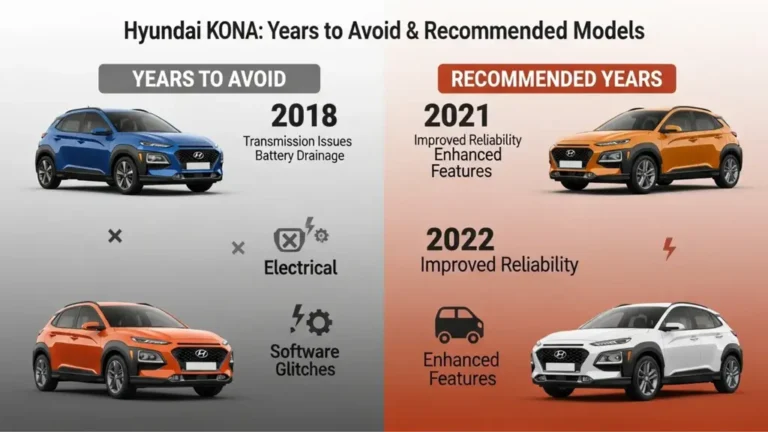
You can see that 2018 and 2019 stand out for engine and electrical complaints, while 2020 and newer gasoline models are much improved.
Credit: reganmotors.com
Practical Tips For Buying A Used Hyundai Kona
If you’re set on a Kona, here’s how to protect yourself:
- Avoid the highest-risk years (2018, 2020 Electric) unless you get a big discount or documented repairs.
- Choose models with the standard engine if buying from 2018 or 2019—these have fewer issues than turbo or electric.
- Check recall status and make sure all work has been completed.
- Ask for maintenance records, especially for engine, transmission, or battery repairs.
- Test drive on highways and city streets to spot hesitation, warning lights, or strange noises.
- Get a pre-purchase inspection by a mechanic who knows Hyundai models.
- Consider certified pre-owned (CPO) options, which include extra warranty coverage.
What Makes A “good” Kona Year?
A good Kona year has:
- Few recalls
- Low owner complaint rates
- Strong reliability ratings (from sources like Consumer Reports or J.D. Power)
- Good safety scores
- Positive owner reviews
Years like 2020 (gasoline), 2022, and newer tick these boxes.
Credit: rerev.com
Common Mistakes When Buying A Used Kona
Many buyers focus too much on price or color and forget these key checks:
- Skipping the VIN recall search: Always check for open recalls.
- Ignoring the engine type: Turbo and electric models had more issues early on.
- Not checking for extended warranties: Hyundai sometimes extends engine or battery warranties for problem years.
- Buying from sellers without service records: This makes it hard to know if repairs were done.
- Trusting only the test drive: Some problems only show up after months of driving.
How Recalls And Repairs Impact Resale Value
Cars with a history of recalls or major repairs often lose value faster. Even if the issue is fixed, some buyers worry about future problems. That’s why it’s smart to avoid risky Kona years if you plan to resell later.
Here’s how recall history can affect Kona resale values:
| Model Year | Average Resale Value (% of new price) | Major Recall Status |
|---|---|---|
| 2018 | 51% | Yes |
| 2020 (Gasoline) | 62% | No |
| 2020 (Electric) | 48% | Yes |
| 2022 | 68% | No |
*Numbers are estimates based on 3-year-old Konas in the US used car market. *
What About The Hyundai Kona Electric?
The Kona Electric is appealing for its range and low running costs, but the 2020 and 2021 models had serious battery recalls. Hyundai replaced many battery packs for free, but the process could take months. Some owners also faced charging system problems that made the car unreliable for daily use.
If you want a Kona Electric, look for a 2022 or newer model. These have updated batteries and fewer issues. Always check the VIN to see if all recall work was done.
The Importance Of Warranty Coverage
One reason people like Hyundai is the long warranty—usually 5 years/60,000 miles for basic coverage, and 10 years/100,000 miles for the powertrain. For electric models, the battery warranty is also 10 years/100,000 miles.
If you buy a used Kona from a risky year, make sure the warranty is still valid and transferable. Some repairs can cost as much as the car itself, especially engine or battery replacements.
Where To Find Reliable Used Kona Models
- Certified Pre-Owned (CPO) Hyundai dealers: These cars are inspected and come with extra warranty.
- Reputable used car dealerships: Look for those who provide service history and allow independent inspections.
- Private sellers: Only buy if they have full maintenance records and let you check for recalls.
Avoid cars sold “as-is” or with missing paperwork—they could be hiding problems.
Non-obvious Insights Most Buyers Miss
- Electric and Turbo models have higher insurance premiums. These versions cost more to repair, which means higher insurance rates compared to standard gasoline Konas.
- Battery recall repairs on Electric models can affect title status. In some states, if the battery was replaced after a fire or major incident, the car may have a “branded” title. This reduces resale value and can make getting insurance harder.
How Hyundai Responded To Kona Problems
Hyundai took several steps to address the issues in problem years:
- Issued recalls and extended warranties for affected engines and batteries.
- Offered free engine or battery replacements for many owners.
- Released software updates to reduce fire risks in electric models.
Still, the repair process was sometimes slow, and not every owner was satisfied. That’s why later model years are safer bets.
Should You Avoid All Early Kona Models?
Not every early Kona is a lemon. Some 2018 and 2019 models, especially those with the base engine and a clean service history, can be reliable. But you must do more homework—check for recall work, ask for all records, and don’t skip the pre-purchase inspection.
If you want less risk and less hassle, choose a newer year with a strong reliability record.
Is The Kona Still A Good Buy Overall?
Yes, the Hyundai Kona remains a good value in the small SUV segment, especially from 2020 onward. It offers:
- Great fuel economy
- Modern safety features
- Comfortable driving experience
- Long warranty coverage
Just be smart about the year and trim you choose. Avoiding the riskiest years can help you enjoy the Kona’s strengths without unwanted surprises.
Additional Resources
For the latest information on recalls, reliability ratings, and owner reviews, check sources like the National Highway Traffic Safety Administration. These sites provide up-to-date data on Kona safety and recalls.
Frequently Asked Questions
Which Hyundai Kona Years Are The Most Reliable?
The 2020 gasoline, 2022, and newer Hyundai Kona models are known for strong reliability. They have fewer engine, electrical, or battery complaints than earlier years.
Are All Hyundai Kona Electric Models Risky To Buy?
No, but the 2020 and 2021 Kona Electric had major battery recalls. The 2022 and newer Electric models have improved batteries and are generally safer to buy.
How Can I Tell If A Used Kona Has Had Recall Repairs?
Check the vehicle’s VIN on the official NHTSA website or ask the seller for service records. Dealers can also confirm if recall work was done.
Is It Safe To Buy A 2018 Or 2019 Kona If The Engine Was Replaced?
If the engine was replaced by Hyundai under recall or warranty and you have full documentation, it can be a safer bet. But always get a mechanic to inspect the car before buying.
Does Hyundai Cover Engine Or Battery Problems After The Regular Warranty?
For some years, Hyundai extended warranties on engines and batteries. Check with a Hyundai dealer or the manufacturer to see if coverage still applies to the car you’re considering.
Buying a used Hyundai Kona can be a smart move if you avoid the riskiest years, check for repairs, and stick with reliable trims. With a little research, you can find a Kona that’s fun, dependable, and fits your budget.