

Buying a used truck is a big decision, and the GMC Sierra is often on the shortlist for many drivers. Its reputation for comfort, strength, and advanced features has made it a favorite across the US and beyond. But not every Sierra model year delivers the same reliability and satisfaction. Some years have faced serious issues—costly repairs, safety recalls, or disappointing performance—that buyers should know about before making their choice.
If you’re thinking about buying a used GMC Sierra, it’s smart to know which years are best avoided and why. This guide will help you understand the most problematic GMC Sierra years, the reasons behind their troubles, and what to look for instead.
With this knowledge, you can shop with confidence, save money on repairs, and enjoy your truck for years to come.
Understanding Gmc Sierra Generations
Before exploring the years to avoid, it’s helpful to know the main generations of the GMC Sierra. Each generation brings new designs, engines, and technology—along with unique problems. Here’s a brief breakdown:
| Generation | Years Produced | Main Changes |
|---|---|---|
| 2nd Gen (GMT800) | 1999–2006 | Modern look, improved engines, more comfort |
| 3rd Gen (GMT900) | 2007–2013 | Refined ride, better safety, more tech |
| 4th Gen (K2XX) | 2014–2018 | Fuel efficiency focus, advanced infotainment |
| 5th Gen (T1) | 2019–Present | Redesigned, turbo options, advanced driver assists |
Each generation has its strengths, but also some years that stand out for the wrong reasons.
Most Problematic Gmc Sierra Years
Not every Sierra is created equal. Some years have higher rates of complaints, mechanical failures, or safety issues. Here are the GMC Sierra years to avoid and the reasons behind their reputation.
1. 2005 Gmc Sierra
The 2005 Sierra may look tough, but it’s famous for electrical problems and brake system failures. Many owners reported that the speedometer would stop working or give wrong readings. This isn’t just annoying—it’s unsafe. Some drivers even got tickets because their speed was wrongly displayed.
Another big issue is the anti-lock braking system (ABS). The ABS could fail, especially in wet conditions. GMC even issued a recall, but not all trucks were fixed. Brake lines were also prone to rust and leaks, leading to expensive repairs.
Common problems:
- Faulty speedometer and gauges
- ABS failure, especially in northern states
- Rusty brake lines
Repair costs: Fixing the speedometer cluster can cost $300–$500. Replacing corroded brake lines may reach $1,000 or more.
2. 2007 Gmc Sierra
The redesigned 2007 Sierra launched with high hopes, but it quickly became known for engine and transmission problems. The most serious was engine lifter failure, which can lead to rough idling, power loss, or total engine failure. This problem often appears after 70,000 miles.
Transmission issues were also common, especially hard shifting or slipping gears. Many drivers reported their 4L60E transmission failed before 100,000 miles.
Common problems:
- Engine lifter and camshaft failure
- Transmission slipping and harsh shifting
- Faulty door locks and window regulators
Repair costs: Engine repairs can exceed $3,000. Transmission rebuilds often cost $2,000–$3,500.
3. 2014 Gmc Sierra
The 2014 model was the first of a new generation, packed with features and a modern look. Unfortunately, it’s also one of the most troublesome Sierra years. Major complaints include electrical gremlins, A/C failures, and transmission shudder.
The truck’s infotainment system often freezes or crashes, sometimes blanking out completely. Many owners had to replace the entire unit. The air conditioning system is also a weak spot—compressors and condensers fail early, leaving drivers sweating in the summer.
Transmission shudder is another headache, especially at low speeds. GMC updated the software, but many trucks never ran smoothly.
Common problems:
- Failing infotainment/touchscreen
- A/C system breakdowns
- Transmission shudder and hesitation
Repair costs: Infotainment unit replacement can cost $1,000 or more. A/C repairs often range from $700–$1,200.
4. 2015 Gmc Sierra
The 2015 Sierra continued many of the 2014’s issues. It’s especially known for headlight problems—the new projector headlights are too dim for safe night driving. Many owners complained about poor visibility, and aftermarket solutions are often needed.
Electrical issues also persist, including problems with the radio, backup camera, and dashboard warning lights. Some trucks suffered from “Chevy Shake”—a vibration at highway speeds caused by drivetrain or tire imbalance.
Common problems:
- Dim projector headlights
- Electrical glitches in radio and camera
- “Chevy Shake” vibration
Repair costs: Upgrading headlights can cost $300–$1,000. Fixing vibrations often requires multiple shop visits.
5. 2016 Gmc Sierra
While the 2016 Sierra improved in some areas, it still suffers from transmission problems. The 8-speed automatic is especially problematic—it can jerk, hesitate, or “hunt” for the right gear. Some owners had to replace the transmission under warranty, but others paid out of pocket.
There are also complaints about the A/C system, repeating the same condenser and compressor failures seen in 2014–2015 models.
Common problems:
- Transmission hesitation and rough shifting
- Persistent A/C failures
- Random electrical faults
Repair costs: Transmission replacement can run $3,000–$4,000. A/C system repairs remain expensive.
6. 2017 Gmc Sierra
2017 saw fewer issues, but some problems continued. The transmission shudder is still present, especially on the 8-speed automatic. Some owners also reported tailgate issues, with latches failing or not closing securely.
While reliability is slightly better, it’s still a year to be cautious with—especially if the truck is out of warranty.
Common problems:
- Transmission shudder
- Tailgate latch failure
- Ongoing electrical bugs
Repair costs: Transmission and tailgate repairs can both cost over $1,000.
7. 2019 Gmc Sierra
The 2019 Sierra marked a new generation and introduced lots of technology. But with new tech came new problems—especially with the infotainment system, transmission, and climate controls.
Owners reported the infotainment screen freezing or restarting. The 8-speed and 10-speed automatics both had complaints of hard shifts, hesitation, and even complete failure. The climate control system sometimes stops working, making the cabin uncomfortable in hot or cold weather.
Common problems:
- Infotainment system glitches
- Transmission harsh shifting
- Faulty climate controls
Repair costs: Infotainment repairs can cost $1,500+. Transmission issues are often $2,000–$4,000.
Honorable Mention: 2003 Gmc Sierra
The 2003 Sierra is older, but still common on the used market. It’s notorious for fuel pump failure, electrical shorts, and worn out suspension parts. While not as high-tech as later trucks, repairs can add up fast.
Common problems:
- Failing fuel pump
- Electrical gremlins
- Weak front suspension
Repair costs: Fuel pump replacement is about $800. Front-end rebuilds can be $1,000+.
Key Issues In Problematic Years
Understanding what goes wrong with these Sierra years helps you spot red flags and avoid future headaches. Here are the most common trouble areas and what they mean for your ownership experience.
Electrical System Problems
Modern Sierras have complex electrical systems—infotainment, cameras, sensors, and more. When these fail, repairs are expensive and often require a dealer visit. Common symptoms include:
- Blank or flickering dashboard screens
- Random warning lights
- Power window/lock failures
Sometimes, these issues can drain the battery overnight or cause random system resets while driving.
Transmission Failures
Sierra transmissions, especially the 4L60E (older trucks) and 8-speed/10-speed automatics (newer trucks), have a reputation for early failure. Signs of trouble include:
- Hard or delayed shifting
- Slipping gears
- Sudden loss of drive
Ignoring these symptoms often leads to a full transmission rebuild or replacement.
Air Conditioning And Climate Control Issues
A/C system failure is a regular complaint, mostly in 2014–2016 Sierras. Common causes include:
- Leaking condenser
- Broken compressor
- Faulty climate control module
Hot climates make these problems worse, and repairs are rarely cheap.
Headlight And Visibility Concerns
Dim headlights, especially on 2014–2015 models, affect night driving safety. Some owners install aftermarket bulbs or LED upgrades to fix this, but not all solutions are legal in every state.
Rust And Corrosion
Older Sierras, especially in northern states, often develop rust on the brake lines, frame, and body panels. This can lead to brake failure or expensive rust repairs.
Sierra Model Year Comparison
To help you see the differences, here’s a side-by-side look at several Sierra years—highlighting their most common complaints.
| Model Year | Main Problems | Average Repair Cost | Number of Recalls |
|---|---|---|---|
| 2005 | Electrical, ABS, rust | $800–$1,500 | 4 |
| 2007 | Engine, transmission, windows | $2,000–$4,000 | 3 |
| 2014 | Infotainment, A/C, transmission | $1,000–$2,500 | 7 |
| 2015 | Headlights, electrical, vibration | $500–$1,500 | 5 |
| 2016 | Transmission, A/C, electrical | $1,000–$4,000 | 3 |
| 2017 | Transmission, tailgate | $1,000–$3,000 | 2 |
| 2019 | Infotainment, transmission, climate | $1,000–$4,000 | 6 |

Credit: www.pauletteauto.com
Why Do These Years Have More Problems?
Every truck has some issues, but certain Sierra years stand out for several reasons:
- New technology: First-year models after a redesign often have bugs that take a few years to fix.
- Supplier issues: Some parts, like transmissions or electronics, had defects from the factory.
- Cost-cutting: In some years, GM used cheaper parts to lower costs, leading to reliability problems.
- Design flaws: Certain features—like the 8-speed transmission or projector headlights—didn’t work as well as planned.
When shopping for a used Sierra, it’s wise to research not just the year, but also the engine and transmission combo. Some options are much more reliable than others.
Sierra Years With Fewer Problems
Not every Sierra is risky. Many owners enjoy years of dependable service from the right truck. If you want to avoid headaches, look for these more reliable GMC Sierra years:
- 2006: Last year of the GMT800 generation, with most bugs fixed.
- 2010–2013: Fewer transmission and electrical issues; solid reliability overall.
- 2018: Last year before another redesign, with improved transmission and electronics.
- 2020–2022: Early signs are positive, but still new—watch for long-term reports.
Low-mileage trucks with full service records are always a better bet, no matter the year.

Credit: www.youtube.com
How To Spot A Problematic Sierra Before You Buy
Even if you avoid the worst years, not every used Sierra is trouble-free. Here’s how to check a truck’s condition and avoid surprises:
- Review service records: Look for regular oil changes, transmission service, and recall work.
- Get a pre-purchase inspection: A mechanic can spot hidden issues, like worn suspension or electrical faults.
- Check for recalls: Use the truck’s VIN on the NHTSA website to see if recalls are open.
- Test drive at highway speed: Listen for vibrations (“Chevy Shake”), transmission shudder, or strange noises.
- Inspect electronics: Test every button, switch, and screen.
- Look for rust: Check the frame, brake lines, and underbody—especially in snowy regions.
Buying from a private seller with maintenance records is often safer than a dealer with little history.
Common Mistakes When Shopping For A Used Sierra
It’s easy to get excited about a shiny truck, but some mistakes can cost thousands later. Here’s what to avoid:
- Ignoring known problem years: Don’t buy a truck just because it’s cheap. Repairs may cost more than the savings.
- Skipping the inspection: A trusted mechanic will spot issues you won’t see.
- Overlooking test drives: Short drives won’t reveal transmission or vibration issues.
- Assuming all Sierras are tough: Even durable trucks can have weak years.
- Not budgeting for repairs: Older Sierras often need new suspension, brakes, or electronics.
What Owners Say About These Problem Years
Owner reviews and forums provide a real-world look at Sierra reliability. For example:
- A 2014 Sierra owner from Texas shared: “I replaced my A/C compressor twice before 80,000 miles. The dealership said it’s a known problem.”
- A 2007 Sierra driver in Michigan reported: “Transmission failed at 95,000 miles. GM covered part of the cost, but I still paid $1,800.”
- A 2015 Sierra owner in California said: “Headlights are so dim I was scared to drive at night. Aftermarket LEDs helped, but it’s frustrating.”
These stories are common, especially for the years listed above.
Comparing Gmc Sierra To The Competition
How do Sierra’s “bad” years stack up against rivals like the Chevy Silverado, Ford F-150, or Ram 1500? Here’s a quick comparison:
| Model | Problem Years | Common Issues | Average Repair Cost |
|---|---|---|---|
| GMC Sierra | 2005, 2007, 2014–2017, 2019 | Electrical, transmission, A/C | $1,500–$3,000 |
| Chevy Silverado | 2007, 2014–2016 | Transmission, A/C, vibration | $1,400–$2,800 |
| Ford F-150 | 2004–2006, 2010 | Engine, transmission, spark plugs | $1,200–$2,500 |
| Ram 1500 | 2012, 2014–2016 | Transmission, air suspension, electrical | $1,300–$2,700 |
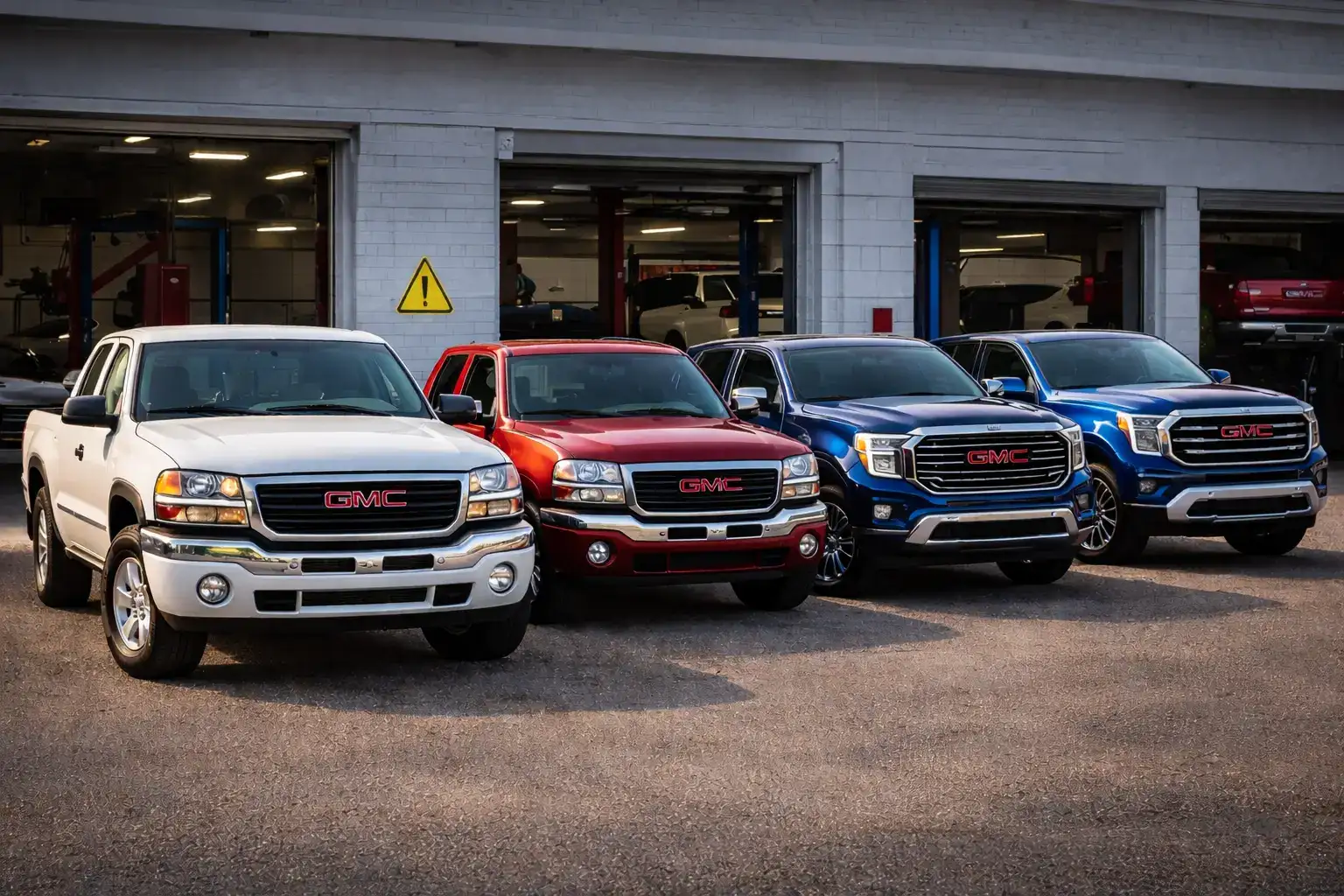
All trucks have challenging years, but the Sierra’s transmission and electronic issues are more persistent in the years listed above.
Credit: www.starlingbuickgmcstuart.com
Two Insights Most Buyers Miss
- First-year redesigns are risky: The most common Sierra problems appear in years after a major redesign (like 2007 and 2014). Carmakers often use early buyers as real-world testers. Waiting a couple of years after a redesign can save you headaches.
- Small problems add up: Many Sierra issues—like dim headlights or infotainment glitches—seem minor. But fixing several small issues in a year can cost as much as a major engine repair. Always factor in the “little stuff” when choosing a truck.
When Is It Worth Buying A “bad” Sierra Year?
Sometimes a Sierra from a “problem year” is available at a great price. Here’s when it might be worth the risk:
- Full repair history: If the major issues have been fixed by a professional, the truck may be more reliable.
- Low mileage: Trucks with fewer miles are less likely to have worn-out transmissions or A/C systems.
- Short-term ownership: If you only need the truck for a year or two, you may avoid the biggest repair bills.
- Budget for repairs: If the purchase price is low enough to cover future repairs, it may still be a good deal.
Always have a trusted mechanic check the truck before you buy.
Are Sierra’s Problems Covered By Recalls Or Warranties?
Many of the biggest Sierra issues led to recalls—especially ABS problems, airbag failures, and electrical faults. You can check recall status with the truck’s VIN on the NHTSA website. However, most used Sierras are out of their original warranty, so owners pay for most repairs.
Some dealers offer extended warranties, but read the fine print. Not all plans cover the transmission, electronics, or A/C system failures common in these trucks.
For more on recalls and common Sierra issues, you can visit the NHTSA official recall database.
Frequently Asked Questions
What Is The Worst Year For Gmc Sierra?
The 2014 GMC Sierra is widely considered the worst year due to frequent electrical, air conditioning, and transmission problems. It has more owner complaints and expensive repairs than most other years.
Are Newer Gmc Sierras More Reliable?
2018 and newer Sierras have improved reliability, especially after GM fixed many transmission and electronic issues. However, the 2019 model still had problems with the infotainment system and climate controls, so check reviews for the exact year and trim.
Is The Gmc Sierra Better Than The Chevy Silverado?
The GMC Sierra and Chevy Silverado are nearly identical mechanically. Both have similar problem years (like 2014–2016) and share engines, transmissions, and electronics. The Sierra often has more upscale features, but reliability is similar.
How Many Miles Can A Gmc Sierra Last?
A well-maintained GMC Sierra can last 200,000 miles or more. Key factors are regular maintenance, avoiding known problem years, and fixing issues early. Trucks from good years with full service records often go much farther.
What Should I Check Before Buying A Used Sierra?
Check for service records, open recalls, transmission smoothness, electrical function, A/C performance, and signs of rust. A pre-purchase inspection by a mechanic is strongly recommended.
Shopping for a used truck is never simple, but knowing which GMC Sierra years to avoid can save you thousands in repairs and give you peace of mind on the road. With the right research and a careful inspection, you can find a Sierra that delivers years of reliable service.