

The C3 Corvette is one of the most iconic American sports cars, known for its bold styling, rumbling V8 engines, and its place in pop culture. Produced from 1968 to 1982, the C3 generation brought us the classic “shark” look, T-tops, and some wild special editions. Yet, not all C3 Corvettes are created equal. Some years are notorious for issues that frustrate owners and cost a lot to repair. If you’re thinking about buying a C3, it’s smart to know which years might be best to avoid—and why.
Choosing the right classic car can make the difference between a fun hobby and a money pit. This guide will help you understand which C3 Corvette years to avoid, the reasons behind their problems, and how to spot trouble before you buy.
You’ll also get practical advice on what to look for, hidden pitfalls many beginners miss, and how to make a wise choice in the C3 market.
What Makes A C3 Corvette Year Worth Avoiding?
Not every “bad year” is the same. Some have weak engines, others suffer from rust, or troublesome electronics. The worst years for the C3 are usually a mix of several factors:
- Low engine performance due to emissions regulations
- Build quality issues like leaks, rattles, or poor materials
- Difficult or expensive repairs for unique or problematic parts
- Rust or frame problems that are costly to fix
Understanding these details helps you avoid buying a car that spends more time in the shop than on the road.
The Three C3 Corvette Years To Avoid
Over its 15-year run, the C3 had some highs and lows. Three years stand out as especially problematic: 1974, 1975, and 1980. Each has its own set of issues that can turn ownership into a headache.
1974 Corvette: The Year Of Unwanted Change
The 1974 Corvette sits in a tough spot in the C3’s history. The US government started to push for cleaner air, so car makers had to reduce engine emissions. For the Corvette, this meant less power and more complicated systems.
Major Problems In 1974
- Engine Power Drops: The most powerful engine in 1974 was the 454 V8, but even that made only 270 horsepower. The base L48 engine dropped to 195 hp. For context, earlier C3s easily hit 300+ hp.
- First Year Without Chrome Bumpers: The 1974 was the first to have a full plastic bumper front and rear. These urethane bumpers looked good at first, but aged poorly. Many owners complain of cracking, warping, and fading.
- Heavier Car, Same Old Brakes: The new bumpers added weight, but Corvette didn’t improve the brakes or suspension much. Stopping distance grew, and handling suffered.
- Interior Quality Issues: 1974 was a year of cost-cutting. The dash, seats, and panels were often lower quality than earlier years. Rattles and loose trim are common.
- More Complicated Emissions Gear: New emissions controls (like EGR valves and air injection pumps) made the engine bay crowded and repairs harder.
Why 1974 Is A Risk
If you want a classic Corvette for speed or looks, the 1974 often disappoints. The styling was in transition—no chrome, but not as sharp as later models. The power loss means you don’t get the muscle car feel, and many 1974s now need bumper replacements, which are expensive and hard to fit well.
Emissions equipment can be tricky to fix or replace, especially if you want to keep the car original.
Common Issues Table
| Problem Area | Typical Issue | Repair Difficulty |
|---|---|---|
| Bumpers | Cracking/warping urethane | High |
| Engine | Low power, emissions failures | Medium |
| Interior | Loose trim, rattles | Low |
| Brakes | Weak for car’s weight | Medium |
Non-obvious insight: Many buyers don’t realize that replacing the 1974’s urethane bumpers often requires special skills—aftermarket replacements rarely fit perfectly and may need custom shaping.
1975 Corvette: The Weakest Of The Bunch
If you want the slowest C3 Corvette, 1975 is the year. This was the first model without a big-block engine, and the new emissions standards choked horsepower to historic lows.
Major Problems In 1975
- Lowest Horsepower Ever: The base L48 V8 made just 165 hp, and the optional L82 only 205 hp. For a sports car, these numbers are disappointing—even some family sedans were faster.
- Even More Emissions Gear: New catalytic converters made the exhaust system complex. These cats often overheat, plug up, or rattle. Replacements are costly, and removing them is illegal in many states.
- Poor Build Quality: The mid-70s were a rough time for quality. Many 1975s have ill-fitting panels, paint problems, and cheap plastics inside.
- One-Year-Only Parts: Some parts on 1975 models are unique, making them hard to find and expensive.
- End of Convertible (for a while): 1975 was the last year for the convertible until 1986. While this makes convertibles rare, the 1975 soft-top is less desirable because of weak engines.
Why 1975 Is A Risk
For collectors, the 1975 is not very special—no big engines, no unique styling, and lots of compromises. If you want to drive your Corvette and enjoy it, the lack of power and tricky emissions equipment will frustrate you. Many 1975s were not well cared for, since they were seen as “just another used car” for years.
Rust is also a bigger problem, especially in the frame and floor pans.
Value Comparison Table
Here’s a look at how the 1975 compares to better C3 years in terms of value and collectability.
| Year | Average Price (Good Condition) | Horsepower (Base) | Collector Appeal |
|---|---|---|---|
| 1971 | $28,000 | 270 hp | High |
| 1975 | $18,000 | 165 hp | Low |
| 1978 | $24,000 | 185 hp | Medium |
Non-obvious insight: Many 1975s have already had their emissions gear removed or altered. If you want to keep the car original, finding a complete, unmodified example is getting harder—and more expensive.
1980 Corvette: Looks Good, Drives Poorly
By 1980, the C3’s looks were still classic, but the performance gap had grown. Chevrolet tried to keep the car fresh, but emissions rules became even stricter, especially in California. The C3 was starting to feel out of date, and many owners noticed.
Major Problems In 1980
- California Model Headaches: Corvettes sold in California came with the 305 V8, making only 180 hp. These cars have unique emissions controls that are tough to repair or replace.
- Overly Complicated Emissions Systems: The 1980 added computer controls, more sensors, and extra hoses. Diagnosing problems is much harder than with earlier C3s.
- Weight Reductions That Didn’t Help: Chevy tried to make the 1980 lighter by using thinner glass and lighter body parts. This sometimes led to window cracks and body flex.
- Rust and Frame Problems: The 1980 shares the same rust-prone frame as other late C3s, but by now, most cars have seen decades of use. Rot can be hidden and expensive to fix.
- Quality Control Issues: The 1980 was built in two different plants (St. Louis and Bowling Green). Some parts and fit/finish can vary between cars, making repairs a guessing game.
Why 1980 Is A Risk
Many buyers choose a late C3 for the looks, but the 1980 can be a disappointment if you care about driving fun. The California version in particular is slow, and fixing emissions or electrical faults is a real challenge. If you’re looking for a driver, you’ll spend more time and money to get the 1980 running right than you would with an earlier or later model.
Emissions Complexity Table
| Year | Number of Emissions Devices | Common Issues |
|---|---|---|
| 1977 | 3 | Basic failures, easy repairs |
| 1980 | 8 | Sensor faults, vacuum leaks |
| 1982 | 10 | Computer failure, parts NLA |
Non-obvious insight: Many mechanics today are not familiar with the early 1980s emissions and computer control systems. Even a small sensor failure can cause big performance problems, and parts are often “no longer available” (NLA).
Other Years With Caution Signs
While 1974, 1975, and 1980 are the years most buyers should avoid, a few other C3 years have their own issues:
- 1976-1977: Still low on power, and emissions controls are growing more complex.
- 1981-1982: Early computer controls and Cross-Fire Injection (especially in 1982) can be unreliable and expensive to repair.
- 1968-1969: The earliest C3s have unique parts and sometimes poor build quality, but they offer strong engines and simple mechanics.
These years are not as risky as the main three, but you should look closely at any car from these periods.
How To Spot A Risky C3 Corvette Before You Buy
Even if you avoid the worst years, buying a C3 Corvette is not simple. Here are important steps and tips:
- Check the Engine and Emissions Gear: Is all the original equipment present? Has it been changed or removed? Missing parts can hurt value and make registration harder in some states.
- Inspect the Bumpers: Look for cracks, warping, or poor repairs. Bumper replacement is a common need on 1974-1982 cars.
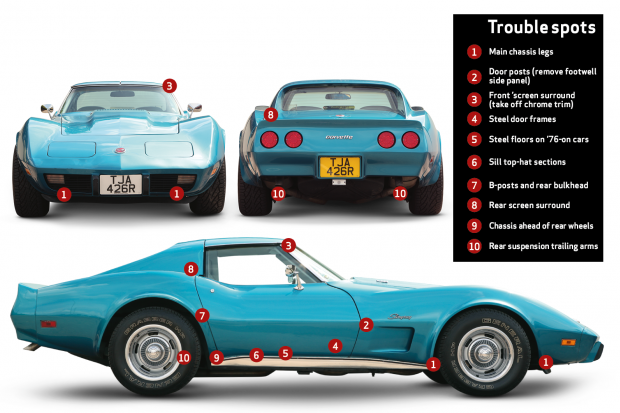
- Look Underneath for Rust: The C3’s frame is steel, and rust is a killer. Pay special attention to the “birdcage” (the area under the windshield), rear frame rails, and floor pans.
- Test Electrical Systems: Windows, headlights (pop-up style), gauges, and wipers are all common failure points. Repairs can be complex.
- Drive the Car: Slow, rough, or “bogged down” performance can mean emissions or engine problems.
Pro tip: Bring a strong magnet wrapped in cloth. Run it along the frame and lower body panels—if it doesn’t stick, there may be hidden rust repairs or body filler.
Why Do People Still Buy These Years?
Despite their problems, some people still buy 1974, 1975, and 1980 Corvettes. Here’s why:
- Lower price: These cars are usually cheaper than more desirable years.
- Good looks: All C3s share the classic shark styling.
- Easier to find: There are more of these years on the market.
However, the money you save up front can be quickly lost to repairs, especially if you want a car to drive often or take to shows.
Lessons From Real Owners
Many C3 owners started with a “cheap” car from a bad year and learned the hard way. Here’s what some have shared:
- “I thought I got a deal on my 1975, but after a year I spent more fixing the engine than I paid for the car.”
- “My 1980 California car is in great shape, but finding parts for the emissions system is a nightmare.”
- “I love the look of my 1974, but I had to pay a body shop to custom-fit new bumpers. They still don’t look right.”
Experience-based insight: If you are not doing your own repairs, labor costs can quickly eat up any savings from buying a cheaper C3. Always budget extra for surprises.

Credit: cartalk.pandahub.com
How To Buy A Better C3 Corvette
If you want to enjoy a C3, here’s what to look for instead:
- 1969-1972: These years offer the best engines, simpler mechanics, and strong collector value.
- 1978 25th Anniversary Edition: Unique styling, better build quality, and decent power.
- 1977 and earlier: Fewer emissions headaches, easier to work on.
- 1981 and 1982: Only if you love the looks and can handle computer controls and fuel injection issues.
Always check the car’s history, look for receipts of past repairs, and get a pre-purchase inspection from a Corvette specialist.
Unique Factors That Affect C3 Corvette Ownership
Insurance Costs
C3 Corvettes can be cheap to buy but expensive to insure, especially for younger drivers or in cities. Some years (like the 1975) may be harder to insure as “classics” due to low collector value.
Availability Of Parts
While most mechanical parts are easy to find, unique trim, emissions, and electrical parts for 1974, 1975, and 1980 can be rare and costly.
Driving Experience
The worst years still have the classic Corvette “feel”—long hood, low seats, wide stance—but the thrill is less. If you dream of a muscle car, these years will disappoint.
Surprising fact: Some C3s from the “bad years” have been modified with better engines and modern suspension. These can be fun, but they lose collector value and may be harder to sell later.
Credit: www.corvsport.com
C3 Corvette Market Trends
Over the past decade, prices for top C3s (1969-1972, and some special editions) have gone up steadily. The “years to avoid” lag behind, often growing slower or even dropping in value when restoration costs outweigh market price.
Market tip: If you buy a 1974, 1975, or 1980, buy the best example you can find—restoring a rough car will cost more than buying a good one.
Comparing The Three Years To Avoid
To help you see the differences at a glance, here’s a direct comparison:
| Year | Engine Options | Horsepower Range | Emissions Complexity | Bumper Issues | Collector Value |
|---|---|---|---|---|---|
| 1974 | L48, L82, 454 | 195-270 hp | Medium | High | Low |
| 1975 | L48, L82 | 165-205 hp | High | High | Very Low |
| 1980 | L48, L82, 305 (CA only) | 180-230 hp | Very High | Medium | Low |
Should You Ever Buy One Of These Years?
Sometimes, buying a “bad year” C3 makes sense:
- You want a project: If you love working on cars and want to learn, these years can be a good, cheap entry.
- You care about style, not speed: For car shows and casual drives, any C3 turns heads.
- You find a low-mileage, well-kept car: Some owners cared for their cars and kept them original.
Just go in with your eyes open, and don’t expect a high return on investment.
Essential Questions To Ask Before Buying
If you decide to check out a 1974, 1975, or 1980 C3, ask these questions:
- Has the emissions equipment been changed or removed?
- Are the bumpers original, repaired, or replaced?
- Is there rust in the frame, birdcage, or floor?
- Do all electrical systems work?
- Is there paperwork for past repairs and maintenance?
Careful buyers avoid the worst surprises.
Where To Learn More About C3 Corvettes
The Corvette community is large and helpful. Forums, clubs, and experts can help you spot trouble and find good deals. For more technical details and the full history of every model year, the Wikipedia C3 Corvette page is a great place to start.
Frequently Asked Questions
What Is The Worst Year For The C3 Corvette?
Most experts agree that 1975 is the worst year for the C3 Corvette. It had the lowest horsepower, the most emissions problems, and poor build quality. While 1974 and 1980 are also risky, the 1975 stands out for its lack of power and unique parts that can make repairs difficult.
Are Any C3 Corvettes Reliable?
Yes, some C3 Corvettes are quite reliable, especially the 1969-1972 models. These years have strong engines, simpler mechanics, and fewer emissions parts. With good care, they can be dependable classics. Even later C3s can be reliable if well maintained, but the years to avoid often require more repairs and patience.
Is It Expensive To Restore A 1974, 1975, Or 1980 Corvette?
Restoring any C3 can be costly, but the years to avoid often cost more. Unique bumpers, emissions equipment, and rare parts mean higher prices for both labor and materials. Restoring a “bad year” C3 can easily cost more than the car is worth, especially if you need to pay a shop for the work.
Why Do Some Collectors Still Buy The Worst C3 Years?
Some collectors buy the “bad” years because they are cheaper and easier to find. Others want a challenge or are attracted to the styling. A few are looking for rare versions, like a 1975 convertible, even if the performance is weak. For most buyers, though, there are better C3 choices.
How Can I Tell If A C3 Corvette Has Hidden Rust?
Check the frame rails, “birdcage” area under the windshield, and floor pans. Use a flashlight and a magnet. If the magnet doesn’t stick or you see signs of patching, be cautious. Always check under the carpets and in the trunk for soft spots or water damage—these are common places for rust to hide.
The C3 Corvette is a dream car for many, but not every year is a safe bet. By knowing which years to avoid, what to inspect, and how to spot trouble, you can enjoy classic Corvette ownership without costly surprises.
Choose carefully, and your C3 can be a source of pride on the road and at the show.

Credit: www.youtube.com