

The Audi Q5 is one of the most popular luxury compact SUVs in the world. It combines sporty performance, comfort, and advanced technology. Many people consider it when looking for a reliable, stylish vehicle. But not every Audi Q5 model year is equal. Some years have serious problems that can cost owners time and money. If you want to buy a used Audi Q5, it’s very important to know which years to avoid.
This article will help you make an informed decision. You’ll learn which five Audi Q5 model years are known for trouble, what issues they face, and how these problems compare to better years. We’ll cover real-world examples, data, and practical advice.
By the end, you’ll feel confident about choosing a safe, dependable Audi Q5.
Why Some Audi Q5 Years Should Be Avoided
No car is perfect, but some Audi Q5 years are worse than others. These years often have:
- Engine problems
- Transmission issues
- Electrical faults
- Expensive repairs
- Poor reliability scores
Manufacturers sometimes fix problems in later models, but in certain years, these issues are common. If you buy a Q5 from a problematic year, you might face high maintenance costs or safety concerns.
Let’s look at the five Audi Q5 years you should avoid and why.
Audi Q5 Years To Avoid: The Five Worst
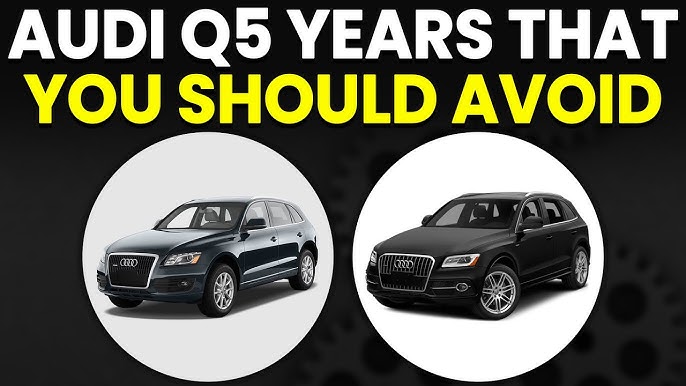
Many experts, mechanics, and owners agree on the five most problematic Audi Q5 years. These are:
- 2009
- 2012
- 2013
- 2014
- 2018
Each year has its own set of issues. Below, you’ll find details for each, including statistics, common complaints, and how they compare to other Q5 models.
1. 2009 Audi Q5: The Risky Debut
The 2009 Audi Q5 was the first year of the model in the United States. Like many debut years, it had several design and engineering flaws.
Engine And Oil Consumption
One of the biggest issues with the 2009 Q5 is excessive oil consumption. Owners report that the engine burns oil much faster than normal. In some cases, drivers need to add oil every 1,000 miles, which is much more than usual. This can lead to engine damage if not handled quickly.
- Consumer Reports rates the 2009 Q5’s engine reliability as “Much Worse Than Average.”
- A recall was issued for timing chain tensioner failure, which can cause sudden engine failure.
Transmission Problems
Another major complaint is transmission hesitation. Drivers notice delays when shifting gears, especially when moving from a stop. This can be dangerous in traffic and frustrating to drive.
Electrical Issues
The first Q5 also had electrical faults. Common problems include malfunctioning lights, faulty sensors, and infotainment system bugs. These issues are often expensive to fix.
Real-world Example
One owner on a car forum described how their Q5 stalled on the highway due to a timing chain failure. The repair cost was over $4,000, and Audi did not cover it under warranty.
Comparison Table: 2009 Q5 Vs. Later Models
| Feature | 2009 Q5 | 2011 Q5 | 2015 Q5 |
|---|---|---|---|
| Engine Reliability | Poor | Average | Good |
| Oil Consumption | High | Moderate | Low |
| Transmission Issues | Frequent | Occasional | Rare |
| Electrical Faults | Common | Uncommon | Rare |
Practical Insight
Many beginners overlook that first-year models often have “teething” problems. It’s wise to wait at least one year after a new model launches before buying.
2. 2012 Audi Q5: The Oil Burner
The 2012 Audi Q5 is well-known for engine oil consumption problems. This year’s model uses the 2.0L turbocharged engine, which is notorious for burning oil.
Engine Oil Consumption
Some 2012 Q5s require owners to add oil every 700 to 1,000 miles. Audi admitted this problem and offered a customer satisfaction campaign, but many owners still paid for repairs.
- According to the National Highway Traffic Safety Administration (NHTSA), hundreds of complaints were filed for oil consumption.
- A typical repair involves replacing pistons and rings, costing up to $6,000.
Timing Chain Tensioner Failure
Another issue is the timing chain tensioner. If it fails, the engine can be destroyed. Audi issued a recall, but not all vehicles were repaired.
Water Pump Leaks
The 2012 Q5 also has water pump leaks, leading to overheating and expensive repairs.
Real-world Data
- CarComplaints.com shows that the 2012 Q5 has over 200 reported engine problems, far more than other years.
- Many owners report engine replacement before 80,000 miles.
Comparison Table: Oil Consumption Over Years
| Model Year | Average Oil Added (per 1,000 miles) | Common Engine Repairs |
|---|---|---|
| 2012 | 1 quart | Piston replacement |
| 2015 | 0.3 quart | Minor leaks |
| 2018 | 0.5 quart | Pump replacement |
Non-obvious Insight
Beginners often think oil consumption is normal for turbo engines, but the Q5’s 2012 issue is extreme and signals deeper engine trouble.
3. 2013 Audi Q5: Engine And Electrical Nightmares
The 2013 Audi Q5 is another year with serious engine and electrical problems. It uses the same engine as the 2012 model, so many issues are repeated.
Engine Failure
Many owners report complete engine failure at low mileage (under 60,000 miles). Common causes are timing chain tensioner and oil consumption.
- Consumer Reports rated engine reliability for the 2013 Q5 as “Much Worse Than Average.”
- Repairs often cost between $5,000 and $8,000.
Electrical System Faults
The 2013 Q5 suffers from electrical glitches. Common complaints include:
- Dashboard lights flickering
- Infotainment system freezing
- Power windows failing
These problems can be difficult to diagnose and fix.
Airbag Recall
Audi recalled thousands of 2013 Q5s for airbag defects. Some airbags would not deploy in a crash, creating a serious safety risk.
Real-world Example
A driver reported that their Q5’s engine stopped working during a road trip. The dealer found the timing chain tensioner had failed, causing major engine damage. The repair cost was nearly $7,000.
Comparison Table: Electrical Complaints
| Year | Electrical Complaints (per 1,000 owners) | Major Electrical Repair Cost |
|---|---|---|
| 2013 | 14 | $1,200 |
| 2015 | 5 | $700 |
| 2017 | 3 | $500 |
Practical Tip
If you must buy a 2013 Q5, check if the timing chain tensioner and airbag recall repairs were done. Always ask for maintenance records.
4. 2014 Audi Q5: The Cooling System Issue
The 2014 Audi Q5 improved on some earlier problems, but new issues appeared, especially with the cooling system.
Cooling System Failure
Many owners report water pump leaks and thermostat failure. These can cause the engine to overheat, leading to expensive repairs or engine damage.
- Typical repair costs for water pump replacement are $900–$1,500.
- Overheating can cause engine failure, costing up to $6,000.
Turbocharger Problems
The turbocharger in the 2014 Q5 is also problematic. Some owners report turbo failure before 60,000 miles. Turbo repairs are expensive and can affect performance.
Electrical Faults Continue
While electrical issues were less common than 2013, some owners still report:
- Faulty sensors
- Keyless entry problems
- Navigation glitches
Real-world Example
A 2014 Q5 owner shared that their vehicle overheated twice in one month. Each time, the water pump needed replacement. Total repair cost was over $2,500.
Comparison Table: Cooling System Reliability
| Model Year | Water Pump Failure Rate (%) | Average Repair Cost |
|---|---|---|
| 2014 | 12 | $1,200 |
| 2015 | 4 | $900 |
| 2016 | 2 | $700 |
Non-obvious Insight
Many buyers ignore cooling system issues because they seem minor at first. But repeated overheating damages the engine and lowers resale value.
5. 2018 Audi Q5: New Generation, New Headaches
The 2018 Audi Q5 marked the start of the second generation. While it brought new features, it also introduced new problems.
Transmission Shifting Issues
Many owners complain about rough shifting and transmission hesitation. The new 7-speed dual-clutch transmission can feel jerky and slow to respond.
- Edmunds.com lists transmission complaints as the most common problem for 2018 Q5 owners.
- Some drivers report the vehicle rolling backward on hills, even in “Drive” mode.
Electrical Glitches
The 2018 Q5 has many electrical bugs:
- Infotainment system crashes
- Bluetooth connectivity problems
- Random warning lights
These issues are often fixed with software updates, but some require expensive module replacements.
Safety System Faults
Several owners report problems with advanced safety systems. Lane assist, collision warning, and adaptive cruise control sometimes fail without warning. Audi issued software patches, but not all vehicles received them.
Real-world Example
A driver in California reported that their Q5’s transmission would not shift into “Park. ” The dealer replaced the transmission control module, costing over $2,000.
Comparison Table: 2018 Vs. Earlier Models
| Feature | 2018 Q5 | 2016 Q5 | 2019 Q5 |
|---|---|---|---|
| Transmission Type | 7-speed dual-clutch | 8-speed automatic | 7-speed dual-clutch |
| Transmission Complaints | High | Low | Moderate |
| Infotainment Issues | Frequent | Uncommon | Rare |
| Safety System Faults | Occasional | Rare | Rare |
Practical Advice
If you want a newer Q5, consider the 2019 or 2020 model. Audi fixed many bugs from the 2018 release, making later models more reliable.
Credit: www.youtube.com
How These Problem Years Compare To Good Audi Q5 Years
It’s important to see how these five years stack up against better Audi Q5 models. Reliable Q5 years—like 2015, 2016, and 2019—have fewer complaints, lower repair costs, and higher owner satisfaction.
- 2015 and 2016 Q5s have strong reliability scores, with few engine or transmission issues.
- 2019 and newer Q5s benefit from improved electronics and software updates.
Owners of these models report smooth driving, low maintenance costs, and good resale value. If you’re shopping for a used Q5, these are safer choices.
Key Differences
- Engine Reliability: Problem years often have premature failures, while good years last over 100,000 miles without major repairs.
- Transmission: Newer Q5s (post-2019) have improved gearboxes with fewer complaints.
- Electronics: Audi fixed many bugs in later models, reducing infotainment and sensor issues.
What To Look For When Buying A Used Audi Q5
Even if you avoid the worst years, it’s important to inspect any used Q5 carefully.
Steps To Take
- Check for recalls and see if all repairs were done.
- Ask for service records—maintenance history tells you a lot.
- Have a trusted mechanic inspect the car before buying.
- Test drive to check for engine, transmission, and electrical issues.
- Look for oil leaks, overheating, or warning lights during inspection.
Common Mistakes
- Ignoring oil consumption because you think it’s “normal.”
- Buying without checking recall repairs.
- Believing dealer promises instead of seeing maintenance records.
Practical Tips
- Buy from a seller who can prove regular oil changes and repairs.
- Avoid first-year models, especially in luxury brands.
- Consider certified pre-owned (CPO) programs for extra warranty.

Credit: www.copilotsearch.com
Real Owner Stories: What Can Go Wrong
Hearing from real Audi Q5 owners gives extra insight.
- A 2012 Q5 owner spent $6,500 replacing pistons due to oil consumption.
- A 2013 Q5 driver experienced engine failure at 58,000 miles, costing $7,200.
- A 2014 Q5 owner had three water pump replacements in two years.
- A 2018 Q5 buyer faced repeated transmission glitches, solved only after multiple software updates.
These examples show how expensive and frustrating these problem years can be. Beginners often miss that luxury cars cost more to repair, especially when out of warranty.
How To Avoid Buying A Problem Audi Q5
There are practical ways to protect yourself:
- Use VIN checks to see accident and repair history.
- Read owner reviews on sites like Edmunds and CarComplaints.
- Ask about recalls and insist on documentation.
- Avoid deals that seem too good—cheap prices often hide expensive problems.

Credit: rerev.com
Audi Q5 Years To Avoid: Summary Table
Here’s a quick summary of the five years to avoid and their main issues:
| Model Year | Main Problems | Average Repair Cost | Owner Satisfaction |
|---|---|---|---|
| 2009 | Engine, Transmission, Electrical | $4,000 | Low |
| 2012 | Oil Consumption, Timing Chain | $6,000 | Very Low |
| 2013 | Engine Failure, Electrical | $7,000 | Low |
| 2014 | Cooling System, Turbo | $2,500 | Moderate |
| 2018 | Transmission, Electrical, Safety Systems | $2,000 | Moderate |
Frequently Asked Questions
What Is The Most Reliable Audi Q5 Year?
The 2015 and 2016 Audi Q5 models are considered the most reliable. They have fewer engine and transmission complaints and higher owner satisfaction scores.
Why Does The 2012 Audi Q5 Burn So Much Oil?
The 2012 Q5 uses a 2.0L turbocharged engine with faulty piston rings. This design causes excessive oil consumption, leading to frequent refills and potential engine damage.
Are Repairs For Older Audi Q5s Expensive?
Yes, repairs for problem years can be very expensive. Engine and transmission fixes often cost between $4,000 and $7,000. Parts and labor for luxury cars are higher than average.
How Can I Check If A Used Q5 Had Recall Repairs?
Ask for the VIN and check Audi’s official recall database. Dealers should provide documentation for completed recall repairs. You can also use the NHTSA website to verify.
Is The 2018 Audi Q5 A Good Buy?
The 2018 Q5 has transmission and electrical issues. If you buy one, ensure all software updates and recalls were handled. Later models (2019+) are more reliable.
Final Thoughts
Buying a used Audi Q5 can be a smart choice if you know which years to avoid. The five years discussed—2009, 2012, 2013, 2014, and 2018—come with high risks, expensive repairs, and owner frustration. Always check maintenance records, recall history, and get a mechanic’s opinion before buying.
If you stick to reliable years and follow the tips here, you’ll enjoy the Q5’s luxury and performance without the headaches.
For more detailed reliability data, visit Consumer Reports, a trusted source for automotive reviews and statistics.