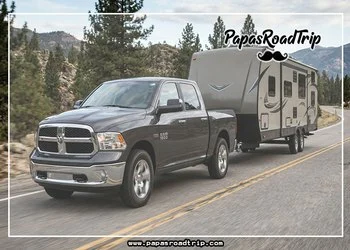
The 3.0 duramax towing capacity is up to 13,200 lbs when properly equipped. That figure belongs to the 3.0L Duramax turbo-diesel in the 2024 Chevrolet Silverado 1500. In the GMC Sierra 1500, the same engine is rated at up to 13,000 lbs. The exact number depends on cab, bed, drivetrain and trim. This guide breaks those combinations down, shows where the rating lives, and explains what changes once a trailer is behind you.
What the 3.0L Duramax actually is
The 3.0L Duramax is a straight-six turbo-diesel engine that GM puts in light-duty full-size pickups. It’s sold in the Chevrolet Silverado 1500 and the GMC Sierra 1500. It was built for torque and fuel economy, not for heavy hauling. It makes 305 horsepower and 495 lb-ft of torque in its current form.
People buy it for highway miles, quiet running and strong low-end pull. It suits a family truck that tows a camper a few weekends a year. The engine is also used in the Chevrolet Tahoe and Suburban, plus the GMC Yukon, but those SUVs have their own separate tow ratings.
The common misconception is that the diesel automatically tows more than the gas V8. That isn’t true. In many Silverado and Sierra configurations, the 6.2L V8 is rated higher than the 3.0L diesel. The diesel’s advantage is torque delivery and fuel use, not a bigger maximum number.
Another point people miss: the engine doesn’t set the limit. The truck’s cooling, frame, axle, springs and brakes do. That’s why two trucks with the identical engine can carry very different ratings.
How to find your truck’s own rating
- Open the driver’s door and read the yellow sticker. It shows the tire and loading limit for that exact truck. This is the payload number, not the tow number, but it caps everything else.
- Read the silver or white certification label on the same door jamb. It lists the gross vehicle weight rating (GVWR) and the gross combined weight rating (GCWR) for your build.
- Check the trailering label. On newer Silverado and Sierra trucks, GM puts a label in the door jamb with the truck’s own trailer rating in pounds.
- Look up the GM trailering guide for your model year. Ratings change year to year, so use the guide for the year your truck was built.
- Match your cab, bed, drivetrain and axle ratio. A crew cab 4×4 with a short bed carries a lower rating than a two-wheel-drive double cab with the max trailering package.
- Subtract your real payload from the equation. Add the weight of passengers, fuel, tools and tongue weight. If that total passes the yellow sticker, you’ve hit your limit before you reach the trailer rating.
- Confirm the hitch and the trailer’s own limits. The receiver, ball mount and trailer frame each have a ceiling. The lowest one wins.
The single judgement call that decides a good result from a bad one is payload, not the headline tow number. A truck rated to pull 13,000 lbs often runs out of payload long before it runs out of pull. Weigh the truck loaded, then weigh the tongue. That pair of numbers settles it.
3.0 Duramax towing figures by setup
Ratings differ by model, year, cab and package, so treat this as a map of the variations rather than a fixed chart. Always confirm your own figure on the door-jamb label or in the GM trailering guide for your model year.
| Your situation | What to do | Figure that matters | What to watch for |
|---|---|---|---|
| 2024 Silverado 1500, 3.0L, max trailering package | Use the top-rated build | Up to 13,200 lbs | Needs the right cab, bed, axle and 2WD/4WD combo |
| 2024 Sierra 1500, 3.0L, best build | Check the Sierra guide | Up to 13,000 lbs | Slightly lower ceiling than the Silverado |
| Crew cab 4×4, short bed, standard package | Expect a lower rating | Well under the maximum | Options and 4WD add weight and cut payload |
| Towing a travel trailer with heavy tongue weight | Weigh the tongue first | Payload on the yellow sticker | Tongue weight counts against payload |
| Family of five plus gear in the bed | Add every person and item | GVWR from the certification label | People and cargo eat payload fast |
| Boat or flatbed on a bumper hitch | Check the receiver label | Receiver’s own max rating | A weight-distributing hitch raises it |
| Fifth-wheel or gooseneck trailer | Don’t assume it fits | Light-duty frame limits | Most 1500-series trucks aren’t rated for it |
What separates a safe setup from an unsafe one
Experienced towers start with the scale, not the brochure. They load the truck the way they’ll actually travel, fill the tank, and weigh the front and rear axles separately. That gives them real payload left over. Then they weigh the tongue with the trailer loaded. A tongue weight around 10 to 15 percent of the trailer’s gross weight is the usual target for a conventional trailer, and the trailer maker’s own manual states what yours needs.
They also set the hitch height before they drive off. A trailer that runs nose-high or nose-low puts uneven load on the axles and can cause sway. The fix is simple: measure the coupler height with the trailer level, then adjust the ball mount to match.
The order of work matters too. Weight distribution and sway control go on before the first real trip, not after a white-knuckle drive. Tire pressure gets set to the truck’s door sticker, cold, not to the number molded on the tire sidewall.
What experienced towers leave alone is the engine. The 3.0L Duramax doesn’t need a tune or a delete to tow well. Changing the exhaust or the software can void the warranty and, in many states, break emissions law. GM publishes the ratings for the truck as built, and that’s the number to work with.
One more habit: they check the combined weight against the GCWR, not just the trailer against the tow rating. A light trailer with a fully loaded truck can still pass the GCWR.
Common 3.0 Duramax towing problems

| What you notice | What it usually means | What to do first |
|---|---|---|
| Trailer sways at highway speed | Too little tongue weight or a nose-high trailer | Reload the trailer and reset the hitch height |
| Truck feels light in the front | Too much tongue weight or no weight distribution | Weigh the tongue and add a weight-distributing hitch |
| Sagging rear end | Rear springs at their limit | Check payload and consider helper springs or airbags |
| Transmission runs hot on long climbs | The load is near the truck’s ceiling | Slow down, use tow/haul mode, check the GCWR |
| Brakes fade on descents | Trailer brakes not set up or not working | Test the trailer brake controller before the next trip |
Sway that starts around 55 to 60 mph and builds is almost always loading, not the truck. Pull over at the first sign and move cargo forward.
If the trailer is level and the tongue weight is right, look at the tires and the hitch setup before you blame the Duramax.
A light front end on a 3.0 Duramax usually shows up as vague steering and a floaty feel over bridge joints. Weigh the tongue on a scale rather than guessing.
Sagging that only appears when loaded is a payload question. Measure the rear ride height empty and loaded, then decide between helper springs and airbags.
Heat on a long climb is the one to respect. If the gauge climbs on a grade you have pulled before, you’re over the truck’s comfort zone, not just its rating.
Fade on a descent means the trailer brakes are doing little or nothing. Test the controller in a parking lot before every trip with a heavy trailer.
Where the official ratings come from
The numbers on this page trace back to GM’s own published trailering guides, which list ratings by model year, cab, bed, drivetrain and package. GM also prints a trailering label in the driver’s door jamb of newer trucks. That label is the figure that applies to your specific vehicle, and it overrides any general chart.
The other rule that matters is the SAE J2807 standard. It’s a test procedure published by SAE International that sets how automakers measure tow ratings, so a rating from one brand can be compared with another. GM rates its trucks to this standard. You can read the details through SAE International’s J2807 standard.
Federal rules also apply once you’re on the road. The National Highway Traffic Safety Administration sets weight thresholds that can require a commercial driver’s license, and those thresholds vary by state for some combinations. If your trailer and truck together pass your state’s limit, that stops being a do-it-yourself question. Talk to your state DMV or a licensed commercial driving school.
Keeping your setup right over time
Once the truck is dialed in, write the numbers down. Keep a note of your loaded truck weight, your tongue weight and your trailer’s gross weight. Tape it inside the glovebox. Next time you load for a trip, you can compare against it in a minute instead of hunting for a scale.
Check the hitch hardware before every season. Look for cracks at the receiver welds, worn pins and loose bolts. Re-torque the ball mount to the hitch maker’s spec. Trailer tires age out even when the tread looks fine, so read the date code on the sidewall and replace them when they reach the age your tire maker states.
Recheck your payload whenever your setup changes. A new toolbox, a bigger camper or an extra passenger all eat into it. The sign that it’s time to re-weigh is simple: the truck sits lower, or the steering feels lighter than it did last season.
When the 3.0 Duramax isn’t the right truck

If you plan to tow a fifth-wheel or a large travel trailer every month, this isn’t your engine. A 2500-series truck with a larger diesel is built for that duty, with a heavier frame and higher ratings. The 3.0L light-duty truck is a weekend tower, not a work truck.
If your trailer’s gross weight sits near the top of the 13,200 lb figure on a regular basis, look at a heavier truck. Running at the ceiling leaves no room for passengers, water or gear, and you’ll be over payload on most trips.
Payload is the number that catches people out, not the tow rating. Check the yellow sticker on the driver’s door jamb of the exact truck you’re buying. Two trucks with the same 3.0L can carry very different loads once cab, bed and options are counted.
If you tow in extreme heat or long mountain grades often, a gas V8 or a heavy-duty diesel may serve you better. The 3.0L is capable, but it’s designed around efficiency, not sustained maximum-load work.
A useful test: if most of your trips are under an hour on flat ground with a trailer well below the limit, the 3.0L fits. If any single trip is a long climb in summer heat at near-maximum weight, buy the heavier truck.
Related guides
- Toyota Highlander Tow Package: Ultimate Guide to Towing Power
- Honda Passport Tow Package: Ultimate Guide for Powerful Towing
- Jeep Gladiator Max Tow Package: Ultimate Towing Power Unleashed
Frequently asked questions
What is the max towing capacity of a 3.0 Duramax?
Up to 13,200 lbs in the 2024 Chevrolet Silverado 1500, when built with the max trailering package and the right cab, bed and drivetrain. The 2024 GMC Sierra 1500 with the same engine tops out at 13,000 lbs. Your own truck’s figure is on the door-jamb trailering label.
Can a 3.0 Duramax tow a 10,000 lb trailer?
Yes, in most properly equipped configurations. A 10,000 lb trailer leaves room under the 13,000 to 13,200 lb ceiling, but you still need to check payload. Tongue weight at 10 to 15 percent of trailer weight is 1,000 to 1,500 lbs, which eats a large share of a half-ton truck’s payload.
Is the 3.0 Duramax good for towing?
Yes, for light-duty work. It makes 495 lb-ft of torque, which pulls a camper or boat easily and returns good fuel economy on the highway. It isn’t built for daily heavy hauling. For that, a 2500-series truck is the better tool.
How much can a 3.0 Duramax Silverado pull with 4WD?
Less than the same truck in two-wheel drive. Four-wheel drive adds weight and cuts payload, so the rating drops below the 13,200 lb maximum. The exact drop depends on cab, bed and package, so read your own door-jamb label rather than a general chart.
Does the 3.0 Duramax tow more than the 6.2 V8?
No, not in every configuration. The 6.2L V8 in the Silverado 1500 is rated higher than the diesel in many builds. The diesel’s edge is torque and fuel use, not a higher maximum tow number. Compare the two builds in GM’s trailering guide for your model year.
What happens if I tow over the 3.0 Duramax rating?
You put stress on the frame, brakes, cooling system and transmission beyond what they were designed for, and you may break state weight laws. Insurance can also refuse a claim after an overloaded crash. If your load passes the rating, move to a heavier truck.
Can I tow a fifth-wheel with a 3.0 Duramax?
Usually no. Most 1500-series Silverado and Sierra trucks aren’t rated for fifth-wheel or gooseneck trailers. A few builds with the right package may allow it, but you must confirm on your own truck’s label and in the GM trailering guide before buying a hitch.
Conclusion
The 3.0L Duramax is a capable light-duty tower when you work from your own truck’s label, not a brochure headline. Weigh the truck loaded, weigh the tongue, and keep both numbers under the door-jamb figures. That habit keeps the setup safe and the truck inside its design.