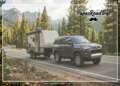
The 2025 Toyota RAV4 Hybrid towing capacity is 1,750 pounds for most trims, though the Woodland Edition is rated lower. Toyota lists the same figure for front-wheel drive and all-wheel drive. That’s lower than the gas RAV4, which can pull up to 3,500 pounds on some trims. What follows covers the real limits behind that number — tongue weight, what you can actually load, and when a RAV4 Hybrid is the wrong vehicle for the job.
What the 1,750-pound rating really means
The 2025 RAV4 Hybrid is a compact SUV that pairs a gasoline engine with electric motors. Toyota sells it in several trims, from the LE up to the Woodland Edition and XSE. Most trims share the same towing figure, so trim choice generally doesn’t buy you more pulling power.
Towing capacity is the maximum weight of a trailer, fully loaded, that the vehicle is built to pull. It includes the trailer itself plus everything on it — a boat, a pair of jet skis, camping gear, water in a tank. Toyota publishes this number in the owner’s manual and on its official RAV4 Hybrid specifications page, and that manual is the version that counts.
The rating assumes the vehicle is loaded normally: a driver, a passenger or two, and some cargo. Add a full car of adults and a trunk of luggage, and the trailer weight you can safely pull drops. That’s because the vehicle has a combined limit for what it carries and what it pulls.
Most people come to this number with one wrong idea: that a hybrid’s electric motor gives it extra pulling strength. The electric motors help with low-speed response, but the towing limit is set by the whole vehicle’s design — the frame, the brakes, the cooling system, and the hitch mounting points. A strong motor doesn’t raise the rating.
How to plan a tow with the RAV4 Hybrid
Work through these decisions in order. Each one settles the next.
- Measure your loaded trailer first. Weigh the trailer with everything on it, or add up the dry weight plus fuel, water, and gear. If the total is under 1,750 pounds, the RAV4 Hybrid is in play. Over it, stop here.
- Check the tongue weight. This is the downward push the trailer puts on the hitch ball. Aim for about 10% of the trailer weight, so roughly 175 pounds at the full 1,750. Too little and the trailer sways; too much and you overload the rear axle.
- Add up what’s inside the car. Passengers and cargo count toward the vehicle’s payload limit, which is printed on a sticker on the driver’s door jamb. Subtract that from the payload figure before you load the trunk.
- Get the right hitch. Toyota offers a genuine tow hitch for the RAV4 Hybrid. Aftermarket hitches exist too, but check the hitch’s own rating — a hitch rated for less than 1,750 pounds caps your tow, whatever the car can do.
- Add a trailer brake controller if your trailer has brakes. Many small trailers don’t, but anything near the limit benefits from working trailer brakes. Your hitch installer or trailer shop can advise.
- Check your state’s rules. Many US states require trailer brakes above a certain trailer weight, and some require extra mirrors or a permit for certain loads. Your state DMV or motor vehicle agency publishes these.
- Load the trailer nose-heavy and low. Put heavy items over the trailer axle, not at the back. A tail-heavy trailer is the most common cause of highway sway.
The judgement call that matters most is the gap between the trailer’s dry weight and its loaded weight. A trailer that’s “1,500 pounds” empty can pass 1,750 once you add water, fuel, and gear. Weigh it loaded, or leave a healthy margin — 200 to 300 pounds of headroom is sensible.
Hitch installation and trailer wiring are jobs for a trained installer. If you’re not confident with torque settings and wiring, have a shop do it.
RAV4 Hybrid towing numbers at a glance
These are the figures to keep handy when you’re matching a trailer to the car. Each one assumes a normally loaded vehicle with a driver and light cargo.
| Your situation | What to do | Figure that matters | What to watch for |
|---|---|---|---|
| Small utility trailer, empty | Fine to tow | Up to 1,750 lb loaded | Weigh it loaded, not empty |
| Single jet ski on a trailer | Comfortable tow | Typically 800–1,200 lb loaded | Water in the hull adds weight |
| Small pop-up camper | Check loaded weight first | Keep under 1,750 lb loaded | Water tanks and gear push it over |
| Two jet skis or a small boat | Likely too heavy | Often 1,800–2,500 lb | Over the limit — don’t tow |
| Full car of adults plus trailer | Reduce trailer weight | Payload sticker on door jamb | People and cargo count too |
| Tongue weight target | Aim for 10% of trailer weight | About 175 lb at full load | Too little causes sway |
| Trailer with its own brakes | Use a brake controller | Follow trailer maker’s spec | Check your state’s brake rules |
Where experienced towers get it right
The people who tow happily with a RAV4 Hybrid tend to be the ones who never get close to the limit. They pick a trailer that leaves 200–300 pounds of headroom, and they weigh it loaded before the first trip. That single habit prevents most of the trouble people run into.
They also prepare the car before hitching. Tire pressures go up to the towing figures in the owner’s manual — not the everyday pressures. They check the hitch bolts and the ball mount, and they confirm the trailer lights work before pulling away. A quick walk around the whole rig, trailer and car together, catches a loose pin or a dragging chain.
Partway through a trip, they stop and check. After the first 30 minutes or so of towing, they feel the hitch area and look at how the trailer is sitting. If the trailer looks nose-up or nose-down, the ball mount height is wrong, and that changes how the rig handles.
What they leave alone matters just as much. They don’t add heavy cargo to the back of the trailer to “balance” it — that’s how sway starts. They don’t tow in overdrive-style economy modes if the manual advises against it. And they don’t push the car hard up long grades; the hybrid system manages heat, but a sustained climb with a trailer near the limit is where it works hardest.
Common towing problems and fixes

| What you notice | What it usually means | What to do first |
|---|---|---|
| Trailer sways at speed | Too little tongue weight, or load too far back | Move weight forward over the axle |
| Rear of the car sits low | Too much tongue weight or overloaded cargo area | Recheck payload and tongue weight |
| Trailer lights don’t work | Wiring connection or blown fuse | Check the plug, then the car’s fuses |
| Car feels sluggish on hills | Trailer near or over the limit | Weigh the loaded trailer |
| Poor fuel economy while towing | Normal for any tow | Expect a real drop; plan fuel stops |
Sway that starts around highway speed and grows when you steer is almost always a loading problem. Pull over at the next safe spot rather than tapping the brakes hard. Shift the load forward, then drive a short stretch and see if it settles.
A RAV4 Hybrid that squats at the rear is telling you the tongue weight is too high for the payload you’re carrying. Move cargo from the back of the car into the trailer, ahead of the axle, and recheck both numbers.
If the lights fail only when the engine is running, suspect the car’s fuse before the trailer. If they fail every time, the plug is the likely culprit.
Rules and limits you should confirm
Toyota’s owner’s manual is the authority on what your specific RAV4 Hybrid may tow, and it lists the towing figure for your trim along with the tongue weight limit and the payload sticker location. Read the towing section before your first trip, not after.
Beyond the manual, four things are worth checking for your own case. Your state’s motor vehicle agency sets trailer brake and lighting rules, and these vary. Your insurer may want to know you’re towing, and some policies treat trailer damage differently. Your hitch maker publishes its own weight rating, which can be lower than the car’s. And the trailer manufacturer lists the trailer’s dry and maximum loaded weights.
If your trailer needs brakes wired into the car, or the hitch needs installing, that’s a job for a qualified installer — wiring mistakes can damage the car’s electrical system, and a badly torqued hitch is a safety risk.
Keeping your setup reliable
Once the hitch is on, check the bolts and the ball mount before each towing season, and again before a long trip. Look for rust, loose hardware, and wear on the ball. A worn ball lets the coupler rattle and can work loose.
Check the torque on the hitch bolts with a wrench rather than by feel. A bolt that turns a little when you lean on it’s already looser than it should be. Re-torque to the hitch maker’s figure, not to whatever feels tight.
Store the ball mount and pin somewhere dry when you’re not towing, and keep the hitch receiver covered so water and road salt don’t sit inside it. Clean the trailer lights and check them each time you hook up — a dead light is the most common reason a rig gets stopped.
After a trip, wash the trailer, especially if you’ve been near salt water with a boat. Salt left on the frame and lights is what shortens their life. Bring the setup back to normal by removing the ball mount if it blocks the rear sensors or the tailgate.
If the RAV4’s rear sensors chirp every time you back up, the ball mount is sitting in their view. Pull it and stow it rather than living with the noise.
When a RAV4 Hybrid isn’t the right tow vehicle

The RAV4 Hybrid is the wrong choice if your trailer’s loaded weight is over 1,750 pounds. A small boat, a two-jet-ski trailer, or a mid-size camper will usually exceed it. In that case, look at the gas RAV4, which Toyota rates higher on some trims, or a mid-size SUV or pickup.
Weigh the trailer loaded, not empty, and include the battery, fuel and water you actually carry. A single jet ski on a light trailer can sit under the limit; two on one trailer often will not.
It’s also the wrong choice if you tow often with a full car of people and gear. The payload left over after passengers is small, and you’ll be running near limits every trip. A larger vehicle gives you room to spare.
And it’s the wrong choice for long-distance heavy towing in mountains. The hybrid is built for efficiency, not for sustained hard pulls. If that’s your regular use, a vehicle designed for it will last longer and feel safer.
If most of your towing is a short hop to the ramp a few times a season, the hybrid is fine. If it’s a monthly trip with the whole family aboard, it isn’t.
Related guides
- Rav4 Hybrid Years to Avoid: Expert Tips Before You Buy
- Toyota Rav 4 Years to Avoid: Expert Guide to Smart Buying
Frequently asked questions
Can a 2025 RAV4 Hybrid tow a small camper?
Yes, if the camper’s loaded weight stays under 1,750 pounds. Small pop-up campers and lightweight teardrop trailers often fit. Weigh the camper with water and gear aboard before you commit — many “lightweight” campers pass the limit once loaded.
How much tongue weight can a RAV4 Hybrid take?
Aim for about 175 pounds, roughly 10% of the 1,750-pound limit. Toyota’s owner’s manual gives the exact maximum for your trim, and you should stay at or under it. Too little tongue weight causes sway; too much overloads the rear axle.
Why is the RAV4 Hybrid’s tow rating lower than the gas RAV4?
The two vehicles are built differently. Toyota rates some gas RAV4 trims up to 3,500 pounds, while the hybrid is rated at 1,750. The hybrid’s design priorities — efficiency and the hybrid system layout — set a lower limit. Check Toyota’s specs for each model before comparing.
Is it safe to tow at the full 1,750 pounds?
It’s within Toyota’s rating, so it’s allowed, but it leaves no margin. At the full limit, every extra pound of cargo in the car matters, and hills and wind feel harder. Most experienced towers stay 200–300 pounds under the limit for comfort and safety.
Do I need trailer brakes to tow with a RAV4 Hybrid?
It depends on your trailer and your state. Many small trailers have no brakes, and that’s fine at low weights. Your state motor vehicle agency sets the weight above which trailer brakes are required, and those rules differ from state to state.
How much does towing drop fuel economy on a RAV4 Hybrid?
Expect a clear drop, though the exact figure depends on trailer weight, speed, and terrain. Toyota doesn’t publish a towing fuel figure. Track your own by filling the tank before and after a tow trip and comparing miles covered to fuel used.
Can I add a tow hitch to a RAV4 Hybrid after buying it?
Yes. Toyota sells a genuine tow hitch, and aftermarket options exist. The hitch’s own rating must be at least 1,750 pounds, or it becomes your limit instead of the car’s. Have a qualified installer fit it and wire the lights.
Conclusion
Before you settle on a trim, grab your owner’s manual and check the sticker on your driver’s door jamb—those give you the exact limits for your specific build. If your trailer comes close to the edge, it’s worth renting one for a test pull first.