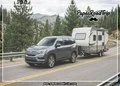
The 2017 honda pilot towing capacity is 5,000 pounds when the vehicle is properly equipped. That figure applies to every 2017 Pilot trim, from LX to Elite. You need the factory towing package, which includes a transmission cooler, a hitch receiver and a wiring harness. Without that package, Honda doesn’t rate the vehicle to tow at all. This guide covers the tongue weight limit, what changes when you carry passengers and cargo, and the setup details that keep a Pilot stable on the road.
What the 5,000-pound rating really means
The 2017 Pilot is a mid-size, three-row family SUV. Honda builds it for school runs, highway trips and light hauling. The 5,000-pound rating is the maximum weight of a fully loaded trailer, including water, gear and anything else you put inside it. It isn’t the weight of an empty trailer on the dealer’s lot.
People often think the rating is a fixed number they can use however they load the car. It isn’t. Honda rates the Pilot with a driver and one passenger aboard. Add five more people and a full cargo area, and the trailer weight you can safely pull drops. The vehicle’s gross combined weight rating sets that ceiling, and you can find it on the sticker inside the driver’s door jamb.
Honda publishes these figures in the 2017 Pilot owner’s manual, which lists the towing limits and the equipment required.
The other misconception is that all-wheel drive adds capacity. It doesn’t. Front-wheel-drive and all-wheel-drive 2017 Pilots share the same 5,000-pound rating. All-wheel drive helps with traction on a wet boat ramp, not with the number on the spec sheet.
The rating also assumes the trailer has its own brakes. Honda asks for trailer brakes on anything much past 1,500 pounds, so a 4,500-pound camper without them is outside the spec no matter what the door sticker says.
Tongue weight is the second half of the same limit. Figure roughly 10 percent of the loaded trailer on the hitch, which is about 500 pounds at the full 5,000. That weight counts against the Pilot’s payload, along with your passengers and cargo.
So run the arithmetic before you hitch up. Weigh the loaded trailer, add the tongue weight to everything in the cabin, and compare the total to the payload figure on that door jamb sticker. If it fits, you tow at 5,000. If it doesn’t, you lighten the trailer or leave people home.
One more thing: the rating covers a properly equipped Pilot. That means the hitch, the transmission cooler and the wiring Honda specifies. A base model with a hitch bolted on at a parts store isn’t the same vehicle the rating was written for.
How to set up a 2017 Pilot for towing
- Confirm the towing package is fitted. Look for the hitch receiver under the rear bumper and the 7-pin connector. If either is missing, price the factory parts before you buy the vehicle.
- Read the door jamb sticker. Note the gross vehicle weight rating and the gross combined weight rating. These two numbers decide your real limit.
- Weigh the trailer loaded. A public scale gives you the true figure. Assume the trailer weighs what the spec sheet says plus everything you added.
- Load the trailer with 10-15% of its total weight on the tongue. For a 4,000-pound trailer, that’s 400-600 pounds on the hitch. Too little causes sway; too much overloads the rear axle.
- Check the tongue weight limit. The 2017 Pilot’s hitch is rated for about 500 pounds of tongue weight with a weight-distributing setup. Confirm the exact figure for your hitch in its own paperwork.
- Add a weight-distributing hitch for trailers above roughly 3,500 pounds. It moves weight back onto the front axle and keeps the steering planted.
- Fit trailer brakes for anything heavy. Many states require brakes above a set trailer weight; check your state’s motor vehicle department rules.
- Do a short test pull. Drive 10-15 minutes on a quiet road at 45-50 mph and check for sway before you commit to a long trip.
The judgement call that matters most is tongue weight. Get it right and the Pilot tracks straight at highway speed. Get it wrong and the tail starts steering the car.
2017 Honda Pilot towing capacity at a glance
Use this table to match your load to the right setup. The figures assume the factory towing package is fitted and the vehicle isn’t overloaded with people and cargo.
| Your situation | What to use | Figure that matters | What to watch for |
|---|---|---|---|
| Light utility trailer, empty or with tools | Standard ball mount, no distribution | Up to 2,000 lb trailer weight | Check tire pressure on both vehicles |
| Small camper, 2,500-3,500 lb | Ball mount, sway bar recommended | 250-525 lb tongue weight | Rear ride height drops; check headlight aim |
| Mid-size travel trailer, 3,500-5,000 lb | Weight-distributing hitch with sway control | 350-500 lb tongue weight | Never exceed 5,000 lb loaded |
| Boat and trailer on a ramp | AWD helps traction; same rating | 5,000 lb maximum | Wet ramps reduce grip; use low gear |
| Seven passengers plus luggage | Reduce trailer weight to stay under GCWR | Check door jamb sticker | Payload runs out before towing capacity |
| Trailer with its own brakes | Trailer brake controller wired in | Varies by state law | Confirm your state’s brake requirement |
| Long highway trip in summer | Same setup, plus transmission fluid check | 5,000 lb maximum | Watch transmission temperature on long climbs |
What experienced towers get right
The first thing they do is weigh the rig, not guess it. A loaded camper almost always comes in heavier than the brochure figure. Water tanks, propane, batteries and kitchen gear add up fast. A trip to a public scale costs little and settles the question in one go.
They also load the trailer deliberately. Heavy items go over the trailer axles, low down. The front storage compartment stays light so the tongue weight lands in the right window. Then they re-check the tongue with a gauge rather than trusting their arms.
Setting up the hitch and mirrors
Weight distribution takes time to dial in. The goal is the front of the Pilot sitting at roughly its unloaded height once the trailer is hitched. Too much tension and the rear axle unloads; too little and the front goes light. Towing mirrors that extend past the trailer’s width make lane changes far less stressful.
Knowing when to stop
Experienced towers leave margin. They plan for 80-85% of the rated maximum on long trips, which for a 2017 Pilot means keeping the trailer around 4,000-4,250 pounds loaded. That margin covers steep grades, headwinds and the extra weight of a full fuel tank. They also stop every 2-3 hours to check straps, hitch pins and tire temperatures by hand.
Common towing problems and fixes

| What you notice | What it usually means | What to do first |
|---|---|---|
| Trailer sways at highway speed | Too little tongue weight or no sway control | Shift cargo forward and fit a sway-control bar |
| Rear of the Pilot sits low | Tongue weight too high or springs compressed | Re-check tongue weight; add weight distribution |
| Transmission feels sluggish on hills | Load near the limit plus a climb | Slow down and let the transmission downshift |
| Brakes feel weak on descents | Trailer has no brakes or controller isn’t set | Check the brake controller gain setting |
| Poor fuel economy, worse than usual | Normal for towing a heavy trailer | Accept it; plan fuel stops more often |
Sway that starts only above 55 mph and settles when you ease off points to loading. Sway that begins at 45 mph and builds no matter how gently you drive means the trailer is too heavy for the Pilot, and no sway bar fixes that.
A Pilot that squats level but still wanders needs an alignment check, not more spring help. Weight distribution transfers load to the front axle, so have the setup measured at a scale rather than guessed at in the driveway.
If the transmission hunts between gears on a steady climb, lock out the top gear. Constant shifting heats the fluid faster than a steady pull in a lower gear.
On long descents, drop a gear before the brakes get hot. Brakes that fade halfway down a mountain were already too hot at the top.
Rules and limits you should confirm
Honda’s own owner’s manual is the authority on what the 2017 Pilot may tow, and it states the 5,000-pound maximum with the required equipment. Beyond that, state law governs trailer brakes, maximum trailer width and lighting. Many states require brakes on trailers above a certain weight; your state’s motor vehicle department publishes the exact threshold, so look it up before you tow across state lines.
The 5,000-pound figure assumes the towing package: the transmission cooler, hitch receiver and wiring that came with the Elite and Touring trims. On an LX or EX without that equipment, the rating is lower, so check the door jamb sticker and the manual for your exact trim before you buy a trailer.
Insurance is the other thing to check. Some policies cover a trailer attached to the vehicle; others don’t. Call your insurer and ask specifically about trailer coverage and whether your premium changes. Get the answer in writing, because a claim is the wrong moment to learn your trailer was excluded.
Finally, a commercial driver’s licence isn’t needed for a 2017 Pilot and a travel trailer in normal private use. But if you’re towing for hire or the combined weight crosses your state’s threshold for a heavier vehicle class, the rules change. Your state DMV is the place to confirm.
Keeping the setup working trip after trip
After each trip, wash the hitch ball and receiver and check the pins for wear. Store the weight-distribution bars somewhere dry so the paint doesn’t rust. Re-torque the hitch bolts once a year, or sooner if you notice movement.
Check tire pressure on the Pilot and the trailer before every long drive. Trailer tires age out faster than car tires, so look at the date code on the sidewall. If the rubber looks cracked, replace it regardless of tread depth.
The sign that the setup needs attention again is sway you didn’t have before, or a hitch that clunks over bumps. Both point to worn parts or a load that has shifted. Fix them before the next trip.
On the Pilot, the rear tires carry the tongue weight and the front end unloads once the trailer is hooked up. Set pressures with the trailer attached, not before. The door-jamb sticker gives the empty-vehicle numbers.
Keep a small log of torque dates and tire date codes in the glovebox. When you trade the Pilot or sell the trailer, that page answers the buyer’s first question.
If the clunk only shows up on rough pavement and the pins look tight, re-check the ball mount for play before replacing anything. A loose mount is the cheap fix; worn bars are not.
When a 2017 Pilot isn’t the right tow vehicle
A 5,000-pound limit rules out most large travel trailers and nearly all fifth-wheel setups. If your trailer’s loaded weight lands above 5,000 pounds, you need a full-size truck or a body-on-frame SUV with a higher rating. Trying to stretch the Pilot past its limit puts the transmission, brakes and stability at risk.
Weigh the trailer loaded, with water and gear aboard, before you shop for a hitch. Dry weights printed in brochures leave out propane, batteries and everything you pack, and that gap is where people get caught.
If you tow every week for work, a Pilot isn’t built for that duty cycle. A pickup with a dedicated tow package will hold up longer and cost less to maintain over time.
And if you regularly carry seven people plus a trailer, the payload runs out before the towing capacity does. Count the weight of every passenger and every bag, then subtract it from the payload figure on the driver’s door jamb. In that case, two vehicles or a larger SUV makes more sense.
The Pilot still fits if your trailer stays under the limit and you tow a handful of weekends a season.
Related guides
- Honda Pilot Emissions System Problem: Quick Fixes
- Honda Passport Vs Pilot: Which SUV Reigns Supreme?
- Honda Pilot Transmission System Problem: Quick Fixes
Frequently asked questions
Can a 2017 Honda Pilot tow 5,000 pounds?
Yes, when it has the factory towing package and the loaded trailer stays at or under 5,000 pounds. Without that package, Honda doesn’t rate the vehicle for towing. The figure applies to every trim, front-wheel drive and all-wheel drive alike.
What’s the tongue weight limit on a 2017 Pilot?
About 500 pounds with a weight-distributing hitch, based on the hitch’s own rating. Without weight distribution, the limit is lower. Check the paperwork that came with your specific hitch, because aftermarket receivers vary.
Do I need a special package to tow with a 2017 Pilot?
Yes. The towing package adds a transmission cooler, a hitch receiver and a wiring harness. Without the cooler, the transmission can overheat on long climbs with a heavy trailer. Confirm the package is fitted before you buy a used 2017 Pilot.
How much can a 2017 Pilot tow without the towing package?
Zero, according to Honda’s rating. The vehicle isn’t rated to tow without the package. Adding an aftermarket hitch doesn’t change the manufacturer’s rating, and it may affect your warranty coverage.
Is it safe to tow 5,000 pounds with a 2017 Pilot?
It’s safe within the rating, with the right hitch setup, working trailer brakes and a load balanced at 10-15% tongue weight. Above 5,000 pounds loaded, the setup is outside Honda’s rating and stability suffers. Weigh your loaded trailer before a long trip.
How much does towing reduce fuel economy on a 2017 Pilot?
Expect a large drop, often 30-50% depending on trailer weight, speed and terrain. A lighter, more aerodynamic trailer hurts less. There’s no official figure from Honda, so track your own mpg on the first trip and plan fuel stops from that.
What happens if I tow more than 5,000 pounds with a 2017 Pilot?
You exceed the manufacturer’s rating, which stresses the transmission, brakes and suspension. It can also void warranty coverage on related parts and may breach your insurance terms. If your trailer is heavier, switch to a vehicle rated for it.
Conclusion
Before you book a trailer, check your Pilot’s door-jamb sticker for its gross vehicle weight rating and compare it against the loaded weight you plan to carry. That’s the number that’ll tell you whether you’re really ready to hitch up.