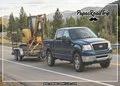
The 2015 4Runner’s towing capacity is 5,000 lb (2,268 kg) when properly equipped. That figure is the same for both the 4.0L V6 engine and every trim, from SR5 to TRD Pro. Two numbers sit under it: tongue weight tops out at 500 lb, and the total vehicle plus trailer plus cargo must stay within the Gross Combined Weight Rating (GCWR) on your door jamb. The rest of this guide covers the options that change those numbers and the checks that keep you legal.
What the 5,000 lb rating actually means
The 2015 4Runner is a body-on-frame SUV with a 4.0L V6. Toyota builds it for off-road use and family hauling, and it rates every 2015 model at 5,000 lb of trailer weight. That number comes from Toyota’s own published specification for the model year, not from a dealer’s estimate.
“Properly equipped” is the part people skip. It means you have the factory tow package or an equivalent hitch, a working trailer brake controller for heavier loads, and you haven’t gone over the weight limits on your door jamb sticker. The 5,000 lb figure assumes a driver and one passenger, not a fully loaded truck.
The common misconception is that the V6 limits you to a small trailer. It doesn’t. The 4Runner’s rating is set by the vehicle as a whole, so a 4,500 lb camper is within spec if the other numbers line up.
The rating on the brochure is a ceiling, not a target. Load the trailer, load the truck, and weigh both before a long trip.
How to check your setup before you tow
Six decisions settle whether your 2015 4Runner can pull a given trailer safely. Work through them in this order, because each one changes the next.
- Read the door jamb sticker. Find the GVWR (Gross Vehicle Weight Rating) and the GAWR for each axle. These are your hard limits, and they’re specific to your truck’s options.
- Weigh the truck as you’ll drive it. Fill the tank, add passengers and cargo, then use a public scale. Subtract that from GVWR to get your real payload left for tongue weight and gear.
- Check the trailer’s loaded weight, not its dry weight. Water, propane, batteries and gear add up fast. A trailer rated 4,800 lb dry can pass 5,000 lb loaded.
- Set tongue weight at 10–15% of trailer weight. For a 4,500 lb trailer that’s 450–675 lb, but your hitch and receiver cap it at 500 lb, so stay near the low end.
- Confirm GCWR. Toyota publishes a Gross Combined Weight Rating for the 2015 4Runner; your loaded truck plus loaded trailer must stay under it.
- Add a brake controller if the trailer has electric brakes. Most states require trailer brakes above a certain weight, and the 4Runner needs a controller wired in to use them.
The judgement call that separates a good tow from a bad one is honesty about payload. Tongue weight, passengers and cargo all eat the same GVWR budget.
If your setup needs a weight-distribution hitch or a brake controller install, a trained RV shop handles that properly. Wiring and brake setup done wrong is a safety problem, not a DIY project.
2015 4Runner towing numbers at a glance
These are the figures you’ll come back to. Each row assumes the condition in the first column, so don’t mix them.
| Your situation | What to use or do | Figure that matters | What to watch for |
|---|---|---|---|
| Any 2015 4Runner trim, properly equipped | Factory tow package or equivalent hitch | 5,000 lb max trailer weight | Rating is a ceiling, not a target |
| Tongue weight on a standard receiver | Load trailer so tongue sits at 10–15% of trailer weight | 500 lb max tongue weight | A heavy trailer pushes you past this fast |
| Trailer over roughly 3,000 lb with electric brakes | Install a brake controller | Controller must be wired and tested | Brakes that don’t engage on a downhill |
| Truck loaded with family and gear | Weigh at a public scale | GVWR from your door jamb sticker | Payload and tongue weight share one budget |
| Long trip with hills | Check GCWR before you leave | GCWR from Toyota’s spec for your model year | Combined weight creeps up with fuel and water |
| Trailer with a high, flat front | Slow down and check cooling | No published derate — use judgment | Transmission temperature climbing on grades |
| Buying a used 2015 4Runner | Confirm the hitch and wiring are factory or rated | Hitch class and receiver rating | Aftermarket hitches vary in rating |
What experienced towers get right
The people who tow without drama do one thing first: they weigh the truck loaded, before they buy or rent a trailer. That single number tells them what trailer they can actually pull, and it’s often less than the 5,000 lb headline suggests.
They also set tongue weight before the first mile, not after the trailer starts to sway. Loading heavy items over the trailer axles, and keeping the tongue near the low end of 10–15%, keeps the truck level and the steering predictable. A trailer loaded tail-heavy is the classic cause of highway sway, and no amount of driving skill fixes it.
The order they work in
Check the door jamb sticker, weigh the truck, weigh the trailer, then adjust. They confirm the brake controller works on a quiet street before merging onto a highway. They check tire pressures cold on both truck and trailer, because a soft trailer tire overheats and fails.
What they leave alone
They don’t chase the last 200 lb of capacity by stripping the truck. They don’t tow in overdrive on long grades, and they don’t add a lift kit and bigger tires without checking that the hitch height still matches the trailer coupler. A lifted 4Runner can sit too high for a standard trailer, which throws off the trailer’s level attitude and the tongue weight on the ball.
2015 4Runner towing problems and fixes

Most towing complaints trace back to weight distribution or brakes, not the truck itself. Match what you notice to the likely cause below.
| What you notice | What it usually means | What to do first |
|---|---|---|
| Trailer sways at highway speed | Too little tongue weight, or cargo loaded behind the trailer axles | Move weight forward over the axles and re-check tongue weight |
| Truck feels light in the front | Tongue weight too high, or the truck is overloaded | Weigh the setup and shift cargo back |
| Brakes feel weak going downhill | Controller gain set too low, or trailer brakes not engaging | Test the controller on a quiet street and raise the gain |
| Transmission temperature climbing on a grade | Working the truck hard in a high gear | Shift down, slow to a steady speed, and let the engine cool |
| Trailer lights don’t work | Wiring harness connection or a blown fuse | Check the connector pins and the truck’s tow fuse |
Rules and limits you should confirm
Toyota publishes the towing capacity, GVWR, GAWR and GCWR for the 2015 4Runner, and those figures on your own truck’s door jamb sticker override any brochure number. Toyota’s 2015 4Runner specifications list the model-year ratings, and the sticker on the driver’s door jamb gives your specific build.
State rules on trailer brakes and speed limits vary. Many states require trailer brakes above a set weight, and some set a lower speed limit for vehicles towing. Check your state’s driver or motor vehicle agency for the exact rule where you live.
Your insurance policy may also have conditions on towing, so confirm coverage with your insurer before a long trip. If you’re unsure whether your setup is legal, a licensed RV dealer or a weigh station can confirm it. Getting this wrong can cost you a fine, a denied claim, or worse.
Keeping the setup safe over time
Once your rig is dialed in, write the numbers down. Record the loaded truck weight, the loaded trailer weight, the tongue weight and the brake controller gain in a note you keep in the glovebox. Next trip, you start from a known setup instead of guessing.
Re-weigh whenever something changes: a new trailer, added cargo, a different passenger load, or a lift kit and bigger tires. Those changes move the numbers, and the old settings no longer apply.
Larger tires on the 4Runner are the change most often missed. A bigger diameter raises the truck’s ride height and changes how the trailer sits, so the hitch height and trailer attitude you recorded before the swap no longer apply. Weigh again after the tires go on, not before.
Check tire pressures cold before every trip, on both truck and trailer. Look at the brake controller’s display for faults, and test the trailer brakes at low speed before you get on a highway. If the trailer starts to sway, stop and re-check the load rather than driving through it.
Keep the note in the glovebox and update it the same day you change anything. A setup sheet that’s two trips out of date is worse than none, because you’ll trust it.
When the 4Runner isn’t the right tow vehicle

The 2015 4Runner is the wrong choice for a trailer over 5,000 lb loaded, full stop. A travel trailer with a dry weight near 4,800 lb will pass that limit once you add water, propane and gear. For those, a full-size truck with a higher rating is the honest answer.
It’s also a poor fit for frequent long-distance towing in mountains. The V6 works hard on grades, and a heavier truck handles that load with less strain. If most of your towing is cross-country, look at a truck rated for the job.
Finally, skip the 4Runner if you need to tow near the limit with a full family and cargo. The payload budget runs out before the trailer rating does, and a lighter trailer or a bigger truck solves it.
Weigh your setup at a public scale before you decide. Load the 4Runner as you would for a trip, fill the tank, and put the trailer on the scale too. The tongue weight, passengers and gear count against payload, not against the 5,000 lb trailer figure.
If the scale ticket leaves you a few hundred pounds of payload to spare, the 4Runner is fine for weekend trips. If it leaves you nothing, no hitch setup fixes that.
Two mistakes cost people here. Buying a trailer on its dry weight alone is the common one. The other is adding airbags or a weight-distributing hitch to a rig that’s already over on payload. Neither raises the rating on the door jamb.
Related guides
- Do Airbags Increase Payload Capacity
- Plastic Cover Under Car Fell Off: Quick Fixes!
- What is H2, H4, and L4 in 4Runner: Unlocking Modes
Frequently asked questions
Can a 2015 4Runner tow 5,000 lbs?
Yes, when properly equipped. Toyota rates every 2015 4Runner trim at 5,000 lb of trailer weight, assuming a factory or equivalent hitch, a working brake controller for heavier trailers, and a setup that stays within your truck’s GVWR, GAWR and GCWR. The loaded trailer, not the dry weight, has to stay at or under that figure.
How much tongue weight can a 2015 4Runner handle?
500 lb, with a standard receiver and a properly equipped setup. Tongue weight should sit at 10–15% of trailer weight, so a 4,500 lb trailer needs 450–675 lb of tongue weight — which means you stay near the low end to keep under the 500 lb cap. Check your own hitch’s label, because aftermarket hitches vary.
Do I need trailer brakes to tow with a 2015 4Runner?
For most trailers above roughly 3,000 lb, yes. Many states require trailer brakes above a set weight, and the 4Runner needs a wired brake controller to operate electric trailer brakes. Check your state motor vehicle agency for the exact threshold where you live, and have a shop install and test the controller.
Why does my trailer sway behind my 4Runner?
Usually too little tongue weight or cargo loaded behind the trailer axles. Move heavy items forward over the trailer axles, aim for tongue weight near 10% of trailer weight, and keep the truck level. If sway continues, stop and re-check the load rather than driving through it — sway gets worse, not better, with speed.
Is it safe to tow at the full 5,000 lb rating?
It can be, but only if every other number lines up. The 5,000 lb figure assumes you stay within GVWR, GAWR, GCWR and the 500 lb tongue weight cap, with a working brake controller. A loaded truck with a full family often runs out of payload before it reaches 5,000 lb of trailer, so weigh your setup first.
What happens if I tow more than the 2015 4Runner’s rating?
You risk brake fade, transmission overheating, poor handling and legal trouble. Going over the rating can also complicate an insurance claim for an incident and may break state law. If your trailer’s loaded weight is over 5,000 lb, use a vehicle rated for it rather than pushing the 4Runner past its limit.
How do I find my 2015 4Runner’s exact weight limits?
Read the driver’s door jamb sticker for GVWR and GAWR, then check Toyota’s published GCWR for your model year. Weigh the loaded truck at a public scale to find your real payload. Those three figures, not the brochure, decide what your specific 4Runner can safely tow.
Conclusion
Before your next trip, load the truck and trailer the way you’ll actually travel, then hit a public scale to confirm you’re within limits. It’s a quick stop that settles any doubt, and you’ll head out knowing your setup is sound.