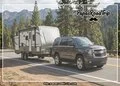
The 2024 Subaru Ascent is rated to tow up to 5,000 pounds when properly equipped, and that figure holds steady across every trim from the base model to the Touring. Payload capacity lands in the 1,400–1,600 pound range depending on trim and options, which is the number that actually limits most families once passengers and cargo climb aboard. Below is everything you need to match a trailer to the Ascent, load it safely, and understand where the SUV runs out of margin.
Key Takeaways
- Every 2024 Ascent trim tows 5,000 pounds with the factory hitch; there’s no tow-package upgrade that raises the rating.
- The Ascent requires premium 91-octane fuel when towing, per Subaru’s owner’s manual, so budget for that on road trips.
- Payload (1,400–1,600 pounds) usually runs out before towing capacity does — subtract tongue weight, passengers, and gear before you hitch up.
- A weight-distributing hitch is strongly recommended above roughly 3,500 pounds of trailer weight to keep the rear axle and steering stable.
- Tongue weight should land at 10–15 percent of loaded trailer weight, and the Ascent’s hitch receiver is rated for 500 pounds of tongue weight.
- The Ascent is a comfortable 3,000–4,000 pound tow vehicle (small campers, utility trailers, jet skis) but works hard at its 5,000-pound ceiling.
How Much the Subaru Ascent Can Tow
Subaru rates the Ascent at 5,000 pounds maximum towing capacity across all trim levels — Base, Premium, Onyx Edition, Limited, Onyx Edition Limited, and Touring. Unlike some competitors that gate the full rating behind an optional tow package, the Ascent’s rating is the same whether you buy the cheapest trim or the most expensive one. What varies is how much equipment comes standard.
Every Ascent leaves the factory with a 2.4-liter turbocharged flat-four engine producing 260 horsepower and 277 lb-ft of torque, paired with a continuously variable transmission and standard all-wheel drive. That powertrain is what the 5,000-pound rating is built around, and Subaru doesn’t offer a larger engine or a heavy-duty cooling upgrade.
What’s Included on Every Trim
- Hitch receiver pre-wired with a 7-pin connector on most configurations (check window stickers — some early builds needed the dealer-installed accessory)
- Trailer stability assist, integrated with the stability control system
- Hill descent control and X-Mode for low-speed traction on loose surfaces
- Rearview camera with a hitch-zone guideline overlay
Where Trims Differ for Towing
Higher trims add conveniences rather than capability: a surround-view camera on Limited and Touring, a power-folding third row, and different wheel sizes. Heavier wheels and extra features nibble at payload, which is why the Touring typically carries the lowest payload number in the lineup. If you plan to tow near the limit with a full family aboard, a mid-tier Premium or Onyx often leaves more usable payload than a loaded Touring.
Ascent Towing Specs at a Glance
| Specification | Figure | Notes |
|---|---|---|
| Maximum towing capacity | 5,000 lb | All trims, properly equipped |
| Maximum tongue weight | 500 lb | Hitch receiver rating |
| Payload capacity | 1,400–1,600 lb | Varies by trim and options |
| Engine | 2.4L turbo flat-four | 260 hp / 277 lb-ft |
| Transmission | CVT | With manual mode and paddle shifters |
| Fuel requirement while towing | Premium (91 octane) | Per owner’s manual |
| Gross combined weight rating | About 10,000 lb | Vehicle + trailer + all cargo |
| Seating | 7 or 8 | Second-row captain’s chairs optional |
The gross combined weight rating (GCWR) is the ceiling for the whole rig — SUV, trailer, fuel, passengers, and gear combined. With a curb weight around 4,500 pounds and a 5,000-pound trailer, you’re close to the GCWR before you add a single passenger, which is why the payload math below matters so much.
Payload: The Number Most Owners Miss
Towing capacity gets the headlines, but payload is what actually strands families at the scales. Payload is everything the Ascent carries: passengers, pets, coolers, roof-box contents, and the tongue weight of the trailer. Open the driver’s door jamb and read the yellow Tire and Loading Information placard — that’s your vehicle-specific payload, and it’s the only number that matters for your particular Ascent.
Here is the math with a typical 1,500-pound payload:
| Item | Weight |
|---|---|
| Two adults | 340 lb |
| Two children | 140 lb |
| Cooler, bags, snacks | 120 lb |
| Dog and crate | 80 lb |
| Roof box contents | 50 lb |
| Remaining for tongue weight | 770 lb |
That looks generous — until you realize a 5,000-pound trailer at 12 percent tongue weight puts 600 pounds on the hitch. You’re now within 170 pounds of the limit, and that’s before anyone throws a bike on the back. A 3,500-pound camper at 12 percent tongue weight (420 pounds) leaves far more breathing room and is the sweet spot for most Ascent owners.
Pro Tip: Weigh your loaded rig at a public scale — one axle at a time — before your first big trip. A $15 CAT scale ticket tells you more about your actual margins than any brochure spec.
What the Ascent Tows Well

The Ascent shines in the 2,500–4,000 pound window. Owners routinely report comfortable, confident pulls with:
- Small travel trailers — 16 to 20 feet, single axle, around 3,000–3,800 pounds loaded (R-Pod, No Boundaries, Geo Pro, and similar lightweight fiberglass models)
- Pop-up campers — typically 1,500–2,500 pounds, nearly effortless
- Utility and landscape trailers — 5×8 to 6×12 single-axle, 1,500–3,000 pounds
- Boat trailers — aluminum fishing boats and small runabouts up to about 3,500 pounds
- Jet skis and personal watercraft — usually under 1,500 pounds with trailer
- Dirt bike and ATV trailers — two to three bikes on a folding trailer
The turbocharged engine’s 277 lb-ft of torque arrives low in the rev range, which is exactly what you want for pulling away from a stop with a trailer attached. The CVT holds ratios well under load, though it will keep engine rpm high on long grades — that’s normal behavior, not a fault.
Where the Ascent Runs Out of Margin
At the full 5,000 pounds, the Ascent works hard. Realistic limits show up in four places:
- Frontal area. Subaru specifies a maximum frontal area for the trailer (check your owner’s manual supplement); tall, flat-fronted travel trailers push more air than the turbo four likes at highway speed.
- Payload. As shown above, a tongue-heavy trailer plus a full family can exceed the placard.
- Fuel range. Expect roughly 10–13 mpg towing, which means fuel stops every 200 miles or so with the 19.3-gallon tank.
- Braking and cooling. The Ascent has trailer brakes wired through the 7-pin connector, and you should use them — a 5,000-pound trailer without its own brakes will overwhelm the SUV’s brakes on a mountain descent.
Warning: Don’t exceed 5,000 pounds by “feeling it out.” The rating accounts for braking, cooling, and structural limits, and an overloaded CVT-equipped SUV on a hot grade is how transmissions die early. If your trailer’s gross weight creeps toward 5,000 pounds loaded, move up to a body-on-frame tow vehicle.
Setting Up Your Ascent to Tow
Proper setup is what separates a relaxed 400-mile day from white-knuckle sway. Work through these steps in order:
1. Confirm the hitch and wiring
Most Ascents come with the receiver and 7-pin harness; if yours has only the bumper cutout, the dealer sells the genuine accessory hitch and harness. Aftermarket Class III receivers from Curt and Draw-Tite are widely available and rated for the same 5,000/500 figures.
2. Add a brake controller
The Ascent doesn’t have an integrated trailer brake controller. You need an aftermarket unit — Tekonsha Prodigy and Redarc Tow-Pro are the common choices — wired to the 7-pin harness. Any trailer over about 1,500 pounds should have its own brakes, and the controller is what makes them work progressively.
3. Choose the right ball mount and hitch
For trailers under roughly 3,500 pounds, a standard ball mount with the correct drop works fine. Above that, use a weight-distributing hitch (Equal-i-zer and Blue Ox are proven names) to spread tongue weight across both axles and level the SUV. Pair it with a friction sway-control bar if the trailer is long or tall.
4. Load the trailer correctly
Put heavy items over the trailer’s axles, keep 10–15 percent of total weight on the tongue, and secure everything so nothing shifts. A tail-heavy trailer will sway no matter how good your hitch is.
5. Adjust the SUV
Inflate tires to the pressures on the placard (often higher in the rear when towing — check the manual), switch on X-Mode for loose surfaces, and use the CVT’s manual mode to hold a lower ratio on descents so engine braking assists the trailer brakes.
Towing Capacity vs. Close Competitors
| Vehicle | Max Tow Rating | Engine | Notes |
|---|---|---|---|
| Subaru Ascent | 5,000 lb | 2.4L turbo flat-four | Standard AWD on all trims |
| Toyota Grand Highlander | 5,000 lb | 2.4L turbo | Similar mission, similar limit |
| Honda Pilot | 5,000 lb | 3.5L V6 | Requires tow package for full rating |
| Kia Telluride | 5,000 lb | 3.8L V6 | 5,500 lb with tow package on some years |
| Ford Explorer | 5,000–5,600 lb | 2.3L turbo / 3.0L turbo | Rating varies by engine |
| Chevrolet Traverse | 5,000 lb | 2.5L turbo | Tow package required |
The pattern is clear: the three-row crossover class clusters around 5,000 pounds, and the Ascent is squarely mid-pack. If you need 6,000+ pounds, you’re shopping full-size SUVs or trucks. The Ascent’s differentiator is standard symmetrical all-wheel drive and a low-mounted flat-four that gives it a planted feel with a trailer attached.
For the definitive word on ratings and required equipment, Subaru’s own towing guide and owner’s manuals list the figures by model year and trim.
Maintenance and Real-World Costs
Towing accelerates wear, and the Ascent’s maintenance schedule reflects it. Budget for these:
- Oil changes every 6,000 miles normally; shorten to about 3,000–4,000 miles during heavy towing seasons
- CVT fluid inspection at 30,000-mile intervals, with many dealers recommending a drain-and-fill by 60,000 miles on tow-heavy vehicles
- Brake pads and rotors — expect rear pads to wear faster when the trailer brake controller is set too low
- Coolant and differential fluid checks before any long summer trip with a trailer
- Premium fuel — the manual calls for 91 octane while towing, roughly $0.60–$0.90 more per gallon than regular in most markets
A dealer-installed hitch and harness, if your Ascent lacks them, typically runs $600–$1,000 parts and labor. An aftermarket receiver plus wiring runs $250–$450 installed. A brake controller adds $150–$300, and a weight-distributing hitch setup runs $400–$800 depending on brand and bars.
Related guides
- Subaru Outback Towing Problems: Common Issues and Solutions
- Subaru Ascent Years to Avoid: Expert Guide for Smart Buyers
- Subaru Outback Window Stuck Down: Quick Fixes to Try Now
Frequently Asked Questions
Can the Subaru Ascent really tow 5,000 pounds?
Yes — Subaru rates every 2024 Ascent trim at 5,000 pounds with the factory hitch and 7-pin wiring. That said, payload, tongue weight, and frontal area limits mean a 5,000-pound trailer leaves almost no margin for passengers and gear. Most owners are happier below 4,000 pounds.
Does the Ascent need a special tow package?
No. Unlike the Honda Pilot or Chevrolet Traverse, the Ascent’s 5,000-pound rating doesn’t depend on an optional package. You need the hitch receiver, 7-pin harness, and an aftermarket brake controller for trailers with brakes. Everything else — cooling, alternator, AWD — is standard.
What is the tongue weight limit on a Subaru Ascent?
The hitch receiver is rated for 500 pounds of tongue weight. Aim for 10–15 percent of your loaded trailer weight on the tongue, which means a 5,000-pound trailer at 12 percent puts 600 pounds on the hitch — over the limit. Keep loaded trailer weight near 4,000 pounds to stay legal and stable.
Can the Ascent tow a travel trailer?
Yes, within limits. Lightweight fiberglass trailers in the 16–20 foot range weighing 3,000–3,800 pounds loaded are the sweet spot. Check the trailer’s frontal area against Subaru’s specification, use a weight-distributing hitch, and confirm your payload math with a full family aboard before buying.
What octane fuel does the Ascent need while towing?
Subaru’s owner’s manual specifies premium unleaded of at least 91 octane when towing. Regular fuel is acceptable for normal driving, but the engine is tuned to resist knock under sustained load with premium. Skipping it while towing risks reduced power and long-term engine stress.
How much can the Ascent carry inside while towing?
Payload ranges from roughly 1,400 to 1,600 pounds depending on trim, and tongue weight counts against it. Subtract the trailer’s tongue weight first, then passengers and cargo. A family of four plus a 500-pound tongue load typically leaves only a few hundred pounds for luggage.
Conclusion
The smartest next step is to open your Ascent’s driver’s door, photograph the yellow payload placard, and write down that number — then weigh your intended trailer loaded before you sign anything. Matching those two figures, not the brochure’s 5,000-pound headline, is what keeps your Ascent towing happily for 200,000 miles.