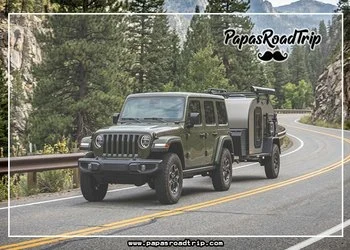
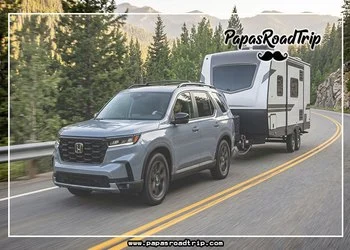
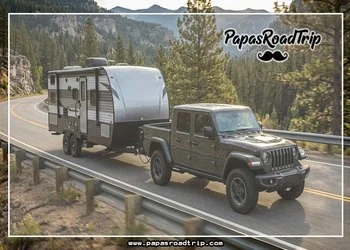
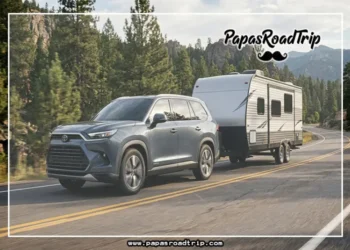
The Grand Highlander Hybrid towing capacity is 5,000 pounds for every trim, whether front-wheel-drive or all-wheel-drive. That figure applies across the LE, XLE, Limited and Platinum when the towing package is fitted.
What the rating really means
The 5,000-pound figure is the maximum weight of a fully loaded trailer the vehicle is built to pull. It includes the trailer, everything inside it, water in the tanks, and gear strapped on top. It isn’t the weight of an empty trailer you can then fill up.
Toyota builds the Grand Highlander Hybrid as a family three-row SUV, and the towing rating sits in the middle of the class. It’s enough for a small travel trailer, a boat, a pair of jet skis or a utility trailer with a lawn tractor. It isn’t enough for a large fifth-wheel or a heavy horse trailer.
The misconception people bring is that the hybrid system weakens towing. It doesn’t change the rating. The electric motor actually adds low-end pull, which helps when you start from a stop on a ramp. The limit comes from the chassis, the cooling system and the brakes, not the battery.
One rule is worth knowing before anything else: the towing rating and the payload rating are separate limits, and you must stay under both at the same time. A trailer that sits right at 5,000 pounds leaves very little room for passengers and cargo in the SUV itself.
How to set up the Grand Highlander Hybrid for towing
- Check your door jamb sticker first. It lists the payload limit for your exact vehicle. Subtract the weight of every person and every item you’ll carry, and what’s left is the tongue-weight budget.
- Keep tongue weight between 10% and 15% of the trailer weight. For a 4,000-pound trailer, that’s 400 to 600 pounds on the hitch. Too little causes sway; too much overloads the rear axle.
- Fit the correct hitch. Use a Class III hitch rated for at least 5,000 pounds, and a ball mount that matches your trailer coupler size. A mismatch here is a common and dangerous error.
- Add a weight-distributing hitch above roughly 3,500 pounds of trailer. It spreads load across both axles and keeps the front end planted. Toyota’s own guidance ties the full rating to proper equipment.
- Wire the trailer brakes. Any trailer over about 3,000 pounds needs its own brakes in most US states, and the vehicle needs a brake controller. Check your state’s rule, because the threshold varies.
- Load the trailer evenly. Put heavy items over the trailer axles, not at the back. A tail-heavy trailer sways at highway speed.
- Test at low speed first. Drive a quiet road at 30 mph, brake firmly, and feel for sway or push before you join a highway.
The single judgement call that separates a good tow from a bad one is honesty about total weight. Load the trailer, then weigh it at a public scale. Most people guess low, and a guess is what turns a safe setup into an overloaded one.
Grand Highlander Hybrid towing numbers at a glance
The figures below cover the situations owners actually face. Every number assumes the standard factory hitch setup and a properly loaded trailer.
| Your situation | What to use or do | The figure that matters | What to watch for |
|---|---|---|---|
| Small utility trailer | Standard ball mount, no distribution | Up to 2,000 lb trailer | Light tongue weight causes bouncing |
| Boat or jet ski trailer | Class III hitch, check surge brakes | 3,000–4,000 lb typical | Wet ramp traction on AWD models |
| Small travel trailer | Weight-distributing hitch | 3,500–5,000 lb | Tongue weight climbs fast with propane and water |
| Trailer near the full rating | Distribution hitch plus trailer brakes | 5,000 lb maximum | Payload left for people drops sharply |
| Seven passengers aboard | Weigh everything before you go | Payload limit on door sticker | People eat the tongue-weight budget |
| Steep mountain roads | Lower gear, slower speed | Reduce speed on descents | Brake fade on long downhill runs |
| Front-wheel-drive trim | Same rating, less traction | 5,000 lb | Wheel slip on gravel or wet ramps |
What experienced towers get right
The detail that separates a calm tow from a white-knuckle one is preparation before the trailer is attached. People who tow often check tire pressure on both vehicle and trailer cold, in the morning, before any driving. Under-inflated trailer tires are a leading cause of blowouts and sway.
They also load in a fixed order. Heavy gear goes in first, over the trailer axles. Light gear goes last, near the doors. Water tanks stay empty until they reach the campsite, because a full fresh tank can add hundreds of pounds in the wrong place.
The checks partway through
On the road, experienced towers stop after the first 20 to 30 minutes and put a hand on each trailer hub and tire. A hub that’s hot to the touch means a bearing or brake problem. They also re-check the hitch and safety chains at that stop, because things settle once the trailer has moved.
They leave the vehicle’s drive mode alone. Towing mode, where fitted, holds gears longer and reduces hunting between gears, but it doesn’t raise the rating. They also leave the trailer’s own brake setting slightly conservative until they feel how the combination behaves.
The Grand Highlander Hybrid rewards this routine more than most rigs, because its rating is generous but not unlimited. A common mistake is treating the published maximum as a target. That number is the trailer weight limit, and passengers and cargo come out of payload separately.
Every passenger and every pound in the cargo area comes off the payload allowance, which the tongue weight also draws on. A family of five with a loaded cargo bay can lose several hundred pounds of towing room before the trailer is even hitched.
So weigh the setup loaded, once, at a public scale. If the combined weight is close to the limit, take gear out rather than adding it to the trailer. If it’s well under, load for comfort instead.
Grand Highlander Hybrid towing problems and fixes

| What you notice | What it usually means | What to do first |
|---|---|---|
| Trailer sways side to side | Too little tongue weight or load too far back | Move weight forward, then re-weigh |
| Rear of the SUV sits low | Tongue weight over the limit | Add a weight-distributing hitch |
| Brakes feel weak downhill | Trailer brakes not working or set too low | Check the brake controller gain setting |
| Steering feels light | Front axle unloaded by tongue weight | Re-check distribution hitch setup |
| Overheating warning on a climb | Cooling system working hard under load | Slow down, drop a gear, pull over safely |
Sway that starts above 55 mph and builds is usually tongue weight, not the hitch. Pull over and shift cargo forward before you touch anything else.
A weight-distributing hitch fixes a low rear end, but it doesn’t raise the tongue weight rating. If the scale still reads over, the trailer is too heavy for the Grand Highlander Hybrid and no hitch will change that.
Set the brake controller gain in an empty lot, not on the ramp. Start low, test at low speed, and raise it until the trailer brakes engage firmly without locking the wheels.
The overheating warning is the one to respect. The hybrid’s cooling system is working at its limit on a long grade with a trailer, and slowing down early costs you minutes. Ignoring it costs you a tow.
Rules and limits you should confirm
Toyota’s published rating is the starting point, but the legal side belongs to your state. Most US states require trailer brakes above a certain weight, and that threshold differs from state to state. Check your state’s department of motor vehicles or highway patrol website for the exact figure that applies to you.
Your insurance policy is the second thing to confirm. Some policies cover a trailer only if it’s declared, and a claim after an undeclared tow can be refused. Call your insurer and ask directly. Ask two questions: whether the trailer has to be listed on the policy, and whether the Grand Highlander’s own coverage changes while it’s towing. Get the answer in writing, by email if you can. A phone answer is hard to produce at claim time.
The third item is your driver’s licence. A heavy trailer may need a different class in some states. The NHTSA publishes general trailer safety guidance, but the licence rule is set by your state.
If your setup needs welding, brake wiring or a custom hitch fabrication, that’s a job for a qualified hitch shop. Doing it yourself risks a failure at speed that no warranty will cover.
One more number to settle before you book anything: the tongue weight. It counts against the Grand Highlander’s payload, along with passengers and cargo, not against the tow rating. Load the car as you would for the trip and weigh it at a public scale if you’re close to the limit.
Keeping your tow setup sound
After each trip, wash the hitch receiver and ball mount and wipe them dry. Grease the ball lightly before the next tow, and check the hitch bolts for looseness with a wrench. A bolt that works loose over a season is one of the quiet causes of hitch failure.
Check the bolts again after the first tow of the season, since that’s when a fastener that was never fully torqued shows itself. If a bolt needs tightening twice, replace it rather than keep chasing it.
Store the weight-distributing bars and pins in one box so nothing goes missing between trips. Check the trailer tires for cracks in the sidewall before every season, and replace them when the tread wears to the wear bars.
Bring the setup back into shape by re-weighing the loaded trailer at the start of each season. Trailer weight creeps up as gear accumulates, and last year’s safe load may not be this year’s. Weigh it loaded, with the water tank and gear you actually travel with, not empty.
If the tongue weight has climbed since last season, move gear back over the trailer axles to bring it into range.
When the Grand Highlander Hybrid isn’t the right tow vehicle
If your trailer weighs more than 5,000 pounds loaded, this vehicle isn’t the right choice. Step up to a body-on-frame truck or a full-size SUV with a higher rating. Guessing that “a bit over” is fine is how axles and brakes get overloaded.
Weigh the trailer loaded, with water and gear aboard, before you decide. A 4,800-pound trailer that gains 400 pounds of water and supplies is over the line, and the door-jamb sticker won’t tell you that.
If you plan to tow a large travel trailer across mountain passes every summer, the hybrid’s rating leaves no margin. A diesel or a heavy-duty gasoline truck handles sustained climbs and descents far better.
If you need to carry seven people and tow at the same time, the payload math rarely works. In that case, use two vehicles or choose a larger tow rig with a higher payload figure.
Count the weight of every passenger and every bag against payload, not against towing capacity. The two numbers are separate, and the smaller one usually runs out first.
Related guides
Frequently asked questions
Can the Grand Highlander Hybrid tow 5,000 pounds with a full load of passengers?
No, not safely. The 5,000-pound trailer rating and the payload rating are separate limits you must both respect. Seven adults plus luggage can use most of the payload, leaving little for tongue weight. Weigh your passengers and gear, check the door sticker, and reduce the trailer load to stay under both figures.
Does the hybrid battery reduce towing capacity?
No. The rating is the same 5,000 pounds on the hybrid as on the gasoline version. The electric motor adds low-speed torque, which helps when pulling away from a stop. The limit comes from the chassis, cooling and brakes, not from the battery being charged or empty.
How much tongue weight can it handle?
Between 500 and 750 pounds, based on 10% to 15% of the 5,000-pound maximum. That range assumes the trailer is loaded evenly and the hitch is rated for it. For a lighter trailer, scale the figure down — a 3,000-pound trailer wants 300 to 450 pounds on the ball.
Is it safe to tow at the full 5,000 pounds?
Yes, if the trailer has working brakes, you use a weight-distributing hitch, and you stay under the payload limit. The rating assumes the correct equipment is fitted. Towing at the maximum with a bare ball mount and no trailer brakes isn’t what the rating covers.
What happens if I tow more than the rating?
You overload the axles, brakes and cooling system, and you may exceed your legal and insurance limits. Handling gets worse, stopping distances grow, and a claim after a crash can be refused. The rating is a ceiling, not a target, and staying under it’s the whole point.
How often should I check the hitch and trailer?
Before every trip, and again after the first 20 to 30 minutes on the road. Check hitch bolts, safety chains, tire pressure and hub temperature. A hub that’s hot to the touch signals a bearing or brake problem that needs attention before you continue.
Conclusion
Before you book a trailer rental, check your owner’s manual for the exact tongue-weight limit and confirm your hitch setup matches it. If you’re still comparing SUVs, line up a test drive and ask the dealer to show you the towing package in person—it’s the easiest way to see what you’re actually getting.