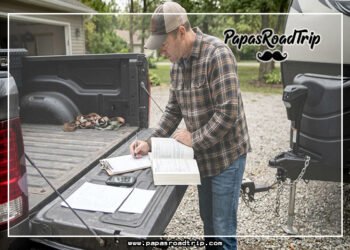
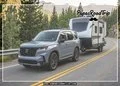
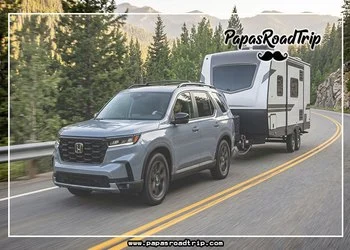
The 2023 Honda Pilot towing capacity is 5,000 pounds on all-wheel-drive models when the vehicle is properly equipped, and 3,500 pounds on front-wheel-drive versions. That figure applies to the Elite and the TrailSport too, so no all-wheel-drive version of the Pilot tows more than another. Honda lists 5,000 pounds for the AWD models and 3,500 pounds for the front-wheel-drive versions, so check your drivetrain first. Below you’ll find the full numbers, the equipment that makes them real, and the mistakes that cut a Pilot’s safe pull well below its rating.
What the 5,000-pound rating really means
The rating is a maximum, not a promise. Honda sets it for a Pilot with the right equipment fitted and a light load inside the cabin. Load the trunk with passengers and gear, and the weight you can still tow drops. That’s the part people miss.
Towing capacity works with two other limits: gross vehicle weight rating (GVWR) and gross combined weight rating (GCWR). GVWR is the most the Pilot itself can weigh, including people and cargo. GCWR is the most the Pilot plus the trailer can weigh together. Honda prints both on the driver’s door jamb label. If you’re near either number, you’re over — even when the trailer alone sits under 5,000 pounds.
The Pilot is a mid-size three-row SUV. It suits families pulling a small camper, a boat, or a utility trailer. It isn’t a heavy-duty tow vehicle. People often assume the TrailSport’s off-road kit adds pulling power. It doesn’t. The rating stays the same across trims.
Honda publishes the full figures in the owner’s manual and on the 2023 Pilot specifications page. Check your own door label before you hitch anything.
The Pilot towing setup, step by step
Honda doesn’t fit a hitch receiver as standard on every 2023 Pilot, so the first job is often buying and fitting one. Work through these in order and the numbers stay honest.
- Confirm your drivetrain. All-wheel drive gives you the full 5,000 pounds. Front-wheel drive gives 3,500 pounds. This is fixed — you can’t add AWD later.
- Fit a Honda-approved hitch and wiring. Use a Class III receiver rated for at least 5,000 pounds, plus a 7-pin or 4-pin harness matched to your trailer. A hitch rated below the car’s limit becomes the new limit.
- Add a weight-distributing hitch if the trailer is over about 3,500 pounds. It spreads tongue weight across both axles and keeps the rear from squatting.
- Check tongue weight. Aim for 10–15% of the loaded trailer weight. For a 4,000-pound trailer that’s 400–600 pounds on the ball.
- Weigh the loaded car. Fill the tank, load your people and gear, and weigh it. Compare against the GVWR on the door label.
- Weigh the loaded trailer. A trailer full of water, fuel or firewood often weighs far more than the brochure said.
- Check both against GCWR. If car plus trailer together pass the GCWR, lighten the load before you drive.
- Do a test pull at low speed. Brake, turn and reverse in an empty lot before you take it on a highway.
The judgement call that decides everything is tongue weight. Too little and the trailer sways at speed. Too much and the rear axle and hitch carry more than they should.
If your trailer needs electric brakes or a brake controller, that’s a job for a qualified hitch shop — wiring it wrong can leave you without trailer brakes when you need them most.
2023 Honda Pilot towing capacity at a glance
Use this table to find your situation, then read the figure beside it. Every number assumes the Pilot is loaded within its door-label limits.
| Your situation | What to use or do | Figure that matters | What to watch for |
|---|---|---|---|
| All-wheel-drive Pilot, properly equipped | Class III hitch, weight-distributing hitch over 3,500 lb | 5,000 lb max trailer weight | Stays 5,000 lb on every AWD trim, including TrailSport |
| Front-wheel-drive Pilot | Same hitch setup | 3,500 lb max trailer weight | No upgrade path — the drivetrain sets it |
| Trailer around 4,000 lb | Weight-distributing hitch | 400–600 lb tongue weight (10–15%) | Too little tongue weight causes sway |
| Small utility trailer, under 1,500 lb | Standard ball mount | Tongue weight 150–225 lb | Still check the door-label payload |
| Family of 6 plus full cargo | Lighten the load or the trailer | GCWR on the door label | People and gear eat into what you can tow |
| Boat with surge brakes | Confirm brake type before hitching | Trailer brake type must match your setup | Surge brakes need no controller; electric ones do |
| Steep mountain roads | Reduce trailer weight below the max | Stay well under the 5,000 lb max | Long grades stress brakes and cooling |
The 5,000-pound figure assumes a properly equipped vehicle with a properly loaded trailer. Climbing long grades with a full load, cut the trailer weight and give yourself more room.
What careful towers get right
The people who tow well do the boring parts first. They read the door jamb label before they buy a trailer, not after. They weigh the loaded car at a public scale, because guessing the weight of six people, a cooler and a full tank is where most setups go wrong. And they set tongue weight with a scale, not by eye.
They also match the hitch to the job. A receiver rated for 5,000 pounds with a 500-pound tongue limit is fine for a 4,000-pound trailer at 12% tongue weight. It isn’t fine for a 5,000-pound trailer loaded toward the front. The lower of the two ratings — car or hitch — always wins.
Partway through loading, they re-check. Adding a full water tank to a camper can push a trailer over its limit in minutes. A quick re-weigh before pulling out catches that.
What they leave alone matters too. They don’t add a lift kit or oversized tires and expect the rating to hold — suspension and tire changes can alter how the Pilot handles a load, and Honda’s rating assumes the stock setup. They don’t tow in overdrive on long climbs. And they don’t trust a seller’s word on trailer weight; they weigh it.
Common towing problems and fixes
Most towing trouble shows up as a feeling behind the wheel. Match what you notice to the likely cause and the first thing to check.
| What you notice | What it usually means | What to do first |
|---|---|---|
| Trailer sways side to side at speed | Too little tongue weight | Move cargo forward to raise tongue weight toward 10–15% |
| Rear of the Pilot sags heavily | Tongue weight too high or no weight-distributing hitch | Re-check tongue weight; fit a distributing hitch |
| Brakes feel weak or slow to stop | Trailer brakes not working or not fitted | Test the brake controller and trailer brake wiring |
| Steering feels light or vague | Too much weight on the rear axle | Weigh the car against the GVWR on the door label |
| Overheating on long climbs | Trailer too heavy for the grade | Reduce trailer weight and downshift on grades |
If sway starts at highway speed, ease off the accelerator gently and avoid hard braking. Sharp corrections make sway worse.
Rules and limits worth checking
Honda’s rating is the first rule, but it isn’t the only one. Your state’s motor vehicle department sets the rules for trailer brakes, lighting and mirrors, and those rules vary by state. Some states require trailer brakes above a certain trailer weight; others set their own lighting and width limits. Check your state DMV’s trailer page before you tow across a border.
Your insurance policy is the second thing to confirm. Most auto policies cover a trailer attached to your car, but the coverage limit and whether the trailer itself is covered vary by insurer. Call your insurer and ask directly — a claim denied after a crash is a costly way to learn the answer.
The third is your driver’s licence. A standard licence covers most light trailers, but some states require a different class for heavier combinations. Your state DMV lists the thresholds.
Finally, check the hitch maker’s own rating plate. It states a maximum trailer weight and a maximum tongue weight, and both must sit at or above your load. If either falls short, the hitch — not the Pilot — is your limit. A hitch shop can confirm the right receiver for your trailer.
Keeping your Pilot towing safely over time
Once you’re set up, the work shifts to upkeep. Check hitch bolts and the ball mount for looseness before each trip — vibration works them loose over time. Look at the trailer tires for cracks and correct pressure, since trailer tires age faster than car tires and often sit for months.
Honda’s own maintenance schedule in the owner’s manual sets the service intervals for your Pilot, including transmission fluid. Towing is hard on a transmission, so follow the “severe” service schedule if you tow often. The manual lists exactly what that schedule includes.
After each trip, wash the hitch and wiring connectors to clear road salt and grit, and store the ball mount somewhere dry. If the trailer sits for a season, check the lights and brakes before the next pull rather than the morning you leave. A five-minute light check beats a failed brake light on the highway.
Trailer brakes deserve their own look. If your trailer has electric brakes, test the breakaway switch and check the battery that powers it. That battery is easy to forget because it charges only while the trailer is hitched and running.
Keep a small log in the glovebox: date, mileage, what you checked. When something starts to feel off — a shimmy, a soft pedal, a light that flickers — you’ll know whether it’s new or something you’ve seen before.
One habit pays for itself: after every stop on a long tow, walk around the trailer and touch the wheel hubs. A hub that’s hot to the hand means a bearing or brake dragging, and catching it at a rest stop beats catching it on the shoulder.
When a Pilot isn’t the right tow vehicle
The Pilot is the wrong choice in a few clear cases. If your trailer weighs more than 5,000 pounds loaded, you need a full-size truck or a large SUV with a higher rating — no hitch or add-on raises the Pilot’s number. If you tow a heavy camper most weekends, a vehicle built around towing will handle heat, brakes and wear better over years.
If you have a front-wheel-drive Pilot and need the full 5,000 pounds, the honest answer is that you don’t have it. Trading for an AWD model, or choosing a lighter trailer, are the real options.
And if you’re towing a trailer with electric brakes for the first time, get the brake controller fitted and tested by a qualified shop. Getting it wrong is a safety problem, not a DIY project.
Watch the payload sticker on the driver’s door jamb, not just the towing number. Honda rates the Pilot’s towing, but the same vehicle also carries people, gear and the hitch weight itself. Four adults and a weekend of luggage can eat several hundred pounds of that budget before the trailer is hooked up.
If the sticker leaves you short, the fix is a lighter trailer or a different vehicle, not a trip to the scale hoping for the best.
One more case: a short-wheelbase, narrow campsite road or a tight storage lot. The Pilot is a mid-size SUV, and a long trailer behind it turns those spaces into a job.
Related guides
- Honda Pilot Emissions System Problem: Quick Fixes
- Honda Passport Vs Pilot: Which SUV Reigns Supreme?
- Honda Pilot Transmission System Problem: Quick Fixes
Frequently asked questions
Can the 2023 Honda Pilot tow 5,000 pounds?
Yes, if it’s an all-wheel-drive model with the correct hitch and the load stays within the door-label limits. Front-wheel-drive versions are rated at 3,500 pounds. The 5,000-pound figure assumes a properly equipped vehicle, a loaded trailer within the tongue-weight range, and flat-road conditions.
Does the TrailSport tow more than other Pilots?
No. The TrailSport is rated at the same 5,000 pounds as other all-wheel-drive 2023 Pilots. Its off-road tires and suspension are built for rough ground, not extra pulling power. Any hitch you fit still has to match or exceed 5,000 pounds and the tongue weight you plan to carry.
How much tongue weight can a 2023 Pilot handle?
Aim for 10–15% of your loaded trailer weight, so a 4,000-pound trailer needs 400–600 pounds on the ball. Your hitch’s own rating plate sets the hard ceiling. If the hitch allows less tongue weight than the trailer needs, the hitch is your limit, not the car.
Do I need a weight-distributing hitch on a Pilot?
It depends on the trailer. Under about 3,500 pounds, a standard ball mount usually works. Above that, a weight-distributing hitch keeps the rear axle from squatting and the steering steady. Your hitch maker’s instructions state the weight where distributing becomes required — follow those, not a guess.
Is it safe to tow 5,000 pounds with a Pilot?
It can be, when the car, hitch and trailer are all within their limits and the trailer has working brakes. The risks come from overloading, wrong tongue weight and missing trailer brakes. Weigh your loaded setup at a public scale before a long trip, and check your state DMV’s trailer rules.
What happens if I tow more than the Pilot’s rating?
You overload the car’s structure, brakes and cooling, and you may exceed the GVWR and GCWR on the door label. That raises the risk of sway, brake fade and damage, and it can affect insurance coverage after a crash. No add-on part legally or safely raises Honda’s published rating.
How often should I check the hitch when towing?
Check the hitch bolts, ball mount and wiring before every trip, and look at trailer tire pressure each time you hook up. For the car’s own service, follow the owner’s manual — and use the severe schedule if you tow often. The manual lists the exact intervals for your Pilot.
Conclusion
Before you hook up a trailer, check the driver’s door jamb sticker and your owner’s manual for your specific trim’s rating, since they’re the final word. If you’re still shopping, take a test drive with your loaded trailer if you can—it’ll tell you more than any spec sheet.