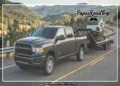
The land rover defender towing capacity depends on the version. The shorter Defender 90 tops out lower, at about 7,716 lbs (3,500 kg). The two-door Classic and older models are far lower, so check your own model year.
Those figures assume a braked trailer and the factory tow package. This guide covers the engine and trim differences, the hitch and tongue-weight rules, and the checks that keep a Defender legal and stable on the road.
What the towing rating really means
A towing capacity is the maximum weight a vehicle is built and approved to pull, and it’s set by the manufacturer, not by the hitch you bolt on. Land Rover publishes a separate figure for each Defender body style, engine and market. The number on the spec sheet is the ceiling, not a target.
The rating covers the trailer’s total weight, including whatever you load onto it. It assumes a braked trailer, a proper hitch, and a tongue weight within the limit. Change any of those and the real safe figure drops.
People who tow with a Defender often carry one wrong idea: that a high rating means the truck will feel the same with any load behind it. It won’t. A heavy trailer changes braking, steering and fuel use, and the rating doesn’t promise comfort at the limit.
The Defender is built for this work, with a strong ladder frame on older models and a stiff body on the new one. But the rating is a legal and engineering limit, not a suggestion. Go over it and you’re outside what the vehicle was designed and approved to do.
How to match your Defender to a trailer
- Find your exact rating first. Look at the VIN plate or the owner’s handbook for your model year and engine. The 110 and 90 differ, and so do the engines. Don’t trust a general web figure for your specific truck.
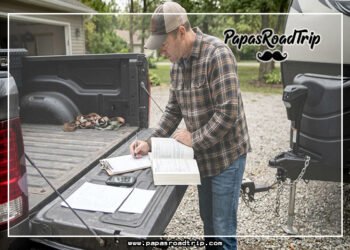
- Weigh the loaded trailer, not the empty one. A trailer’s dry weight is meaningless once you add water, fuel, gear or an ATV. Use a public weighbridge and get the real number with everything aboard.
- Check the tongue weight. Aim for roughly 10% of the trailer weight on the hitch, and stay under the Defender’s stated tongue limit. Too little causes sway; too much overloads the rear axle.
- Confirm the hitch and wiring. The factory tow package includes the receiver and the 7-pin connector. If your Defender lacks it, have a proper tow bar fitted and coded to the vehicle.
- Match the trailer brakes. Anything heavy needs its own brakes, and they must work with the Defender’s system. Test them on a quiet road before a real trip.
- Read the payload sticker. Towing capacity and payload are different limits. The tongue weight, passengers and cargo all count against payload, and that’s often the real bottleneck.
- Load the trailer correctly. Put heavier items over the trailer’s axle, not at the back. A tail-heavy trailer sways, and no tow vehicle fixes that.
The single judgement call that decides a good tow from a bad one is honesty about weight. A trailer that “should be fine” is the one that pushes you over the limit on a wet downhill. Weigh it, or don’t tow it.
Fitting a tow bar and coding the electronics is a job for a qualified fitter with the right diagnostic tools. Get a specialist to do it rather than wiring it yourself.
Land Rover Defender towing capacity by model
The table below shows the main variations. Treat every figure as the maximum for that setup, with a braked trailer and the factory tow package. Your own VIN plate is the final word.
| Your situation | What to use | Figure that matters | What to watch for |
|---|---|---|---|
| New Defender 110, correct engine and tow pack | Factory receiver, braked trailer | Up to 8,201 lbs (3,720 kg) | Payload runs out before towing capacity does |
| New Defender 90, short wheelbase | Factory receiver, braked trailer | About 7,716 lbs (3,500 kg) | Less weight over the rear axle, so sway shows sooner |
| Older Defender (Td5, Puma era) | Rated tow bar, braked trailer | Much lower than the new model — check your handbook | Age of the chassis and hitch matters as much as the rating |
| Unbraked trailer | Any Defender | A small fraction of the braked figure | Keep it light; unbraked limits are strict |
| Tongue weight | Hitch and rear axle | Around 10% of trailer weight, under the stated limit | Overloading the rear axle is easy to miss |
| Towing on a steep downhill | Lower gear, engine braking | No fixed figure — drive to conditions | Brake fade is the real danger, not the rating |
What experienced towers get right
The difference between a calm tow and a white-knuckle one comes down to preparation before the trailer is even hitched. People who tow often check tire pressures on both vehicle and trailer, confirm the lights work, and test the trailer brakes. They do this every time, not just on big trips.
They also load in a set order. Heavy gear goes over the trailer axle first, then lighter items around it, and nothing loose rides at the back. On the Defender itself, they keep the heaviest cargo low and forward of the rear axle. That keeps the front wheels planted for steering.
The checks partway through
On a long run, pull over after the first stretch and put a hand near each trailer hub and tire. A hub that’s far hotter than the others points to a brake or bearing problem. Check the hitch and safety chains are still tight, and glance at how the trailer sits — level means the load hasn’t shifted.
What they leave alone
They don’t chase the maximum rating. A trailer loaded to 80% of the limit tows far more comfortably and leaves margin for a hill or a gust. They also don’t add suspension helpers to “fix” a sagging rear — that masks an overload rather than solving it. If the truck sags, the tongue weight is wrong.
Common Defender towing problems

Most towing complaints trace back to weight, setup or electrics, and each has a simple first check. The table matches what you notice to what to do.
| What you notice | What it usually means | What to do first |
|---|---|---|
| Trailer sways at speed | Too little tongue weight or a tail-heavy load | Move weight forward over the trailer axle and re-check |
| Rear of the Defender sags | Tongue weight too high or payload overloaded | Weigh the tongue and move cargo off the rear |
| Trailer lights don’t work | Wiring or connector fault | Check the 7-pin plug and the trailer’s own fuses |
| Brakes feel weak when stopping | Trailer brakes not working or not adjusted | Test the trailer brakes alone on a quiet road |
| Overheating on a long climb | Engine working hard under load | Slow down, use a lower gear, and check coolant level |
Two of these are easy to confuse. A Defender that sags at the rear and a trailer that sways can both come from the same trip, but they pull in opposite directions.
If the rear squats, the tongue is carrying too much. Move cargo back off the nose until the truck sits level.
If the trailer sways instead, the tongue is too light. Shift weight forward over the trailer axle, then re-check before you pull away.
Fix one and re-test before touching the other. Correcting both at once usually overshoots, and you end up chasing the problem down the road.
On the electrics, work from the plug outward. The 7-pin connector and the trailer’s own fuses account for most light failures, and both are a two-minute check at the hitch.
If the lights still fail after that, stop guessing at the Defender’s wiring and test the trailer on another tow vehicle. That tells you which side of the plug the fault is on.
Rules and limits you should confirm
Towing law is set where you drive, and it can be stricter than the vehicle’s own rating. In the US, individual states set their own trailer-braking and speed rules, so check your state’s DMV or highway authority before a long trip. In the UK and Europe, the driving licence you hold can cap the combined weight you’re allowed to tow.
Before you start, look up four things for your own case. First, your Defender’s exact rating on the VIN plate or in the handbook. Second, your licence rules for the combined weight. Third, your local trailer-braking requirement. Fourth, your insurance cover for towing.
Land Rover’s own towing specifications and your owner’s handbook give the figures for your model year. When a setup needs a specialist — a heavy trailer, a commercial load, or a hitch that isn’t factory — hand it to a qualified tow-bar fitter or a dealer. Getting the weight and the paperwork wrong can cost you your insurance cover or land you a fine.
Keeping your tow setup in good shape
Once the hitch is fitted, look after it. Grease the tow ball lightly before each trip and wipe it clean after, so the coupling grips properly. Check the receiver bolts for tightness now and then, and keep the 7-pin connector dry and free of dirt. A corroded plug is behind a lot of “my trailer lights stopped working” moments.
The connector is the usual culprit when lights act up, so start there before you touch the wiring. Dry it, look for green crust on the pins, and check that the plug seats fully.
Store the trailer with its weight off the tires where you can, and check trailer tire pressures before every trip — trailer tires age faster than you’d expect and often sit for months. Look at the sidewalls for cracks rather than trusting the tread alone.
Feel each hub after a run. Warm is normal; too hot to hold your hand on means a bearing or brake issue, so stop and check before the next trip.
The sign that your setup needs attention again isn’t a fixed date. It’s a change: a new trailer, a heavier load, a different driver, or a hub running hot. Re-check the weights and the hitch whenever any of those change, and give the whole setup a fresh look at the start of each towing season.
When a Defender isn’t the right tow vehicle
A Defender is a capable tow vehicle, but it’s the wrong choice in a few cases. If you’re pulling a very heavy trailer near the top of the rating on a regular basis, a larger truck with a higher rating and more payload gives you real margin.
Run the payload math before you sign, not after. Take the tongue weight of the loaded trailer and add the weight of every person and every pound of gear that will be in the Defender. If that total lands within a few hundred pounds of the payload figure on the door jamb sticker, you’re in the case where a bigger truck is the honest answer. If it leaves clear room, the Defender is fine.
If you need to tow and carry a full load of people and gear at the same time, check that math carefully — a big family plus tongue weight can exceed it. A bigger tow vehicle solves that.
And if you only tow a light trailer a few times a year, a smaller, cheaper vehicle may do the job without the fuel cost of a Defender. Match the vehicle to the real weight you pull, not the biggest number on the spec sheet.
Related guides
- Land Rover LR2 Years to Avoid: Expert Tips for Smart Buyers
- Land Rover Discovery Years to Avoid: Expert Guide for Buyers
Frequently asked questions
Can a Land Rover Defender tow a car trailer?
Yes, a current Defender 110 can tow a typical car trailer with a car on it, as long as the loaded weight stays under its rating — up to 8,201 lbs (3,720 kg) with the right engine and tow package. Weigh the loaded trailer first, because a car plus trailer often comes close to the limit.
Why is my Defender’s towing capacity lower than I expected?
Because the rating changes with body style, engine and market. The Defender 90 is rated lower than the 110, and older models are far lower than the current one. Check the VIN plate or your owner’s handbook for your exact model year rather than a general web figure.
How long can I tow before I need a break?
There’s no fixed legal limit for private towing in most places, but a stop every 2 hours is a sensible habit. Use it to check the hitch, the lights and the trailer hubs for heat. Long runs without a check are when small faults become breakdowns.
Is it safe to tow at the maximum capacity?
It’s legal if you stay within every limit, but it leaves no margin. Towing at about 80% of the rating gives you room for hills, wind and braking. Stay under the tongue weight and payload limits too, not just the towing figure.
What happens if I tow more than the rated capacity?
You go outside what the vehicle was designed and approved to do. That can mean poor braking and stability, extra wear, and in many places it can affect your insurance or break the law. If your load is over the limit, use a bigger tow vehicle.
Do I need a special licence to tow with a Defender?
It depends where you live and the combined weight. In the UK and Europe, your licence category can cap what you may tow, so check your own licence rules. In the US, state rules on trailer brakes and weight apply. Confirm before you set off.
How much tongue weight can a Defender take?
Aim for around 10% of the loaded trailer weight on the hitch, and stay under the tongue limit in your handbook. Tongue weight also counts against payload, so a heavy tongue plus passengers can overload the rear axle even when the trailer itself is under the towing rating.
Conclusion
Before you hook up a trailer, check the sticker inside your driver’s door for your exact model’s rating, and confirm your hitch and brakes match the load. If you’re still shopping, bring your trailer’s weight to the dealer and ask them to match you with the right setup.