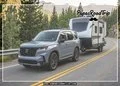
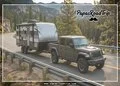
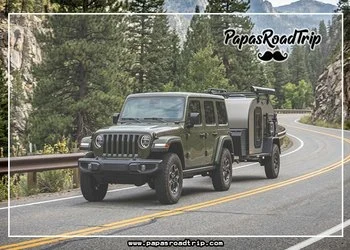
The 2025 jeep wrangler towing capacity tops out at 5,000 pounds. Only the four-door Wrangler with the 3.6L V6 engine, the 8-speed automatic, and the Max Tow package reaches that number. Most other Wrangler builds tow between 2,000 and 3,500 pounds. The exact figure for your Jeep depends on body style, engine, axle ratio, and how many people and how much cargo ride inside. This guide breaks down every 2025 configuration, the equipment that changes the rating, and the checks that keep you legal and safe.
What the rating actually means
Towing capacity is the maximum weight a vehicle is built and rated to pull, and Jeep publishes a separate number for each 2025 Wrangler build. It isn’t one figure for the whole model. The rating covers the trailer plus everything loaded on it — gear, water, fuel in the trailer’s own tank.
The number comes from the manufacturer, and it’s based on engineering limits: frame strength, brakes, cooling, and the hitch. It isn’t a suggestion. Going over it strains the drivetrain and can void your warranty.
Wranglers are built for off-road trails first. That’s the misconception people bring: that a tough-looking 4×4 must tow like a pickup. It doesn’t. A short wheelbase, soft suspension, and a body-on-frame design tuned for rocks make a Wrangler a modest tow vehicle compared with a Gladiator or a full-size truck.
The rating applies to the vehicle as built. Add a lift kit, bigger tires, or a heavy steel bumper, and the real-world safe limit drops even though the sticker doesn’t change. Jeep rates the stock vehicle.
How to find your Wrangler’s real tow number
Start with the door jamb, not the brochure. The steps below go in the order that settles your number fastest.
- Read the tire and loading label on the driver’s door jamb. It lists the vehicle’s gross vehicle weight rating (GVWR) and axle ratings — the ceilings your tow number sits under.
- Check the window sticker or build sheet for engine, transmission, axle ratio, and whether the Max Tow package is listed. These four items decide the rating.
- Confirm the body style. Two-door Wranglers carry much lower ratings than four-door models, usually under 2,000 pounds.
- Match your build to Jeep’s published towing chart for the 2025 model year. Jeep prints a table by engine and axle ratio; your dealer has it, and it’s in the owner’s manual.
- Subtract your payload. People, cargo, and tongue weight all count against GVWR. A loaded four-door with four adults can hit its payload limit before it hits its tow limit.
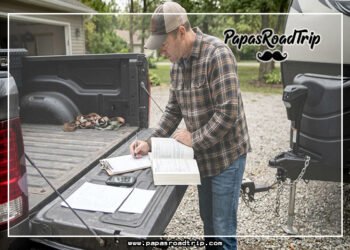
- Weigh the trailer loaded, at a public scale, not empty. The trailer’s dry weight on the spec sheet isn’t what you pull.
- Keep tongue weight at 10% of the loaded trailer weight. Too little causes sway; too much overloads the rear axle.
The judgement call that separates a safe setup from a sketchy one is honesty about payload. A 5,000-pound rating assumes a lightly loaded Jeep. Fill the seats and the cargo area, and the same trailer that felt fine empty now pushes you past the limit. If you plan to tow near the max, weigh the Jeep loaded first — if the scale says you’re over GVWR, drop trailer weight until you’re under.
2025 Jeep Wrangler towing capacity by build
The table below shows the main 2025 Wrangler variations. Confirm your exact build against Jeep’s official towing chart, because axle ratio and package change the result.
| Your Wrangler build | What it’s rated for | Figure that matters | What to watch |
|---|---|---|---|
| Two-door, any engine | Light trailers only | Around 2,000 lb | Short wheelbase; sway comes fast |
| Four-door, 2.0L turbo, standard axle | Moderate loads | 3,500 lb | Needs the tow package for the full rating |
| Four-door, 3.6L V6, automatic, Max Tow | Heaviest loads | 5,000 lb | Requires specific axle ratio and cooling |
| Four-door, 3.6L V6, manual | Reduced rating | Lower than automatic | Check the chart; manual limits are stricter |
| Four-door 4xe plug-in hybrid | Moderate loads | 3,500 lb | Battery weight cuts payload |
| Rubicon trim | Off-road first | Lower than Sport/Sahara | Bigger tires and lockers reduce tow rating |
| Any Wrangler with a lift or big tires | Modified | Below the sticker | Rating assumes stock suspension and tires |
What experienced towers get right
The people who tow well with a Wrangler start before they hitch anything. They weigh the Jeep with the family and gear inside, on a public scale, so they know their real payload left over. That single number decides whether a trailer is even possible.
They also load the trailer with weight forward of the axle, aiming for that 10% tongue figure, and they check it at the scale rather than guessing. A trailer that’s tail-heavy will sway on a downhill, and a Wrangler’s short wheelbase makes that sway harder to catch.
Setting up the hitch and brakes
A weight-distributing hitch helps on the heavier four-door builds, and trailer brakes are essential above roughly 1,500 to 2,000 pounds — check your state’s rule, since some states require brakes on trailers over a set weight. Experienced towers test the brake controller in an empty lot before a real trip. They also check tire pressure cold, on both vehicles, and torque the lug nuts to spec.
Knowing what to leave alone
They don’t chase the 5,000-pound number with a lifted Jeep on 35-inch tires. They keep the stock setup for towing, or they accept a lower real-world limit. And they leave the engine’s tow mode alone until the trailer is fully hitched — no shortcuts at the ramp.
Common Wrangler towing problems

Most towing complaints trace back to a setup issue, not a broken Jeep. The table matches what you notice to the likely cause and the first fix.
| What you notice | What it usually means | What to do first |
|---|---|---|
| Trailer sways side to side | Too little tongue weight | Move cargo forward, re-weigh tongue |
| Rear of the Jeep sags badly | Too much tongue weight or no weight distribution | Add a weight-distributing hitch; check payload |
| Brakes feel weak on a downhill | Trailer brakes not set or not working | Test the brake controller; check the trailer wiring |
| Engine runs hot on long climbs | Cooling strain near the limit | Slow down, drop a gear, lighten the load |
| Steering feels light at speed | Front axle unloaded by too much rear weight | Redistribute load, re-check hitch height |
Sway that starts only above 55 mph and settles when you lift off is almost always tongue weight. Sway that begins the moment a truck passes you points to the hitch setup instead.
If the Jeep squats even with an empty trailer, the hitch ball is probably too low or the tongue weight too high. Drop it one hole and drive the same road again before you touch the load.
On a two-door Wrangler, the short wheelbase makes the same trailer feel twitchy that a four-door pulls calmly. Keep two-door loads well under the rating and slow down sooner.
Weigh the tongue at a public scale rather than guessing by feel. A bathroom scale under the coupler works for lighter trailers.
One costly mistake: fixing sway by adding a sway-control bar while the tongue is still light. The bar hides the symptom and the trailer keeps wagging.
Rules and limits you should confirm
The towing figure isn’t the only rule. Your state sets its own limits on trailer brakes, maximum trailer width, and speed while towing, and those rules travel with you across state lines. Check your state’s department of motor vehicles or highway patrol website for the brake-weight threshold and any towing speed cap.
Your insurance policy also matters. Some insurers ask whether you tow, and coverage for a trailer may be separate from the Jeep’s policy.
Finally, check your Jeep’s owner’s manual for the break-in advice on towing a new vehicle, and confirm the hitch receiver and wiring are factory-rated for your build. If you plan to tow near the maximum, a professional hitch shop can verify the setup. Anything involving trailer brakes, wiring, or a weight-distributing hitch that you’re unsure about is worth handing to a qualified installer — a failed brake connection is a safety problem, not a DIY one.
Keeping your setup safe over time
Once your Wrangler and trailer are matched, the work becomes routine checks. Re-weigh the loaded trailer at the start of each season, because gear creeps in over the year. Check tongue weight again whenever you change how you load.
Inspect the hitch, ball mount, and safety chains before every trip, and look for cracks or rust at the receiver welds. Check trailer tire pressure cold and look at the sidewalls for cracking. Test the trailer brakes in an empty lot at low speed before you hit the highway.
There’s no single service interval that fits every setup — how often you tow and how heavy the load is decides it. Let the signs tell you: a new clunk at the hitch, a trailer that suddenly sways, or brakes that grab unevenly all mean stop and inspect. Keep a simple log of your weights and inspection dates so you can spot changes.
A Wrangler that tows a light trailer a few weekends a year can get by with a seasonal once-over. One that pulls a heavy camper most summer weekends earns a look underneath every few trips. If you tow in salt or on beach sand, rinse the receiver and chains after each trip, since rust starts where you can’t see it.
Pay attention to how the Jeep itself sits. If the rear sags more than it used to with the same trailer, the springs or the load have changed. If the steering feels light on the highway, tongue weight is probably too high. Either one is a reason to re-weigh before the next trip, not after.
When a Wrangler isn’t the right tow vehicle
A Wrangler is the wrong choice when your trailer’s loaded weight sits near or above 5,000 pounds on a regular basis. Step up to a Gladiator, a full-size pickup, or an SUV built for towing, and match the rating to your real loaded weight with margin to spare.
It’s also the wrong choice for a lifted, modified Jeep on large tires if you need the full rating. The sticker won’t reflect your build, so either return the suspension to stock for towing or accept a lower real-world limit and a smaller trailer.
And it’s the wrong choice for full-time travel with a heavy camper. The payload runs out fast once you add people, gear, and tongue weight. A vehicle with a higher payload rating will serve that life far better.
Weigh the trailer loaded, not dry, before you decide the Wrangler stays. A single trip to a public scale settles it in minutes and costs less than a tank of gas.
If the loaded figure lands within a few hundred pounds of your rating, you’re already in the wrong vehicle. That margin disappears with a full water tank, firewood, or a passenger or two.
The same goes for tongue weight. Load it, then check that the rear axle and tires are within their limits, not just the trailer.
Buying a Wrangler first and a camper second is the costly order. Pick the trailer you actually want, then let its loaded weight choose the vehicle.
Related guides
- Jeep Gladiator Max Tow Package: Ultimate Towing Power Unleashed
- Jeep Wrangler Tj Years to Avoid: Critical Buyer Tips
- Jeep Wrangler P0456 Code: Causes, Fixes, and Diagnosis
Frequently asked questions
What is the maximum towing capacity of a 2025 Jeep Wrangler?
5,000 pounds, and only on the four-door with the 3.6L V6, the 8-speed automatic, the correct axle ratio, and the Max Tow package. Any other 2025 Wrangler build is rated lower — most fall between 2,000 and 3,500 pounds. Check your own build against Jeep’s official chart.
Can a two-door Wrangler tow a camper?
Yes, but a small one. Two-door 2025 Wranglers are rated around 2,000 pounds, so the trailer plus its loaded gear must stay under that. A light teardrop or pop-up camper fits; a full-size travel trailer doesn’t. Weigh the loaded camper before you commit.
Does the 4xe hybrid tow less than the gas Wrangler?
It’s rated at 3,500 pounds, which is lower than the 5,000-pound gas maximum but matches many gas builds. The hybrid’s battery adds weight, which cuts into payload. If you tow near the limit with a full cabin, check your payload on a scale first.
How much tongue weight can a Wrangler handle?
Aim for about 10% of your loaded trailer weight. For a 3,500-pound trailer that’s roughly 350 pounds; for 5,000 pounds it’s about 500. That tongue weight counts against your payload, so subtract it along with passengers and cargo when you check GVWR.
Is it safe to tow at the maximum rating?
It’s safe only when you stay under every limit at once — tow rating, GVWR, and axle ratings — with the trailer loaded and weighed. Towing at the max with a full cabin often pushes you over payload. Weigh the loaded Jeep and trailer, and back off if either is over.
Why is my Wrangler’s towing capacity lower than the brochure says?
Because the brochure shows the best-case build. Your engine, axle ratio, body style, trim, and whether you have the Max Tow package all change the number. A lift kit or larger tires lowers the real safe limit further. Match your exact build to Jeep’s towing chart.
Do I need trailer brakes on a Wrangler?
It depends on your state and the trailer’s weight. Many states require trailer brakes above a set weight, often around 1,500 to 3,000 pounds — check your state DMV or highway patrol for the exact figure. Above roughly 2,000 pounds, trailer brakes are a sensible minimum regardless.
Conclusion
Before you head out, check the driver’s door jamb sticker for your Jeep’s specific ratings, then weigh your loaded trailer at a public scale. That’s the only way to be sure you’re within limits. If the numbers look tight, leave some gear behind or upgrade to a build with more headroom.