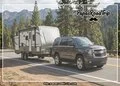
The 2015 tahoe towing capacity varies by trim and configuration, but generally, the towing limits are set by the manufacturer and depend heavily on the specific model variant you have. This guide covers the towing limits, necessary checks, and what to consider when towing a 2015 tahoe.
Understanding 2015 Tahoe Towing Limits
The 2015 tahoe towing capacity refers to the maximum weight it can safely pull according to the vehicle’s design and engineering. This capability isn’t a single number; it changes based on the drivetrain (2WD or 4WD), the axle ratio, and the specific towing package installed. Many people think they can pull more than the limits, but exceeding these ratings puts the vehicle and its passengers at serious risk of failure.
This capacity is set by General Motors to ensure the vehicle stays within safe operational parameters. The system relies on the vehicle’s frame, suspension, and braking systems to handle the extra load.
Two figures get confused here, and the difference matters. The towing rating covers the trailer alone. The gross combined weight rating covers the trailer plus the Tahoe, its passengers, and everything in the cargo area. Load the truck with people and gear and the trailer weight you can safely pull drops.
Read the door jamb sticker before you hitch anything. It lists the ratings for that specific Tahoe as built, not the best-case number from a brochure.
Payload counts against you too. Tongue weight, the downward force the trailer puts on the hitch, is carried by the truck and eats into the same allowance as passengers and cargo. A trailer that tows fine empty can push a loaded Tahoe over its limit.
If your trailer’s loaded weight stays under the sticker’s tow rating and its tongue weight stays within the payload and hitch limits, you’re within the design. If it doesn’t, move weight to the trailer axles or step up to a larger tow vehicle. Guessing wrong costs you brakes and transmission first, and control on a downhill grade after that.
Determining the Correct Towing Limit
To figure out the right towing capacity for your 2015 tahoe, you need to check the specific documentation for your vehicle. You can’t just guess this number because the weight you pull affects different parts of the truck in unique ways.
- Check your vehicle’s Owner’s Manual first. This is the most accurate source for your specific trim and engine setup.
- Look for the Gross Combined Weight Rating (GCWR) and the hitch receiver capacity. These two numbers are key for safe towing.
- If the manual isn’t clear, consult a certified towing specialist who can check your vehicle’s VIN for exact specifications.
- Consider the weight of the trailer plus the hitch, which is the actual load you’re moving.
- Decide if you’re towing a light utility trailer or a heavy RV, as this changes the safety margins.
- Ensure your trailer brakes are properly installed and rated for the weight you’re pulling.
The judgement call you must make is between pulling the maximum safe load and pulling a load that feels comfortable and stable; always choose stability over the highest number possible. If you aren’t sure, see a professional mechanic who handles heavy vehicle towing.
Key Towing Figures for 2015 Tahoe
| Situation | What to Use or Do | Figure That Matters | What to Watch For |
|---|---|---|---|
| Light Utility Trailer | Consult Owner’s Manual for base capacity | Varies by model | Suspension sag during acceleration |
| Heavy Travel Trailer | Verify GCWR limits before hooking up | Gross Combined Weight Rating | Braking performance when stopping |
| Towing in High Heat | Check cooling system status | Engine operating temperature | Overheating warnings |
| Towing on Hills | Maintain steady, low RPM | Engine RPM limit | Engine strain and overheating |
| Towing in Strong Winds | Adjust speed for stability | Speed limit relative to trailer size | Sudden sway or loss of control |
Proper Technique for Towing a Tahoe
Experienced tow operators pay close attention to the trailer’s weight distribution and how it affects the Tahoe’s handling. They don’t just look at the maximum number; they look at the feel of the tow.
Experienced drivers prepare by ensuring all fluids are topped up and the tires are inflated to the correct pressure for both the truck and the trailer. They also check that the trailer wiring is securely fastened and tested before moving the vehicle. If you’re starting in a steep hill area, you should give the tow plenty of extra distance to slow down.
A key difference between a good and bad tow is how smoothly the vehicle handles a curve; if the trailer pulls hard to one side, it’s a sign of improper setup or an overloaded trailer.
Troubleshooting Towing Issues for Tahoe

| What You Notice | What It Usually Means | What to Do First |
|---|---|---|
| Excessive sway | Improper tongue weight distribution | Adjust trailer hitch height/weight |
| Dashboard warning lights | Overheating or system overload | Pull over safely and shut down engine |
| Trailer not braking | Trailer brakes not connected or failed | Check electrical connection and circuit |
| Slow acceleration | Engine strain or under-inflation | Check tire pressure and reduce load slightly |
Sway that starts only above a certain speed usually points to tongue weight, not the hitch itself. Aim for roughly 10 to 15 percent of the loaded trailer’s weight on the tongue. A trailer that’s light at the front will wag no matter how tight the ball is.
If the sway appears when a semi passes or in a crosswind, slow down and reload before you touch any adjustment. Moving a heavy item forward a few inches often settles it. Adding a sway bar to a badly balanced trailer hides the problem rather than fixing it.
A warning light on a long climb is different from one on flat ground. On a climb, downshift and let the engine rev rather than lugging it in a tall gear. If the light stays on after you pull over and the gauge doesn’t drop within a few minutes, stop for the day.
Trailer brakes that work cold but fade on a long descent mean the trailer’s brakes are doing too much of the stopping and overheating. Check the breakaway cable and the connector first, since a pulled breakaway cable or an unplugged connector is the most common cause of dead trailer brakes.
Slow acceleration with correct tire pressure usually means you’re near the limit, not over it. Check the door jamb sticker for your Tahoe’s rear axle rating and weigh the tongue at a scale if you tow often.
Rules for Towing the Tahoe
Check the official General Motors documentation for the exact towing limits for your specific 2015 Tahoe, as local towing regulations can also apply to where you drive. Before you start, confirm your trailer’s safety certification and ensure your vehicle’s brakes are in top condition. If you’re unsure about the technical aspects of towing, you should consult a certified heavy-duty vehicle mechanic.
The Tahoe’s rating changes with how it’s built, so match the number to your own truck. Two-wheel drive and four-wheel drive versions don’t tow the same, and the figure drops again on models without the heavy trailering package. Read the door jamb label and the owner’s manual for your VIN before you trust any number you found online.
Payload is the limit people miss. Tongue weight, passengers and cargo in the Tahoe all count against it, and a loaded family of five can use most of it before the trailer is hitched. Weigh the truck loaded at a public scale, then subtract that from the gross vehicle weight rating.
If the tongue weight is more than the payload you have left after loading the truck, you’re over payload even when you’re under the tow rating. Move gear into the trailer, or leave it home.
Brake controllers matter on this generation. A trailer over the weight your state sets for trailer brakes needs its own working brakes and a controller matched to them, and the Tahoe’s integrated setup has to be wired correctly. Test the manual override in a parking lot before every trip.
Check tire pressure cold, including the trailer’s, and confirm the hitch ball matches the coupler size. A mismatch here is the failure that ends trips badly.
Maintaining a Tahoe After Towing
Once you finish towing, it’s wise to have a quick inspection of the hitch and the trailer connections. You should check for any signs of unusual wear or heat around the hitch mechanism. The trailer itself needs to be checked for any damage that happened during the trip. Generally, there’s no specific maintenance interval given by the manufacturer for post-tow checks, but if you see any leaks or strange noises, address them right away.
Give the hitch hardware a closer look than a glance. Look for elongated holes, cracked welds and bolts that have started to back out. On a 2015 Tahoe the receiver and ball mount take the load directly, so looseness there shows up as a clunk when you pull away.
Check the ball itself for flat spots and galling. A worn ball wears the coupler with it, and the pair then rattles no matter how tight you set the latch.
Fluids deserve the same attention after a long pull. Transmission fluid is the one to watch, since towing is the hardest work the Tahoe’s automatic does. Pull the dipstick when the truck is level and the engine is warm.
Color tells you more than level. Fluid that has gone dark or smells burnt after a heavy tow is a reason to have it changed sooner than the schedule calls for.
Tires carry the whole load, so check them cold the morning after. Look for feathered edges and flat spots, and confirm the pressures match what the door jamb lists for a loaded truck.
If your trailer has its own brakes, test them on a quiet street before the next trip. If it doesn’t, your Tahoe’s brakes did all the work, and a soft pedal or longer stopping distance means they need looking at.
Keep a simple log of what you towed and how far. If the same part keeps coming loose or the same noise returns, that pattern is what a shop needs to hear.
When to Use a Different Approach for Tahoe

If you’re towing a very heavy, low-profile trailer, the Tahoe might not be the best idea. A larger, heavier-duty truck may be necessary. Low-profile means the trailer sits close to the ground, so loading ramps and hitch height become a problem before weight ever does. Measure your coupler height against the Tahoe’s receiver before you commit.
Another time this approach is wrong is in heavy snow or ice. The Tahoe’s traction might not be enough for the combined weight. When conditions are severe, postpone the trip or use a heavier-duty tow vehicle.
The line between the two cases is the trailer, not the weather. If the trailer is within the Tahoe’s rating and sits at a normal height, the truck handles it and you adjust speed for conditions. If the trailer is at or near the limit, any ice pushes you into the other approach.
The mistake people make here is reading a light snow forecast and deciding the Tahoe is fine because it managed the same load last summer. It did, on dry pavement. On ice, the same trailer that felt stable can start pushing the rear axle sideways on a downgrade, and once that starts, steering input rarely brings it back. That costs you a trailer, a guardrail, or worse.
So apply it plainly. If the load is near the rating and the road is icy, leave the Tahoe parked. If the load is well under the rating and the roads are clear, drive it and slow down. If you’re unsure which side you’re on, you’re on the wrong side.
Related guides
Frequently Asked Questions
What is the maximum 2015 tahoe towing capacity?
The 2015 tahoe towing capacity varies depending on the trim and engine of the specific vehicle, so you must check your Owner’s Manual for the exact figure.
Can I tow a heavy boat with my 2015 tahoe?
You can only tow a heavy boat if its total weight and the trailer’s weight are within the Gross Combined Weight Rating (GCWR) listed in your vehicle’s documentation.
What should I check before towing my Tahoe?
You should check the tire pressure on both the Tahoe and the trailer, and confirm all trailer lights and brakes are functioning correctly before you start.
Is it safe to tow a full-sized RV with a Tahoe?
It’s only safe if the RV’s weight is within the manufacturer’s specified towing capacity for your particular 2015 tahoe model.
How do I find my Tahoe’s towing capacity?
You can find the specific towing capacity by looking at the sticker inside the driver’s side door jamb or by checking the official General Motors documentation for your vehicle.
What happens if I exceed the towing capacity?
If you exceed the towing capacity, the vehicle’s suspension, brakes, and frame can fail, leading to a loss of control and potential accidents.
Conclusion
The safe operation of any heavy vehicle depends on respecting the limits set by the manufacturer for that specific year and model.