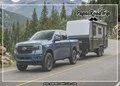
The 2026 Ford Ranger’s towing capacity depends on the configuration you buy. In the US, Ford lists a maximum of 7,500 lbs for the Ranger, and that figure belongs to specific build combinations — not every truck on the lot. This guide covers the exact numbers by body style, the gear that changes them, and how to read your own door jamb sticker.
What the Ranger’s tow rating really means
A tow rating is the most weight a specific truck, built a specific way, is allowed to pull. Ford sets it per configuration, so the same Ranger name can carry very different numbers. The 7,500 lb maximum is the top of that list, not the middle.
The rating covers the trailer and everything on it — the boat, the fuel, the water in the tank, the camping gear. It doesn’t cover people or cargo inside the truck. Those count against a separate limit called payload, and payload is often what actually runs out first on a small pickup.
People bring one common misconception to this: that the biggest number applies to their truck. It doesn’t. Your rating is printed on your own vehicle, and it can be lower than the headline figure by a lot.
The Ranger is a mid-size truck. It suits people towing a small travel trailer, a pair of jet skis, a utility trailer or a light boat. It isn’t built for a fifth-wheel or a large toy hauler, and no amount of aftermarket parts changes what Ford certified.
Where the configuration bites is the cab and bed. A crew cab with four-wheel drive and the heavier optional equipment is the version most often sitting lowest on the chart. A two-wheel-drive truck with a shorter cab usually lands higher.
So check the door jamb sticker before you shop for a trailer, not after. If your Ranger’s rating is well under 7,500 lb, size the trailer to that lower number and ignore the brochure.
Then load the truck as you would for a real trip and weigh it. If the scale shows you near the payload limit with the trailer unhitched, a lighter tongue weight or less gear is the fix. A weight-distribution hitch helps with sway and leveling, but it doesn’t raise the rating Ford printed.
How to find your Ranger’s real towing number
- Open the driver’s door and read the two stickers. One is the tire and loading label. The other is the safety compliance label. Both list weight limits for your exact truck.
- Note the GVWR — the most the truck itself can weigh, fully loaded. It’s on the compliance label, in pounds.
- Note the GCWR — the most the truck plus trailer can weigh together. Ford publishes this in the towing guide for your model year.
- Weigh your truck at a public scale, full of fuel, with the people and gear you normally carry. Subtract that from GVWR. The answer is your real payload left over.
- Add up your trailer’s loaded weight, not the dry weight from the brochure. Water, propane and gear add up fast.
- Take 10–15% of the loaded trailer weight as your target tongue weight. Compare it to your leftover payload.
- Pick the lower of the two ceilings — the published tow rating or the payload-limited figure. That’s your real limit.
The judgement call that matters most is step 7. A truck can be under its tow rating and still be overloaded, because the tongue weight sits on the truck. If your tongue weight pushes you past the payload figure, the trailer is too heavy for that truck, whatever the brochure says.
Hitching, weight distribution and brake controller wiring are jobs a dealer or a qualified trailer shop should handle. Getting them wrong is a road-safety problem, not a DIY one.
2026 Ford Ranger towing capacity by setup
These are the figures to keep. Confirm your own combination in Ford’s official towing guide for the 2026 model year before you buy or hitch anything.
| Your situation | What to use | Figure that matters | What to watch for |
|---|---|---|---|
| Boat or flat trailer, low profile | Any V6 build | Tongue weight near 10% of trailer weight | Easy to underestimate loaded weight |
| Travel trailer, tall front | V6 with tow package | Wind drag limits real-world comfort | Sway risk rises near the top of the range |
| Trailer over 3,000 lbs loaded | Any Ranger build | Needs its own trailer brakes | Confirm the brake controller is installed |
What separates a safe Ranger tow from a risky one
Experienced towers load the trailer before they load the truck. They put the heavy items over the trailer axles, keep the tongue weight near 10–15% of the trailer’s loaded weight, and then weigh the whole rig at a scale. That order matters. Once the truck is packed, you’ve lost the room to fix a tongue weight problem.
They also read the door sticker before they trust any published number. The sticker is the truck you own. The brochure is every truck Ford builds. When the two disagree, the sticker wins, and so does the scale.
Loading and hitching details
- Cross the safety chains under the coupler, not straight across.
- Check tire pressure on the truck and the trailer cold, before you drive.
- Re-check the hitch and coupler after the first 50 miles of any trip.
- Keep the heaviest cargo low and centered in the trailer.
What to leave alone
Don’t add a lift kit, oversized tires or a heavy front bumper and assume the rating holds. Those change the truck’s geometry and weight, and Ford’s rating assumes the stock build. If you’ve modified the truck, treat the published number as an upper bound you can no longer fully claim.
Common Ranger towing problems

| What you notice | What it usually means | What to do first |
|---|---|---|
| Trailer sways at highway speed | Too little tongue weight, or load too far back | Move weight forward and re-weigh |
| Rear of the truck sits low | Tongue weight over the payload limit | Weigh the tongue and compare to your sticker |
| Brakes feel weak on a downhill | Trailer brakes not working or not set | Check the brake controller gain setting |
| Poor acceleration on hills | Trailer near or over the real limit | Weigh the loaded trailer, not the dry figure |
| Truck feels light in the front | Hitch setup or weight distribution wrong | Have a trailer shop check the setup |
Sway that starts around 55 mph and builds is almost always tongue weight, not the truck. Aim for 10 to 15 percent of the loaded trailer on the ball, and weigh it at a public scale rather than guessing.
If the rear squats with the trailer empty, the spring bars are doing nothing and the tongue is riding on the rear axle. That’s a payload problem, and no hitch adjustment fixes it.
Weak brakes on a long descent usually mean the gain is set too low for the load. Turn it up until the trailer pulls slightly against the truck on a dry, empty road, then back off one setting.
If the truck feels light in the front only when loaded, the hitch needs setup, not parts. A shop with a scale sorts it in an hour.
Rules and limits you should confirm
Ford publishes the towing guide that sets these numbers, and your state’s DMV or motor vehicle agency sets the road rules. Check the Ford towing guide for your exact 2026 build, and check your state agency for trailer brake and registration requirements.
Read the door sticker on your own truck, not the brochure. The sticker’s gross axle weight ratings are what a scale ticket gets checked against, and they can be lower than the headline tow number on a heavily optioned Ranger.
Three things to confirm before you tow: your truck’s door sticker figures, your state’s rules on trailer brakes and weight, and whether your insurance covers the trailer. Ford’s own guide is the authority on the rating itself.
Trailer brake rules vary by state and often kick in by trailer weight, so a rig that’s legal at home may not be legal two states over. Confirm the threshold for every state you’ll cross, not just yours.
If your rig needs a weight-distribution hitch, a brake controller install or a wiring repair, that’s work for a dealer or a qualified trailer shop. Doing it wrong risks the trailer coming loose, and that’s not a job to learn on the road.
Keeping your setup right over time
Once your rig is set up, write the numbers down. Keep the loaded trailer weight, the tongue weight and your truck’s scale weight in a note in the glovebox. Next time you load the truck, you can check against real figures instead of guessing.
Weigh the rig again whenever something changes: a new trailer, a different load, added accessories, or a new set of tires. There’s no fixed interval that fits every owner — the sign it’s due is any change to the truck or the trailer.
Check the hitch hardware, the coupler and the safety chains before each trip. Look for rust, loose bolts and worn pins. Replace worn parts rather than tightening them and hoping.
Keep the note in the glovebox even after you trade the trailer. The loaded weight and tongue weight you wrote down for the old one tell you what your Ranger has already carried. That’s the baseline you compare a new trailer against before you hitch it.
If a new trailer’s loaded weight or tongue weight comes in above those figures, weigh the combined rig at a public scale before the first long trip.
One mistake costs people the whole exercise: weighing the trailer empty. An empty trailer tells you nothing about the load you actually pull. Weigh it loaded, with water and gear aboard, the way it rolls out of the driveway.
When the Ranger isn’t the right truck

The Ranger is the wrong choice if your loaded trailer sits near or above 7,500 lbs. A full-size truck like the F-150 carries a higher rating and more payload, and it’s the honest answer for a large travel trailer.
It’s also wrong if you plan to tow a fifth-wheel or a gooseneck trailer. Those need a heavier truck with the right bed and frame setup.
And it’s wrong if your payload runs out before your tow rating does — a common case with a family, gear and a heavy tongue. In that case, a bigger truck solves the problem that a Ranger can’t.
Check payload before you fall in love with a trailer. Take the trailer’s tongue weight, add the weight of every person and every pound of cargo that rides in the cab and bed, and compare the total to the yellow sticker on the Ranger’s driver’s door jamb.
If that number comes up short, no weight-distribution hitch or airbag kit will fix it. Those change how the truck rides, not what it’s legally allowed to carry.
The same math tells you when the Ranger is fine. A couple with a modest camper and little gear in the bed often has room to spare, and the smaller truck is easier to park and cheaper to run.
Run the numbers for your own load before you sign anything.
Related guides
- Ford Ranger Tow Package: Ultimate Guide to Maximize Towing Power
- Ford Ranger Years to Avoid: Buyer Beware Guide
- Ford Ranger Transmission Problems: Troubleshoot & Fix
Frequently asked questions
What is the 2026 Ford Ranger’s max towing capacity?
Up to 7,500 lbs, and only on specific build combinations with the trailer tow package. Your own truck’s figure is on the driver’s door sticker and in Ford’s towing guide for your model year. Your own truck’s figure is on the driver’s door sticker and in Ford’s towing guide for your model year.
Can a 2026 Ford Ranger tow a travel trailer?
Yes, if the loaded trailer stays under your truck’s rating and your payload covers the tongue weight. Small travel trailers in the 4,000–6,000 lb loaded range suit a properly equipped Ranger. Weigh the trailer loaded, not dry, before you decide.
How much tongue weight can a Ranger handle?
Aim for 10–15% of your loaded trailer weight, then check it against your truck’s payload. If your trailer weighs 5,000 lbs loaded, that’s 500–750 lbs of tongue weight, which many Ranger builds can’t carry with a full cab of people and gear.
Do I need trailer brakes on a Ranger?
Yes for most trailers over roughly 3,000 lbs loaded, and many states require trailer brakes above a set weight. Check your state motor vehicle agency’s rules. Your Ranger also needs a brake controller installed and set correctly.
Is it safe to tow at the maximum rating?
It’s legal if every limit is met — tow rating, payload, gross combined weight and tongue weight. It’s not comfortable. At the top of the range, hills, wind and braking all feel harder, and you have no margin for extra gear.
What happens if I tow more than the rating?
You risk brake fade, sway, transmission heat and losing control, and you may be over your legal weight limit. Insurance can also refuse a claim after an overloaded crash. Weigh your rig at a scale and stay under the lower of your two ceilings.
Does a lift kit change the Ranger’s towing capacity?
Yes, in practice it lowers what you can safely claim. Ford’s rating assumes the stock build, and a lift or oversized tires change the truck’s geometry and weight. Treat the published figure as an upper bound, and re-check your setup after any modification.
Conclusion
Before you sign anything, ask the dealer to print the build sheet and walk you through the ratings for that exact truck. It’s a quick conversation, and you’ll drive away confident you’re not asking more of your Ranger than it’s built to handle.