

The Ford Mustang is more than just a car—it’s an American icon that has captured the imagination of drivers for generations. From its bold appearance in the 1960s to today’s powerful models, the Mustang continues to turn heads. But not every Mustang year is a winner.
If you’re thinking about buying a used Mustang, knowing which years to avoid can save you money, time, and stress. Some years have serious issues with engines, transmissions, or safety that make them risky choices. Others suffer from poor build quality or expensive repairs that surprise new owners.
This guide offers a clear look at the Ford Mustang years to avoid, drawing on real owner experiences, expert analysis, and industry data. We’ll break down the main problems, show you how different generations compare, and give tips for finding a reliable Mustang. If you want the thrill of a Mustang without the headaches, this article will help you buy smart.
Understanding Mustang Generations
Before diving into specific years to avoid, it helps to know how the Mustang has changed over time. Ford has released six main generations of the Mustang, each with its own strengths and weaknesses.
| Generation | Model Years | Key Changes |
|---|---|---|
| First (Classic) | 1964.5–1973 | Original pony car, simple mechanics |
| Second | 1974–1978 | Smaller, focused on fuel efficiency |
| Third (Fox Body) | 1979–1993 | Lightweight, affordable, popular with tuners |
| Fourth | 1994–2004 | Modern styling, new engines, improved safety |
| Fifth | 2005–2014 | Retro design, modern tech, powerful V8s |
| Sixth | 2015–Present | Independent rear suspension, advanced features |
Each generation brought new features, but also new problems. Some years have issues that make them Mustang years to avoid for most buyers.
Major Mustang Problems: What Makes A Year Bad?
Not all Mustang issues are equal. Some problems are annoying but cheap to fix, while others can lead to big repair bills or dangerous driving. When car experts talk about the worst Mustang years, they look for:
- Frequent engine or transmission failures
- Expensive repairs that happen early in the car’s life
- Safety recalls for airbags, brakes, or steering
- Electrical problems that affect starting or driving
- Rust or build quality issues that reduce the car’s value
Certain years stand out for having more of these issues. Let’s look at the Mustang years to avoid, generation by generation.

Credit: www.youtube.com
First Generation (1964.5–1973): Are Any Years Bad?
The earliest Mustangs are classics, and many people want them for their style and history. But buying a first-generation Mustang is different from buying a modern car. Problems come from age, rust, and poor repairs more than factory defects.
- 1964.5 and 1965 models: These early cars are popular, but they often suffer from frame rust, worn suspension, and weak drum brakes. Parts are available, but repairs can be expensive.
- 1969–1970 models: Some versions had timing chain problems and oil leaks with the larger V8s.
- 1971–1973 models: These were heavier and slower due to stricter emissions rules.
The main risk with early Mustangs is buying a car with hidden rust or poor restoration work. If you want a first-generation Mustang, pay for a detailed inspection before you buy.
Second Generation (1974–1978): The Mustang Ii Era
The Mustang II is often viewed as the low point for the brand. Ford designed it to be small and efficient after the oil crisis, but most enthusiasts consider these years to be Mustang years to avoid for a few reasons:
- Weak engines: Most models came with underpowered four or six-cylinder engines. Performance is disappointing for a “muscle car.”
- Rust problems: The Mustang II is known for having serious rust in the floor, fenders, and frame.
- Parts are harder to find compared to other generations.
- Limited collector value: Even well-kept examples don’t command high prices.
If you want a Mustang for performance or investment, most experts recommend skipping the 1974–1978 Mustang II years.

Credit: www.pauletteauto.com
Third Generation (1979–1993): Fox Body Hits And Misses
The Fox Body Mustang is popular for its light weight and easy modifications. But not every year is a good buy.
1979–1981: Early Fox Body Problems
- Weak engines: Base engines were slow and not very reliable.
- Poor build quality: Ford was recovering from the 1970s, and some cars had rattles, leaks, and electrical problems.
1982–1985: Improvements, But Not Perfect
- 1984 Mustang SVO: This turbocharged model had unique parts that can be expensive to replace.
1986: Unique Engine Head Design
- The 1986 Mustang 5.0 had a one-year-only cylinder head. Many owners find it hard to find replacements or performance parts.
Late 1980s–early 1990s: Watch For Rust And Mileage
- Fox Body Mustangs from 1987–1993 are more reliable, but many have high miles and rust. Many have been heavily modified, which can cause problems if not done well.
Fourth Generation (1994–2004): Modern Looks, Mixed Results
The fourth generation Mustang brought new style and safety features. However, some years have serious problems that make them years to avoid.
1996: Cooling System Nightmares
- The 1996 Mustang GT is notorious for overheating problems. The new 4.6L V8 had a poor cooling design, leading to head gasket failures and warped heads.
- Owners report that overheating can happen even with normal driving.
1997–1998: Electrical And Engine Issues
- Many owners complain about electrical gremlins—faulty windows, failing gauges, and lights.
- Some V6 engines develop timing chain problems.
1999–2000: “the Spark Plug Problem”
- V6 engines in these years are known for blowing spark plugs out of the heads, which is an expensive fix.
- Some models had bad intake manifolds that crack and leak coolant.
2003–2004: Cobra “tick” And Other Issues
- The 2003–2004 Mustang Cobra uses a special supercharged V8, but some cars have a “head tick” problem—a tapping noise from the engine. It can signal serious head damage.
- Repairs are expensive, and replacement parts are rare.
Fifth Generation (2005–2014): Retro Looks, Modern Problems
Ford brought back the classic Mustang look in 2005, but early models had several issues.
2005–2006: Engine And Electrical Woes
- Owners of 2005–2006 Mustangs report frequent engine stalling, failing alternators, and electrical problems.
- The 4.6L V8 is generally reliable, but the V6 suffers from coolant leaks and sensor failures.
2005–2009: Transmission Issues
- The automatic transmission in these years is known for rough shifting and early failures.
2010–2012: Airbag Recalls And Paint Problems
- Ford recalled many Mustangs from these years for defective Takata airbags.
- 2010 models have poor paint quality and are prone to chipping and fading.
2011–2012: Coyote Engine Worries
- The new 5.0L “Coyote” V8 is powerful, but early versions can develop cam phaser problems (noisy ticking, expensive repairs).
- Some V6 engines have water pump failures leading to overheating.
2012–2013: Manual Transmission Problems
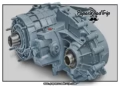
- The Getrag MT82 manual transmission gets a lot of complaints for notchy shifting, grinding, and failing synchronizers.
- Many owners say it’s hard to get Ford to fix these under warranty.
Sixth Generation (2015–present): Modern Tech, New Issues
The newest Mustangs are fun to drive, with independent rear suspension and advanced features. But even modern Mustangs have some years to avoid.
2015–2017: Ecoboost And V8 Issues
- The 2.3L EcoBoost turbo engine can develop head gasket leaks and carbon build-up if not maintained well.
- Early 2015–2017 Mustangs had problems with leaky rear differentials, causing noise and early wear.
2015–2018: Transmission And Interior Quality
- The automatic transmission in these years is sometimes rough or slow to shift.
- Some owners complain about cheap interior plastics and rattles, especially in 2015–2016 models.
2018: Oil Consumption And Transmission
- The 2018 Mustang GT is known for high oil consumption with the revised 5.0L V8.
- The new 10-speed automatic transmission can shift harshly or hesitate.
2019–2020: Recalls And Electronics
- Ford recalled the 2019–2020 Mustang for backup camera failures and faulty forward collision warnings.
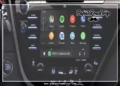
- Some owners report problems with the digital dash and infotainment freezing.
Quick Reference: Mustang Years To Avoid
Here’s a summary of Mustang years with the most complaints and expensive problems. These years are best avoided if you want a trouble-free experience.
| Model Year | Generation | Main Issues |
|---|---|---|
| 1974–1978 | Second | Rust, weak engines, poor value |
| 1979–1981 | Third (Early Fox Body) | Weak engines, build quality |
| 1996 | Fourth | Overheating, head gasket failure |
| 1997–1998 | Fourth | Electrical, engine issues |
| 1999–2000 | Fourth | Spark plug blowout, intake cracks |
| 2005–2006 | Fifth | Engine stalling, electrical |
| 2011–2012 | Fifth | Cam phaser, water pump, transmission |
| 2015–2017 | Sixth | EcoBoost head gaskets, transmission |
| 2018 | Sixth | Oil consumption, transmission |
Mustang Years Worth Considering
Not all Mustangs are risky. Some years stand out for being reliable, fun, and holding their value. If you’re shopping for a used Mustang, consider these years:
- 1987–1993 Fox Body: Simple, reliable, easy to fix.
- 2003–2004 Mustang GT (not Cobra): Strong V8, fewer issues.
- 2013–2014 Mustang: Good build quality, fewer recalls.
- 2019–Present: Modern tech, better reliability (after initial recalls).

Credit: www.motorbiscuit.com
Common Mistakes When Shopping For A Used Mustang
Buying a used Mustang is exciting, but it’s easy to make mistakes. Here are a few traps to avoid:
- Ignoring vehicle history reports: Always check for accident damage, flood history, or title problems.
- Buying modified cars without proper inspection: Many Mustangs are customized. Modifications can hide abuse or cause reliability problems.
- Skipping a pre-purchase inspection: A mechanic can spot rust, leaks, and electrical issues that you might miss.
- Assuming all Mustangs are fast: Some years and engines are slow and not very sporty.
- Underestimating insurance costs: Young drivers often pay high rates for Mustangs, especially V8 models.
Key Factors That Make Some Mustang Years Worse Than Others
Not all problems are obvious when test-driving a car. These factors often separate good Mustang years from bad ones:
- Engine design flaws: Issues like the 1996 GT’s cooling system or the 2018 GT’s oil use only appear after thousands of miles.
- Supplier recalls: Years with Takata airbags or faulty transmissions can mean more trips to the dealer.
- Cost of repairs: A cheap Mustang with a rare engine or transmission can quickly become expensive to own.
- Owner abuse: Many Mustangs are driven hard. Check for signs of burnout, racing, or poor maintenance.
How To Find A Reliable Used Mustang
You can avoid most problems by following a few simple steps:
- Focus on well-maintained cars with complete service records.
- Look for stock (unmodified) examples, especially for newer models.
- Use a trusted mechanic for a pre-purchase inspection.
- Check online forums for common problems with your target year.
- Consider newer models (2019 and up) for the latest safety and reliability improvements.
Non-obvious Insights For Mustang Buyers
Many buyers focus only on engine power or price, but miss key issues:
- Interior quality matters more than you think. Cheap plastics in some years (like 2005–2009) can make the car feel older than it is.
- Convertible models often have more leaks and electrical issues due to the roof mechanism and water seals.
- Regional differences: Mustangs from dry states (like Arizona) are less likely to have rust, while cars from the Northeast often have hidden frame damage from road salt.
Comparing Mustang Generations By Reliability
For a quick look at how the main Mustang generations compare in reliability, see the table below.
| Generation | Best Years | Years to Avoid | Owner Satisfaction (1–5) |
|---|---|---|---|
| First (1964.5–1973) | 1967–1968 | 1964.5–1965, 1971–1973 | 4.2 |
| Second (1974–1978) | 1978 | 1974–1977 | 3.2 |
| Third (1979–1993) | 1987–1993 | 1979–1981, 1984 SVO | 4.0 |
| Fourth (1994–2004) | 2001–2002, 2003–2004 GT | 1996–2000, 2003–2004 Cobra | 3.8 |
| Fifth (2005–2014) | 2013–2014 | 2005–2006, 2010–2012 | 4.1 |
| Sixth (2015–Present) | 2019–Present | 2015–2018 | 4.3 |
The Role Of Recalls And Owner Reports
One reason certain Mustang years are best avoided is the high number of recalls and owner complaints. For example, the 2010–2012 Mustang was part of the massive Takata airbag recall, affecting millions of cars worldwide. The 2011–2012 Mustangs have over 900 official complaints on file for transmission and engine issues. Checking the National Highway Traffic Safety Administration (NHTSA) database before buying is always smart.
When A “bad” Mustang Year Can Still Be A Good Buy
It’s important to remember that not every car from a problem year is bad. Some owners take great care of their Mustangs, fixing issues before they get worse. If a previous owner has already replaced common problem parts (like the intake manifold on a 2000 V6), that car could still be a solid buy.
Just make sure you have paperwork to prove it.
Mustang Special Editions: Extra Care Needed
Special editions like the Cobra, Bullitt, or Shelby GT500 are exciting but can be risky. These models often use unique engines or parts, making repairs expensive and parts harder to find. The 2003–2004 Cobra is a good example: its supercharged engine is powerful, but the head tick problem is costly to fix. Always check that rare Mustangs have been maintained by experts.
Real Owner Experiences: What Buyers Say
Many buyers share their Mustang stories online. For example, one owner reports their 2011 Mustang GT started ticking at 70,000 miles, leading to a $2,500 repair for the cam phasers. Another describes buying a 2005 V6 and facing $1,000 in repairs for electrical issues in the first year. These stories are common for the years to avoid mentioned above.
Should You Avoid All Early Mustangs?
Classic Mustangs from the 1960s and early 1970s are attractive for collectors, but they aren’t practical for daily driving. They lack modern safety features, get poor gas mileage, and need regular care. If you want a first-generation Mustang, it’s best as a weekend car, not a daily commuter.
Modern Mustangs: Are They More Reliable?
Recent Mustangs (2019 and newer) benefit from better engineering and quality control. Problems are less common, and most repairs are covered under warranty. However, no car is perfect. Always check for recalls, and avoid cars with a long list of owners or accidents.
How Mustang Stacks Up Against The Competition
Compared to rivals like the Chevrolet Camaro and Dodge Challenger, the Mustang is often cheaper to repair and holds its value better. However, the Camaro’s V6 is known for better reliability in some years. The Challenger is larger and heavier, but its V8s are durable. For most buyers, the Mustang offers the best mix of style, performance, and resale value.
If you want to dive deeper, check out Consumer Reports for detailed Mustang reliability ratings.
Frequently Asked Questions
What Is The Worst Ford Mustang Year To Avoid?
Most experts agree that 1974–1978 Mustang II models are the worst, due to rust, weak engines, and poor build quality. For modern Mustangs, 1996 (overheating) and 2015–2017 EcoBoost (engine issues) are also risky.
Are Newer Mustangs (2015 And Up) Reliable?
The latest Mustangs are more reliable than older models, but early sixth-generation cars (2015–2018) have some issues with engines, transmissions, and electronics. Look for 2019 and newer for the best reliability.
Is The Mustang Expensive To Maintain?
Maintenance costs depend on the year and engine. V8 models and special editions can be pricey to fix. Common repairs (like brakes, water pumps) are average for sports cars, but avoid years with known engine or transmission failures.
What Should I Check Before Buying A Used Mustang?
- Review service records
- Get a pre-purchase inspection
- Check for rust and accident damage
- Test all electronics and the roof (convertibles)
- Look for recalls and common issues with your target year
Which Mustang Generation Is Most Reliable?
The third generation (1987–1993) Fox Body and fifth generation (2013–2014) Mustangs are among the most reliable. The sixth generation (2019–present) also has strong reliability, especially after recalls were fixed.
Buying a used Mustang can be rewarding if you know which years to avoid. Do your homework, focus on well-kept cars, and enjoy the ride—Mustang style.