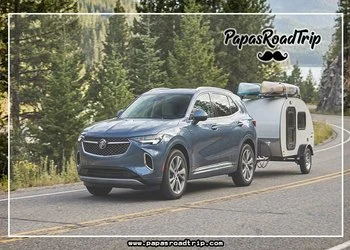
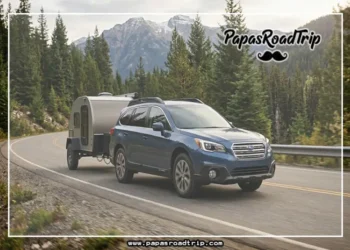
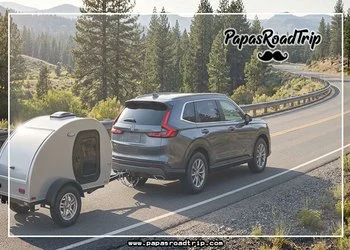
The honda crv towing capacity is 1,500 lb (680 kg) for the 2023–2026 CR-V in the US, and that figure is the same whether you pick the gas model or the hybrid. The tongue weight limit is 150 lb. Older generations were rated lower. This guide covers the year-by-year numbers, what changes them, and how to load a trailer so the car stays stable.
What Honda’s towing capacity rating means
The CR-V’s tow rating is a number Honda publishes for a complete car — one with the right equipment, the right load and the right trailer. It isn’t a strength test of the engine. A 1,500 lb rating assumes the car carries only its driver and a light load, the trailer has brakes if it’s heavy, and the hitch is a proper Honda-approved one.
Honda builds the CR-V as a compact crossover, not a truck. It shares its platform with the Civic, and its unibody structure is designed for passengers and cargo first. Towing sits third on the list. That’s why the rating is modest next to a Pilot or a Ridgeline.
Most people arrive with one wrong idea: that the hybrid can’t tow, or that it tows less. For the current generation, it doesn’t. Honda rates both powertrains the same. The other common belief — that adding a bigger hitch or a cooler raises the limit — is also wrong. Only Honda sets the rating, and no accessory changes it.
The rating exists for a reason you can feel from the driver’s seat. A trailer that weighs more than the car can push the rear around on a turn or in crosswind. The 1,500 lb cap keeps the trailer well under the CR-V’s own weight, which is roughly 3,300–3,600 lb depending on trim.
How to tow with a CR-V, step by step
- Check your own year and trim first. Open the driver’s door and find the certification label, then compare it with the towing section of your owner’s manual. Ratings changed across generations, and the manual for your model year is the only figure that applies to your car.
- Confirm the car has the tow package. Honda sells the CR-V with an optional hitch and wiring, but not every car has it. If yours doesn’t, budget for a proper hitch install — not a universal bolt-on from a box store.
- Weigh the trailer loaded, not empty. A trailer’s dry weight means nothing once you add water, gear and fuel. Aim to stay at or under 1,500 lb total, and keep tongue weight near 150 lb — about 10% of the trailer’s weight.
- Load the trailer nose-heavy, not tail-heavy. Put the heavy items over the trailer axle or slightly forward of it. Weight at the back of a trailer causes sway, and sway is the thing that actually causes crashes.
- Add trailer brakes above roughly 1,000 lb. Many states require brakes on trailers over a set weight; check your state’s DMV rules, since the threshold differs. Honda recommends brakes for heavier loads.
- Drop the cargo inside the car. Every passenger and every pound of luggage counts against the car’s payload, and payload and towing share the same structure. A full car plus a full trailer is over the limit even when the trailer alone is legal.
- Do a short test run before the real trip. Ten minutes at 45–55 mph on a quiet road tells you more than any checklist. If the trailer feels loose or the car squats at the rear, stop and reload.
The judgement call that separates a good tow from a bad one is tongue weight. Too little and the trailer wanders; too much and the rear of the car drops, the steering goes light and the headlights point at the sky. Get that one number right and the rest follows.
CR-V towing figures by model year
The numbers below are Honda’s published ratings for the US market. Always confirm against your own owner’s manual, because Honda has revised figures mid-generation before.
| Your situation | What to use | Figure that matters | What to watch for |
|---|---|---|---|
| 2023–2026 CR-V, any trim | Standard hitch, no extra gear | 1,500 lb tow / 150 lb tongue | Same for gas and hybrid |
| 2017–2022 CR-V | Standard hitch | 1,500 lb tow | Confirm in your manual; some trims list less |
| 2012–2016 CR-V | Standard hitch | 1,500 lb tow | Older cars need a brake and fluid check first |
| 2007–2011 CR-V | Standard hitch | 1,500 lb tow | Rust on the hitch mounts is common |
| Small utility trailer, empty | No brakes needed | Under 1,000 lb | Weigh it loaded before you trust it |
| Trailer near 1,500 lb | Trailer brakes fitted | 150 lb tongue weight | Sway risk rises fast above 55 mph |
| Full car of passengers plus trailer | Reduce trailer load | Payload minus passengers | The car’s payload limit comes first |
| Steep mountain route | Lighter trailer or none | 1,500 lb is a flat-road figure | Heat and grade cut your margin |
What experienced towers do differently
The first thing they do is weigh the tongue, not guess it. A bathroom scale and a length of wood under the coupler gives a real number in two minutes. Anyone who has towed for a while knows that 150 lb feels very different from 220 lb on a CR-V’s rear springs.
They also load the car before the trailer. Passengers, dogs and luggage go in first, then the trailer gets whatever capacity is left. Doing it the other way round — filling the trailer, then adding people — is how cars end up over their gross weight without the driver noticing.
The checks partway through
On the road, they stop after the first 20–30 minutes and put a hand on the trailer hubs and tires. A hub too hot to touch means a bearing or brake problem, and it’s better found in a parking lot than on a highway. They also re-check the hitch ball and the safety chains at that stop, since things settle once a trailer has bounced a few miles.
They leave the car’s suspension alone. Stiffer springs or airbags don’t raise the rating, and they can change how the car handles when it’s empty. The rating is a package deal, and Honda tested it as one.
Common towing problems and fixes

| What you notice | What it usually means | What to do first |
|---|---|---|
| Trailer sways side to side | Too little tongue weight, or load too far back | Pull over, move weight forward over the axle |
| Rear of the car sits low | Tongue weight too high | Shift cargo back slightly, re-weigh |
| Steering feels light | Front axle unloaded by too much tongue weight | Reduce tongue weight toward 150 lb |
| Brakes feel weak on a descent | Trailer too heavy for the car, or no trailer brakes | Slow down, use a lower gear, fit trailer brakes |
| Hitch creaks or clunks | Loose ball mount or worn pin | Re-torque the ball, check the pin and clip |
| Poor fuel economy and constant downshifting | Load near the limit on hills | Accept slower speeds; don’t push the car harder |
Sway that starts above 55 mph and stops when you slow down is usually a loading problem, not a CR-V problem. Move the load and drive the same stretch again before you blame the car.
If the rear sags even after you re-weigh, check that the CR-V is sitting on level ground. A sloped driveway reads as tongue weight you don’t have.
A clunk that shows up only over bumps is often the ball mount moving in the receiver, not a worn ball. Slide it out, look for shiny rub marks, and shim or replace the mount.
Weak brakes on a long grade mean stop driving and fix the setup. Descending on the pedal alone overheats the CR-V’s brakes, and the trailer keeps pushing.
The rules that decide what you can tow
Honda sets the vehicle’s limit, and no state or accessory overrides it. Your owner’s manual is the document that applies to your specific car, and it lists the tow rating, the tongue weight and the equipment Honda requires. Read the towing section before you buy a hitch.
State rules sit on top of that. Most states require trailer brakes above a certain weight, and that threshold varies — your state DMV’s website publishes the figure for your state. Many states also require safety chains, working trailer lights and a separate registration for the trailer.
Your car insurance and warranty matter too. Towing beyond the rated limit can void drivetrain coverage, and some policies treat heavy towing as a change in risk. Ask your insurer before a long trip with a trailer. If you’re unsure whether your setup is legal, a local hitch specialist or your state DMV is the right place to ask — not a forum.
Keeping the setup in good shape
After a trip, wash the hitch and the area around it, especially in winter states where road salt sits on the metal. Salt attacks the hitch mounts and the wiring connectors first, and a corroded connector is why trailer lights fail a year later.
Give the connectors a closer look while you’re under there. A plug with green crust on the pins or a cracked boot is cheaper to replace now than to chase as an electrical fault later.
Store the ball mount and pins somewhere dry, and check the hitch bolts before each season rather than each trip. Honda’s maintenance schedule in your owner’s manual lists the intervals for fluid and brake checks; follow that, and add a visual inspection of the hitch and wiring at the same time.
If the CR-V mostly does short local tows, the seasonal check is enough. If it pulls a loaded trailer on hills or at highway speed regularly, shorten that to every few thousand miles and say so when you book service.
Bring the setup back to good condition by starting with the simple things: clean and grease the ball, test every light with a helper, and check tire pressures on car and trailer cold. If the car has towed a lot, have a shop look at the transmission fluid and the rear brakes — those are the parts that work hardest.
When a CR-V isn’t the right tow vehicle
A CR-V is the wrong choice if your trailer weighs more than about 1,500 lb loaded. A small camper, a boat on a trailer, or two jet skis will usually push past that. In that case, look at a mid-size SUV or a truck with a rating that leaves you a margin — the Honda Pilot and Ridgeline both tow far more.
Weigh the trailer loaded, not empty. Gear, water, and fuel add up faster than most people expect, and a trailer that felt fine at the dealer can be over the limit on the first trip.
It’s also wrong if you tow often on steep grades or at high altitude. Thin air cuts engine power, and a small engine working at its limit on a long climb is hard on the car. A vehicle with a bigger margin handles that better.
If you tow a light trailer a few times a year on flat ground, the CR-V is fine. If you tow every weekend, or haul a camper through mountains, it isn’t.
Finally, skip the CR-V if you plan to tow with a full car of people and gear every time. Payload runs out before towing capacity does, and you’ll be over a limit without realizing it.
Frequently asked questions
Can a Honda CR-V tow a small camper?
Yes, if the loaded camper stays at or under 1,500 lb and the tongue weight is near 150 lb. Most hard-sided campers weigh more than that once loaded, so pop-up campers and small teardrop trailers are the realistic options. Weigh the camper loaded, with water and gear, before you commit to a trip.
Can the hybrid CR-V tow as much as the gas one?
Yes. For the 2023–2026 CR-V, Honda rates the hybrid at the same 1,500 lb as the gas model. Earlier hybrid versions weren’t sold with a tow rating in every market, so check your own owner’s manual. Don’t assume the hybrid tows less just because it has a battery.
How much tongue weight can a CR-V handle?
About 150 lb, which is roughly 10% of the 1,500 lb tow rating. Going over that unloads the front tires and makes steering feel light. Going well under it causes trailer sway. Weigh the tongue with a bathroom scale and a piece of wood under the coupler.
Do I need trailer brakes on a CR-V?
It depends on the trailer’s weight and your state’s rules. Many states require brakes on trailers above a set weight, and that threshold differs by state — check your DMV’s site. Honda recommends brakes for heavier loads. For anything near 1,500 lb, fit them.
Is it safe to tow 2,000 lb with a CR-V?
No. That’s 500 lb over Honda’s rating, and it puts stress on the transmission, brakes and hitch beyond what the car was designed for. It can also void your warranty and affect insurance. If your trailer weighs 2,000 lb, you need a vehicle rated for it.
How fast can I drive while towing with a CR-V?
Stay at or below 55–60 mph with a loaded trailer, even where the speed limit is higher. Trailer tires are often rated for lower speeds than car tires, and sway gets worse as speed rises. Check the sidewall of your trailer tires for their maximum speed.
Does towing hurt the CR-V’s fuel economy?
Yes, noticeably. A trailer adds weight and wind drag, so expect a clear drop from your normal mpg, worse on hills and at highway speed. The exact loss depends on the trailer’s size and shape. Slow down and keep the load light to limit it.
Conclusion
Before you hook up a trailer, check your owner’s manual for the rating that matches your exact model year and trim, since it’s the final word. Then load up and practice in an empty lot first—you’ll get a feel for braking and turning before hitting real roads.