The 2016 Subaru Outback is rated to tow up to 3,000 pounds when properly equipped, and that figure applies to every trim level of the wagon — the 2.5i, 2.5i Premium, 2.5i Limited, 3.6R Limited, and the rugged 3.6R-powered models all share the same 3,000-pound maximum. That number matters because it sits right at the dividing line between “I can haul a small utility trailer” and “I need a bigger vehicle,” so understanding exactly what it does and doesn’t cover — tongue weight, payload, the required hitch, and the effect of passengers and cargo — is what turns a spec-sheet figure into a safe, legal tow. This guide breaks down the 2016 Subaru Outback towing capacity in plain terms, explains how the ratings interact, and walks through what you actually need to buy and do before hooking up a trailer.
Key Takeaways
- Every 2016 Outback trim — 2.5-liter and 3.6-liter alike — carries a 3,000-pound maximum tow rating when equipped with the factory hitch and proper wiring.
- The rating assumes a trailer with its own brakes above roughly 1,000–1,500 pounds; unbraked trailers are limited to a much lower weight.
- Tongue weight should land around 10–15 percent of the loaded trailer weight, which puts you in the 300–450 pound range at full capacity.
- You must subtract passengers, cargo, and tongue weight from the Outback’s payload capacity (roughly 1,000–1,100 pounds depending on trim), not just from the tow rating.
- Subaru requires the Geniuine Subaru trailer hitch and wiring harness (or equivalent) — the hitch is a Class I/II-style unit rated for 3,000 pounds, not a universal bumper mount.
- Expect real-world towing to be slower and thirstier than solo driving, especially with the 2.5-liter four-cylinder and a trailer near the limit.
What the 2016 Outback Is Actually Rated For
Subaru publishes a single maximum trailer weight for the 2016 Outback: 3,000 pounds (1,361 kg). That figure is identical across the lineup, which surprises a lot of shoppers who assume the 3.6R six-cylinder must be rated higher. It isn’t. The 3.6R gives you more power and a smoother, less strained experience on grades, but the structural and cooling limits of the platform — not the engine — set the ceiling.
The rating also comes with conditions. Subaru’s own towing guidance specifies that the trailer must be equipped with its own brakes once you get above a certain weight, that the hitch must be a proper frame-mounted unit, and that the vehicle must be loaded within its gross vehicle weight rating (GVWR) and gross combined weight rating (GCWR). In other words, 3,000 pounds is a maximum, not a target, and it assumes everything else is in order.
| 2016 Outback Trim | Engine | Max Tow Rating | Notes |
|---|---|---|---|
| 2.5i (base) | 2.5L flat-4, 175 hp | 3,000 lb | Requires factory hitch + wiring |
| 2.5i Premium | 2.5L flat-4, 175 hp | 3,000 lb | Same rating, more standard equipment |
| 2.5i Limited | 2.5L flat-4, 175 hp | 3,000 lb | Same rating |
| 3.6R Limited | 3.6L flat-6, 256 hp | 3,000 lb | More power, same structural limit |
| 3.6R Touring | 3.6L flat-6, 256 hp | 3,000 lb | Same rating |
Pro Tip: The tow rating doesn’t change with trim, but the experience does. If you plan to tow near 3,000 pounds regularly in hilly country, the 3.6R’s extra 81 horsepower and significantly more torque make it the more comfortable choice even though the number on the door is the same.
The Numbers Behind the Rating: GVWR, GCWR, and Payload
A tow rating in isolation is misleading. What actually keeps you legal and safe is the interaction of four figures, all printed on the driver’s door jamb sticker and in the owner’s manual.
GVWR (gross vehicle weight rating) is the most the Outback itself can weigh, fully loaded, including passengers, cargo, and tongue weight. For a 2016 Outback it lands in the neighborhood of 4,850–4,950 pounds depending on trim. Curb weight — the vehicle with fluids and a full tank — is roughly 3,600–3,800 pounds. Subtract curb weight from GVWR and you get payload capacity, typically around 1,000–1,100 pounds for this generation.
Here’s why that matters: tongue weight counts against payload. If your trailer weighs 3,000 pounds and you’ve set tongue weight at 10 percent, that’s 300 pounds off your payload before you’ve loaded a single suitcase. Add two adults (say 350 pounds), a cooler, and camping gear, and a family of four can run out of payload well before they run out of tow rating.
GCWR (gross combined weight rating) is the total of the loaded vehicle plus the loaded trailer. Subaru’s GCWR for the Outback is set so that a 3,000-pound trailer plus a fully loaded car stays within it — but only if you respect payload.
| Figure | Approximate 2016 Outback Value | What It Includes |
|---|---|---|
| Curb weight | 3,600–3,800 lb | Vehicle, fluids, full fuel |
| GVWR | 4,850–4,950 lb | Vehicle + passengers + cargo + tongue weight |
| Payload capacity | ~1,000–1,100 lb | GVWR minus curb weight |
| Max tow rating | 3,000 lb | Trailer weight, brakes required above threshold |
| Tongue weight target | 300–450 lb | 10–15% of loaded trailer weight |
Warning: Never let a salesperson tell you the tow rating and payload “add up.” They don’t. Tongue weight is subtracted from payload, and the trailer’s total weight is subtracted from the combined rating. Overloading either one is a handling and liability problem, not just a paperwork one.
What You Need to Actually Tow With an Outback
The Outback doesn’t come from the factory with a hitch. To tow at the rated 3,000 pounds you need the right hardware, and Subaru is specific about what qualifies.
The Hitch
Subaru offers a Geniuine Subaru trailer hitch designed for the Outback, a frame-mounted Class I/II-style unit rated to the vehicle’s 3,000-pound maximum. Aftermarket hitches from established brands like Curt, Draw-Tite, and Reese are widely available and, when properly rated, are a common and acceptable alternative. What you should avoid is any bumper-mounted or universal bolt-on setup that isn’t rated for the load — the Outback’s unibody structure needs a hitch that distributes load to the frame rails.
The Wiring
You need a 4-pin flat wiring harness at minimum for a basic utility or boat trailer, and a 7-pin connector if your trailer has brakes or auxiliary power. Subaru sells a plug-and-play harness that connects to the vehicle’s existing connector; aftermarket harnesses are also available. Don’t splice into taillight wiring with Scotchloks on a car you plan to keep — use a proper harness.
Trailer Brakes
This is the detail most people miss. Subaru’s towing guidance requires trailer brakes once trailer weight exceeds a relatively low threshold (commonly cited around 1,000–1,500 pounds, and always required as you approach the 3,000-pound maximum). That means your trailer needs electric or surge brakes, and if electric, the Outback needs a brake controller installed in the cabin. Budget for that.
Other Gear
- A weight-distributing hitch isn’t required at 3,000 pounds but can improve stability with a heavier, taller trailer.
- Mirror extensions help with visibility around a wider trailer.
- A transmission cooler is worth discussing with a shop if you tow frequently in hot climates or mountains; the CVT on the 2.5i benefits from keeping fluid temperatures in check.
- Tire pressure should be set to the loaded-vehicle spec in the manual, not the door sticker’s solo-driving number, when towing near capacity.
How the Outback Tows in the Real World
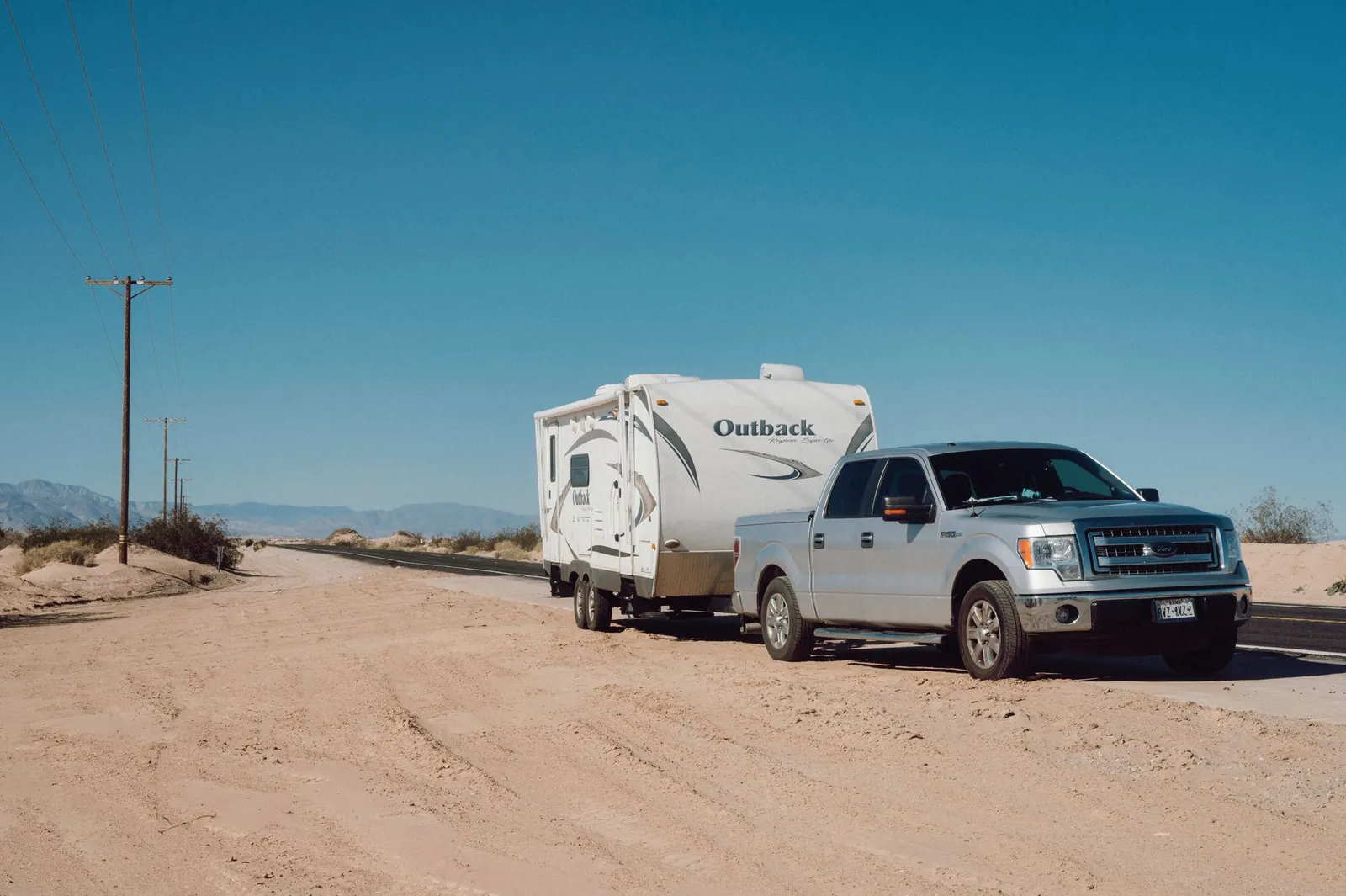
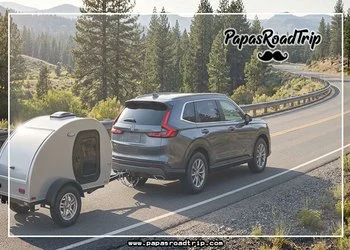
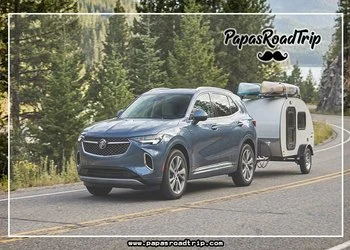
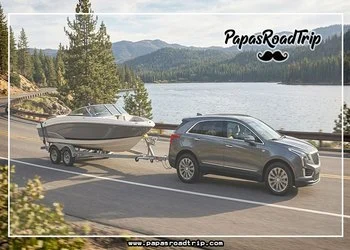
The 2016 Outback is a capable light-duty tow vehicle, and owners routinely pull small utility trailers, teardrop campers, small pop-ups, jet skis, and lightweight boats. Where it struggles is at the top of its range.
With the 2.5-liter four-cylinder, a 2,500–3,000-pound trailer means the CVT is working hard, engine rpm climbs on any grade, and passing power evaporates. Fuel economy drops sharply — expect mid-to-high teens in mpg when towing, versus high 20s solo. The 3.6R handles the same load with less drama thanks to its extra torque, but it still isn’t a truck; you’ll feel crosswinds and semitruck bow waves.
Stopping is the other consideration. The Outback’s brakes are adequate for the vehicle, but a 3,000-pound trailer without working brakes will overwhelm them on a long descent. This is exactly why the trailer-brake requirement exists.
Pro Tip: Scale your trailer before your first trip. Load it the way you’ll actually travel, drive to a public scale (many truck stops have certified scales), and weigh the trailer and the tongue separately. A trailer that’s “supposed” to weigh 2,600 pounds often weighs 3,100 loaded — and you want to find that out at the scale, not on a mountain pass.
Matching a Trailer to the Outback’s Towing Capacity
The practical question is what you can actually buy and tow. Here’s how common trailer types stack up against the 3,000-pound ceiling.
| Trailer Type | Typical Dry Weight | Typical Loaded Weight | Verdict for a 2016 Outback |
|---|---|---|---|
| 4×8 utility trailer | 400–600 lb | 1,500–2,500 lb | Comfortable fit |
| 5×8 utility trailer | 600–800 lb | 2,000–3,000 lb | At the limit when loaded |
| Teardrop camper | 1,200–1,800 lb | 1,800–2,500 lb | Good fit with brakes |
| Small pop-up camper | 1,500–2,200 lb | 2,200–3,000 lb | Near limit; brakes essential |
| Aluminum fishing boat (14–16 ft) | 800–1,500 lb | 1,500–2,500 lb | Good fit |
| Jet ski / personal watercraft | 300–800 lb | 800–1,500 lb | Easy fit |
| Travel trailer (conventional) | 2,800–3,500 lb | 3,500+ lb | Over capacity — don’t |
The pattern is clear: the Outback is happiest in the 1,500–2,500 pound range. Trailers in that band leave payload headroom for people and gear, don’t tax the drivetrain, and stop predictably. Above 2,500 pounds you’re using most of the rating and need to be disciplined about loading.
Warning: “Dry weight” on a camper’s spec sheet excludes water, propane, battery, and your gear. A 2,400-pound dry pop-up can easily exceed 3,000 pounds wet and loaded. Always plan around the gross vehicle weight rating of the trailer, not its dry weight.
Loading and Driving Tips That Preserve the Rating
Getting the most out of the Outback’s 3,000 pounds is mostly about discipline in three areas.
Load distribution. Put heavier items over the trailer axle or slightly forward of it, never at the rear. Too little tongue weight causes sway; too much overloads the rear of the car and unloads the front tires, dulling steering. Aim for 10–15 percent of trailer weight on the ball.
Vehicle loading. Keep heavy cargo low and between the axles in the Outback, and don’t stack the cargo area to the roof — that raises the center of gravity and eats into the rear suspension travel.
Driving technique. Increase following distance, brake earlier, and downshift manually on long descents to use engine braking rather than riding the brakes. The Outback’s CVT has a manual mode; use it. Keep speeds moderate — most trailer tires are speed-rated well below highway maximums, and stability degrades quickly above 60–65 mph.
Common Mistakes and How to Avoid Them
- Confusing tow rating with payload. The 3,000 pounds is trailer weight only. Everything in the car comes out of a separate budget.
- Skipping trailer brakes. A 2,800-pound unbraked trailer is a genuine hazard and, depending on your state, potentially illegal.
- Using a bumper hitch or a hitch not rated for 3,000 pounds. Verify the hitch’s capacity label, not just that it fits.
- Forgetting the brake controller. If your trailer has electric brakes and you haven’t installed a controller, the brakes don’t work.
- Trusting dry weight. Weigh the loaded trailer.
- Ignoring tongue weight. A bathroom scale and a tongue-weight gauge are cheap insurance.
- Towing in overdrive-style economy mode on hills. Let the transmission downshift; lugging strains the CVT.
When the Outback Isn’t Enough

If your honest loaded trailer weight lands above 3,000 pounds, no amount of careful loading fixes it — you need a different vehicle. The Outback’s rating is a hard structural limit, and exceeding it voids any argument you’d have in a crash or warranty dispute.
For trailers in the 3,500–5,000 pound range, shoppers typically move to midsize SUVs and trucks; above that, full-size trucks. The Outback remains an excellent daily driver and a fine light-duty tow rig — it just isn’t a tow vehicle for a conventional travel trailer.
The National Highway Traffic Safety Administration publishes consumer safety information on vehicle ratings and recalls, which is worth checking for any used Outback you’re considering, including whether outstanding recalls have been addressed.
Related guides
- Subaru Outback Roof Rack Problems: Common Issues & Easy Fixes
- Subaru Outback Battery Problems: Causes, Solutions & Tips
- Subaru Outback Years to Avoid: Expert Guide for Smart Buyers
Frequently Asked Questions
Can a 2016 Subaru Outback tow 3,500 pounds?
No. The maximum rated trailer weight for every 2016 Outback trim is 3,000 pounds. Towing 3,500 pounds exceeds the manufacturer’s rating and the vehicle’s structural and cooling limits, and it can void warranty coverage and create liability if something goes wrong. Stay at or below 3,000 pounds loaded.
Do I need trailer brakes to tow with a 2016 Outback?
Yes, for anything but the lightest trailers. Subaru’s towing guidance requires trailer brakes above a relatively low weight threshold, and brakes are essential as you approach 3,000 pounds. If your trailer has electric brakes, you’ll also need a brake controller installed in the Outback.
Does the 3.6R Outback tow more than the 2.5i?
No. Both engines carry the same 3,000-pound maximum tow rating. The 3.6R’s six-cylinder provides more power and a less strained towing experience, particularly on hills, but it doesn’t increase the legal or structural limit. The rating is set by the platform, not the engine.
What hitch do I need for a 2016 Outback?
You need a frame-mounted hitch rated for 3,000 pounds — the Genuine Subaru trailer hitch or a properly rated aftermarket unit from a brand like Curt or Draw-Tite. A bumper-mounted or universal hitch isn’t adequate. Pair it with the correct 4-pin or 7-pin wiring harness.
How much tongue weight can a 2016 Outback handle?
Tongue weight should be about 10–15 percent of loaded trailer weight, so roughly 300–450 pounds at the full 3,000-pound rating. That weight counts against the Outback’s payload capacity of roughly 1,000–1,100 pounds, along with passengers and cargo, so it directly reduces how much you can carry inside the car.
Can I tow a camper with a 2016 Outback?
Yes, within limits. Small teardrop campers and lightweight pop-ups in the 1,500–2,500 pound loaded range are a good match. Conventional travel trailers almost always exceed 3,000 pounds loaded and aren’t appropriate. Always plan around the trailer’s gross weight, not its dry weight.
Conclusion
Before your first tow, load the trailer the way you’ll actually travel and run it across a certified scale — trailer weight and tongue weight separately — then compare both against the 3,000-pound rating and the Outback’s door-jamb payload sticker. Ten minutes at a scale tells you more than any spec sheet, and it’s the single step that keeps a light-duty tow rig like this one comfortably inside its limits.