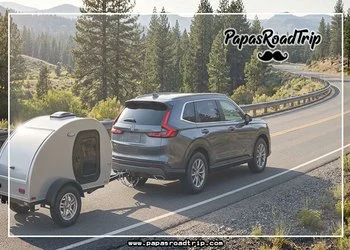
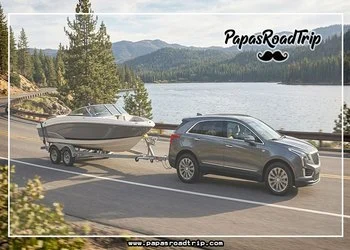
The buick envision towing capacity is 1,500 pounds on every trim, and that figure hasn’t changed across the current generation. Buick lists it in the owner’s manual and the trailering section of the vehicle guide. That’s a modest number for a mid-size SUV, and it shapes what you can safely pull. Here’s what the 1,500 lb limit covers in practice, how it’s measured, and where it stops being the right vehicle for the job.
What the Envision’s tow rating actually means
The Envision is a compact-to-midsize five-seat SUV built for city driving and highway cruising, not for hauling. Its 1,500-pound rating is the maximum weight of a loaded trailer the vehicle is engineered to pull safely. That number includes the trailer plus everything on it — cargo, water, fuel in the trailer’s own tank.
The rating assumes a properly equipped vehicle: the factory hitch receiver, the correct wiring harness, and trailer brakes if the load needs them. Buick publishes the exact figure in the owner’s manual under “Trailering,” and you can confirm it for your model year at Buick’s owner manual site. Always check your own year — ratings can shift with a redesign.
The misconception people bring here is simple: they assume a mid-size SUV can pull a small camper or a boat because it looks big enough. Size isn’t the limit. The Envision’s unibody structure, its engine cooling, and its brakes set the ceiling, and 1,500 pounds is where Buick draws the line.
Weigh the trailer loaded, not empty. A folding camper that lists at 1,100 pounds dry can pass 1,500 once you add a battery, propane, water and gear, and that’s the number that counts against the rating.
Passengers and cargo in the Envision count too. Buick’s figure assumes the tow vehicle is loaded within its own limits, so a car full of people and luggage leaves less margin for tongue weight on the hitch.
If your loaded trailer comes in under 1,500 pounds, the Envision will tow it. If it lands over, no hitch upgrade changes the rating — the ceiling belongs to the vehicle, and exceeding it puts strain on the brakes and cooling that the warranty won’t cover.
How to match a trailer to the Envision
Work through these decisions in order. Each one settles the next.
- Weigh your loaded trailer, not the empty one. A trailer’s dry weight is printed on its label, but cargo, water and gear add up fast. A 1,200-pound empty trailer with 400 pounds of cargo is already over the limit. Use a public scale — many truck stops have one — and weigh the trailer loaded.
- Check the tongue weight. Aim for roughly 10% of the trailer’s total weight on the hitch, so about 150 pounds at the 1,500-pound ceiling. Too little causes sway; too much overloads the rear axle.
- Confirm the hitch and wiring are factory or equivalent. The Envision needs a receiver rated for the load and a 4-pin or 7-pin connector that matches your trailer lights. A dealer or a hitch shop installs these; don’t improvise wiring.
- Decide whether the trailer needs its own brakes. Many states require trailer brakes above a certain weight — often around 3,000 pounds, which the Envision never reaches, but some set it lower. Check your state’s DMV rules before you tow.
- Read the payload sticker on the driver’s door jamb. Towing capacity and payload are different limits. Passengers and cargo in the SUV count against payload, and a full car plus a tongue-heavy trailer can exceed it even when the trailer itself is under 1,500 pounds.
- Check your owner’s manual for the break-in rule. Buick, like most makers, advises against towing during the first miles of a new vehicle. The manual states the exact figure for your year.
The judgement call that separates a good tow from a bad one is the margin. Towing at 1,450 pounds on a flat highway in cool weather is fine. Towing 1,500 pounds up a long mountain grade in summer heat is a different job, and the Envision’s cooling system will feel it. Leave yourself room below the ceiling when the route is hard.
Buick Envision towing capacity at a glance
The table below covers the variations that change your answer. Every row assumes the factory hitch and correct wiring.
| Your situation | What to do | The figure that matters | What to watch for |
|---|---|---|---|
| Small utility trailer, empty | Safe to tow | Up to 1,500 lb loaded | Weigh it loaded, not empty |
| Single jet ski and trailer | Usually fine | Around 800–1,200 lb typical | Water in the hull adds weight |
| Small aluminum boat, 14 ft | Often fine | Check boat + motor + trailer + fuel | Fuel and gear push it up fast |
| Pop-up camper | Usually over the limit | Most exceed 1,500 lb dry | Check the dry weight label first |
| Two snowmobiles on a trailer | Over the limit | Typically 1,800 lb and up | Needs a larger tow vehicle |
| Travel trailer, any size | Not suitable | Smallest are near or over 1,500 lb | Rent or borrow a truck instead |
| Steep mountain route | Reduce load | Stay well under 1,500 lb | Heat and grade stress the drivetrain |
Where good towing and bad towing split
The difference between a smooth tow and a white-knuckle one comes down to preparation before you leave, not skill behind the wheel. People who tow well load the trailer first, check the hitch second, and only then start the engine. They distribute weight so the trailer sits level, with heavier items over the axle rather than at the ends.
They also check tire pressure on both vehicles cold, before any driving. Underinflated trailer tires overheat and fail, and the Envision’s own tires need to be at the pressure on the door jamb sticker, not the number on the tire sidewall. A torque wrench on the lug nuts and a walk-around check of the coupler latch take two minutes and prevent most on-road surprises.
Partway through a long tow, good practice means stopping after the first 50 miles or so to re-check the hitch, the lights and the tire temperatures by hand. Things settle and shift in the first stretch. After that, a check at every fuel stop is enough.
What experienced towers leave alone matters too. They don’t add suspension helpers or airbags to “increase” capacity — those change how the vehicle rides, not what it’s rated to pull. The 1,500-pound figure is set by Buick’s engineering and can’t be raised with aftermarket parts. Treat any product that claims otherwise as marketing, not engineering.
Common Envision towing problems and fixes
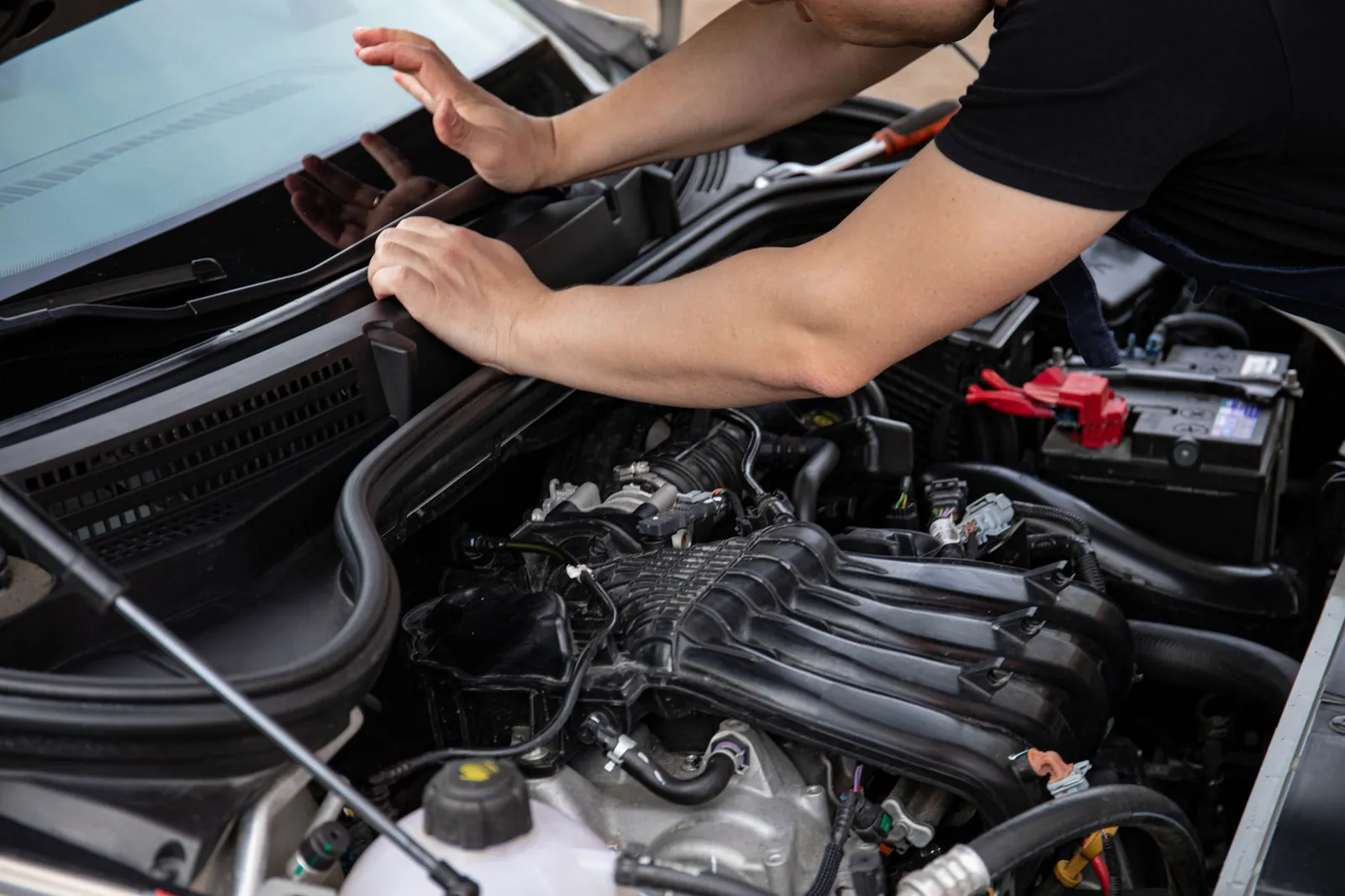
Most issues show up in the first few miles. Match what you notice to the likely cause.
| What you notice | What it usually means | What to do first |
|---|---|---|
| Trailer sway at highway speed | Too little tongue weight or load too far back | Move cargo forward, aim for 10% on the hitch |
| Trailer lights don’t work | Wiring connector mismatch or a blown fuse | Check the 4-pin vs 7-pin match and the vehicle fuse box |
| Rear of the SUV sits low | Tongue weight too high or payload overloaded | Weigh the tongue and remove cargo from the SUV |
| Brakes feel weak on a downhill | Trailer pushing the vehicle, no trailer brakes | Slow down, use a lower gear, don’t ride the brakes |
| Transmission runs hot on a climb | Load near the limit on a steep grade | Reduce load or take a gentler route |
What to confirm before you hitch up
Four things are worth checking for your own case, and each has a clear place to find the answer. First, the exact rating for your model year — the owner’s manual, not a forum. Second, your state’s trailer brake and lighting rules — your state DMV website. Third, the real loaded weight of your trailer — a certified public scale. Fourth, your vehicle’s payload sticker — the driver’s door jamb.
Payload is the one people skip, and it’s the one that catches them. The Envision’s rating assumes the tow vehicle is loaded within its own payload limits, so passengers, cargo and tongue weight all count against that number. Every passenger, every bag in the back, and the tongue weight of the trailer all come out of that same number.
Weigh the tongue with the trailer loaded the way you’ll actually tow it, not empty. A tongue scale is cheap and takes a minute.
If your trailer needs brakes, a brake controller install, or a custom hitch, that’s a job for a qualified hitch shop or dealer. Wiring mistakes can damage the vehicle’s electrical system, and a badly installed hitch is a safety risk on the road.
One more: confirm the hitch itself is rated for the number you found in the manual. A hitch bolted on by a previous owner may be rated lower than the Envision is.
Keeping your Envision tow-ready
After a tow, wash the hitch receiver and check the wiring connector for corrosion — road salt and water get in and cause flickering lights later. Store the ball mount and pins somewhere dry, and inspect the hitch bolts for looseness once a season if you tow often.
The sign that the setup needs attention again isn’t a fixed date. It’s a change: new tires on the trailer, a different load, or lights that start behaving oddly. Re-weigh and re-check whenever any of those change.
Buick’s maintenance schedule in the owner’s manual covers fluid intervals, and towing counts as “severe service” in most manuals — check whether your year says so and shorten the oil change interval accordingly.
One thing owners skip: the trailer’s own tires and bearings age even when the trailer sits. Check the date code on the sidewall and replace trailer tires by age, not tread depth alone. Repack the bearings on the trailer’s schedule, not the Envision’s.
If you tow only a few times a year, a pre-trip walk-around beats a maintenance habit. Check the receiver bolts, the connector pins, and the trailer lights before each trip, and you can leave the seasonal inspection for spring.
When the Envision isn’t the right tow vehicle
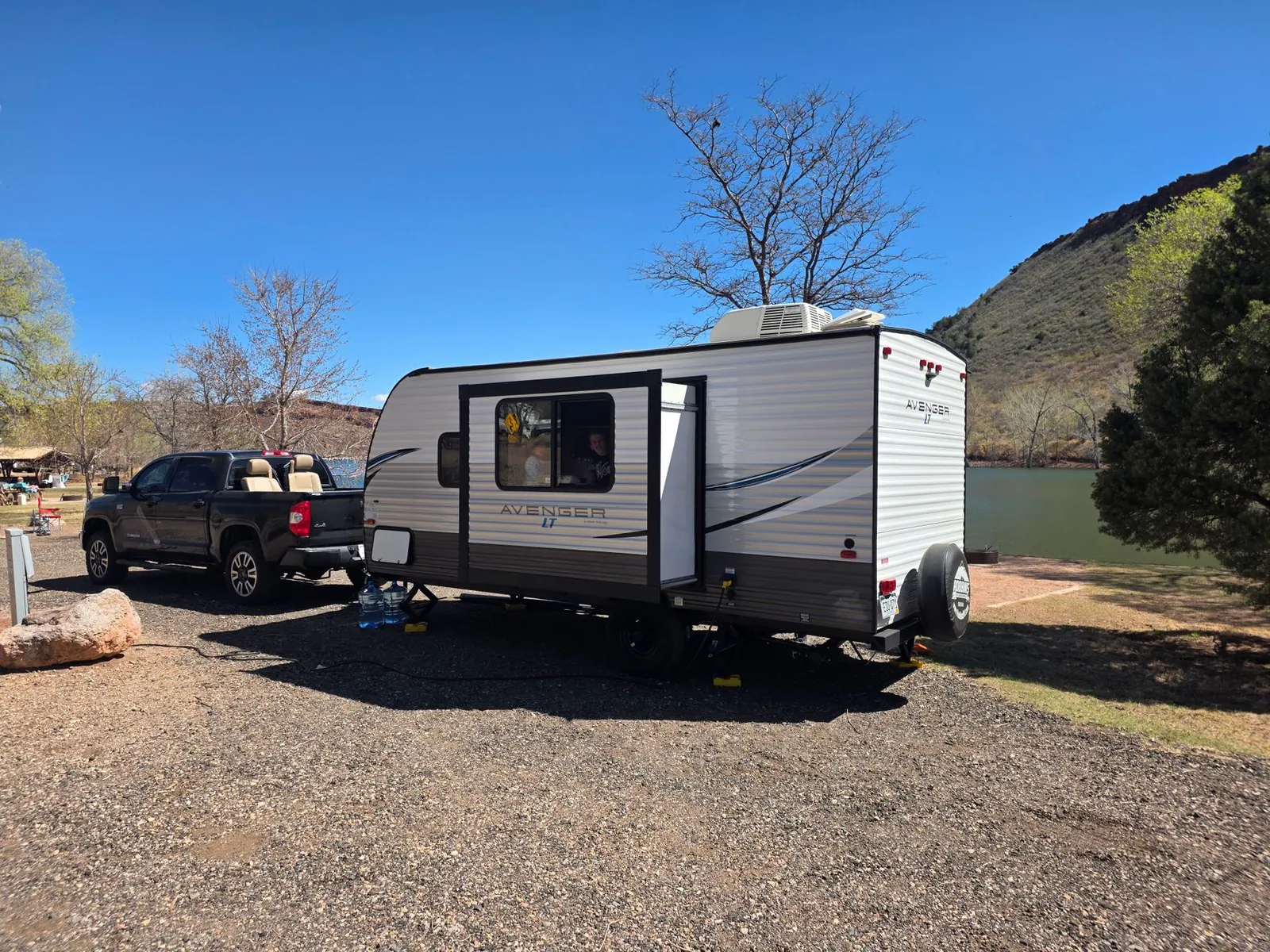
The Envision is the wrong choice in three situations. If your trailer’s loaded weight is over 1,500 pounds — a pop-up camper, a pair of snowmobiles, any travel trailer — you need a vehicle rated for it, like a mid-size or full-size truck. Renting a truck for occasional trips is cheaper than straining the SUV.
Weigh the trailer loaded, not empty. Gear, water and propane add up fast, and a pop-up that lists light at the dealer can cross 1,500 pounds once it’s packed for a weekend.
If you tow regularly on mountain grades or in extreme heat, the margin at 1,500 pounds gets thin, and a body-on-frame SUV or pickup handles the stress better. The same goes for steady highway speeds into a headwind, which loads the engine about as hard as a climb.
And if you tow every week, the wear on the Envision’s transmission and brakes adds up; a vehicle built for towing will last longer in that role. A handful of weekend trips a year is fine. Weekly towing is where the repair bills start.
One mistake owners make: adding a transmission cooler and calling it solved. Cooling helps, but it doesn’t raise the rating on the door jamb, and a warranty claim on an overloaded Envision can be denied.
Frequently asked questions
Can the Buick Envision tow a small camper?
Only a very light one. Most pop-up campers weigh more than 1,500 pounds dry, before you add water, propane and gear. Weigh the camper loaded on a public scale first. If it comes in under 1,500 pounds with the tongue weight around 150 pounds, it’s within the rating.
How much can a Buick Envision actually pull?
1,500 pounds, loaded trailer included, on every current trim. That figure assumes the factory hitch, correct wiring, and trailer brakes where your state requires them. The number is set by Buick and can’t be raised with aftermarket suspension parts. Check your owner’s manual for your exact model year.
Does the Envision need a special tow package?
Buick doesn’t offer a separate heavy-duty tow package that raises the rating. You need a hitch receiver, a wiring harness and a ball mount rated for the load. A dealer or hitch shop installs these. The 1,500-pound limit stays the same with or without dealer-installed accessories.
Is it safe to tow 1,500 pounds with the Envision?
Yes, within the conditions Buick sets. Keep the loaded trailer at or under 1,500 pounds, keep tongue weight near 10%, and stay within the payload sticker on the door jamb. Reduce speed on grades and in wind. Towing at the ceiling on a hot mountain climb is where it gets uncomfortable.
What happens if I tow more than the rating?
You overload the brakes, transmission and cooling system, and you may exceed your insurance coverage if there’s a crash. Handling gets unstable, especially in wind or on downhill grades. The rating is a safety limit set by the manufacturer, not a suggestion. If your load is heavier, use a different vehicle.
How long does it take to install a hitch on an Envision?
A hitch shop typically needs one to two hours for a receiver and wiring on this vehicle, assuming the parts are in stock. Dealer installation may take longer if they order parts. Ask for the exact time when you book, since it varies by shop and by whether your Envision already has the wiring prep.