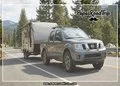
The ford f150 towing capacity depends on how the truck is built, not just which model you buy. The maximum is 13,500 lb, and that figure belongs to one specific setup: a Regular Cab, 8-foot bed, 4×2, with the 3.5L EcoBoost V6 and the Max Trailer Tow Package. Most F-150s on a dealer lot tow far less.
What the towing number really measures
Ford’s towing figure is the most weight a specific truck build can pull.
The rating isn’t a general promise about the model. It’s a property of one build: cab size, bed length, drive type, engine, axle ratio and tow package all change it. Change one, and the number moves.
People often confuse towing capacity with payload. Payload is what the truck carries — people, fuel, cargo, and the tongue weight of the trailer. Towing capacity is what it pulls. The trailer’s tongue weight counts against payload, so a truck can be under its tow limit and still be overloaded.
This matters for anyone loading a boat, a travel trailer or a work trailer with tools. It’s also why two F-150s that look the same can have very different limits.
Ford publishes its own figures each model year in the Ford towing guide, and the door jamb sticker on your own truck carries the exact payload and axle ratings for that vehicle. Read the sticker, not the brochure.
How to find your F-150’s real tow limit
- Open the driver’s door and read the tire and loading label. It lists the payload limit for that exact truck, in pounds. Write it down.
- Check the axle code on the same sticker. The code tells you the rear axle ratio, which affects towing. Ford’s towing guide matches each code to a rating.
- Confirm your engine and tow package. The 3.5L EcoBoost with Max Trailer Tow is the top setup. The 2.7L EcoBoost and 5.0L V8 sit lower. A truck without a factory tow package usually has a lower limit.
- Match your build in Ford’s towing guide for your model year. Cab, bed, drive type and axle must all match, or the number is wrong for you.
- Subtract tongue weight from payload. Aim for 10–15% of the loaded trailer’s weight on the tongue. A 7,000 lb trailer needs roughly 700–1,050 lb of tongue weight, and that comes off your payload.
- Weigh the loaded truck and trailer at a public scale. Loaded weight is what counts, not the dry weight in the trailer ad.
- Compare both numbers. If either payload or tow weight is over the limit, the load is too much, whatever the brochure said.
The judgement call that decides everything is payload, not towing capacity. A truck rated to pull 12,000 lb may have far less payload than the tow number suggests, and a family plus a heavy trailer tongue eats that fast. Weigh first; pick the trailer second.
If your setup needs a weight-distribution hitch or a brake controller, a trained installer should fit it. Wiring and brake setup done wrong is a safety problem, not a DIY one.
Ford F-150 towing capacity figures by setup
The table below shows typical ranges, not exact figures for every year. Your model year’s Ford towing guide is the only place to confirm your build.
| Your situation | What to use or do | Figure that matters | What to watch for |
|---|---|---|---|
| Regular Cab, 8-ft bed, 4×2, 3.5L EcoBoost, Max Tow | Best-case setup | Up to 13,500 lb | Needs the full Max Trailer Tow Package |
| SuperCrew 4×4, 3.5L EcoBoost, Max Tow | Common high-tow build | Roughly 12,000–13,000 lb | Extra cab weight cuts the rating |
| 5.0L V8, crew cab, 4×4 | Popular V8 choice | Roughly 10,000–11,500 lb | Axle ratio changes the number |
| 2.7L EcoBoost, crew cab | Everyday and light towing | Roughly 7,500–9,000 lb | Check payload before a travel trailer |
| Any F-150 with the 2.7L or 3.3L and no tow package | Light utility trailers only | Lower still | Aftermarket hitches don’t raise the rating |
| F-150 Lightning (electric) | Different truck, different limits | Up to about 10,000 lb | Battery weight cuts payload |
| Trailer with 10–15% tongue weight | Subtract from payload | 700–1,050 lb for a 7,000 lb trailer | Payload is often the real ceiling |
What separates a safe tow from an overloaded one
Experienced towers start with the trailer, not the truck. They weigh the loaded trailer first, work out the tongue weight at 10–15%, and only then check whether the truck’s payload covers it. That order stops the common mistake of buying a trailer that fits the tow rating but overloads the truck.
They also read the door sticker before anything else. The sticker is specific to that vehicle, so it beats any chart online. A truck with added accessories — a bed cap, a winch, a toolbox — carries less payload, because that weight counts too.
Partway through a trip, they check tire pressure cold and look at how the trailer sits. A trailer that sags at the rear or lifts the truck’s nose means the weight distribution is wrong. Fix it before the next leg, not after.
What they leave alone is the truck itself. Lifting a truck or fitting bigger tires can change how it tows, and Ford’s rating assumes the stock setup. If you change the suspension or tire size, treat the original rating as no longer guaranteed.
One more detail: the hitch receiver has its own rating stamped on it. A receiver rated for 5,000 lb in weight-carrying mode caps the setup at that figure unless you use a weight-distribution hitch rated higher.
Common towing problems and fixes

| What you notice | What it usually means | What to do first |
|---|---|---|
| Truck sags at the rear when hitched | Too much tongue weight or payload | Reweigh and move cargo; add a weight-distribution hitch |
| Trailer sways at highway speed | Tongue weight too low or load balanced wrong | Shift weight forward to raise tongue weight to 10–15% |
| Brakes feel weak on a downhill | Trailer brake controller not set right | Adjust the controller gain and test at low speed |
| Engine strains on hills | Load near or over the limit | Weigh the setup; a lighter trailer or a higher-rated build is the fix |
| Towing figure doesn’t match the brochure | Different build or missing tow package | Check the door sticker and your year’s Ford towing guide |
Sway that starts only when a semi passes you is usually a hitch setup problem, not a truck problem. Sway that starts on its own at 60 mph and builds means the load is wrong. Pull over and fix it before the next on-ramp.
A weight-distribution hitch moves weight to the front axle, so recheck the front fender height after you tension the bars. If the front comes back to its unhitched height, the bars are set right.
The door sticker’s payload number is the one that limits you, and it’s almost always lower than the brochure towing figure. Subtract the weight of passengers, fuel and gear before you compare it to your trailer’s tongue weight.
If the truck squats level but the steering feels light, the bars are too loose — add tension and recheck front fender height. Back them off a link and test again on a empty lot.
Rules and ratings you should confirm
Before you hook up, confirm five things for your own truck. First, the payload and axle ratings on the door jamb sticker. Second, the hitch receiver’s stamped rating, which you’ll find on the receiver itself. Third, your state’s trailer brake rules — many states require trailer brakes above a certain weight, and your state DMV or motor vehicle office publishes the figure.
Fourth, your driver’s licence class. Some states require a special endorsement for heavy trailers, and the DMV is the place to check. Fifth, your insurance policy — confirm the trailer is covered before you tow it.
Ford’s own towing guide for your model year settles the truck-side numbers, and it’s free to download. Don’t rely on a dealer’s memory or a forum post.
If your trailer needs a brake controller wired in, or the hitch needs welding, that’s a job for a qualified installer. Getting it wrong risks the brakes failing when you need them.
Keeping your tow setup in good shape
Once your setup is dialed in, write the numbers down: loaded trailer weight, tongue weight, payload used, and tire pressures. Keep that sheet in the glovebox. It saves you reweighing every trip.
Check tire pressure cold before each tow, and check the trailer tires too — they carry the load and fail quietly. Look at the hitch ball and coupler for wear, and confirm the safety chains cross under the tongue.
Recheck the numbers whenever something changes: a new trailer, added truck accessories, or a different load. There’s no fixed interval that fits every truck — the sign it’s due is any change to what you’re carrying or pulling.
Weigh the truck once loaded for a trip, not empty. A full tank, passengers, and gear in the bed all count against payload, and that’s the figure that decides whether your tongue weight still fits.
On an F-150, check the door-jamb sticker for the payload rating of your exact truck. Two trucks that look identical can carry different amounts, so never borrow a number from a friend’s truck or a brochure.
If a trip is coming after months parked, do a short local run first. Get up to highway speed and brake firmly in a empty lot. Any shimmy, pull, or new noise means something changed while it sat.
When the F-150 isn’t the right truck

The F-150 is the wrong choice when your loaded trailer sits near the top of its range every trip. Running at the limit wears the truck faster and leaves no margin for hills or heat. A Super Duty is built for that.
It’s also wrong when payload is the real problem. A heavy fifth-wheel trailer or a truck camper needs payload the F-150 doesn’t have, whatever its tow rating says.
Check the door jamb sticker before you sign, not the brochure. Payload is the truck’s own weight subtracted from its gross vehicle weight rating, and every option, running board and bed liner comes out of it. On a well-equipped F-150 that number can land far below what the tow rating suggests.
If your trailer’s tongue weight plus passengers and gear clears the sticker with room to spare, the F-150 is fine. If it doesn’t, no hitch setup fixes it — you need a heavier truck.
And if you tow only a small utility trailer a few times a year, a lower-spec F-150 — or a smaller truck — does the job for less money and fuel.
Related guides
- Ford Bronco Towing Package: Ultimate Guide for Heavy Hauling
- Ford Ranger Tow Package: Ultimate Guide to Maximize Towing Power
- Ford Maverick Towing Package: Ultimate Guide for Maximum Hauling
Frequently asked questions
What is the maximum towing capacity of a Ford F-150?
13,500 lb, and only on the specific build that earns it: a Regular Cab, 8-foot bed, 4×2 with the 3.5L EcoBoost V6 and Max Trailer Tow Package, per your model year’s Ford towing guide. Any other cab, bed or drive type lowers the figure. Check your model year’s Ford towing guide for your exact build.
Can a Ford F-150 tow a 10,000 lb trailer?
Yes, if your build is rated for it. Crew cab 4×4 models with the 3.5L EcoBoost or 5.0L V8 often clear 10,000 lb. The catch is payload: a 10,000 lb trailer needs roughly 1,000–1,500 lb of tongue weight, which comes off your payload. Weigh both before you commit.
Why is my F-150’s towing capacity lower than the brochure?
Because the brochure shows the best-case build, not yours. Cab size, bed length, drive type, engine, axle ratio and tow package all change the rating. Your door jamb sticker and Ford’s guide for your model year give the real number for your truck.
How much tongue weight can an F-150 carry?
It depends on your payload, not a fixed number. Aim for 10–15% of the loaded trailer’s weight on the tongue, then subtract that from your door-sticker payload. A 6,000 lb trailer means roughly 600–900 lb of tongue weight, plus passengers and cargo.
Is it safe to tow at the maximum rating?
It’s legal and tested, but it leaves no margin. Towing at the limit on long grades or in heat strains the truck and brakes. Most experienced towers stay 10–20% below the maximum, which gives room for hills, wind and a heavier-than-expected load.
Does a lift kit or bigger tires change my towing capacity?
Yes, in practice. Ford’s rating assumes the stock suspension and tire size. Lifting the truck or fitting larger tires can change stability and braking, so treat the original rating as no longer guaranteed. Ask the shop that does the work how it affects towing.
How often should I check my tow setup?
Before every trip, and any time the load changes. Check tire pressure cold, look at hitch and coupler wear, and confirm the trailer brakes work at low speed. Reweigh whenever you change trailers or add weight to the truck.
Conclusion
Before you sign anything, take the truck you’re considering to a scale and check the door-jamb sticker yourself. It’s the only way to be sure your real setup matches your plans. If the numbers don’t line up, walk away—there’s always another truck.