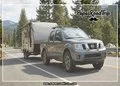
The 2018 Nissan Frontier towing capacity tops out at 6,500 lbs, and that number belongs to specific configurations only. Most Frontier models are rated between 3,500 and 6,500 lbs, depending on cab, bed length and drivetrain. The common V6 Crew Cab 4×2 with a long bed sits at 6,290 lbs. Below are the exact figures by body style, the gear that changes them, and what to check on your own door jamb sticker before you hook up a trailer.
What the rating really means
The 2018 Frontier’s tow rating is the maximum weight Nissan says the truck can pull — trailer plus everything loaded on it — when it’s built a certain way. It’s not one number for every Frontier on the road. Nissan publishes a separate figure for each cab, bed and drivetrain combination, and the lowest-rated part of the truck sets the ceiling.
The truck comes in King Cab and Crew Cab body styles, with a 5-foot or 6-foot-1-inch bed, rear-wheel drive or four-wheel drive, and either a 2.5L four-cylinder or a 4.0L V6 engine. Each mix gets its own rating. That’s why two Frontiers parked side by side can legally tow very different loads.
The rating covers the trailer and its cargo. It doesn’t cover people and gear inside the truck — those count against a separate limit called the payload or GCWR. Load the bed and cab full, and the weight you can still put on the trailer goes down.
One misconception follows this truck everywhere: that every V6 Frontier pulls 6,500 lbs. It doesn’t. The four-cylinder models are rated far lower, and the heaviest Crew Cab 4×4 V6 models lose several hundred pounds against the lightest 4×2. Nissan’s own towing guide lists every combination — check it against your VIN, not against a forum post.
How to find your Frontier’s real rating
- Open the driver’s door and find the certification label. It lists your truck’s GVWR (gross vehicle weight rating) and GAWR (axle ratings). These are the hard limits for your exact build.
- Read the tire and loading information placard, on the same door jamb. It gives the maximum payload for your truck as built — the number that shrinks when you add passengers.
- Note your cab, bed and drivetrain. Crew Cab, 6-foot bed, 4×4 is the heaviest body. King Cab, 5-foot bed, 4×2 is the lightest.
- Match that combination to Nissan’s 2018 towing guide for your engine. This gives the trailer weight rating.
- Weigh your trailer loaded, at a public scale, with the gear you actually carry. A trailer rated at 5,000 lbs empty can pass 6,000 lbs with water, fuel and tools aboard.
- Subtract tongue weight from payload. Tongue weight is typically 10–15% of trailer weight, so a 5,000 lb trailer puts 500–750 lbs on the hitch.
- Check the hitch and ball rating. A Class III hitch and a ball mount rated for your trailer weight are the minimum; the hardware must match or exceed the load.
The judgement call that decides success or failure is step 5. People trust the trailer’s dry weight from the sales sheet. Loaded weight is what the truck actually pulls, and it’s often 15–20% higher than the dry figure.
If your setup needs a weight-distribution hitch or electric trailer brakes, have a qualified hitch shop fit and adjust them. Getting the setup wrong isn’t a DIY fix — it’s a stability and braking problem at highway speed.
2018 Frontier towing capacity by configuration
These are the ratings Nissan published for the 2018 model year. Treat them as the starting point and confirm against your door jamb label — accessories fitted after purchase, like a heavy bumper or a lift kit, reduce what’s left.
| Your Frontier | Engine and drive | Max trailer weight | Watch for |
|---|---|---|---|
| King Cab, 5-ft bed, 4×2 | 2.5L I4, manual | 3,500 lbs | Lowest rating in the range; light trailers only |
| King Cab, 5-ft bed, 4×2 | 2.5L I4, automatic | 3,500 lbs | Same limit; payload fills fast with two people |
| King Cab, 6-ft bed, 4×2 | 4.0L V6 | 6,500 lbs | Highest rating; needs the right hitch class |
| King Cab, 6-ft bed, 4×4 | 4.0L V6 | 6,300 lbs | Four-wheel drive adds weight, cuts the figure |
| Crew Cab, 5-ft bed, 4×2 | 4.0L V6 | 6,500 lbs | Short bed limits long cargo, not towing |
| Crew Cab, 6-ft bed, 4×2 | 4.0L V6 | 6,290 lbs | Long bed adds weight; check tongue weight |
| Crew Cab, 5-ft bed, 4×4 | 4.0L V6 | 6,300 lbs | Popular trim; payload is the real limit |
| Crew Cab, 6-ft bed, 4×4 | 4.0L V6 | 6,100 lbs | Heaviest body; plan for less trailer weight |
What experienced towers get right
The detail that separates a safe setup from a sketchy one is where the weight sits on the trailer. Load the heaviest items over or slightly ahead of the trailer axle, and keep tongue weight around 10–15% of the total trailer weight. Too little tongue weight and the trailer sways at speed; too much and the rear axle and hitch take a beating.
Experienced towers weigh the truck and trailer separately at a public scale before a long trip. They check the front and rear axle loads against the GAWR on the door label, not just the total. A truck can be under its GVWR and still be over on the rear axle — that’s the failure most people miss.
They also leave the truck stock where it matters. Bigger tires, a lift kit and a heavy steel bumper all add weight and raise the center of gravity, and none of that helps towing. If a truck is modified, the usable trailer weight drops by whatever the parts weigh.
Partway through a trip, they stop and check the hitch, the safety chains and the trailer tires. A loose ball mount or a soft trailer tire shows up in the first 50 miles, not at the destination.
What they leave alone: the engine and transmission. The 4.0L V6 is the engine to have for towing in this truck — no tuner or aftermarket add-on changes the rating on the door label.
Common towing problems and what to check
Sway, sag and a hard ride usually trace back to one of a few causes. Match what you notice to the likely reason, then fix the cheapest thing first.
| What you notice | What it usually means | What to do first |
|---|---|---|
| Trailer sways at highway speed | Too little tongue weight, or load too far back | Move cargo forward; aim for 10–15% tongue weight |
| Rear of the truck sits low | Tongue weight over payload, or worn rear springs | Weigh the tongue; add a weight-distribution hitch if needed |
| Brakes feel weak stopping | Trailer has no brakes, or they aren’t working | Fit and test electric trailer brakes above 3,000 lbs trailer weight |
| Truck struggles on hills | Trailer near or over the rating for your build | Recheck your config against the table; lighten the load |
| Hitch or ball mount creaks | Loose hardware or a mount rated below the load | Torque the bolts; replace a mount rated under your trailer weight |
Rules and limits that apply
Nissan’s towing guide is the source for your truck’s rating, and the door jamb label is the source for its GVWR and axle limits. Both come from Nissan and both apply to your specific VIN. When they disagree with a brochure or a dealer’s memory, the label on your truck wins.
Beyond the truck, road rules vary by state. Many states require trailer brakes above a set trailer weight and set speed limits for towing, and some require a special license for heavier trailers. Your state’s department of motor vehicles publishes those rules — check its site or a local office before a long trip.
The NHTSA towing safety guidance covers tire load limits and why underinflated or overloaded tires fail under trailer weight. It’s a good check before any trip with a loaded trailer.
If your trailer, combined weight or license situation is near a legal limit, confirm it with your state DMV rather than a forum. Getting it wrong can mean a fine, a refused insurance claim, or worse on the road.
Keeping the setup safe over time
Once the truck and trailer are matched, the work shifts to checks. Re-weigh the loaded trailer whenever you change what you carry — a new water tank, a toolbox or a second passenger changes the numbers. The door label doesn’t change, but what’s left of your payload does.
Check tire pressure on the truck and trailer before every trip, cold. The placard on the door jamb gives the truck’s figures; the trailer’s tire sidewall gives its maximum. Underinflation is the most common cause of trailer tire failure under load.
Inspect the hitch, ball mount, safety chains and trailer lights each time you hook up. Look for cracks, rust through the metal or a loose bolt. A part that’s worn past its rating is due for replacement, not repair.
After a long trip, wash the underside of the truck and trailer to clear road salt, and check the trailer brakes for adjustment. The sign that brakes are due is a longer stopping distance or a pedal that feels soft with the trailer attached.
Torque the lug nuts on both the Frontier and the trailer to the figure in the owner’s manual, and recheck them after the first 50 miles of any trip with a freshly mounted wheel. A wheel that works loose gives no warning until it fails.
Keep a written log of each re-weigh and each torque check, with the date and the numbers. When something feels off on the road, the log tells you whether the setup changed or the road did.
If the truck sits for weeks between trips, drive it loaded for a short distance before towing far. Brakes and tires that sat idle behave differently from ones in weekly use.
When a Frontier isn’t the right truck
The 2018 Frontier is the wrong choice if your loaded trailer regularly passes 6,500 lbs. No configuration of this truck is rated above that, and no hitch or add-on raises it. A half-ton truck from the same era carries higher ratings — check its own door label before buying.
It’s also a poor fit if you carry heavy cargo in the bed and tow at the same time. Payload and tongue weight share the same limit, so a loaded bed eats into what the trailer can weigh. A larger truck with more payload solves both at once.
Skip the four-cylinder Frontier entirely if you plan to tow anything beyond a small utility trailer. Its 3,500 lb rating leaves little room once the trailer is loaded, and the V6 is the version built for real towing work.
Weigh the tongue and the bed load together before you decide the Frontier is enough. A tongue scale is cheap next to a truck payment, and it settles the question in an afternoon.
The case that trips people up is the occasional big load. If you tow 6,000 lbs twice a year, the Frontier handles it; if that trip is monthly, it doesn’t. Count the trips, not the worst one.
The costly mistake is buying the Frontier for the price and adding airbags or a helper spring to “fix” the squat. Those level the truck; they don’t raise the rating on the door label. You end up over the limit with a truck that looks fine.
Related guides
- Nissan Frontier Tow Package: Ultimate Guide to Maximum Towing Power
- Nissan Frontier Transmission Problems: Quick Fixes & Tips
- Nissan Frontier Years to Avoid: Expert Tips Before You Buy
Frequently asked questions
What is the towing capacity of a 2018 Nissan Frontier?
It ranges from 3,500 lbs to 6,500 lbs, depending on cab, bed, drivetrain and engine. The 6,500 lb figure applies to V6 4×2 models — the King Cab with the 6-foot bed and the Crew Cab with the 5-foot bed. Four-cylinder models are rated at 3,500 lbs. Confirm your exact figure on the door jamb label and Nissan’s towing guide.
Can a 2018 Frontier tow 7,000 lbs?
No. No 2018 Frontier configuration is rated above 6,500 lbs. Towing 7,000 lbs exceeds every published rating for this truck, even the lightest 4×2 V6. If your loaded trailer weighs that much, you need a truck with a higher rating — check its door label before you buy.
How much can a V6 Frontier actually pull with a full load?
Less than the sticker number. Subtract passengers, cargo and tongue weight from your payload limit first. A Crew Cab 4×4 with four adults aboard may have only a few hundred pounds of payload left, which caps the trailer at well under 6,100 lbs. Weigh your setup at a scale to know for sure.
Does the 4×4 version tow less than the 4×2?
Yes, usually by 200–400 lbs. Four-wheel drive adds a transfer case and front axle, which adds weight to the truck. That extra weight comes off the trailer rating. For example, the Crew Cab long bed drops from 6,290 lbs in 4×2 to 6,100 lbs in 4×4.
How long can a 2018 Frontier tow at its max rating?
There’s no time limit in the rating — it’s a weight limit, not a duration. But towing at the maximum stresses the transmission and brakes more than lighter loads. Check the owner’s manual for the severe-duty service schedule, and follow it if you tow heavy often.
Is it safe to tow at the maximum rating?
It’s safe only when every limit is met: trailer weight, tongue weight, payload, axle ratings and tire ratings. Being at the max leaves no margin for error. Weigh your loaded setup and keep some headroom — a setup at 80–90% of the rating handles hills and wind far better.
What happens if I tow more than the rating?
You risk brake fade, transmission overheating and loss of control, and you may void your warranty or break insurance conditions. Police can also stop an overloaded rig. The rating exists because the truck’s brakes, frame and cooling were built for that weight — not more.
Conclusion
Before you shop hitches or plan a route, pull your own truck’s door jamb sticker and confirm what it’s actually rated to pull. That sticker is the final word, not a brochure. If it’s lower than you expected, you’ve still got time to adjust your plans or your trailer.