

For many car enthusiasts, the BMW M3 stands as a symbol of driving excitement and engineering excellence. Since its introduction in the mid-1980s, the M3 has become one of the most desired sports sedans and coupes in the world. Each generation brought something special: razor-sharp handling, thrilling engines, and a perfect balance between everyday comfort and weekend track potential. But not every M3 is created equal. Some model years are famous for their reliability and performance, while others are notorious for costly issues or disappointing changes.
If you’re thinking about buying a used BMW M3, knowing which years to avoid can save you from unexpected headaches and expenses. This guide covers the three main BMW M3 years to avoid, explains the problems that plague them, and helps you make a smarter decision. We’ll also compare these years with better options, share expert tips, and answer common questions from buyers. Whether you’re a first-time M3 shopper or a seasoned BMW fan, this guide will help you avoid costly mistakes and find the right M3 for your needs.
Why Some Bmw M3 Years Should Be Avoided
Before looking at specific years, it’s important to understand why some M3s are less desirable. BMW engineers often push boundaries, but sometimes new technology or cost-cutting leads to problems. Certain years stand out because of:
- Engine issues: Expensive failures, like rod bearing or VANOS (variable valve timing) problems.
- Transmission troubles: Unreliable SMG or DCT gearboxes that cost thousands to fix.
- Electrical glitches: Complex electronics that break down or are expensive to repair.
- Build quality dips: Use of lower-quality materials or design flaws.
- High maintenance costs: Some models need more frequent or costly repairs.
Not all M3s from these years will have problems, but the risk is noticeably higher. For buyers, these risks mean higher costs, less driving fun, and lower resale value.
Overview Of The Bmw M3 Generations
The M3 has gone through several generations, each with its own unique design, engine, and technology. Here’s a quick overview to set the stage:
| Generation | Years Produced | Engine | Body Styles |
|---|---|---|---|
| E30 | 1986–1991 | 2.3L/2.5L I4 | Coupe, Convertible |
| E36 | 1992–1999 | 3.0L/3.2L I6 | Coupe, Sedan, Convertible |
| E46 | 2000–2006 | 3.2L I6 | Coupe, Convertible |
| E90/E92/E93 | 2008–2013 | 4.0L V8 | Sedan, Coupe, Convertible |
| F80 | 2015–2018 | 3.0L Twin-Turbo I6 | Sedan |
| G80 | 2021–present | 3.0L Twin-Turbo I6 | Sedan |
Some generations are legendary (like the E46), but even within great generations, certain years stand out as ones to avoid.
Credit: www.copilotsearch.com
The 3 Bmw M3 Years To Avoid
While many M3s are reliable and fun, three model years regularly appear on “avoid” lists due to recurring issues, high repair costs, and owner complaints. Let’s look closely at each one.
1. 2008 Bmw M3 (e90/e92/e93)
The 2008 M3 was the first year for the fourth-generation M3, known for its high-revving 4.0L V8 engine. This model brought fresh excitement to the M3 lineup, but buying a 2008 can be a risky move.
Common Problems
- Rod Bearing Failure: The S65 V8 engine is famous for rod bearing problems, which can lead to catastrophic engine damage. Repairs can cost $8,000–$15,000. Early production models are especially at risk.
- Throttle Actuator Issues: The electronic throttle actuators often fail, leading to engine limp mode and expensive repairs ($2,000–$4,000).
- SMG/DCT Transmission Faults: The new dual-clutch (DCT) and automated manual (SMG) transmissions had bugs in the first year. Owners report harsh shifts, warning lights, and sudden failures.
- High Oil Consumption: Some engines burn oil rapidly, which can hide underlying engine wear.
- Electrical Gremlins: Early E9X models had issues with electronic modules, leading to random warning lights and failures.
Why 2008 Stands Out
First model years for any car often have “teething problems. ” The 2008 M3, as the debut year for the S65 V8 and new gearboxes, suffered from poor-quality bearings, incomplete software, and rushed production. Many of these problems were fixed in later years, but 2008 models often have higher repair rates and lower reliability scores.
Real-world Example
One owner reported a rod bearing failure at 65,000 miles, resulting in a $12,000 repair. Another faced repeated transmission faults within the first two years, requiring a complete DCT replacement. These aren’t rare cases—forums and used car reviews are filled with similar stories.
Resale Value Impact
Because of these problems, 2008 M3s often sell for less than later models. However, the lower price rarely makes up for the higher risk of major repairs.
2. 2011 Bmw M3 (e90/e92/e93)
By 2011, the E9X M3 was more refined, but this year is still best avoided for two key reasons: end-of-life production issues and persistent engine problems.
Common Problems
- Rod Bearing and Throttle Actuator Issues: These remained a problem, especially for cars that weren’t properly maintained.
- Crankshaft Problems: Some late-production cars developed crankshaft-related failures, leading to engine replacements.
- DCT Transmission Wear: By 2011, many owners were experiencing premature clutch wear and mechatronic failures in the DCT gearbox.
- Aging Electronics: The complex electronics, including iDrive, navigation, and comfort systems, started to show their age, with failing screens and modules.
- Convertible Top Failures: The hardtop convertible (E93) models often had roof motor issues, which are expensive to repair.
Why 2011 Is Risky
End-of-generation cars sometimes use leftover parts or see build quality slip as attention shifts to the next model. The 2011 M3, produced just before the F80 launch, suffered from more frequent “last batch” issues. Some owners also noticed more squeaks, rattles, and trim problems.
Non-obvious Insight
Many 2011 M3s were leased and driven hard, as buyers knew a new generation was coming. These cars may have skipped proper break-in or maintenance, accelerating wear on critical parts.
Insurance And Depreciation
Insurance companies sometimes flag the 2011 M3 for higher risk, leading to higher premiums. Depreciation is also steeper, as buyers prefer earlier, more reliable years or newer F80 models.
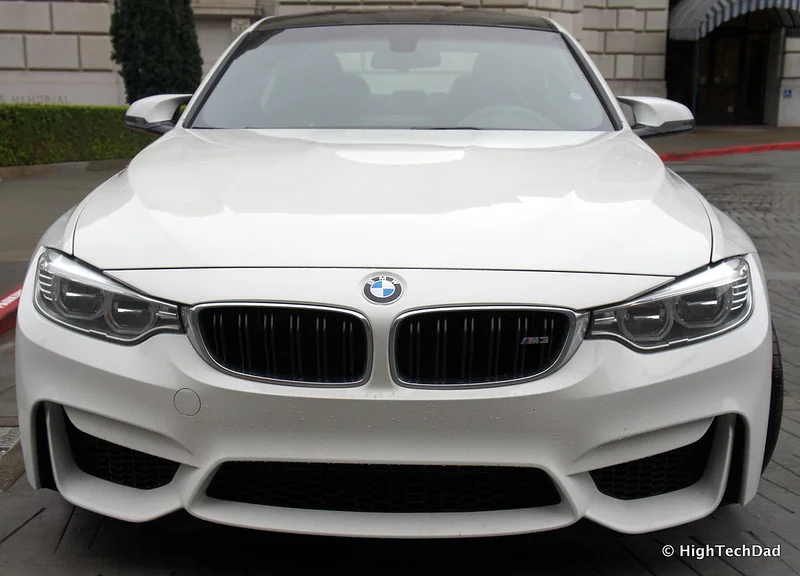
3. 2015 Bmw M3 (f80)
The F80 M3 (2015–2018) marked a big change: turbocharging replaced the naturally aspirated engines. The 2015 model, the first year of this new generation, brought exciting power but also serious problems.
Common Problems
- Crank Hub Failure: The biggest issue is the “spun crank hub.” The S55 engine’s crankshaft hub can slip, causing total engine failure. This is a well-known flaw in early F80s and can cost up to $10,000 to repair.
- Turbocharger Issues: Some 2015 models suffered from turbo wastegate rattle, oil leaks, and turbo failure before 60,000 miles.
- Cooling System Leaks: Plastic cooling system parts are prone to cracks, leading to overheating.
- Drivetrain Clunks and Vibrations: Early cars had rear differential problems, causing clunks and vibrations, especially under hard acceleration.
- Interior Quality Problems: The first F80s had issues with squeaky trim, dashboard rattles, and poor-fitting panels.
Why 2015 Is A Bad Choice
As with many first-year models, BMW was still perfecting the F80 in 2015. Many issues were fixed in 2016 and later. The crank hub problem is especially serious—some BMW specialists recommend replacing it proactively, which is expensive.
Data Comparison
Early F80 M3s, especially 2015 models, show higher warranty claim rates than later years. According to BMW forums and independent repair shops, the first-year F80 is two to three times more likely to need engine or turbo repairs compared to 2017–2018 models.
Ownership Experience
Enthusiasts report that 2015 M3s feel “unfinished” compared to later F80s. More rattles, more software glitches, and more time in the shop.
Comparing The Problem Years To Better Choices
To help you see why these years should be avoided, let’s compare them to the best years from the same generations.
| Generation | Year to Avoid | Best Alternative Year | Main Differences |
|---|---|---|---|
| E90/E92/E93 | 2008 | 2010 | Fewer rod bearing failures, improved electronics, better DCT reliability |
| E90/E92/E93 | 2011 | 2009–2010 | Lower risk of crankshaft and actuator issues, fewer end-of-line build problems |
| F80 | 2015 | 2017–2018 | Crank hub fix, improved turbo reliability, higher build quality |
Buying a later year from the same generation can give you all the performance with much lower risk and ownership costs.
How To Spot A “bad Year” Bmw M3
If you’re shopping for a used M3, it’s not always obvious which year you’re looking at. Here’s how to avoid making a mistake:
- Check the VIN: The 10th digit of the VIN reveals the model year. For example, “8” is 2008, “F” is 2015.
- Review Service Records: Look for evidence of rod bearing, throttle actuator, or crank hub replacements.
- Inspect for Modifications: Many problem cars have been heavily modified to cover up issues or because owners tracked them hard.
- Get a Pre-Purchase Inspection (PPI): Use a BMW specialist who knows these common issues.
- Read Owner Forums: Sites like m3post.com and bimmerforums.com are full of real-world experiences.
Non-obvious tip: Always check if the car was used for track days. Even low-mileage M3s can have hidden wear if driven hard on track.
What To Look For Instead
While some years are best avoided, several M3 model years are known for better reliability and ownership experience. Here’s what to look for:
- E46 M3 (2003–2006): These later E46s had most early issues sorted. Look for models with the “rod bearing recall” completed.
- E9X M3 (2009–2010): Improved rod bearings and electronics; still thrilling to drive.
- F80 M3 (2017–2018): BMW addressed the crank hub and turbo issues, and build quality is better.
When buying any M3, prioritize maintenance history, especially for big-ticket items. A well-kept M3 from a “good year” is much less likely to cause trouble.
Typical Repair Costs For Bad Years
Before you take the plunge, it’s smart to know what repairs can cost if you buy one of the problematic years.
| Problem | Estimated Repair Cost | Model Years Affected |
|---|---|---|
| Rod Bearing Replacement | $8,000–$15,000 | 2008, 2011 M3 |
| Throttle Actuator Replacement | $2,000–$4,000 | 2008, 2011 M3 |
| Crank Hub Fix | $4,000–$10,000 | 2015 M3 |
| DCT/SMG Transmission Repair | $4,000–$7,000 | 2008, 2011 M3 |
| Turbocharger Replacement | $3,000–$6,000 | 2015 M3 |
These are average numbers—some repairs can be even higher, especially at dealerships. Parts and labor are expensive due to the M3’s complex engineering.
Maintenance Tips If You Already Own A Risky M3
If you already have one of these years, all is not lost. Proactive maintenance can help reduce your risk:
- Change oil every 5,000 miles (not the factory interval). Use high-quality synthetic oil.
- Check rod bearings at 60,000–80,000 miles. Many owners replace them as preventive maintenance.
- Inspect the crank hub regularly (for F80). Some shops offer upgraded parts to prevent failure.
- Replace throttle actuators at the first warning. Don’t wait for complete failure.
- Flush transmission fluid every 30,000 miles. This can extend the life of SMG/DCT gearboxes.
- Keep cooling and electrical systems in top shape. Replace worn hoses, sensors, and batteries before they fail.
Taking these steps won’t make a risky M3 bulletproof, but it can help you avoid the worst surprises.

Credit: www.bmwblog.com
What Owners Say: Real-world Experiences
Looking beyond statistics, real owners offer valuable perspective. Many who bought a 2008, 2011, or 2015 M3 share similar frustrations:
- “Loved the way it drove, but my 2008 M3 was always in the shop. Rod bearing failure at 70k miles. Never again.”
- “My 2011 M3 convertible had endless electrical problems. The hardtop stopped working twice, and the iDrive screen failed at 60,000 miles.”
- “The 2015 M3 was a rocket, but after the crank hub slipped, I was left with a $9,000 bill. I wish I had bought a 2017.”
Not all M3s from these years will fail, but the odds are higher. Experienced BMW mechanics often steer buyers toward later years or better-maintained examples.
Is It Ever Worth Buying These Years?
Sometimes, a car from a “bad year” is cheap enough to tempt buyers. But even at a big discount, it’s usually not worth the risk. If you find a 2008, 2011, or 2015 M3 that has:
- Documented major repairs (rod bearings, crank hub, actuators replaced)
- Complete service records
- No track use
- A long, transferable warranty
— then it may be worth considering. Still, expect resale value to be lower, and plan for higher insurance and maintenance.
Non-obvious insight: Sometimes, the cheapest M3 ends up being the most expensive in the long run due to hidden repairs and downtime.
Other M3 Years That Raise Red Flags
While 2008, 2011, and 2015 are the top years to avoid, some other M3s have their own issues:
- 2001–2002 E46 M3: Suffered from early rod bearing problems (fixed by recall) and rear subframe cracks.
- 2016 F80 M3: Still had some crank hub and turbo bugs, but fewer than 2015.
If you’re considering these years, double-check that all known problems have been addressed.
How To Shop For A Used Bmw M3 Safely
Buying any used M3 is a big decision. Here are steps to protect yourself:
- Research specific model years and their known issues.
- Ask for full service records, including proof of major repairs.
- Get a pre-purchase inspection from a BMW specialist, not just a general mechanic.
- Avoid cars with unclear ownership history or cheap modifications.
- Budget for repairs. Even the best M3 will need more maintenance than a regular 3 Series.
If you follow these guidelines, you’ll be much less likely to end up with a problem car.

Credit: m.youtube.com
Should You Buy A Bmw M3 At All?
The M3 is a fantastic car—if you buy the right year and take care of it. The best years offer a mix of performance, excitement, and reasonable reliability. But if you’re not prepared for high maintenance costs or potential repairs, consider a less complex sports sedan or coupe.
Alternatives like the Audi S4, Lexus IS F, or even the BMW 340i are lower-risk choices.
Where To Find More Information
Owner forums, YouTube channels, and BMW specialist shops are the best sources for real-world advice. For deeper reliability data, consider checking resources like Consumer Reports.
Frequently Asked Questions
Is The Bmw M3 Expensive To Maintain?
Yes, the BMW M3 is more expensive to maintain than most regular cars. Annual maintenance can range from $1,500 to $3,000, and major repairs (like rod bearings or crank hub) can cost thousands more. Proper maintenance reduces risks, but you should always budget extra for unexpected problems.
Are Any High-mileage Bmw M3s Safe To Buy?
A high-mileage M3 can be a good buy if it has complete service records and proof that major issues have been addressed. Avoid high-mileage cars from the risky years (2008, 2011, 2015) unless all known problems have been fixed. Always get a pre-purchase inspection.
What Is The Best Bmw M3 Year For Reliability?
The most reliable BMW M3 years are generally the 2003–2006 E46 (with recall work done), 2009–2010 E9X, and 2017–2018 F80. These years have the fewest engine and transmission problems. Still, regular maintenance is essential for long-term reliability.
How Do I Know If An M3 Has Had The Rod Bearings Or Crank Hub Replaced?
Ask for service records or receipts from a BMW specialist. The seller should provide paperwork showing the work was done. If not, assume the car still has the original parts and factor the cost of replacement into your offer. Some sellers post photos of the work as proof.
Is The Bmw M3 A Good Daily Driver?
The M3 can be a great daily driver if you choose a reliable year and keep up with maintenance. It offers comfort, advanced features, and thrilling performance. However, repair costs are higher than a standard 3 Series, and the ride can be stiff on poor roads.
—
Choosing the right BMW M3 is about more than just finding a good price or the right color. By avoiding the 2008, 2011, and 2015 model years, and focusing on well-maintained examples from better years, you’ll enjoy all the excitement of BMW’s legendary M car with fewer surprises. With careful research and smart shopping, your M3 experience can be everything you dreamed—fast, fun, and unforgettable.