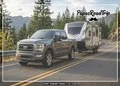
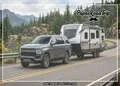
The 2.7 EcoBoost F150 towing capacity is between 7,500 and 9,000 pounds, depending on the truck’s configuration. Ford publishes a maximum of 9,000 pounds for certain rear-wheel-drive models, but that number only applies when you match the right cab, bed, axle ratio and payload package. Most trucks on a dealer lot are rated lower. The exact figure for your truck is on the sticker inside the driver’s door frame, and this guide explains how to read it and what changes it.
What the rating really means
The 2.7 EcoBoost is Ford’s twin-turbocharged 2.7-liter V6 gasoline engine, offered in the F-150 since the 2015 model year. It’s built for people who tow occasionally — a boat, a utility trailer, a small travel trailer — and want better everyday fuel economy than the bigger V8 or 3.5 EcoBoost gives. It’s not a heavy-hauler, and that’s the first thing to get straight.
The rating isn’t one number for the engine. Ford sets a separate maximum for each combination of cab style, bed length, drive type, axle ratio and payload package. Change one of those and the number moves.
The misconception people bring is simple: they think the engine decides the towing capacity. It doesn’t. The engine is only one part. Axle ratio, cooling, suspension and — most of all — payload decide what you can actually pull safely.
One rule to hold onto: the towing number and the payload number are different limits, and you must stay under both. Payload is the weight of everything in the truck — people, fuel, cargo and the trailer’s tongue weight. Ford lists payload on the same door-frame sticker as the towing figure.
How to check your own truck’s limit
- Find the Safety Compliance Certification Label on the driver’s door frame. It lists the GVWR (gross vehicle weight rating) and the front and rear GAWR (axle ratings). This is your starting point.
- Look for the tire and loading information sticker, usually on the same door frame or the door edge. It gives the payload figure for your exact truck as built.
- Check the axle ratio on the same label or in the VIN. Common 2.7 EcoBoost ratios are 3.31, 3.55 and 3.73. A taller (numerically lower) ratio tows less.
- Confirm the payload package. Ford offers a payload package on some configurations that raises the rating. Without it, the truck tows less.
- Open the Ford Towing Guide for your model year. Ford publishes a chart listing every cab, bed, drive and axle combination. Match your truck to a row.
- Weigh the trailer loaded, not empty. A trailer’s dry weight isn’t what you tow. Water, propane, gear and batteries add up fast.
- Do the math on payload. Take the trailer’s tongue weight (typically 10–15% of the loaded trailer weight) and subtract it, plus passengers and cargo, from your payload figure. If the result is negative, the trailer is too heavy for the truck, whatever the towing chart says.
The single judgement call that separates a good result from a bad one is this: you plan around payload, not around the towing number. A truck rated to tow 8,500 pounds can still be overloaded by a 6,000-pound trailer if the tongue weight and passengers push it past its payload limit. The towing chart is the ceiling; payload is the wall you hit first.
If you’re unsure how to read the stickers or the chart, ask the dealer’s fleet or towing specialist to walk you through your specific VIN. That’s a five-minute conversation and it settles the question.
2.7 EcoBoost F150 towing figures by setup
The table below shows the main variations a buyer will meet. Treat these as typical ranges for the 2.7 EcoBoost, not promises for your truck — the door sticker and the Ford Towing Guide for your model year are the final word.
| Your setup | What to do | Figure that matters | What to watch for |
|---|---|---|---|
| Regular cab, 2WD, 3.73 axle, payload package | Best-case towing setup | Up to 9,000 lb | Rare on dealer lots; confirm the package on the sticker |
| SuperCrew, 2WD, 3.55 axle | Common 2WD crew build | Roughly 8,000–8,500 lb | Payload drops with cab size and options |
| SuperCrew, 4WD, 3.55 axle | Common 4WD crew build | Roughly 7,500–8,000 lb | 4WD hardware eats payload |
| SuperCrew, 4WD, 3.31 axle | Highway-geared truck | Lower end of the range | Tall gearing cuts the rating further |
| Any 2.7 EcoBoost with heavy options | Loaded trim, sunroof, big wheels | Subtract from payload first | Options reduce payload, which caps real trailer weight |
| Trailer tongue weight | Set at 10–15% of loaded trailer | Counts against payload | Weigh at a public scale, not by guess |
| Trailer with water and gear | Loaded, ready to camp | Often 500–1,000 lb over dry weight | Dry weight in the brochure isn’t your towing weight |
What careful owners do differently
Experienced towers start at a public scale, not at the brochure. They weigh the truck with a full tank and everyone who rides in it, then subtract that from the GVWR to find the real payload left for tongue weight and cargo. That single step catches most overloading before it happens.
They also read the Ford Towing Guide for their exact model year, because ratings change between years. A 2018 truck and a 2021 truck with the same cab and axle can carry different numbers. Ford publishes the guide by model year, and the chart is the only place all combinations appear together.
Preparing the truck and trailer
Before a trip, they check tire pressure cold against the door sticker — not the tire sidewall — and confirm the trailer brakes work with a manual test at low speed. They load heavy items over the trailer axle, not at the ends, to keep sway down. They leave the truck’s suspension and cooling alone; the 2.7 EcoBoost’s cooling is matched to its rating, and aftermarket add-ons don’t raise the legal limit.
What they don’t do
They don’t trust a salesperson’s towing number, and they don’t trust the engine badge. They don’t tow at the maximum on a first trip — they start lighter and build up. And they don’t add a lift kit or bigger tires without checking what it does to the rating, because both change how the truck handles a load.
Common towing problems and fixes

| What you notice | What it usually means | What to do first |
|---|---|---|
| Trailer sways at highway speed | Too little tongue weight, or load too far back | Move cargo forward over the axle and re-weigh |
| Truck sags at the rear | Tongue weight too high for the springs | Check payload math; a weight-distribution hitch may help |
| Engine feels strained on hills | Trailer near or over the rating | Weigh the loaded trailer and compare to the sticker |
| Brakes feel weak when stopping | Trailer brakes not working or not set | Test the trailer brake controller at low speed |
| Poor fuel economy while towing | Normal for a loaded twin-turbo V6 | Slow down; wind resistance rises sharply with speed |
| Overheating warning on long climbs | Load too heavy for the cooling system | Pull over, let it cool, and check the rating again |
Rules and limits that apply
The door sticker figure assumes the truck as it left the factory. Change the tires, add a lift, or swap the rear springs and you’ve moved away from what Ford certified. The truck may still pull the load, but the number on the sticker no longer describes it. If you’ve modified the suspension or tire size, weigh the truck loaded at a public scale and compare that to the sticker’s gross vehicle weight rating before trusting any tow figure.
Payload is the limit people miss. Towing capacity gets the attention, but the weight of passengers, cargo and the trailer’s tongue weight all count against the truck’s payload rating, which is also on the sticker. A trailer that’s within the tow rating can still put you over on payload once the bed is loaded and the cab is full.
If the trailer’s gross weight stays under about half the truck’s rating, a standard ball mount and a careful loading routine are usually enough. Past that, most states require trailer brakes, and the heavier the trailer the more likely you need a weight-distribution hitch. When in doubt, load the truck and trailer as you’d actually travel and weigh each axle separately.
Keeping the truck ready to tow
After each trip, wash the trailer hitch and check the receiver for cracks or loose bolts. Check tire pressure again when the truck is cold, because towing heats tires and the pressure you set cold is the one that counts. Look at the trailer’s lights and brake wiring before every trip — a dead brake light is the most common cause of a failed roadside check.
Ford’s owner’s manual for your model year lists the severe-duty maintenance schedule, which applies if you tow regularly. Follow that schedule rather than the normal one; the manual states the intervals for your truck.
Between services, watch for transmission shudder, brake fade and coolant loss — any of these means book a service before the next tow.
The 2.7 EcoBoost works hard on a long climb, so give the turbos a minute at idle before you shut down after a heavy pull. It costs you a minute at the ramp and saves the oil cooking in the bearings.
Keep a torque wrench in the truck and re-check the hitch bolts after the first 50 miles of any new setup. Bolts that were fine in the driveway work loose once the trailer starts pushing back.
If you tow only a few weekends a year, the normal schedule is fine. Tow most weeks and you’re on the severe-duty one.
When the 2.7 EcoBoost isn’t the right truck

The 2.7 EcoBoost is the wrong choice if you plan to tow a large travel trailer or a heavy equipment trailer on a regular basis. Those loads sit closer to the 3.5 EcoBoost or the V8’s range, and the 2.7’s payload will run out first. Step up to a higher-rated F-150 or a heavier-duty truck.
It’s also wrong if you tow in mountains every weekend with a full crew and gear. The payload margin disappears fast with four adults and a loaded bed. A truck with the max tow package and a higher payload rating suits that use better.
Watch the door jamb sticker rather than the brochure. Two 2.7 EcoBoost trucks can carry very different payloads depending on cab, bed length and options, and the sticker number is the one that counts when a trailer is hooked up.
And it’s wrong if you only tow a light utility trailer a few times a year and mostly drive in the city — a smaller truck or an SUV may cost less to run. Match the truck to the job, not the other way around.
Related guides
- Do Airbags Increase Payload Capacity
- 3.5 Ecoboost Problems: Common Issues and Solutions
- How to Increase Payload Capacity? [Complete Guide]
Frequently asked questions
Can a 2.7 EcoBoost F-150 tow 10,000 pounds?
No. Ford’s maximum for the 2.7 EcoBoost is 9,000 pounds, and only on specific rear-wheel-drive configurations with the right axle and payload package. Most 2.7 trucks are rated lower, often between 7,500 and 8,500 pounds. Check the sticker on your driver’s door frame for your truck’s exact figure.
How much can a 2.7 EcoBoost F-150 actually tow in real life?
Plan for the lower half of the range. Payload — passengers, cargo and tongue weight — usually runs out before the towing number does. A crew-cab 4WD truck with a family aboard often has room for a trailer well under its rated maximum. Weigh your loaded truck and trailer to know for sure.
Is the 2.7 EcoBoost good for towing a travel trailer?
Yes, for small to mid-size travel trailers. It handles them well on flat ground and moderate hills. For large trailers or regular mountain towing, the 3.5 EcoBoost or V8 gives more margin. Match the trailer’s loaded weight to your truck’s sticker, not to the engine’s reputation.
What axle ratio do I need for maximum 2.7 EcoBoost towing?
The 3.73 axle gives the highest rating in most model years, with 3.55 close behind. A 3.31 axle lowers it. The ratio is printed on your door sticker or can be decoded from the VIN. Confirm it before you trust any towing chart.
Does 4WD reduce 2.7 EcoBoost towing capacity?
Yes, usually by a few hundred pounds. The extra driveline hardware adds weight, which cuts payload, and payload is what limits real trailer weight. A 4WD truck is still fine for most small trailers; just expect a lower number than the 2WD version of the same cab and bed.
How often should I service an F-150 that tows regularly?
Follow Ford’s severe-duty schedule in your owner’s manual rather than the normal interval. Towing counts as severe duty, and the manual lists the shorter oil, transmission and coolant intervals for your model year. If you tow often, check the manual’s severe-duty section before your next service.
What happens if I tow over the 2.7 EcoBoost’s rating?
The truck’s brakes, cooling and suspension are matched to the rating, so stopping distance grows and the transmission runs hotter. Overloading can also affect insurance and liability after a crash. If your loaded trailer is over the sticker, lighten the load or change trucks — don’t tow it and hope.
Conclusion
Before you hook up a trailer, open that door-frame sticker and write the real rating down where you’ll see it. Then load your truck the way you actually travel and weigh it at a scale. That’s the only way you’ll know what you’re really working with.