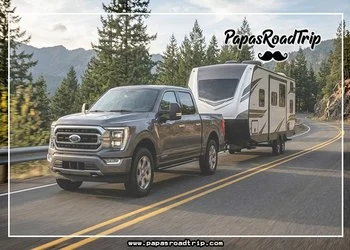
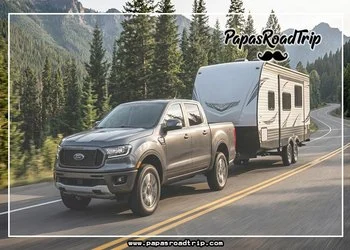
The 2019 Ford Ranger’s towing capacity is up to 7,500 pounds, and that figure only applies when the truck has the optional trailer tow package. Without that package, the rating is lower. Payload and tongue weight also count against the same limits, so the real number depends on how your truck is built and loaded. This guide covers the exact figures by cab and package, the numbers that shrink them, and how to check your own truck’s rating.
What the 7,500-pound rating really means
The 2019 Ford Ranger is a midsize pickup that Ford brought back to the US market after a break of several years. It’s built for people who want a truck that fits in a normal garage and still pulls a small trailer, a boat, or a pair of jet skis. The 7,500-pound figure is the maximum, and it comes from Ford’s own towing guide, not from a dealer’s memory.
The one misconception people bring to this number is that it applies to every Ranger. It doesn’t. Ford rates the truck in specific configurations, and the top figure needs the trailer tow package. That package adds a hitch receiver and trailer wiring, and a trailer brake controller is a separate item you add for a heavy trailer.
Towing capacity and payload are two different limits, and both apply at the same time. Payload is what goes in the truck — people, fuel, tools, and the tongue weight of the trailer. Tongue weight is the downward push the trailer puts on the hitch. If you load the bed full and then hitch a heavy trailer, you can pass the payload limit long before you reach 7,500 pounds.
Ford publishes the figures for each configuration in its towing guide. Check the guide for your exact cab, drive type, and package before you trust any number you see online, including this one.
How to find your Ranger’s real towing number
- Open the driver’s door and read the yellow sticker. It lists the payload limit for your exact truck, as built. This is your starting point, and no website can beat it.
- Check the window sticker or the VIN. Ford’s towing guide lists capacity by configuration. If you don’t have the window sticker, a Ford dealer can pull the build details from the VIN.
- Confirm whether you have the trailer tow package. If you don’t, your rating is lower than 7,500 pounds. Look for the hitch receiver and the trailer wiring connector.
- Weigh your trailer loaded, not empty. A trailer’s dry weight isn’t what you tow. Water, fuel, gear, and batteries all add up, and the loaded weight is the one that counts.
- Work out the tongue weight. Aim for about 10% to 15% of the loaded trailer weight on the hitch. Too little and the trailer sways; too much and you eat your payload.
- Subtract tongue weight and cargo from payload. People, fuel, tools, and tongue weight all come out of the same number. If the total is over the sticker, you’re overloaded.
- Check your hitch and ball rating. A hitch rated for less than your trailer caps your real capacity, whatever the truck’s rating says.
- Match your trailer brake setup. A trailer over roughly 1,500 to 2,000 pounds usually needs its own brakes in most US states. Check your state’s rules, because they vary.
The single judgement call that matters most is the gap between the truck’s rating and what you actually load. A Ranger rated at 7,500 pounds with two adults, a full tank, and a loaded bed may only have room for a much lighter trailer. Weigh the truck at a public scale with everything in it, then do the math.
If your trailer is heavy enough to need a weight-distributing hitch or a brake controller install, have a qualified shop do the wiring. A bad brake controller job is a safety problem, not a DIY project.
2019 Ford Ranger towing capacity by setup
These are the figures Ford publishes for the 2019 Ranger. Your truck’s door sticker is the final word, because options and accessories change the numbers.
| Your setup | What to use | Figure that matters | What to watch for |
|---|---|---|---|
| Ranger with trailer tow package | Standard towing setup | Up to 7,500 lb | Needs the package and a properly rated hitch |
| Ranger without trailer tow package | Base towing setup | Lower than 7,500 lb | Check Ford’s guide for your exact build |
| Crew cab, 4×4, loaded with people | Reduce trailer weight | Payload limit on the door sticker | Tongue weight counts against payload |
| Trailer near the max rating | Weight-distributing hitch | 10–15% tongue weight | Sway and poor steering if the hitch is wrong |
| Trailer over about 1,500–2,000 lb | Trailer brakes | State brake rules | Check your state’s law before you tow |
| Short trips with a light trailer | Standard ball mount | Well under the max | Still check tongue weight and tire pressure |
| Steep grades or high heat | Lower your trailer weight | Ford’s guide for your configuration | Engine and transmission heat climb fast |
What experienced towers get right
The people who tow without trouble start with the door sticker, not the brochure. They write down the payload number, weigh the truck loaded, and only then look at trailers. That order matters, because a trailer that looks fine on paper can push a loaded Ranger over its payload limit.
They also load the trailer with the weight slightly forward of the axle, then check the tongue weight on a scale. A trailer that’s too light on the tongue sways at highway speed, and that’s the failure that scares people most. Too heavy on the tongue eats payload and lifts the front of the truck, which makes steering feel vague.
Partway through a trip, they stop and check the hitch, the chains, the lights, and the tire pressures on both truck and trailer. Heat builds in tires and brakes on long grades, and a five-minute check catches a problem before it becomes a roadside repair.
What they leave alone is the truck itself. They don’t add lift kits, bigger tires, or heavy bumpers and then assume the rating still holds. Those changes add weight and change how the truck handles a trailer, and Ford’s rating assumes a stock truck.
Common towing problems and fixes

| What you notice | What it usually means | What to do first |
|---|---|---|
| Trailer sways at speed | Too little tongue weight | Move cargo forward and recheck tongue weight |
| Truck feels light in the front | Too much tongue weight | Shift cargo back and check payload |
| Brakes feel weak on a downhill | Trailer brakes not working or not set | Check the brake controller and trailer wiring |
| Truck squats a lot when hitched | Load is over the rear axle limit | Weigh the setup and lighten the load |
| Engine or transmission runs hot on grades | Trailer too heavy for the conditions | Slow down and reduce trailer weight |
Sway that starts only above 55 mph and settles when you slow down is usually a loading problem, not a truck problem. Move the load forward before you blame the Ranger.
Sway that begins at 40 mph and gets worse no matter how you load it points to the trailer itself. Check tire pressure on the trailer and look for a bent axle.
If the front feels light but the truck sits level, you’re probably near the payload limit rather than the tongue weight limit. Weigh the truck with the trailer hitched.
Weak brakes on a downhill often mean the controller gain is set too low for the load. Turn it up one setting at a time and retest on a gentle grade before a steep one.
Heat on grades is the one to respect. If the gauge climbs on a short climb with a light trailer, stop and have the cooling system checked.
Rules and limits you should confirm
Ford’s towing guide is the source for the capacity figures, and it lists them by configuration. The door sticker is the source for your payload. Neither one is a suggestion — going over either limit is what causes failures.
Beyond Ford, the rules that apply to you come from your state. Most US states require trailer brakes above a certain weight, and the threshold differs from state to state. Some states also set their own speed limits for vehicles towing trailers. Check your state’s department of motor vehicles or highway patrol website for the current rule, because these change.
Your insurance policy is another place to check. Some policies limit coverage if a trailer is over the truck’s rated capacity. Ask your insurer before you tow near the limit.
If your setup needs a brake controller, a weight-distributing hitch, or wiring work, have a qualified shop install it. Getting it wrong is a safety and liability problem, not a weekend job.
Keeping your setup safe over time
Once your truck and trailer are matched, keep a record of the weights. Write down the loaded truck weight, the loaded trailer weight, and the tongue weight, and keep it with the truck’s paperwork. That record saves you from redoing the math every season.
Check the hitch, the ball, the chains, and the wiring before each trip. Look for rust, cracks, and loose bolts. Check tire pressures on the truck and the trailer when the tires are cold, and check the trailer brake controller with a test pull in a safe, empty lot.
On the Ranger, the receiver and ball mount take the most abuse, so look at the hitch pin and the ball nut as well as the welds. A ball that has worked loose will wallow out the mount, and that’s a replacement, not a tighten-up.
Your setup needs attention again when anything changes — new tires, added accessories, a different trailer, or a heavier load. Recheck the numbers at that point, not on the day of the trip. Ford’s towing guide and your door sticker are the two places to read your own limits.
Weigh the rig loaded at least once a year if you tow often, and again after any change to the truck or trailer. A CAT scale ticket costs little and settles the question faster than adding up parts by hand.
When a Ranger isn’t the right truck

A Ranger is the wrong choice if your trailer’s loaded weight sits close to 7,500 pounds and you also carry people and gear. The payload runs out first, and you’ll be over a limit before you feel it. A full-size truck gives you more room on both numbers.
Run the trailer across a scale loaded, work out 10–15% tongue weight, then subtract that plus passengers and cargo from the payload on your door sticker. Compare what’s left to the weight of your passengers and cargo. If the two are within a few hundred pounds of each other, take the full-size truck.
It’s also the wrong choice if you tow heavy loads regularly on long grades. A midsize truck works harder on climbs, and heat builds faster. A truck with a higher rating and a stronger cooling setup suits that work better.
One or two long climbs a season is fine. A weekly pull over the same mountain is where the Ranger costs you, in transmission and coolant temperatures that climb faster than the gauge suggests.
And it’s the wrong choice if you need to tow a fifth-wheel or gooseneck trailer. The Ranger isn’t rated for those hitches. Look at a heavier truck for that kind of towing.
Related guides
- Ford Ranger Tow Package: Ultimate Guide to Maximize Towing Power
- Ford Ranger Years to Avoid: Buyer Beware Guide
- Ford Ranger Transmission Problems: Troubleshoot & Fix
Frequently asked questions
What is the towing capacity of a 2019 Ford Ranger?
Up to 7,500 pounds, but only with the trailer tow package. Without that package, the rating is lower. Ford publishes the exact figure for each configuration in its towing guide, and your truck’s door sticker gives your payload limit.
Can a 2019 Ford Ranger tow 7,500 pounds without the tow package?
No. The 7,500-pound rating assumes the trailer tow package is fitted. A Ranger without it has a lower rating. Check Ford’s towing guide for your exact build, or ask a dealer to pull the details from your VIN.
How much tongue weight can a 2019 Ranger handle?
Aim for 10% to 15% of your loaded trailer weight on the hitch, and keep the total under your payload limit. A 5,000-pound trailer puts about 500 to 750 pounds on the tongue, which comes straight out of your payload.
Is it safe to tow at the maximum rating?
Yes, if you stay under every limit at once — towing capacity, payload, tongue weight, and your hitch rating. Towing at the max with a full bed and four adults usually breaks the payload limit. Weigh your loaded setup at a public scale to be sure.
Do I need trailer brakes on a 2019 Ranger?
It depends on your state and your trailer weight. Most US states require trailer brakes above a certain weight, often around 1,500 to 2,000 pounds, but the threshold varies. Check your state DMV or highway patrol website for the current rule.
How often should I check my towing setup?
Before every trip. Check the hitch, chains, wiring, and tire pressures when the tires are cold. Recheck the weights whenever you change tires, add accessories, or switch trailers, because those changes affect your limits.
What happens if I tow more than the rating?
You risk brake fade, transmission heat, and loss of control, and your insurance may not cover damage if you were over the rated capacity. Stay under the door sticker and Ford’s guide.
Conclusion
Before you hook up a trailer, take a minute to find the sticker on your driver’s door jamb and compare it to your owner’s manual. That’s the only way to be sure your specific truck is set up safely. It’s worth the effort, and you’ll tow with a lot more confidence.