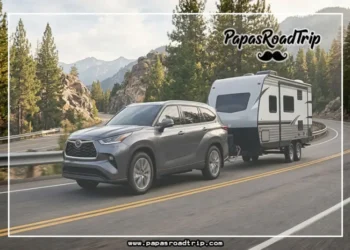
The 2024 Toyota Highlander towing capacity is 5,000 pounds for the gas models and 3,500 pounds for the Hybrid, when properly equipped with the Toyota tow package. The gas model without that package is rated at 3,500 pounds. Those three numbers cover most of what buyers ask. What a two-line answer can’t cover is which trim gets which rating, how trailer weight, tongue weight and payload work together, and where to confirm the figure for your own vehicle.
What the tow rating actually means
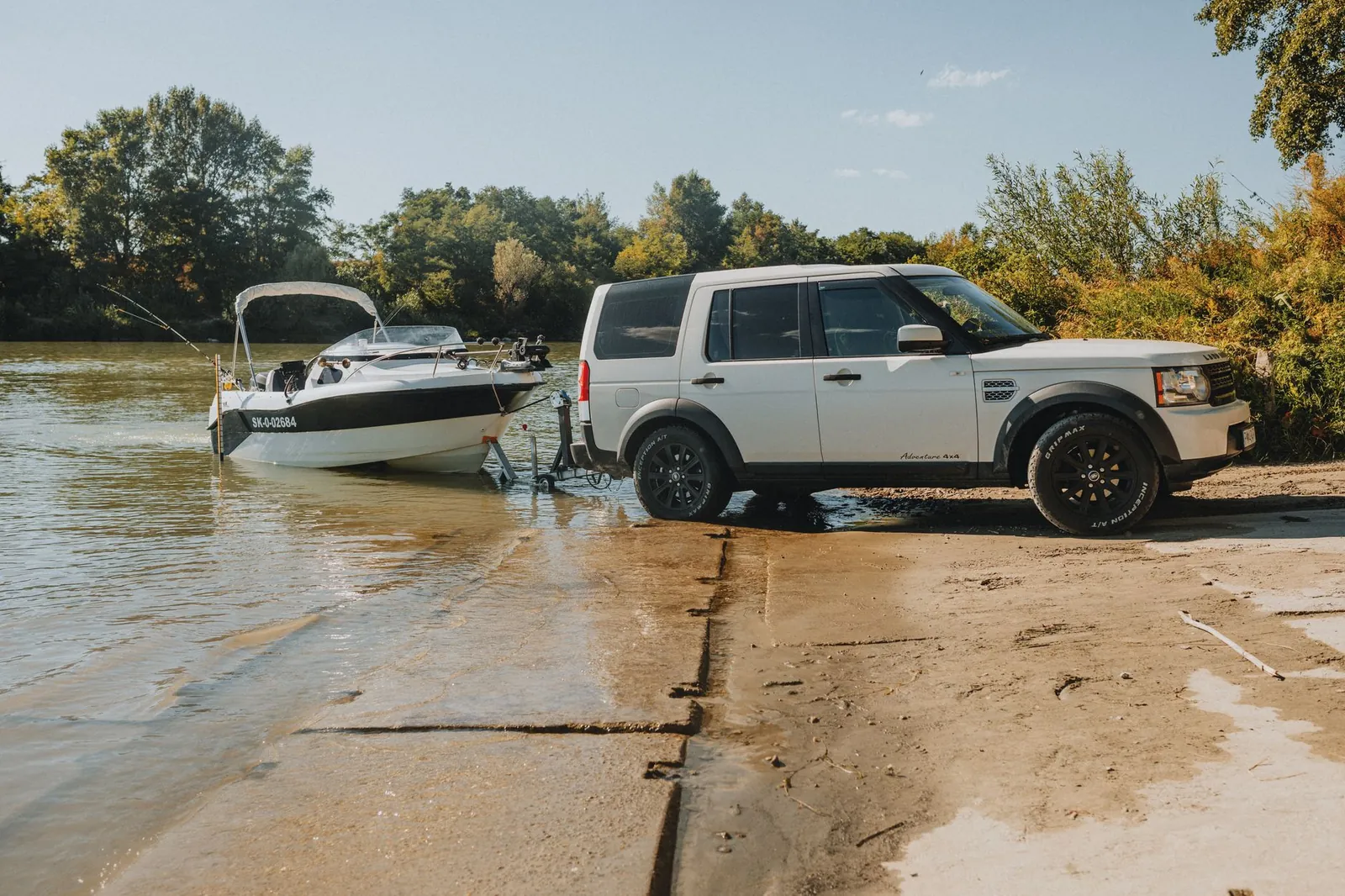
The tow rating is the most weight your Highlander is built to pull, and it isn’t one number for the whole lineup. Toyota publishes a different figure for each trim and powertrain, and the number on the window sticker only applies to a car built with the right equipment.
The Highlander is a mid-size three-row SUV. People buy it for family duty first and towing second — a small boat, a utility trailer, a pair of jet skis, a light camper. It isn’t a truck. The body is unibody, not body-on-frame, so the structure sets a lower ceiling than a Tacoma or a Tundra would have.
The misconception is that every Highlander tows 5,000 pounds. It doesn’t. A front-wheel-drive LE without the tow package has a much lower limit, and the Hybrid tops out lower again. Toyota lists the rating for each configuration in its own towing guide, so check the guide for the exact trim you’re looking at rather than trusting a single figure you read somewhere.
One rule sits underneath all of this: the rating assumes a stock vehicle with the correct hitch, wiring and coolers, a driver and one passenger, and no extra cargo. Load the car with people and luggage and the trailer weight you can safely pull drops.
How to match a trailer to your Highlander
- Find your exact rating. Look up your trim and drivetrain in the Toyota towing guide for the model year, or read the label on the driver’s door jamb. A 2024 XLE gas AWD and a 2024 Hybrid LE don’t share a number.
- Weigh the trailer loaded, not empty. A trailer’s dry weight leaves out fuel, water, batteries and gear. A 3,000-pound dry camper can pass 3,800 pounds ready to camp, which pushes a Hybrid past its limit.
- Check the tongue weight. Aim for 10–15% of the loaded trailer weight on the hitch. A 4,000-pound trailer wants 400–600 pounds of tongue weight, and that weight counts against the Highlander’s payload, not its tow rating.
- Add up payload. Payload is everything in and on the car — passengers, cargo, tongue weight. If the total passes the door-jamb figure, you’re overloaded even when the trailer is under the tow rating.
- Confirm the equipment. The 5,000-pound rating needs the factory tow package: hitch receiver, wiring harness and an engine oil cooler. Without it, the gas model is rated at 3,500 pounds.
- Match the hitch ball and drop. A ball that’s too high or too low tilts the trailer and unloads the tongue. Set the coupler so the trailer sits level.
- Do a short test run. Ten minutes at low speed on a quiet road shows you sway, brake feel and mirror coverage before you commit to a highway trip.
The judgement call that decides good from bad is honesty about the loaded weight. People weigh the trailer empty, add their gear in their head, and round down. Weigh it at a public scale with everything in it, and the decision makes itself.
2024 Highlander towing capacity by trim
Here are the numbers most owners come back for. Each figure assumes the vehicle is properly equipped and loaded within its payload limit.
| Your situation | What to use | Figure that matters | What to watch |
|---|---|---|---|
| Gas, tow package fitted | LE, XLE, Limited, Platinum | 5,000 lb | Needs hitch and wiring |
| Gas, no tow package | Base LE | 3,500 lb | Adding an aftermarket hitch doesn’t raise it |
| Hybrid AWD or FWD | All Hybrid trims | 3,500 lb | Lower ceiling; check payload first |
| Towing a small utility trailer | Any trim | 1,000–2,000 lb | Easy load, but still check tongue weight |
| Towing a camper | Gas V6 with tow package | Up to 5,000 lb loaded | Dry weight misleads; weigh it wet |
| Tongue weight target | All towing trims | 10–15% of trailer weight | Counts against payload |
| Payload check | All trims | Door-jamb label | Passengers plus cargo plus tongue |
The payload figure is the one people skip, and it’s the one that catches them.
What careful owners do differently
The first thing they do is read the door jamb, not the brochure. The label on the driver’s side lists the payload your specific car left the factory with, and it accounts for the sunroof, the second-row captain’s chairs and every other option that adds weight. Two Highlanders of the same trim can carry different payloads.
They also load the trailer before they load the car. Tongue weight comes off the payload, so a heavy trailer hitch eats into what the family and luggage can weigh. Working backward from the trailer is easier than working forward from the suitcase.
Getting the hitch and wiring right
The factory tow package includes a receiver and a wiring harness. Aftermarket hitches are fine for light loads, but they don’t change the rating Toyota published. If your Highlander didn’t come with the package, the 3,500-pound figure still applies to the gas LE.
Wiring matters more than people expect. A 7-pin connector runs trailer brakes and charge lines; a 4-pin only runs lights. Any trailer heavy enough to need its own brakes needs the 7-pin setup and a brake controller.
What they leave alone
They don’t add a lift kit, oversized tires or a stiffer rear spring and expect the rating to hold. Those change the geometry and the stability the rating was built around. They also don’t tow in overdrive on long climbs — dropping a gear keeps the transmission cooler.
Common towing problems and fixes

| What you notice | What it usually means | What to do first |
|---|---|---|
| Trailer sways at highway speed | Too little tongue weight, or load sitting too far back | Move cargo forward to raise tongue weight toward 10–15% |
| Rear of the car sits low | Tongue weight too high, or payload exceeded | Weigh the tongue; shift gear into the trailer over the axle |
| Brakes feel weak on a descent | Trailer has no brakes, or controller set too low | Fit trailer brakes and set the controller per its manual |
| Transmission runs hot on hills | Working near the limit in a tall gear | Downshift, slow down, and check fluid condition |
| Poor rear visibility | Mirrors set for solo driving | Fit extension mirrors and reset them before you leave |
If sway starts, ease off the accelerator gently. Don’t brake hard and don’t steer sharply — that makes it worse.
Sway that returns after you have moved the load forward usually means the trailer is overloaded for the Highlander, not badly packed. Weigh the loaded trailer at a public scale before you tow again. If it comes in over the rating on your door jamb, take cargo out rather than adding tongue weight.
A single low rear corner points at load distribution, not total weight. Shift heavy items toward the trailer axle and recheck.
On a long descent, gear down before the brakes get hot. The engine holds the load and keeps the transmission cooler.
Rules and limits worth confirming
Toyota’s own towing guide is the authority on your rating, and it’s the document to keep in the glovebox. It lists the figure for each trim, the equipment required and the tongue weight limits. Anything else — a forum post, a dealer’s memory, a friend’s truck — is second-hand.
A few things are worth confirming before you hook up. Your state’s motor vehicle agency sets the rules on trailer brakes, lighting and registration, and those rules vary by state. Your insurer may want to know you tow. The hitch maker publishes its own weight limits, and the lower of the two ratings always wins. And your driver’s license may need an endorsement for heavier trailers in some states.
The hitch limit is the one people skip. Check the sticker on the hitch itself, not the box it came in.
Weigh the loaded trailer at a public scale before your first long trip. Brochure weights leave out water, propane and gear, and that gap is where tongue weight limits get broken.
If your trailer needs its own braking system, have a qualified installer fit the controller and test it. Brake wiring done wrong is a safety problem, not a weekend project.
Keeping the setup sound over time
Once you’re towing, check the hitch bolts and the ball mount before every trip — a quick wrench check takes a minute. Look at the trailer tires for cracks and check the pressure cold, since trailer tires often sit for months between uses.
The sign that something needs attention is a change you can feel: new sway, a lower rear ride height, a brake pedal that travels further. Those point to worn suspension, a shifted load or a brake controller that needs resetting, and each is worth a look before the next trip.
Torque matters as much as tightness. Hitch hardware loosens gradually, so a bolt that felt snug last month can be a turn loose now. If a bolt keeps coming back loose after two checks, stop tightening it and have the threads and the mount inspected.
On the Highlander, the rear springs carry both the tongue weight and the family, so a sagging rear end shows up sooner than on a truck. Measure from the ground to the wheel arch, loaded, before your first trip. If that number drops over a season, the springs are tired.
After salt or beach use, rinse the receiver and the wiring plug. Corrosion in the connector is a common cause of flickering trailer lights. Keep the towing guide with the car so the next owner — or the next rental — gets the right number.
When a Highlander isn’t the right tow vehicle
If your loaded trailer passes 5,000 pounds, this isn’t the vehicle — a body-on-frame SUV or a half-ton pickup is. If you tow a camper with a wet weight near the limit every weekend, the transmission and brakes will work hard, and a truck with a higher rating lasts longer.
If you tow on steep mountain grades regularly, the Hybrid’s 3,500-pound ceiling leaves little margin. And if you only tow twice a year, renting a truck for those trips often costs less than buying a bigger vehicle for the other 50 weeks.
The common mistake is buying the Highlander for the 5,000 pounds and discovering the payload sticker later. Tongue weight, passengers and cargo all count against that sticker, not the tow rating.
On a 2024 Highlander, that sticker is on the driver’s door jamb. Check it before you sign, with the whole family in the car and the trailer’s tongue weight added.
The other trap is the Hybrid. Its 3,500 pounds is a real ceiling, not a suggestion, and a fully loaded hybrid drivetrain on a grade is where owners notice it first.
Related guides
Frequently asked questions
Can a 2024 Toyota Highlander tow 5,000 pounds?
Yes, if it’s a gas V6 model with the factory tow package fitted. That covers the LE, XLE, Limited and Platinum gas trims. Without the package, the base LE gas model is rated at 2,000 pounds, and the Hybrid is rated at 3,500 pounds. Check your door jamb and Toyota’s towing guide for your exact build.
How much can the 2024 Highlander Hybrid tow?
3,500 pounds, across all Hybrid trims, when properly equipped. That’s 1,500 pounds less than the gas V6 with the tow package. The gap matters most for camper buyers, because a mid-size camper’s loaded weight can pass 3,500 pounds once water and gear are aboard.
How much tongue weight can a Highlander handle?
Aim for 10–15% of your loaded trailer weight, so a 4,000-pound trailer wants 400–600 pounds on the hitch. That tongue weight counts against the Highlander’s payload, not its tow rating. Your exact limit is on the hitch label and in Toyota’s towing guide.
Do I need a tow package to tow with a Highlander?
Yes, for the full 5,000-pound rating on the gas V6. The package adds the receiver, the wiring harness and an engine oil cooler. An aftermarket hitch gives you something to attach a trailer to, but it doesn’t raise the rating Toyota published for a car built without the package.
Is it safe to tow at the maximum rating?
It’s safe when the trailer is loaded correctly, the tongue weight is in range and the payload isn’t exceeded. Towing at the limit leaves no margin for hills, heat or extra cargo, so many owners stay 10–20% below the rating. Weigh your setup at a public scale before a long trip.
What happens if I tow more than the rating?
You overload the structure, the brakes and the transmission, and you may void your warranty or break state law. Handling gets worse and stopping distances grow. If your trailer is over the rating, change the trailer or change the vehicle — don’t add parts and hope.
How often should I check the hitch and trailer?
Before every trip, and at least once a season if the trailer sits. Check hitch bolts, ball mount tightness, trailer tire pressure and the wiring plug. Any new sway, sag or soft brake pedal means stop and inspect before the next tow.
Conclusion
Before you sign anything, take the exact vehicle you’re considering to a CAT scale with your trailer loaded, then compare the real weights against the door-jamb sticker. That’s the only way to know how your setup behaves on a grade, and it’s worth the hour.