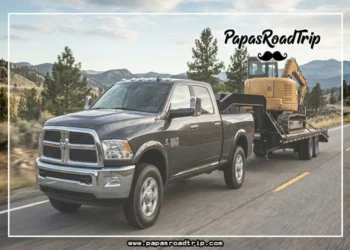
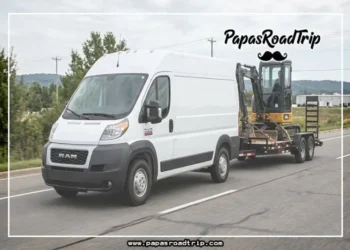
The ram promaster towing capacity is 3,500 pounds for every 2024 model year van, from the 118-inch wheelbase up to the longest 159-inch version. That figure doesn’t change with body length, roof height, or cargo weight carried inside. Only the payload number falls as you load the van. This guide covers the difference between towing and payload, the trims that change your real limit, and the checks to run before you hook up a trailer.
What the 3,500-pound rating really means
The rating is a maximum for a properly equipped van, not a promise for every van on the road. Ram publishes it for the ProMaster with the factory tow package, which adds a receiver hitch, a wiring harness, and the cooling and electrical parts the rating assumes. A van without that package isn’t rated for 3,500 pounds, even though the engine is the same.
This is a cargo van first. People buy it to move appliances, tools, and delivery loads, and towing is a secondary job. The 3.6-liter V6 and the nine-speed automatic handle a small trailer fine, but the van’s tall body and front-wheel drive change how it feels.
The misconception is that a bigger van tows more. It doesn’t here. What changes between them is payload, turning circle, and how stable the van feels with a load behind it.
How to work out what your ProMaster can pull
The order matters. Start with the door jamb sticker, not the brochure, because the sticker states your van’s own gross vehicle weight rating (GVWR) and cargo capacity. Every step below builds on the one before it.
- Read the tire and loading label inside the driver’s door jamb. It gives the maximum cargo weight for that exact van, with its options and seats.
- Weigh the van at a public scale with a full tank and everything you normally carry. Subtract that from the GVWR on the sticker. The result is your real remaining payload.
- Subtract the tongue weight of your trailer from that payload. A 3,500-pound trailer typically carries 10 to 15 percent of its weight on the hitch, so budget roughly 350 to 525 pounds.
- Subtract the weight of passengers and gear in the cab. Four adults plus tools can easily reach 700 pounds.
- Check the trailer’s own loaded weight at a scale, not the dry weight in the ad. Water, propane, and gear add up fast.
- Confirm the hitch and ball match the trailer’s coupler size and that the hitch is rated for at least 3,500 pounds.
- Check the gross combined weight rating (GCWR) in the Ram owner’s manual for your model year. Your van plus trailer plus everything inside must stay under it.
The judgement call is tongue weight. Too little and the trailer sways at highway speed; too much and you eat your payload and lift the front tires. Aim for 10 to 15 percent of the loaded trailer weight and adjust by moving cargo inside the trailer, not by guessing.
If your trailer needs a weight-distributing hitch or electric brakes, that’s a shop job. Ram’s towing guide and a qualified hitch installer handle that properly.
Ram ProMaster towing capacity by setup
The table below pairs each common setup with the figure that decides it.
| Your situation | What to do | Figure that matters | What to watch for |
|---|---|---|---|
| 1500 cargo van, standard roof | Use the factory tow package | 3,500 lb trailer rating | Payload drops by tongue weight |
| 2500 or 3500 with heavy cargo inside | Weigh the van loaded first | Remaining payload after cargo | Towing and hauling share one limit |
| 159-inch wheelbase, long body | Same rating, longer rear overhang | 3,500 lb trailer rating | Tail swing in tight lots |
| Trailer near 3,500 lb loaded | Check tongue weight at a scale | 350–525 lb on the hitch | Sway if tongue weight is low |
| Trailer over 3,500 lb | Don’t tow it with a ProMaster | Over the rating | Insurance and liability risk |
| Van without the tow package | Add a rated hitch and wiring | Package rating, not engine size | Cooling and wiring must match |
| Steep mountain routes | Slow down and check GCWR | Combined weight limit | Brake fade on long descents |
Details that decide a good tow
The first thing to get right is the weighing. A van loaded for work already sits close to its GVWR, and the tongue weight comes straight out of what’s left. Weigh the van loaded, then weigh it again with the trailer attached, and compare both against the sticker. That single habit catches most overload problems before they reach the road.
The second is the hitch setup. A ball that sits too high or too low tilts the trailer and shifts weight onto the wrong axle. Set the ball so the trailer sits level when loaded, and check the coupler latch closes fully with the pin in place. Ram’s own towing guide lists the hitch and ball requirements for each model year, and it’s worth reading for your van.
The third is braking. A trailer near 3,500 pounds needs its own brakes on many state rules, and the ProMaster’s brakes are working harder with that weight behind it. Leave a longer gap, and use a lower gear on long descents instead of riding the pedal.
What experienced drivers leave alone is the engine. The V6 doesn’t need a different tune for towing, and adding one can void your warranty. They also don’t chase a higher rating with aftermarket parts, because the rating comes from Ram, not from a bolt-on.
Common ProMaster towing problems

Most complaints trace back to weight, setup, or expectations. The table below matches what you notice to the likely cause and the first thing to check.
| What you notice | What it usually means | What to do first |
|---|---|---|
| Trailer sways at highway speed | Too little tongue weight | Move cargo forward in the trailer |
| Rear of the van sits low | Tongue weight too high or van overloaded | Weigh the van and the trailer separately |
| Brakes feel weak on descents | Trailer brakes not working or not fitted | Check the wiring and the brake controller |
| Van feels slow uphill | Load near the combined limit | Check GCWR and lighten the load |
| Hitch scrapes on driveways | Ball mount too low | Raise the ball mount or change the drop |
Sway that starts only when a semi passes is usually tongue weight, not the hitch. Add weight to the front of the trailer before you buy a sway bar.
If the van sits low with an empty trailer, the rear springs are the problem, not the load. Air bags or a helper spring fix the stance but don’t raise your ratings.
Weak brakes on a long descent mean the trailer is pushing the van. Pull over and check the controller before the next grade.
On a ProMaster, the hitch receiver itself is often the limit, not the engine. Read the sticker on the receiver and use whichever number is lower.
Rules and checks before you tow
Ram sets the rating, and the National Highway Traffic Safety Administration (NHTSA) sets the safety rules that apply on the road. NHTSA’s tire placard and load limit guidance explains how to read the sticker in your door jamb, which is the figure that applies to your specific van.
Before you tow, confirm four things. Check your state’s trailer brake and lighting rules with your DMV. Check your insurance policy covers towing with your van. Check the hitch’s own weight rating stamped on the label. Check the Ram owner’s manual for your model year’s GCWR.
The door-jamb sticker and the hitch label often disagree, and the lower number wins. A hitch rated for more than your van’s placard doesn’t raise the van’s limit; it just means the hitch isn’t the weak point.
Your model year matters more than the badge on the grille. Ram changed ratings across ProMaster model years and roof heights, so a figure from a forum post about a different year tells you nothing about your van.
If your trailer’s loaded weight lands within about 10 percent of the rating, weigh it at a public scale before your first trip. Guessing high on tongue weight is the mistake that costs people a set of rear tires or a sway event on the highway.
Anything involving a weight-distributing hitch, trailer brake wiring, or a trailer over your rating belongs with a qualified installer or dealer. Getting it wrong can void your warranty or leave you liable in a crash.
Keeping the setup safe over time
Once the hitch is on, check it before every long trip. Look at the hitch bolts for looseness, the ball for wear, and the safety chains for fraying. A quick walk around the van and trailer takes two minutes and catches most problems.
Recheck your weights whenever your load changes. A van that towed fine empty may be over its payload with a full cargo bay and a trailer behind it. Weigh it again after any big change to what you carry.
Store the ball mount and pins somewhere dry so they don’t rust solid. Clean the hitch receiver now and then, and grease the ball lightly so the coupler doesn’t seize. If the van sits for months, test the trailer lights before your first trip back.
The ProMaster’s receiver sits low at the back, so it collects road spray and winter salt faster than a truck’s does. Rinse it out after a salty drive, not just at the end of the season.
After any shop visit that touched the hitch, re-torque the bolts yourself before towing. A hitch that was fine on the lift can work loose over the first few hundred miles.
Keep a small kit in the van: the right wrench for the hitch bolts, a spare pin and clip, and a flashlight. Losing a pin on the road with no spare ends the trip.
If a chain looks frayed or a bolt won’t hold torque, stop towing until it’s fixed. Those two parts are what keep the trailer behind you when something else fails.
When a ProMaster isn’t the right tow vehicle

The ProMaster is the wrong choice when your trailer’s loaded weight passes 3,500 pounds. A car trailer with a full-size vehicle, a large boat, or a travel trailer with water tanks will exceed it. Step up to a full-size pickup or a chassis-cab truck rated for that weight.
Weigh the trailer loaded, not empty, and include water, fuel, and gear. A travel trailer that lists 3,200 pounds dry can pass 3,500 once the tanks are full.
It’s also the wrong choice for long mountain trips with a heavy load. The front-wheel-drive layout and tall body make steep descents and crosswinds more demanding. A rear-wheel-drive truck handles that better.
If most of your towing is a few local trips a month, the van is fine. If it’s weekly, or across state lines, buy the truck and keep the van for cargo.
And it’s wrong if you plan to tow every day. The van’s payload is built for cargo, and constant towing eats into it. A dedicated tow vehicle keeps the van free for the work it does best.
Related guides
- Ram Promaster Years to Avoid: Expert Advice for Smart Buyers
- Do Airbags Increase Payload Capacity
- Ram Etorque Problems: Common Issues and Fixes
Frequently asked questions
Can a Ram ProMaster tow 5,000 pounds?
Towing above the rating puts stress on the brakes, transmission, and hitch, and it can leave you liable if something goes wrong. Check the trailer’s loaded weight at a scale before you plan the trip.
Does the ProMaster 3500 tow more than the 1500?
The 3500 has a higher gross vehicle weight rating, which means more payload for cargo inside the van, but that extra capacity doesn’t raise the trailer limit. The tow package and hitch setup matter more than the model number.
How much tongue weight can a ProMaster handle?
That weight comes out of your payload, so a heavily loaded van may need a lighter trailer. Weigh both at a scale to confirm.
Do I need a special package to tow with a ProMaster?
A van without it isn’t rated for that weight even with the same engine. Check the window sticker or ask a dealer to confirm your van’s build.
Is it safe to tow 3,500 pounds with a ProMaster?
Yes, if the van is within its payload and combined weight limits and the trailer has working brakes and lights. The risk comes from overloading, not from the rating itself. Weigh the van loaded, keep tongue weight in range, and slow down on descents and in crosswinds.
What happens if I tow more than the rating?
You put extra strain on the brakes, transmission, and hitch, and you may exceed your insurance coverage if there’s a crash. The van’s warranty can also be affected.
How long does the factory tow package last?
The hitch and wiring are built to last the life of the van with normal use, but the ball, pins, and chains wear and should be checked before each trip. Rust is the main threat if you drive on salted roads. Clean and grease the hitch receiver now and then to keep it working.
Conclusion
Before you book that trailer, load your van the way you’ll actually travel and visit a scale to confirm where you stand. It’s a quick stop that settles any doubt, and you’ll drive off knowing your setup is safe for the road ahead.