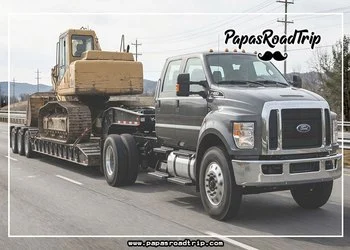
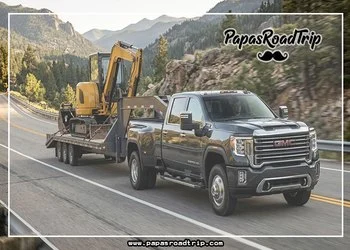
The gmc 3500 towing capacity reaches up to 36,000 lbs when properly equipped. That figure belongs to a 3500 HD Regular Cab, 2WD, dual-rear-wheel truck with the 6.6L Duramax diesel and the Max Trailering Package. Most crew cab 4×4 versions land lower, between roughly 20,000 and 30,000 lbs. Your exact number is printed on the driver’s door jamb sticker. This guide covers the trims, the diesel-versus-gas gap, and the numbers behind them.
What the towing capacity number really means
The GMC Sierra 3500 HD is a heavy-duty pickup built for one main job: pulling very heavy loads. GMC sells it in 2500 HD and 3500 HD sizes, and the 3500 HD is the bigger one. It comes in Regular Cab, Double Cab and Crew Cab body styles, with single or dual rear wheels.
Towing capacity is the maximum weight of a loaded trailer the truck can pull. It’s not the same as payload, which is the weight the truck itself carries — people, fuel, tools, a hitch. These two limits trade against each other. Load the bed heavily and your safe trailer weight drops.
The one misconception people bring here is the single big number. A 36,000 lb figure gets quoted as if every 3500 HD can do it. It can’t. That number needs a specific cab, a specific drivetrain, dual rear wheels, the diesel engine and the Max Trailering Package. Change any one and the figure falls.
GMC publishes the full set of ratings in its trailering guide, and the final authority for your own truck is the certification label on the driver’s door jamb. That sticker lists the gross vehicle weight rating (GVWR) and axle weight ratings for the exact truck you bought.
How to find your own towing number
- Open the driver’s door and read the certification label. It gives your truck’s GVWR and GCWR. These are fixed for your build and never change, no matter what a brochure says.
- Check the engine. The 6.6L Duramax diesel with the Allison transmission pulls the most. The 6.6L gas V8 pulls less, so confirm which one is under your hood before trusting any figure.
- Note your cab and bed. A Regular Cab 2WD truck weighs less than a Crew Cab 4×4, so it can pull more. Every option you added — four-wheel drive, a sunroof, a heavy bumper — takes weight away from your towing room.
- Count the rear wheels. Dual rear wheels raise the rating on a 3500 HD. A single-rear-wheel truck is rated lower.
- Add up everything you’re carrying. Passengers, fuel, cargo and the hitch itself all count. Subtract that total from your payload rating, not from your towing rating.
- Match the hitch and ball to the trailer. A heavy trailer needs a weight-distributing hitch or a fifth-wheel setup. The trailer’s own weight rating must also cover its load.
- Weigh the real setup at a public scale. Loaded trailer weight and tongue weight on a scale settle the question. Paper numbers don’t.
The judgement call that separates a safe setup from a risky one is tongue weight. Too little and the trailer sways; too much and you overload the rear axle. A weight-distributing hitch helps, but it can’t fix a badly loaded trailer.
GMC 3500 towing capacity at a glance
These are the main variations a buyer faces. Treat them as a starting map, then confirm your own truck on its door sticker and in GMC’s current trailering guide.
| Your situation | What to use | Figure that matters | What to watch for |
|---|---|---|---|
| Regular Cab, 2WD, dual rear wheels, diesel | Max Trailering Package, fifth-wheel hitch | Up to 36,000 lbs | Needs the exact build; most trucks don’t match it |
| Crew Cab, 4×4, dual rear wheels, diesel | Fifth-wheel or gooseneck hitch | Lower than the Regular Cab figure | Extra cab and 4×4 weight cuts the rating |
| Single rear wheel, diesel | Weight-distributing hitch | Below the dual-wheel rating | Rear axle and tire limits arrive sooner |
| 6.6L gas V8 | Weight-distributing hitch | Clearly below the diesel figure | Less torque on long climbs |
| Heavy payload in the bed | Subtract payload first | Payload rating on the door sticker | Payload and trailer weight share one budget |
| Trailer near your max | Public scale check | Loaded trailer and tongue weight | Tongue weight must stay in the hitch’s range |
What separates a safe setup from a risky one
Experienced towers start with the door sticker, not the brochure. They write down the GVWR, GCWR and payload before they look at a single trailer. That order matters, because it stops them falling for a headline number their truck can’t reach.
They also weigh the truck loaded — full fuel, all passengers, the tools they actually carry — before they shop. A Crew Cab 4×4 diesel with a full tank and three adults can be surprisingly close to its payload limit. Knowing that early changes which trailer you buy, not just how you load it.
Loading and hitch choices
Weight goes low and over the axles where possible. Heavy items sit on the floor of the bed, not stacked at the tailgate. The hitch type follows the trailer: a travel trailer usually wants a weight-distributing hitch with sway control, while a heavy fifth-wheel or gooseneck trailer puts load over the rear axle instead.
Tire pressure is checked cold, at the pressure on the door sticker for a loaded truck — not the comfort pressure in the owner’s manual’s light-load column. Experienced drivers also check the rear axle rating separately from the total, because that’s where overload shows up first.
What they leave alone is the truck itself. Lifts, oversized tires and added weight all change the rating, and none of them raise it. A modified truck may legally pull less than the stock one, and the door sticker no longer tells the whole story.
Common towing problems and fixes

| What you notice | What it usually means | What to do first |
|---|---|---|
| Trailer sways at highway speed | Too little tongue weight, or load sitting behind the trailer axle | Move cargo forward, then recheck tongue weight on a scale |
| Rear of the truck sags badly | Tongue weight too high, or rear springs and tires at their limit | Adjust the weight-distributing hitch and check the rear axle rating |
| Truck feels slow on hills | You’re near the top of the rating, or driving the gas engine | Confirm actual trailer weight at a scale; drop weight if needed |
| Brakes feel weak stopping | Trailer brakes not set up or not working | Check the trailer brake controller and the trailer’s own brake system |
| Door sticker figure doesn’t match the ad | Different cab, drivetrain, engine or wheel setup | Trust the sticker, not the advertisement |
Sway that appears only at higher speeds and settles when you lift off often points to tongue weight or load distribution. Sway that appears at moderate speeds can indicate a trailer overloaded for its own axles, which moving cargo won’t fix.
A weight-distributing hitch is the fix for sag on a 3500 only when the tongue weight is within the hitch’s rating. If the rear axle is already at its limit on the door sticker, distribution moves the problem, not solves it.
The gas engine in a 3500 is the common reason a truck feels flat on a long grade at 8,000 lb of trailer. That’s normal. If the same load pulled fine last season, check the trailer brakes for drag before you blame the truck.
One mistake costs people the most: buying the truck from the ad and learning the sticker figure after the first trip. Read the door sticker on the truck you’re actually buying, with the cab, drivetrain and wheel setup it has.
Rules and limits that apply
Towing law in the US is set by state, not by one national rule. Your state’s department of motor vehicles or highway patrol publishes the exact figure, so check yours before you tow.
That brake threshold usually falls well below what a 3500 is rated to pull, so on a loaded gooseneck you’ll almost always be required to have working trailer brakes. Confirm the breakaway system and the controller are set up before the first trip.
The other limits are the manufacturer’s. GMC’s ratings are the ceiling for a stock truck, and the door jamb label is the legal record of your build. The hitch maker also publishes its own weight limits, and the lower of the two wins.
If you add a fifth-wheel or gooseneck hitch after purchase, that hitch’s rating — not GMC’s — caps what you can legally pull. Keep the hitch paperwork in the glovebox.
Those can include a DOT number, a medical card and CDL class requirements based on vehicle weight. That side needs a commercial vehicle specialist or your state’s motor carrier office, not a general guide.
Keeping the setup right over time
Recheck the door sticker numbers any time the truck changes: new tires with a different load rating, a lift, a heavier bumper, or a different hitch. Each one can lower what you may legally pull.
Weigh the loaded rig again at the start of each towing season, and any time your cargo changes. Trailer tires age even when they sit, so check them for cracks and correct pressure before a long trip.
After each trip, look at the hitch hardware, the safety chains and the breakaway cable. Loose bolts and frayed chains are cheap to fix at home and expensive on the road. Keep your scale tickets and your sticker photo together, so you always have the numbers on hand.
The common mistake on a GMC 3500 is trusting the brochure towing figure after the truck has been modified. That number was set on a stock truck. Your door sticker is the one that counts once the truck is yours.
If you add air bags or a lift, weigh the rig again before the next trip. If nothing has changed since your last scale ticket, the old numbers still hold.
Store the tickets in the glovebox, not on your phone. A weigh station attendant or a roadside inspector wants paper you can hand over, and a photo on a dead phone helps no one.
When a 3500 HD isn’t the right truck

A 3500 HD is the wrong choice when your trailer is light. If you’re pulling a small camper or a utility trailer well under 10,000 lbs, a 2500 HD or even a half-ton truck rides better, costs less to run and parks more easily. The 3500’s stiff rear springs are built for load, not comfort.
The gap between a 2500 HD and a 3500 HD is mostly about payload, not towing. Add the hitch weight, the passengers and the gear in the bed. If that total lands under the 2500’s rating, the 3500 is buying you stiffness you won’t use.
It’s also wrong when the trailer is beyond any pickup. Very heavy fifth-wheel trailers and equipment trailers can exceed even the best 3500 HD rating. That job belongs to a medium-duty truck, and a commercial truck dealer is the right place to size it.
Finally, skip the 3500 if you only tow a few times a year on short trips. Renting a truck for those days often costs less than owning one. For everything in between, the 3500 HD earns its place.
Related guides
- Gmc Acadia Tow Package: Ultimate Guide to Towing Power & Features
- Toyota Highlander Tow Package: Ultimate Guide to Towing Power
- Honda Passport Tow Package: Ultimate Guide for Powerful Towing
Frequently asked questions
What is the max towing capacity of a GMC 3500?
Up to 36,000 lbs, but only on a properly equipped 3500 HD with the diesel engine, dual rear wheels, 2WD and the Max Trailering Package. Any other build is rated lower. Check the certification label on your driver’s door jamb for your truck’s real number.
Can a GMC 3500 tow 30,000 lbs?
Yes, many 3500 HD builds can. A dual-rear-wheel diesel model usually clears 30,000 lbs, while a single-rear-wheel or gas truck may not. The exact figure depends on cab, drivetrain and options, so confirm it on your door sticker before you hook up.
How much more can the diesel tow than the gas engine?
The gap is large — several thousand pounds in most comparisons. The 6.6L Duramax diesel with the Allison transmission is the top-rated engine, and the 6.6L gas V8 sits well below it. GMC’s trailering guide lists both figures for each build.
Does 4×4 reduce towing capacity?
Yes, usually. Four-wheel-drive hardware adds weight to the truck, and that weight comes out of what’s left for the trailer. A 2WD version of the same truck is normally rated higher. The difference shows up on the door sticker and in GMC’s guide.
Is it safe to tow at the maximum rating?
Only with the right hitch, correct tongue weight, working trailer brakes and a load that stays within payload. Towing at the max leaves no margin for error, so many drivers prefer to stay a little under it. Weigh your loaded rig at a public scale to be sure.
What happens if I tow more than my rating?
You risk brake fade, tire failure and loss of control, and you may be legally liable in a crash. Insurance can also refuse a claim when the rig was over its rated limit. The door sticker is the limit — never the brochure number.
Conclusion
Before you hook up a trailer, load your truck the way you’ll actually travel and weigh it at a public scale. That real-world weight tells you what you can safely pull, and it’ll likely differ from any brochure figure. It’s a quick stop that could save you a lot of trouble on the road.