If you’re searching for a ford towing guide, the short answer is that your truck’s limits are printed on a yellow-and-white certification label on the driver’s door jamb — and that number is almost always lower than the glossy brochure figure. Most half-ton F-150s tow between 5,000 and 13,200 pounds depending on cab, bed, axle ratio, and engine, but payload — the weight of people and cargo in the truck — runs out long before the trailer rating does. This guide walks through reading your label, doing the real math, and staying legal.
Key Takeaways
- Read the door jamb label first. The tire and loading information placard and the Safety Compliance Certification Label give your truck’s actual GVWR, GAWR, and payload — not the marketing brochure.
- Payload is the real bottleneck. A 13,000-pound trailer rating means nothing if your hitch weight plus passengers exceeds your payload sticker, which is common on crew-cab 4x4s.
- Subtract 10–15% tongue weight from your payload budget before you shop for a trailer. A 7,000-pound travel trailer puts roughly 700–1,050 pounds on the hitch.
- Use the Ford Towing Guide and the RV & Trailer Towing Guide published by Ford for your model year, and confirm the axle ratio from the window sticker or VIN decode.
- Weight-distributing hitches are required above certain trailer weights on most F-150 configurations — check your owner’s manual for the exact threshold.
- Stay under GCWR, GVWR, and both GAWRs simultaneously. Exceeding any single rating is a failure even if the others look fine.
How to Read Your Ford’s Towing Label
Every Ford truck built since the late 2000s carries two stickers that matter more than any spec sheet.
The Safety Compliance Certification Label sits on the driver’s door jamb (sometimes the door edge). It lists GVWR (gross vehicle weight rating), front GAWR, rear GAWR, and — on trucks — the original tire size and recommended pressures. This is the legally binding limit for the vehicle as built.
The Tire and Loading Information placard, usually right below or beside it, states “The combined weight of occupants and cargo should never exceed XXXX lbs.” That number is your payload. It already accounts for a full tank of fuel and all factory options.
Pro Tip: Photograph both stickers the day you buy the truck. They fade, peel, and get painted over, and replacements require a dealer order with your VIN.
Where the Towing Guide Fits In
Ford publishes a model-year-specific RV & Trailer Towing Guide (also called the Towing Guide) that lists maximum loaded trailer weights for every cab, bed, drive, engine, and axle-ratio combination. The catch: those figures assume a base-curb truck with a 150-pound driver and no cargo. Your truck’s real capacity is the door-jamb number minus everything you’ve added.
To confirm your axle ratio, check the window sticker if you have it, decode the VIN through a dealer, or look for the axle code on the certification label and cross-reference it in your owner’s manual.
The Real Math: Payload Before Trailer Weight
Almost every towing mistake starts with shopping by trailer weight instead of payload. Here’s the sequence that actually works.
Step 1: Start With Payload
Take the payload figure from the placard. Subtract:
- Weight of all passengers (including you)
- Cargo in the bed and cab (coolers, tools, dogs, firewood)
- Weight of any dealer-installed or aftermarket accessories — running boards, bed liners, tonneau covers, lift kits, larger tires, winches
- The weight-distributing hitch itself (typically 50–100 pounds)
What’s left is your remaining payload for tongue weight.
Step 2: Convert Tongue Weight to Trailer Weight
Conventional trailers should put 10–15% of their loaded weight on the tongue. Travel trailers usually land near 12–13%. So divide your remaining payload by 0.13 for a rough maximum trailer weight.
Example: 1,500 pounds of payload, 500 pounds of people and gear, 80-pound hitch. Remaining: 920 pounds. At 13% tongue weight, that supports roughly a 7,000-pound trailer — well below the truck’s advertised maximum.
Step 3: Check GCWR
Gross Combined Weight Rating is the maximum for truck plus trailer plus everything in both, fully loaded. It’s in the Towing Guide and often in the owner’s manual. If your loaded truck weighs 6,000 pounds and GCWR is 16,000, your loaded trailer can’t exceed 10,000 pounds — regardless of what the trailer rating says.
Step 4: Verify Both Axle Ratings
Load the truck and trailer as you’d actually travel, then hit a public scale. You want the steer axle and drive axle each under their GAWR, and the trailer axles under their own rating. A weight-distributing hitch moves weight forward to the steer axle; without one, a heavy tongue can overload the rear axle while unweighting the front and ruining steering feel.
| Rating | What It Limits | Where to Find It |
|---|---|---|
| GVWR | Total weight of the truck, fuel, people, cargo, and tongue weight | Door jamb certification label |
| Payload | People + cargo + tongue weight + accessories | Tire and loading placard |
| GAWR (front/rear) | Weight carried by each axle | Certification label |
| GCWR | Truck + trailer + all cargo combined | Ford Towing Guide / owner’s manual |
| Max loaded trailer weight | Trailer alone, as configured | Ford Towing Guide |
| Hitch rating | Weight the receiver and ball mount can carry | Hitch label / owner’s manual |
Ford Towing Capacities by Model
These are typical ranges across recent model years. Exact figures depend on year, cab, bed, drivetrain, axle ratio, and trim — always confirm with the Towing Guide for your specific VIN.
| Model | Typical Max Towing | Typical Payload Range | Notes |
|---|---|---|---|
| Maverick | 2,000–4,000 lbs | 1,500 lbs | 4K Tow Package required for the higher figure |
| Ranger | 7,500 lbs | 1,400–1,900 lbs | Varies by cab and 4×2/4×4 |
| F-150 | 5,000–13,200 lbs | 1,300–2,400 lbs | Max figures need specific engine, axle, and Max Tow Package |
| F-250 Super Duty | 12,000–22,000+ lbs | 3,000–4,000+ lbs | Conventional and gooseneck vary widely |
| F-350 Super Duty | 15,000–27,000+ lbs | 3,500–4,500+ lbs | Dual-rear-wheel models tow the most |
| Expedition | 6,000–9,300 lbs | 1,500–1,800 lbs | Heavy-duty tow package changes the number |
| Explorer | 3,000–5,600 lbs | 1,200–1,800 lbs | Class III tow package needed for max |
| Bronco | 3,500 lbs | 1,000–1,300 lbs | Sasquatch package reduces capacity |
Why the Brochure Number Is So High
Manufacturer maximums are computed with a base-curb configuration: the lightest cab, 4×2, the highest axle ratio available, and a 150-pound driver. Add four-wheel drive, a crew cab, a sunroof, a spray-in liner, and 35-inch tires, and you can lose 1,000–1,500 pounds of payload before you load a single bag. That’s not a defect — it’s how the rating system works. The sticker on your truck is the truth.
Choosing the Right Hitch and Setup
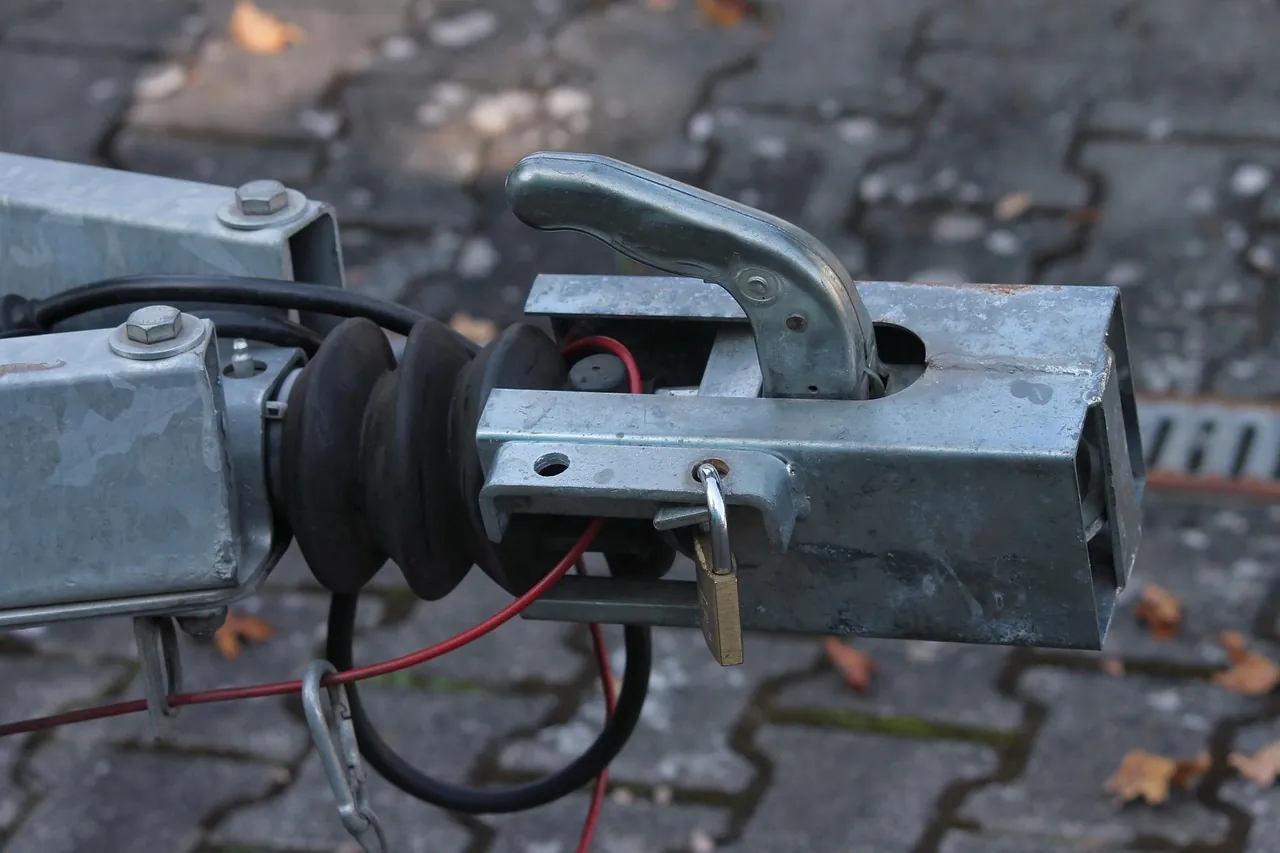
The hitch is where most failures happen, and it’s the cheapest part of the system to get right.
Receiver Classes
- Class I (1.25-inch): up to 2,000 lbs — Maverick, small crossovers
- Class II (1.25-inch): up to 3,500 lbs — Ranger and Explorer base setups
- Class III (2-inch): up to 8,000 lbs — most F-150 configurations
- Class IV (2-inch): up to 10,000–12,000 lbs — heavy half-ton and Super Duty conventional
- Class V (2.5-inch): 12,000+ lbs — Super Duty and gooseneck/5th-wheel prep
Weight-Distributing vs. Weight-Carrying
A weight-carrying hitch simply bolts the ball to the receiver. It’s fine for light trailers. A weight-distributing hitch uses spring bars to push tongue weight back onto the trailer axles and forward onto the truck’s steer axle. Ford requires weight distribution above certain trailer weights on the F-150 — check your owner’s manual, because the threshold varies by year and package. If you’re towing a travel trailer over roughly 5,000 pounds, plan on one.
Sway Control and Brake Controllers
Trailers over about 1,500–2,000 pounds generally need their own brakes, and Ford trucks with the Trailer Tow Package include an integrated trailer brake controller on most recent models. If yours doesn’t, an aftermarket controller is a straightforward install. Electronic sway control is standard on many newer F-150s and works with the truck’s stability system, but it’s a backstop, not a substitute for proper hitch setup.
Warning: Never tow a trailer whose loaded tongue weight exceeds your receiver’s rating, even if the truck’s payload would allow it. The receiver label is a separate limit and it’s often the lowest number in the chain.
Fifth-Wheel and Gooseneck Towing
Fifth-wheel and gooseneck setups put the pin weight directly over the rear axle, which changes the math. Pin weight typically runs 15–25% of trailer weight — much higher than a conventional trailer’s 10–15% — so payload disappears fast.
Ford’s 5th-Wheel/Gooseneck Prep Package is a factory option on Super Duty trucks and includes the under-bed mounting structure and a bed-mounted connector. Aftermarket hitches from established brands (B&W, Curt, Reese) fit the prep package or bolt to the frame on trucks without it.
Two rules that matter:
- Never exceed the rear GAWR. Pin weight plus bed cargo plus the hitch itself (150–250 pounds) lands almost entirely on the rear axle.
- Check bed length and cab clearance. Short-bed trucks need a sliding hitch or a trailer with a tapered front cap to avoid cab contact in tight turns.
Towing With the F-150 PowerBoost and Lightning
The hybrid F-150 PowerBoost carries a lower payload than comparable gas trucks because of the battery pack, but it delivers strong torque and onboard generator capability. Its towing maximum sits in the 11,000–12,400-pound range on properly equipped models — verify against your year’s Towing Guide.
The F-150 Lightning is a different conversation. Electric towing is real, but range drops sharply under load — often by 40–50% depending on trailer size, terrain, and speed. Plan routes around charging stops sized for a truck plus trailer, and expect to unhitch at some stations. Payload on Lightning models is also modest, so tongue weight eats into it quickly.
Pre-Trip Checklist
Run this before every long tow, not just the first one.
- Tire pressures — truck and trailer, set to the door-jamb and trailer-placard figures cold. Trailer tires often need max sidewall pressure.
- Hitch and ball torque — check the ball nut, shank bolts, and spring-bar settings against the hitch manual.
- Safety chains — crossed under the coupler, with enough slack to turn but not enough to drag.
- Breakaway cable — connected to the truck, not the hitch head.
- Trailer lights — running, brake, turn, and reverse. Walk around and confirm.
- Trailer brake gain — test at low speed in a parking lot and adjust for load.
- Mirrors — extend them; standard mirrors leave big blind spots alongside a wide trailer.
- Load distribution — heavy items over the trailer axles, nothing loose in the bed.
- Scale check — for a new or unfamiliar setup, spend the money on a CAT scale ticket. It’s the only way to know your real numbers.
Troubleshooting Common Towing Problems

The Trailer Sways
Usually too little tongue weight, too much speed, or a crosswind. Pull over, shift cargo forward to increase tongue weight toward 13–15%, and slow down. If sway persists with correct tongue weight, check tire pressure and consider a sway-control hitch.
The Truck Squats and Steers Light
Classic sign of insufficient weight distribution. The rear axle is overloaded and the front is unloaded. Re-check your hitch setup and confirm you’re within rear GAWR.
Transmission Hunts Between Gears
Use Tow/Haul mode — it holds gears longer and locks out overdrive. On newer trucks it also adjusts shift pressure. If hunting continues on flat ground, you may simply be over the truck’s comfortable limit.
Trailer Brakes Grab or Fade
Gain set too high or too low, or the controller isn’t calibrated for the load. Re-run the gain adjustment procedure in your owner’s manual with the trailer loaded as you’ll tow it.
Overheating on Long Climbs
Check coolant and transmission fluid condition, confirm the cooling package matches the truck’s tow rating, and downshift manually to keep rpm up and load down. If you’re routinely at the limit, you’re asking too much of a half-ton.
Related guides
- Ford Ranger Tow Package: Ultimate Guide to Maximize Towing Power
- Does Ford Use Real Leather? Truth Revealed!
- Ford Bronco Towing Package: Ultimate Guide for Heavy Hauling
Frequently Asked Questions
How do I find my Ford’s exact towing capacity?
Look at the Safety Compliance Certification Label on the driver’s door jamb for GVWR and axle ratings, then find your cab/bed/engine/axle-ratio combination in Ford’s RV & Trailer Towing Guide for your model year. The door-jamb payload figure is the practical limit; the guide’s trailer number assumes a base truck.
Can I tow more than the door sticker says?
No. The certification label is the legal and engineering limit for the vehicle as built. Exceeding it can void warranty coverage, reduce insurance protection in a crash, and — in many states — create liability. Aftermarket airbags and helper springs level the truck but don’t raise any rating.
What’s the difference between towing capacity and payload?
Towing capacity is the maximum loaded trailer weight. Payload is everything the truck itself carries: people, cargo, accessories, and tongue or pin weight. Payload usually runs out first, especially on crew-cab 4×4 half-tons with options.
Do I need a weight-distributing hitch for an F-150?
Ford requires weight distribution above certain trailer weights, and the threshold varies by model year and package — check your owner’s manual. As a practical rule, any travel trailer over roughly 5,000 pounds loaded benefits from one, and many owners use one well below that.
How much does towing reduce fuel economy?
Expect a 30–50% drop from your unladen highway figure with a tall trailer, and more in headwinds or mountains. The exact penalty depends on trailer frontal area, weight, speed, and terrain. Slowing from 70 to 60 mph is the single biggest lever you have.
Can I flat-tow a Ford behind an RV?
It depends on the model and drivetrain. Some Ford vehicles are approved for four-wheels-down flat towing and others are not — the owner’s manual’s “Recreational Towing” section is the authority. Never assume; a wrong answer here can destroy a transmission or transfer case.
Conclusion
Before your next trip, photograph your door-jamb stickers, pull the Towing Guide for your exact model year, and run the payload math once with real numbers. Then load up and hit a public scale — that ticket is the cheapest insurance a tow rig ever gets.