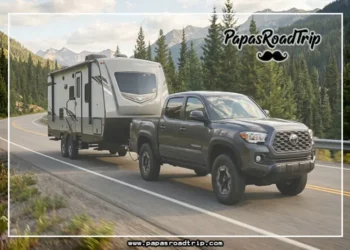
The Grand Cherokee L towing capacity is 7,200 pounds with the 5.7L V8 when the SUV is properly equipped. That figure applies to the 5.7L V8. The 3.6L V6 is rated at 6,200 pounds. Below are the numbers by engine, what changes them, and how to load a trailer so the real weight stays under the limit.
What the rating really means

The rating is the most weight Jeep says the Grand Cherokee L can pull, and it comes from the vehicle’s own published specifications. It isn’t a guess or a round number. Jeep tests the SUV with a trailer behind it and publishes a figure for each engine and axle setup.
The 7,200-pound figure belongs to the V8 and to the V6 when it has the Max Tow Package. Without that package, the same V6 is rated at 6,200 pounds. So two Grand Cherokee Ls sitting in a driveway can carry different ratings. The engine badge alone doesn’t tell you which one you have.
The rating covers the trailer and everything on it — the boat, the fuel, the water in the tanks, the cooler. It doesn’t cover the people and cargo inside the SUV. Those count toward a separate limit called payload, and payload is usually the number that runs out first.
The common misconception is that the biggest engine always gives the biggest rating. It doesn’t. A V8 without the right axle ratio and cooling can be rated lower than a V6 with the full package. The rating is a package deal, not an engine deal.
How to match your Grand Cherokee L to a trailer
Start with the door jamb, not the brochure. The sticker on the driver’s side door frame lists the payload and the axle ratings for your exact vehicle. Those numbers settle everything that follows.
- Read the door jamb sticker. Find the payload figure and the gross vehicle weight rating (GVWR). Write both down. These are specific to your SUV, not to the model line.
- Check your window sticker or VIN. Confirm which engine you have and whether the Max Tow Package is fitted. A Jeep dealer can decode the VIN if the sticker is gone.
- Weigh the trailer loaded. A trailer’s dry weight isn’t what you tow. Fill the water tank, add fuel and gear, then weigh it at a public scale. Most truck stops have one.
- Add the tongue weight. Tongue weight is the downward push the trailer puts on the hitch. It counts against payload, not against the tow rating.
- Subtract passengers and cargo. Take the payload figure from step 1 and subtract the tongue weight, the people, and the gear in the back.
- Compare the result to the trailer weight. If the loaded trailer is under your rating and the payload still has room, you’re within the limit.
The judgement call that separates a good setup from a bad one is tongue weight. Too little and the trailer sways at highway speed. Too much and you overload the rear axle. Aim for a tongue weight between 10% and 15% of the loaded trailer weight, and check it on a scale rather than by eye.
Weighing a trailer and setting up a weight-distribution hitch is a job most people can do at a public scale. If your trailer is near the top of the rating, have a trailer shop check the hitch setup before your first long trip.
Grand Cherokee L towing figures by setup
The table below shows the main combinations. The rating assumes the SUV is otherwise stock, with the correct hitch and a properly loaded trailer.
| Your setup | What you can tow | Figure that matters | What to watch for |
|---|---|---|---|
| 3.6L V6, no Max Tow Package | Up to 6,200 lb | Payload on the door jamb | Heaviest trailer this base setup allows |
| 3.6L V6 with Max Tow Package | Up to 6,200 lb | Payload on the door jamb | Package must be factory-fitted, not added later |
| 5.7L V8 | Up to 7,200 lb | Payload on the door jamb | V8 torque helps on hills, and it carries the highest rating |
| Towing near the limit | Full rating | Tongue weight 10–15% of trailer | Payload runs out before the tow rating does |
| Towing in mountains | Full rating | Coolant and transmission temperature | Stop and let it cool if gauges climb |
| Short trips, light trailer | Well under rating | Trailer weight at the scale | Still check tongue weight |
| Family of five plus gear | Full rating | Payload minus people and cargo | Four passengers can eat most of the payload |
Jeep publishes these figures in its Grand Cherokee L specifications, and they change by model year, so check the page for your own year.
Where good towing setups go wrong
The first thing experienced towers do is weigh the trailer loaded, before they buy a hitch or plan a trip. Dry weights on a sales sheet leave out fuel, water and gear, and that gap is often several hundred pounds. A trailer that looks fine on paper can sit over the rating once it’s full.
They also load the trailer with the heavy items over the axles, not at the back. Weight at the rear of a trailer lightens the tongue and makes the trailer sway. Weight over the axles keeps the tongue load steady and the trailer tracking straight.
Partway through a trip, they check the hitch and the tires. A weight-distribution hitch that was set right at home can shift after a few hundred miles. A quick look at the spring bars and the coupler takes a minute and catches most problems early.
What they leave alone is the SUV itself. They don’t add a lift kit, bigger tires or an aftermarket hitch and assume the rating still holds. Those changes can alter the rating, and Jeep’s published figure assumes the stock setup. If you change the suspension or tire size, ask a Jeep dealer whether the rating still applies.
Problems you’ll notice while towing

Most towing problems show up as a feeling before they show up as a breakdown. The table below matches what you notice to what it usually means and what to do first.
| What you notice | What it usually means | What to do first |
|---|---|---|
| Trailer sways side to side | Too little tongue weight | Move cargo forward over the axles, then reweigh |
| Rear of the SUV sags low | Too much tongue weight or overloaded payload | Weigh the tongue and check the door jamb payload |
| Transmission shifts constantly on hills | Trailer near the top of the rating | Slow down and use a lower gear range |
| Brakes feel weak on long descents | Trailer brakes not set up or not working | Check the trailer brake controller before the next trip |
| Engine temperature climbs | Long climb with a heavy trailer | Pull over and let it cool; don’t keep pushing |
Sway that starts above 55 mph and stops when you ease off is usually loading. Sway that returns at the same speed every time, even empty, points to the hitch setup or tire pressure, so check those before you move cargo around.
On the Grand Cherokee L, a sagging rear often means payload, not tongue weight. Seven passengers and their bags eat into the same door jamb number as the trailer tongue, so weigh the whole rig loaded, not just the trailer.
Weak brakes on a descent are the one row you shouldn’t troubleshoot on the road. If the controller shows no output at the trailer, stop and fix it there.
Rules and limits you should confirm
Jeep’s rating is the starting point, but the law and your equipment set the real limit. Check these before you hook up a trailer.
- Your state’s towing rules. Many states require trailer brakes above a certain trailer weight, and the figure differs by state. Your state DMV or motor vehicle office publishes the rule for your state.
- Your driver’s license class. Some states require a higher license class for heavy trailers. Check with your state’s licensing office, not a forum.
- Your hitch and ball rating. The hitch has its own weight limit stamped on it. A hitch rated below your trailer weight is the real ceiling, whatever Jeep says.
- Your trailer’s gross vehicle weight rating. The trailer’s own plate lists the most it can weigh loaded. Stay under both that and the Jeep rating.
- Your insurance policy. Some policies treat towing differently. Ask your insurer whether your coverage extends to a trailer you own or rent.
If your trailer needs electric brakes, a brake controller and wiring is a job for a trailer shop unless you’re comfortable working on your vehicle’s electrical system.
Keeping the setup safe over time
Once the rig is set up, the work shifts to checks. Re-weigh the trailer whenever you change what you carry — a full water tank versus an empty one can move the number by hundreds of pounds. Do it at the same scale so the numbers compare.
Check the hitch, the coupler and the safety chains before every trip. Look for wear on the ball and rust on the chains. A coupler that doesn’t latch tight is a problem that gets worse, not better.
Tire pressure matters more when you tow. The Grand Cherokee L’s door jamb sticker gives the cold pressure for the SUV, and the trailer’s own sticker gives the pressure for its tires. Check both cold, before you drive.
Trailer tires age out before they wear out. Most carry a date code molded into the sidewall, four digits for the week and year, and a set that looks fine can still be too old to trust on a long pull. Read the code before a big trip, not after a blowout.
Bring the setup back to spec after any change. New tires, a new hitch or a different trailer all mean a fresh weigh-in. The sign that it’s due is simple: anything you changed since the last weigh-in.
Keep a small log in the glovebox: date, scale ticket, hitch height, pressures. When a number drifts, the log tells you whether it moved because of a real change or a bad scale reading.
When the Grand Cherokee L isn’t enough

The Grand Cherokee L is the wrong choice when your loaded trailer sits above 7,200 pounds. No hitch or package raises that ceiling. In that case, look at a full-size SUV or a pickup with a higher published rating.
It’s also the wrong choice if your payload runs out before your trailer weight does. A large family plus a heavy tongue weight can leave no room for gear. A vehicle with a higher payload solves that; a bigger engine doesn’t.
Check the payload figure on the driver’s door jamb before you shop hitches. That number, not the tow rating, is what your family and cargo come out of. If the door jamb sticker is missing or hard to read, walk away from that vehicle.
And it’s the wrong choice if you plan to tow near the limit every weekend. A vehicle rated well above your trailer weight leaves margin for hills, heat and headwinds. Towing at the ceiling every trip wears parts faster and leaves no room for error.
If most of your towing is one boat ramp a few miles from home, the Grand Cherokee L is fine at its rating. If it’s a travel trailer across state lines, size the vehicle to the trailer, not the other way around.
Related guides
- Jeep Grand Cherokee Years to Avoid: Buyer’s Guide Tips
- Jeep Grand Cherokee Door Lock Problems: Quick Fixes & Solutions
Frequently asked questions
What is the towing capacity of a Grand Cherokee L?
It’s 7,200 pounds with the 5.7L V8. The 3.6L V6 is rated at 6,200 pounds. Check your own window sticker or VIN to confirm which setup you have.
Can a Grand Cherokee L tow a 7,000 lb trailer?
Yes, if your SUV is rated at 7,200 pounds and the trailer’s loaded weight stays under that. The catch is payload: tongue weight, passengers and cargo all count against it. Weigh the loaded trailer and check the door jamb payload before you commit.
How much tongue weight can a Grand Cherokee L handle?
Aim for 10% to 15% of your loaded trailer weight, so a 6,000-pound trailer wants 600 to 900 pounds on the tongue. That weight counts against payload, not the tow rating. Check your door jamb sticker for the payload figure your SUV actually has.
Do I need a special package to tow 7,200 pounds?
No. The 7,200-pound rating comes with the 5.7L V8. The 3.6L V6 is rated at 6,200 pounds, and adding a hitch later doesn’t raise the rating.
Is it safe to tow at the full 7,200-pound rating?
It’s safe when the trailer is loaded correctly, the tongue weight is in range and the payload isn’t exceeded. Towing at the ceiling every trip leaves no margin for hills or heat. If you tow heavy often, a vehicle rated higher gives you more room.
What happens if I tow more than the rating?
You overload the SUV’s brakes, suspension and transmission, and you may exceed the legal limits your state sets. Your insurance may also treat an overloaded setup differently. The rating is a ceiling, not a target, so stay under it.
How often should I check my towing setup?
Check the hitch, coupler and chains before every trip, and check tire pressure cold each time you tow. Re-weigh the trailer whenever you change the load. If you change tires, a hitch or the trailer itself, weigh the setup again before the next trip.
Conclusion
Before you hook up a trailer, check the driver’s door jamb sticker on your exact Grand Cherokee L—it lists the real limits for your build, options and all. Then load up and hit a scale. It’s a quick stop that’ll tell you whether you’re actually good to go.