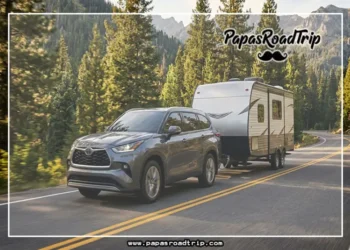
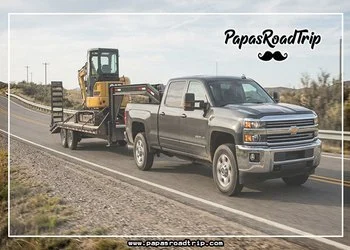
The 2021 chevy silverado 1500 towing capacity ranges from 7,400 lbs to 13,300 lbs, depending on the configuration. The highest figure belongs to the 2WD double cab with the 6.2L V8 and Max Trailering Package. A base 4.3L V6 work truck sits near the bottom. Cab size, drivetrain, engine, axle ratio and package all change the number, and your exact figure is printed on the driver’s door jamb label.
What the number on the door jamb really means
Towing capacity is the most weight a truck can pull, and the 2021 Silverado 1500 is a light-duty pickup built for trailers, boats and work loads. Chevy publishes a separate figure for every build. The number isn’t one figure for the whole model year.
The label on your driver’s door jamb gives the ratings for your specific truck, built with its own options. That’s the figure that applies to you, not a brochure headline.
Read the label before you trust any other source, including the chart in the trailering guide. The guide covers every configuration Chevy built that year. Your truck is one line in it, and the door jamb is the line that matches your VIN.
The common misconception is that the biggest engine always means the biggest tow rating. It doesn’t. A 6.2L V8 in a short-bed crew cab with the wrong axle ratio can tow less than a 5.3L truck set up for max trailering. The package and gearing decide it.
Two limits apply at once, and you must respect both. The first is how much the trailer weighs. The second is how much weight sits on the truck itself — people, fuel, cargo and the tongue weight of the trailer. A trailer that’s under the tow rating can still overload the truck if the bed is full.
Weigh the truck loaded, with everyone in it and the bed as you’d actually run it, at a public scale. Subtract that from the truck’s gross vehicle weight rating on the same door jamb label. What’s left is your real payload, and the tongue weight has to come out of it.
If the trailer’s tongue weight plus your cargo fits under that remainder, you’re within the truck’s limits. If it doesn’t, lighten the load or step up to a heavier-duty truck. No hitch setup fixes a payload number.
Chevy lists these ratings in its own Silverado 1500 trailering guide, which prints the full chart by configuration. Check your own build against it before you hitch anything.
How to find your Silverado’s real tow rating
- Open the driver’s door and read the jamb label. It lists the GVWR (gross vehicle weight rating) and the gross axle weight ratings. Write both down. This takes 2 minutes and settles most of the argument.
- Find your engine. The 2.7L turbo four, 4.3L V6, 5.3L V8 and 6.2L V8 each carry different ratings. The VIN tells you which one you have if the badge is gone.
- Note the cab and bed. A regular cab, double cab and crew cab each weigh differently, and the short bed versus standard bed changes the figure too.
- Check 2WD or 4WD. Four-wheel drive adds weight, and that weight comes off your tow rating. The same truck in 2WD usually tows more.
- Confirm the axle ratio and the Max Trailering Package. The 3.23 and 3.42 ratios each pair with specific ratings. The Max Trailering Package adds cooling and a different rear axle, and on the 6.2L V8 it’s the option that lifts the top figure to 13,300 lbs.
- Subtract your payload. Take the payload figure from the jamb label and subtract the weight of passengers, fuel, tools and the trailer’s tongue weight. If the answer goes negative, you’re over.
- Weigh the loaded trailer at a public scale. A truck stop scale costs a few dollars and gives you the real number. Guessing the trailer weight is where most people get it wrong.
The single judgement call is tongue weight. Aim for about 10% to 15% of the trailer’s loaded weight on the hitch. Too little and the trailer sways at highway speed. Too much and you eat your payload.
Silverado 1500 towing figures by setup
The table below covers the main 2021 configurations. Treat it as a starting point — your door jamb label and the Chevy trailering guide are the final word.
| Your setup | What to expect | Towing figure (lbs) | What to watch for |
|---|---|---|---|
| 4.3L V6, 2WD regular cab, base | The entry work truck | Around 7,900 | Lowest rating; light trailers only |
| 2.7L turbo four, 2WD | Mid-range daily driver | Around 9,300 | Check the axle ratio on the label |
| 5.3L V8, 2WD crew cab | The common family truck | Around 9,500–11,000 | 4WD drops this by a few hundred lbs |
| 5.3L V8 with Max Trailering, 2WD | Heavier travel trailers | Up to about 11,800 | Needs the specific axle and cooling package |
| 6.2L V8, 2WD double cab, Max Trailering | The top rating | Up to 13,300 | Only with the exact package and 2WD |
| 6.2L V8, 4WD crew cab | Strong but heavier | Around 11,800–12,000 | 4WD weight costs you capacity |
| Any trim, loaded with passengers and gear | Real-world working figure | Subtract payload from the rating | Tongue weight counts against payload |
What good towing setups get right
The preparation happens before the hitch. People who tow well weigh the trailer loaded, not empty, and they do it at a scale rather than trusting the seller. They also read the door jamb label and write the payload number on their phone. That one habit prevents most overloading.
The order matters. Hitch and set the tongue weight first, then load the truck, then check the rear ride height. If the truck squats badly at the back, the load is wrong or you need a weight-distributing hitch. Adding airbags hides the squat but doesn’t raise your legal rating.
Partway through, check the trailer tires and the hitch ball torque. A loose ball is a real failure point, and it’s a 5-minute check. Check the trailer lights with a helper before every trip.
What experienced towers leave alone is the truck’s suspension and engine software. Tuning or lifting a truck usually lowers its rating, and the door jamb figure no longer matches the truck. Leave the drivetrain stock if you want to keep the number Chevy published.
The catch is this: the rating on your label assumes a stock truck with a driver and a full tank, nothing else. Every pound of cargo, every passenger and every aftermarket part comes off that number, and only the scale tells you where you actually stand.
Common towing problems and fixes

Sway that starts around 55–60 mph and builds is almost always light tongue weight, not a bad hitch. Move the load forward in small steps and re-weigh rather than guessing.
If the trailer is a boat or a flatbed with the load sitting far back, expect this even when the total weight is well under the rating.
Squat alone doesn’t tell you much. Measure the rear fender height unhitched and hitched; significant drop on a 1500 means you need a weight-distributing hitch, not more spring.
Weak trailer brakes downhill usually trace to the controller gain set too low for the load, or a ground wire that only fails under vibration. Test the manual override on a gravel lot before every long trip.
Struggling on hills with a load you thought was fine usually means you compared against the brochure number, not the jamb label. The label on the driver’s door pillar is the one that counts for your specific truck.
If it overheats on a long climb, downshift and slow to 55 mph. If the gauge keeps climbing, pull over and let it idle — don’t shut it off hot.
Rules and limits worth checking first
Chevy’s own trailering guide is the authority for the rating of each build, and it prints the figure by engine, cab, drivetrain and axle. Read it with your VIN or door jamb label in hand.
The door jamb label carries your truck’s gross axle weight ratings, and those often run out before the advertised tow number does. A heavy tongue load plus a loaded bed can put you over an axle rating while the trailer stays under its own figure. Weigh the truck and trailer loaded at a public scale before you trust the brochure.
Your state’s driver licensing rules are the other thing to check. Many states require a special endorsement or a non-commercial Class A license once the trailer passes a certain weight. That threshold differs by state, so check your state DMV’s own page rather than a forum.
Your truck’s insurance policy also matters. Some policies limit coverage if you tow beyond the manufacturer’s rating. Ask your insurer directly what they cover.
If you’re unsure about your license class, talk to your state DMV and a licensed trailer dealer. That’s not a do-it-yourself call.
Keeping the setup safe over time
Recheck the tongue weight any time you change what you carry. A new toolbox in the bed or a different trailer changes the math, and the door jamb label doesn’t move with it.
Inspect the hitch, ball and safety chains before each season. Look for rust, cracks or a loose bolt, and replace anything that looks worn. Trailer tires age even when they sit, so check the date code on the sidewall.
A Silverado 1500 towing near its top rating is the setup that punishes skipped checks hardest. At that weight, a few pounds of rust on a chain or a soft tire matters more than it would on a lighter load.
If you tow the same trailer every weekend, put the hitch check on the calendar with the oil change. If the truck sits for months between pulls, do the full walk-around before the first one, not after.
Keep a copy of your weight tickets and the trailering guide in the glovebox. If you’re ever stopped or in a claim, those papers show your setup was within the rating.
When a Silverado 1500 isn’t the right truck
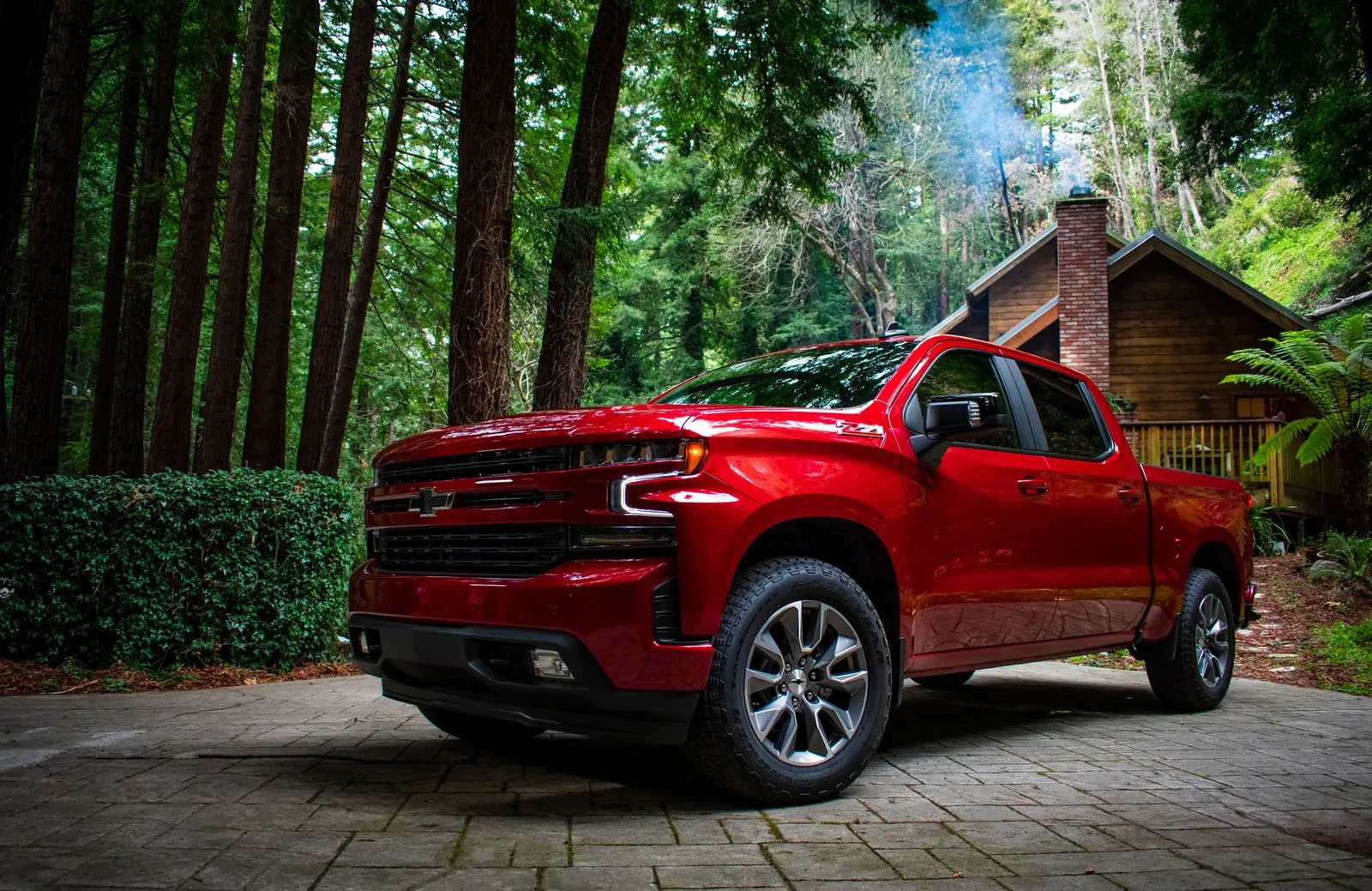
A 1500 is the wrong choice if your loaded trailer sits above its maximum rating of 13,300 lbs. Move up to a Silverado 2500HD or 3500HD, which are built for that weight class.
It’s also wrong if you plan to tow a big fifth-wheel. Most fifth-wheel trailers exceed a half-ton truck’s payload, even when the tow rating looks fine on paper. A heavy-duty truck handles that pin weight properly.
And it’s wrong if you tow a tall travel trailer with a short-bed crew cab and no weight-distributing hitch. The wheelbase and the load need the right hitch, or you’ll fight sway every trip.
Payload is where most half-ton buyers get caught. Check the yellow sticker on the driver’s door jamb, not the brochure. That number is your truck as built, with its options and trim, and it’s often well below the headline figure.
Subtract the weight of every passenger, the dog, the toolbox and the hitch before you compare it to your trailer’s tongue weight. A family of four plus gear can eat several hundred pounds before the trailer is even hooked up.
If the sticker leaves you short, the fix is a 2500HD, not a lighter hitch or a stiffer set of springs. Springs raise the truck; they don’t raise the rating.
Related guides
- Chevy Silverado 1500 Years to Avoid: Expert Guide for Buyers
- Chevy Silverado Years to Avoid: Expert Tips Before You Buy
- Chevy Silverado 2500Hd Leveling Kit Problems: Common Issues & Fixes
Frequently asked questions
What is the max towing capacity of a 2021 Silverado 1500?
It’s 13,300 lbs, and that figure assumes a 2WD double cab with the 6.2L V8 and the Max Trailering Package. Any other configuration is lower. Check your door jamb label for your own build.
Can a 2021 Silverado 1500 tow a 10,000 lb trailer?
Yes, in most V8 configurations with the right axle ratio and package. The 5.3L and 6.2L trucks with Max Trailering handle it. A base V6 truck cannot, and you must also keep tongue weight and payload within the label.
Does 4WD reduce towing capacity?
Yes. Four-wheel drive adds weight to the truck, and that weight comes off the rating. The same engine and cab in 2WD usually tows a few hundred pounds more. Your door jamb label shows your exact figure.
How much tongue weight can a Silverado 1500 take?
Aim for 10% to 15% of your loaded trailer weight on the hitch, and count that against your payload. A 7,000 lb trailer wants roughly 700 to 1,050 lbs on the tongue, and that must fit within your label’s payload and hitch rating. Check your label’s payload before you load.
Is it safe to tow at the maximum rating?
It’s safe only if you’re under every limit at once — tow rating, payload, tongue weight and axle ratings. Towing at the max on a flat road with a light truck bed is very different from towing in mountains with a full cab.
What happens if I tow more than my rating?
You risk brake fade, transmission heat and unstable handling, and your insurance may not cover the damage. In some states you can also face a licence or weight violation. Weigh your setup and stay under the label.
How do I find my exact towing capacity?
Read the driver’s door jamb label for your GVWR and axle ratio, then match it in Chevy’s trailering guide. Weigh your loaded trailer at a public scale. Those two steps give you the real number for your truck.
Conclusion
Before you hook up a trailer, check that door jamb label and compare it against your hitch and trailer weight—it’s the only figure that matches your exact truck. If you’re still shopping, bring your trailer’s weight to the dealer and let them point you to a configuration that fits.