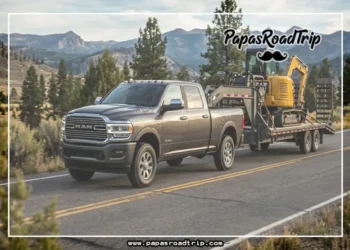
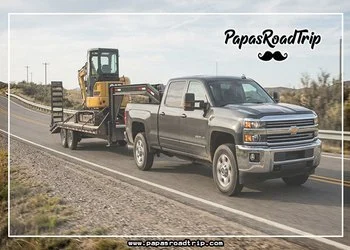
The 2015 chevy 2500 towing capacity tops out at 17,900 pounds. That figure belongs to a two-wheel-drive 2500HD Regular Cab with the 6.6L Duramax diesel V8 and a fifth-wheel or gooseneck hitch. A diesel 4×4 Crew Cab with a conventional hitch lands much lower, near 13,000 pounds. This guide gives you the real numbers by body style, engine and hitch type, plus the payload and axle limits that decide what you can actually pull.
What the 2500HD Really Is
The 2015 Chevrolet Silverado 2500HD is a heavy-duty pickup. Chevy builds it for hauling and towing, not for daily errands. You’ll find it in three cab styles (Regular, Double, Crew) and two bed lengths. Buyers use it for work trailers, horse trailers, campers and equipment hauling.
The truck came with two engine choices. The standard engine is a 6.0L V8 gas engine. The optional engine is a 6.6L Duramax turbo-diesel V8. Each engine pairs with its own transmission, and each one has its own towing ceiling.
Here’s the misconception most people carry in. They read one big number in a brochure and assume it applies to every 2500HD on the lot. It doesn’t. Towing capacity changes with cab style, bed length, drive type (2WD or 4WD), rear axle ratio, engine and hitch type. A truck’s towing figure is set by its weakest limit, and that limit is often payload or the rear axle, not the engine.
One rule you need to know: the towing number assumes a base truck with a driver and no extra cargo. Every pound of people, tools and gear in the cab or bed comes off that number. Chevy prints these figures in its own trailering guide, which is the page to check for your exact build.
How to Find Your Truck’s Real Number
Work through these decisions in order. Each one narrows your number before you hook up anything.
- Find your exact build. Check the door jamb sticker for the GVWR (gross vehicle weight rating) and the axle ratings. These are the legal limits for your specific truck, not the brochure’s.
- Read the engine. The 6.0L gas V8 and the 6.6L Duramax diesel have different ceilings. Confirm which one you have before you trust any figure.
- Check 2WD or 4WD. Four-wheel drive adds weight, and that weight comes straight off your towing and payload numbers.
- Note the cab and bed. A Regular Cab short bed is the lightest and tows the most. A Crew Cab with the long bed is the heaviest and tows the least.
- Pick your hitch type. A fifth-wheel or gooseneck hitch carries weight over the rear axle and allows a higher figure. A conventional bumper hitch is lower.
- Subtract your payload. Add up passengers, fuel, tools and anything in the bed. Take that total off the rated towing figure.
- Check the trailer’s loaded weight. Use the trailer’s GVWR, not its empty weight. A camper loaded with water and gear is much heavier than the dry figure.
The judgement call that matters most is this: never plan around the brochure’s best number. Plan around the lowest of your four limits — towing rating, GVWR, rear axle rating (GAWR) and hitch rating. If any one of them is exceeded, the setup is wrong, even if the others have room to spare.
2015 Chevy 2500 Towing Capacity by Setup
These are the published maximum figures for the 2015 model year. Treat each one as the ceiling for that exact setup, with a driver only.
| Your setup | Towing figure | What sets it | What to watch |
|---|---|---|---|
| 2WD Regular Cab, 6.0L gas, fifth-wheel | 17,900 lb | Lightest body, weight over axle | Needs the correct fifth-wheel prep package |
| 2WD Regular Cab, 6.0L gas, bumper hitch | About 14,300 lb | Conventional hitch rating | Check your hitch’s own sticker |
| 4WD Crew Cab, 6.0L gas, bumper hitch | About 13,000 lb | Extra cab and 4WD weight | Payload runs out fast with passengers |
| 2WD Regular Cab, 6.6L Duramax diesel, fifth-wheel | About 17,900 lb | Diesel torque, axle rating | Diesel engine adds front-end weight |
| 4WD Crew Cab, 6.6L Duramax, bumper hitch | About 13,000 lb | Heaviest body plus 4WD | Weigh the truck loaded before you buy a trailer |
| Any 2500HD with a heavy work body | Well below the above | Added body weight cuts payload | Weigh the truck first, then choose the trailer |
Chevy’s own trailering guide lists every cab, bed, engine and axle combination. Check it for your VIN before you trust any single figure above.
Getting the Details Right
The people who tow safely and happily do the boring work first. They weigh the truck at a public scale with a full tank and all their normal gear aboard. That gives them a real payload number instead of a guess. Then they match the trailer to that number, not the other way around.
They also read the hitch sticker. A bumper hitch has its own weight rating, and it’s often lower than the truck’s towing figure. A 2500HD rated to pull 14,000 pounds can still be limited by a hitch rated for less. The truck isn’t the only part of the chain.
Partway through a trip, they check the setup again. After the first 50 to 100 miles with a loaded trailer, stop and check the hitch bolts, the safety chains and the trailer tire pressures. Things settle and shift on a first run, and a five-minute check catches it.
What they leave alone matters too. They don’t add a lift kit or oversized tires to a truck they tow with. Both change the truck’s stance and its stability under load, and neither raises your legal limits. If you want a lifted truck, keep a separate tow rig.
Common Towing Problems and Fixes

Use this table to match what you feel or see to the likely cause.
| What you notice | What it usually means | What to do first |
|---|---|---|
| The rear of the truck sags badly | Too much tongue weight or too much payload | Weigh the tongue and move cargo back on the trailer |
| The trailer sways at highway speed | Tongue weight too low, or load not centered | Reload so about 10-15% of trailer weight sits on the tongue |
| The truck feels sluggish on hills | You’re near the top of the rating | Check your total weight against the door sticker |
| Brakes feel weak when stopping | Trailer brakes not set up or not working | Test the trailer brake controller before every trip |
| Tires wear fast or run hot | Tire pressure wrong for the load | Check the pressure on the tire placard, cold |
Sag and sway pull in opposite directions, so fix one at a time. Weigh the tongue, adjust the load, then drive a short stretch at highway speed before you change anything else.
If the truck still sags after you have moved cargo back, the problem is payload, not the trailer. Everything in the bed and the cab counts against the same door sticker number.
On a 2500, the hitch receiver and the ball mount have their own limits, and they’re often lower than the truck’s rating. Check the sticker on the receiver before you blame the truck for feeling sluggish.
Weak brakes are the one row you should never drive on. If the controller shows power but the trailer still won’t stop, the fault is usually at the trailer end, not the truck.
Tire pressure on the placard is for the truck as built. Once you add a heavy tongue, check that you’re within the truck’s GVWR and GAWR and keep the tires at the placard pressure for that load.
Rules and Ratings You Must Respect
Chevy publishes the tow ratings, and the door jamb sticker publishes your truck’s legal limits. Those two pages are where your answer lives. The gross vehicle weight rating (GVWR) and the gross axle weight ratings (GAWR) on that sticker are set by the manufacturer and are what law enforcement and insurers look at after a crash.
The trailering guide number assumes a base truck. Every option you added — four-wheel drive, a diesel, a crew cab, a long bed — eats into it. Weigh your truck loaded at a scale and subtract that from the GCWR to get the trailer weight you can actually pull.
Check these things before you start:
- Your door jamb sticker for GVWR and both axle ratings.
- Your hitch label for its maximum weight and tongue weight.
- Chevy’s trailering guide for your exact cab, bed, engine and axle combination.
- Your state’s DMV or licensing office for whether your trailer weight needs a special license or endorsement. Rules differ by state.
- Your insurance policy for whether a heavy trailer needs to be declared.
If your combined weight crosses into commercial territory, or your trailer needs air brakes, that’s not a DIY job. Talk to your state licensing office and a commercial vehicle inspector.
A 2500 with a bumper hitch and a 2500 with a fifth-wheel hitch are two different trucks for rating purposes. Use the hitch label, not the brochure.
Keeping the Setup Safe Over Time
Once your setup works, write it down. Note the truck’s loaded weight, the trailer’s loaded weight, the tongue weight and your tire pressures. Keep that note in the glovebox. Next time you hook up, you check the numbers instead of guessing again.
Recheck the setup whenever something changes. A new trailer, a different load, added tools or a new set of tires all change the math. Weigh again after any big change.
Tire pressure is the thing that drifts. Check it cold, before a trip, against the placard on the driver’s door frame. Look at the trailer tires too, and watch for cracks or bulges on the sidewalls. A blown trailer tire at highway speed is the failure that ruins trips.
Give the hitch hardware a look before each season. Bolts work loose, and rust hides it. If anything looks worn or cracked, replace it rather than tighten it and hope.
The weight that creeps up on you is the truck’s own. Every tool, cooler and passenger you add after the last weigh-in counts against the 2015 Chevy 2500’s payload, not just against the trailer. A rig that scaled fine in spring can be over the rear axle rating by summer without the trailer changing at all.
So weigh the truck loaded, with everyone and everything aboard, at the start of each towing season. If the rear axle figure is close to its rating, move gear into the trailer or leave it home.
Keep the written note current. An old slip in the glovebox is worse than none, because you trust it.
When a 2500HD Isn’t the Right Truck

A 2500HD is the wrong choice in a few honest cases. If your loaded trailer sits above roughly 18,000 pounds, you need a 3500HD or a dual-rear-wheel truck. The 2500HD’s ceiling is real, and pushing past it isn’t safe or legal.
Weigh the trailer loaded, with water and gear aboard, not the dry number from the brochure. That gap is where people get caught.
If you tow a light trailer a few times a year, a 1500 is cheaper to buy, cheaper to fuel and easier to park. The 2500HD’s stiff ride and thirst only pay off when you actually use the capacity.
Count your heaviest trips, not your average ones. A handful of 12,000-pound weekends a season is 2500HD work. Two or three a year is 1500 work.
And if you tow a heavy camper with a family aboard, look at a dually. Two extra rear tires add stability in crosswinds that a single-rear-wheel 2500HD can’t match.
The dually costs you at the drive-through and in the parking garage. If the camper is the only heavy thing you pull, that trade is worth it.
Related guides
Frequently asked questions
What is the max towing capacity of a 2015 Chevy 2500?
It’s 17,900 pounds. That figure applies to a 2WD Regular Cab with the 6.6L Duramax diesel and a fifth-wheel or gooseneck hitch. Any other cab, bed, drive type or hitch lowers it, often by several thousand pounds.
Can a 2015 Silverado 2500HD tow a 15,000 lb trailer?
Sometimes. A 2WD Regular Cab with a fifth-wheel hitch can. A 4WD Crew Cab with a bumper hitch usually can’t, because its rating sits near 13,000 pounds. Check your door sticker and hitch label before you commit.
How much can a 2015 Chevy 2500 diesel tow?
About 17,900 pounds in its best setup, a 2WD truck with a fifth-wheel hitch. The diesel’s real advantage is torque on hills, not a bigger ceiling. A 4WD Crew Cab diesel with a bumper hitch lands near 13,000 pounds.
Why is my 2015 2500 towing less than the brochure says?
Because the brochure shows the best-case build. Your truck’s cab, bed, 4WD system, options and hitch all cut into that number. Your door jamb sticker shows your truck’s actual limits, and that’s the figure to trust.
Is it safe to tow at the maximum rating?
Yes, if every limit is respected. That means towing rating, GVWR, both axle ratings and the hitch rating. Exceeding any one of them is unsafe, even if the others have room. Weigh your loaded setup at a public scale to confirm.
Do I need a special license to tow with a 2500HD?
It depends on your state and your trailer weight. Many states require an endorsement or a non-commercial class for heavier trailers. Check with your state DMV or licensing office, since the rules and weight thresholds differ from state to state.
Conclusion
Before you hook up a trailer, check the sticker inside your driver’s door jamb and weigh your truck at a scale—those real numbers beat any chart. If you’re still shopping, bring your trailer’s loaded weight to the test drive and confirm the setup works for your family.