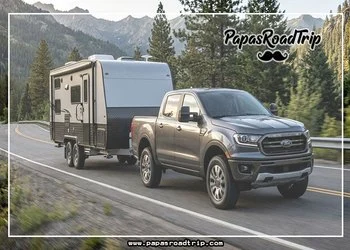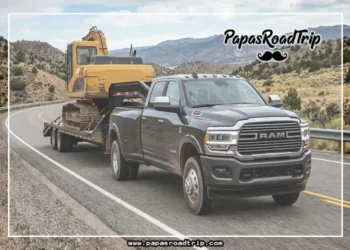


The 2020 Ram 3500 can tow up to 35,100 pounds when properly equipped. That top figure belongs to a 3500 Regular Cab, two-wheel-drive, dual-rear-wheel truck with the high-output Cummins diesel and the Aisin transmission. Most trucks people actually buy — Crew Cab, four-wheel drive, single rear wheels — tow far less. This guide breaks down the 2020 ram 3500 towing capacity by cab, bed, drivetrain and engine, so you can match a real truck to a real trailer.
What the 3500 actually is
The Ram 3500 is a heavy-duty pickup, one class above the 2500. Ram builds it for work that a half-ton truck can’t handle: fifth-wheel trailers, gooseneck flatbeds, slide-in campers and big equipment haulers. Buyers are ranchers, contractors, hotshot haulers and people towing a large RV a few times a year.
Ram sells it in three cabs (Regular, Crew, Mega), two beds (6-foot-4 and 8-foot), two drive types (2WD and 4WD), and two rear-axle setups (single or dual rear wheels). Two engines are offered: the 6.4L HEMI V8 gasoline engine and the 6.7L Cummins turbo diesel. The diesel comes in two versions — standard output and high output.
The misconception is that “3500” means one fixed towing number. It doesn’t. Ram’s own trailering guide lists dozens of separate ratings, and the gap between the lowest and highest is more than 10,000 pounds. Your truck’s rating depends on its exact build, and the only number that counts for your vehicle is the one on its door-jamb sticker.
Payload works the same way. A heavily optioned Crew Cab 4×4 diesel can carry much less than a basic Regular Cab, because the truck’s own weight eats into the allowance. Ram publishes the full chart in its 2020 Ram 3500 trailering guide.
How to find your truck’s real towing number
- Open the driver’s door and read the two stickers. One shows GVWR (the most the whole truck can weigh). The other shows the front and rear GAWR. Write all three down.
- Find your curb weight. Weigh the truck at a public scale with a full tank and everything you normally carry. Subtract that from GVWR — the result is your real payload.
- Add up what goes in the truck. Driver, passengers, tools, hitch, and the trailer’s tongue weight all count against payload. Tongue weight is usually 10–15% of a conventional trailer’s loaded weight, or about 15–25% for a fifth-wheel.
- Compare payload first, not towing. If payload runs out before towing does, the truck is overloaded even when the trailer is under its tow rating.
- Check the hitch and ball rating. A weight-distributing hitch and its ball each carry their own limit. The lowest rating in the chain sets the ceiling.
- Check your driver’s license and state rules. Some states require a special endorsement or a non-commercial class for heavy trailers. Your state DMV is the place to confirm.
- Confirm the combined limit. GCWR (gross combined weight rating) caps truck plus trailer together. A light trailer with a heavy load in the bed can still break it.
The judgement call that separates a safe setup from a white-knuckle one is honesty about payload. A 35,100-pound rating means nothing if your truck’s sticker allows only 3,500 pounds of cargo and your fifth-wheel pin weight is 3,000 before you add passengers. Weigh the rig loaded, at a scale, before your first long trip. That one step settles more arguments than any chart.
2020 Ram 3500 towing figures at a glance
These are Ram’s published maximums for properly equipped trucks. Treat them as ceilings, not promises — your door sticker is the final word.
| Your setup | What to use | Figure that matters | What to watch for |
|---|---|---|---|
| Regular Cab, 2WD, dual rear wheels, high-output diesel | Fifth-wheel or gooseneck | Up to 35,100 lb | Needs the Aisin transmission and max tow package |
| Crew Cab, 4WD, dual rear wheels, high-output diesel | Fifth-wheel or gooseneck | Around 33,000 lb | Options and 4WD cut the figure |
| Crew Cab, 4WD, single rear wheels, diesel | Conventional bumper-pull | Roughly 20,000–23,000 lb | Payload runs out fast with a heavy pin weight |
| Mega Cab, 4WD, diesel | Large travel trailer | Lower than Crew Cab | Heaviest cab body means least payload |
| Any 3500 with the 6.4L HEMI gas V8 | Medium trailer or equipment | Roughly 13,000–17,000 lb | Fuel stops come often under load |
| 3500 with slide-in camper | Truck camper | Payload, not tow rating | Camper weight plus gear counts fully |
| Towing near the maximum | Any trailer over about 26,000 lb GCWR | GCWR and state license rules | Check your state DMV before you drive |
Where good setups and bad setups split
Experienced towers start at the scale, not the brochure. They weigh the empty truck first, then the loaded truck with the trailer attached, and they write the numbers down. That habit catches the two problems that ruin a trip: too much pin weight, and a trailer that’s level at the wrong height.
They also set the hitch before loading. A fifth-wheel hitch mounted slightly ahead of the rear axle carries weight better than one mounted behind it. For bumper-pull trailers, a weight-distributing hitch with the bars set to the trailer maker’s instructions keeps the front axle planted. Get the ball height wrong and the trailer runs nose-up, which unloads the truck’s front tires and makes steering vague.
The order that works
Load the trailer first, then the truck bed, then passengers. Check tire pressures cold, including the trailer’s. Ram lists recommended cold pressures on the door sticker — follow those, not the tire sidewall maximum. Torque the lug nuts and hitch bolts to the maker’s spec before you pull out.
What to leave alone
Don’t add a lift kit or oversized tires to a truck you tow heavy with. Both change the effective gearing and the hitch height, and neither improves the rating. Don’t trust a seller’s claimed towing number either — read the sticker on that specific truck.
Common towing problems and what they mean

| What you notice | What it usually means | What to do first |
|---|---|---|
| Trailer sways at highway speed | Too little tongue weight, or load sitting behind the trailer axles | Move cargo forward, re-weigh tongue weight |
| Truck feels light in the front | Hitch height wrong, or weight-distributing bars not set | Reset ball height and bar tension per hitch manual |
| Rear tires squat badly when loaded | Payload over the limit | Weigh at a scale; move gear to the trailer |
| Brakes fade on long downhill runs | Trailer brakes not working or gain set too low | Test the brake controller in a lot, adjust gain |
| Diesel runs hot on a long climb | Coolant or transmission fluid low, or airflow blocked | Check fluid levels; let it cool before topping off |
Sway that starts around 55 mph and builds is almost always tongue weight. Sway that appears only when a semi passes is often the hitch setup instead. If moving cargo forward changes nothing, stop adding tongue weight and check the bars.
A 3500 squatting level on its rear springs isn’t proof you’re under payload. The only number that counts is the one from a CAT scale ticket, with the truck loaded as you tow.
Brake fade on a long grade usually shows up as a soft pedal and a truck that won’t hold speed. Pull over at the first sign and let the drums cool. Don’t ride the pedal down the rest of the hill.
Rules and limits that bind you
Ram publishes the ratings, but other bodies set limits you can’t option your way around. The hitch maker’s label caps what the receiver and ball can carry — that number often sits below the truck’s rating. Tire load ratings on the sidewall cap each axle. Your state DMV decides whether your trailer needs a special license class, and some states require one above a set combined weight.
Check four things before you hook up: your door-jamb sticker, the hitch label, the trailer’s own weight rating plate, and your state’s trailer license rules. If your combined weight crosses into commercial territory — hauling for pay — federal rules on driver qualification and hours may apply, and a commercial driver’s license may be required. That’s a matter for your state DMV and the Federal Motor Carrier Safety Administration, not a DIY question.
The hitch label is where most 3500 owners get caught. A factory receiver rated well under the truck’s max tow number is common, so match the ball mount and trailer to the label, not the brochure.
Weigh the loaded trailer at a public scale before your first long pull. The rating plate gives dry weight; water, gear and a side-by-side add up fast.
If you stay under your state’s combined-weight threshold and tow only your own trailer, the basic rules are enough. Cross into for-hire hauling and the federal layer applies — call your state DMV first to confirm which side you’re on.
Keeping the setup right over time
Re-check the numbers whenever something changes. A new set of heavier tires, a toolbox bolted to the bed, a different hitch — each one moves your real payload. Weigh the truck again after any change that adds weight, and rewrite your figures.
Before each towing season, check tire pressures cold, inspect the hitch for cracks or loose bolts, and test the trailer brakes. Look at the trailer tires too: a tire that sat all winter can lose pressure without looking flat. If the truck sits for months, drive it loaded once before a big trip so you notice any change in how it handles.
The hitch is where most of this goes wrong. A fifth-wheel or gooseneck setup on a 3500 puts stress on the bed and the frame mounts, so check the mounting bolts for torque and look for cracks in the bed floor around the brackets. A slider hitch that hasn’t been greased will bind when you need it to move.
Keep your scale tickets and sticker photos in the glovebox. When you sell the truck, that record answers the buyer’s first question better than any brochure. It also settles arguments at the scale, where the ticket is the only number that counts.
When a 3500 isn’t the right truck

If your trailer’s loaded weight stays under about 10,000 pounds and you tow a few weekends a year, a 2500 or even a well-equipped 1500 will do the job with better ride quality and easier parking. The 3500’s stiff rear springs are built for load, and empty they ride harsh.
That harshness is the trade you make every day, not just on tow days. On a 3500, the empty-bed commute over broken pavement is the cost of the capability, and a 2500 owner with the same trailer pays less of it.
If your pin weight plus gear lands within a few hundred pounds of the payload limit, step up to a dual-rear-wheel truck rather than pushing a single-rear-wheel one. The dual wheels buy stability, not capacity — check the door-jamb sticker for your specific truck’s ratings before you assume the step up solves it.
And if you’re towing commercially across state lines, talk to a commercial vehicle specialist about licensing before you buy — the truck is the cheap part of that decision.
Related guides
- Toyota Highlander Tow Package: Ultimate Guide to Towing Power
- Honda Passport Tow Package: Ultimate Guide for Powerful Towing
- Jeep Gladiator Max Tow Package: Ultimate Towing Power Unleashed
Frequently asked questions
What is the max towing capacity of a 2020 Ram 3500?
35,100 pounds, on a Regular Cab, two-wheel-drive, dual-rear-wheel truck with the high-output Cummins diesel and Aisin transmission. Any other cab, bed or drivetrain combination lowers that figure, sometimes by more than 10,000 pounds. Check the trailering guide for your exact build.
How much can a 2020 Ram 3500 diesel tow with a Crew Cab?
Roughly 33,000 pounds in a dual-rear-wheel, two-wheel-drive Crew Cab with the high-output diesel. Add four-wheel drive or single rear wheels and the figure drops further. The door-jamb sticker on your truck is the number that actually applies.
Can a 2020 Ram 3500 tow a 15,000 lb fifth wheel?
Yes, comfortably, on almost any 3500 build. The real question is pin weight: a 15,000-pound fifth wheel usually puts around 2,500–3,000 pounds on the hitch, which eats most of a diesel Crew Cab’s payload. Weigh the loaded rig before your first trip.
How much payload does a 2020 Ram 3500 have?
It varies widely by build — a basic Regular Cab gas truck carries far more than a loaded Mega Cab diesel 4×4. Ram doesn’t publish one number because there isn’t one. Read the tire and loading information sticker on your driver’s door for your truck’s exact figure.
Is it safe to tow at the maximum rating?
Only with the right hitch, working trailer brakes, correct tire pressures and a load balanced inside the trailer. The rating assumes a properly equipped truck and an experienced driver. If you’re new to heavy trailers, practice in an empty lot and stay well under the ceiling at first.
Do I need a special license to tow with a Ram 3500?
It depends on your state and your combined weight. Several states require a non-commercial class or endorsement above a set trailer or combined weight. Check your state DMV’s rules for recreational trailers before you plan a long trip.
What happens if I tow more than the rating?
You overload the truck’s axles, tires and brakes, and you may exceed legal weight limits. Handling gets worse, stopping distances grow, and in a crash an overloaded rig can affect insurance and liability. Weigh your setup at a scale and stay within the sticker.
Conclusion
Before you sign for a truck, pull the door-jamb sticker and confirm the exact build against Ram’s official chart for your model year. Options, tongue weight, and passengers all eat into your margin, so it’s worth verifying your specific truck’s rating before you hook up a trailer.