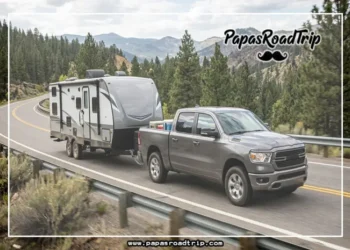
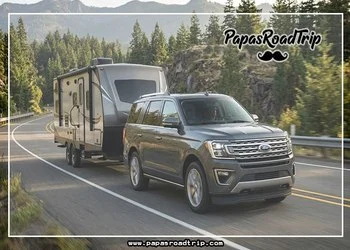
The 2018 ford expedition 3.5 l towing capacity is 9,300 lb when the SUV has the Heavy-Duty Trailer Tow Package. Without that package, the limit is 6,000 lb. Both figures assume a properly equipped vehicle with the right hitch and weight distribution. The engine is the same 3.5L EcoBoost V6 in every trim — the package and the axle ratio decide the number, not the badge on the tailgate. This guide covers the axle codes, the payload math, and the setup details that keep you legal and stable.
What the 9,300 lb figure really means
The 9,300 lb number is a maximum trailer weight rating, not a promise about your specific truck. Ford publishes it for a 2018 Expedition with the 3.5L EcoBoost V6, the Heavy-Duty Trailer Tow Package, and the 3.73 rear axle. Change the axle or drop the package, and the ceiling drops with it.
This is a full-size body-on-frame SUV built for families and light work duty. It seats up to eight and pulls boats, travel trailers, and utility trailers. The 3.5L EcoBoost makes 375 horsepower and 470 lb-ft of torque, which is why the truck feels unstressed at highway speed with a trailer behind it.
The misconception people bring is that every 2018 Expedition tows 9,300 lb. It doesn’t. Ford’s own 2018 Expedition towing guide lists the rating by configuration, and the base setup with the standard axle is rated at 6,000 lb.
A second myth: that engine size sets the tow rating. It doesn’t. Cooling, axle ratio, hitch class, and the vehicle’s own weight are what the rating is built from. The 3.5L is the same engine across trims — the package is what unlocks the higher number.
Before you trust any number on a listing, open the driver’s door and read the certification label. It carries the axle code, and that code tells you which rear axle the truck left the factory with.
Then look at the hitch itself. A factory receiver with the tow package wiring is the setup the 9,300 lb figure was written for. A dealer-installed hitch added later is not.
Payload is the other half of the math. Eight passengers, luggage, and a trailer tongue weight all count against the same gross vehicle weight rating, and a loaded family Expedition runs out of payload before it runs out of tow rating.
If your trailer’s loaded weight plus tongue weight stays under the door-label payload and your axle code matches the 3.73, tow with confidence. If either one doesn’t, size the trailer to the 6,000 lb base rating instead.
How to confirm your Expedition’s real rating
- Find the Safety Compliance Certification Label. It’s on the driver’s door jamb. It lists the GVWR (gross vehicle weight rating) and the GAWR for each axle. Write both down.
- Check the axle code on the same label. Ford codes the 3.73 electronic locking axle used with the Heavy-Duty Tow Package as “XL” on this generation. If you see a different code, your rating is lower.
- Look for the trailer tow package. Check for the hitch receiver, the 7-pin connector, the trailer brake controller wiring, and the auxiliary transmission cooler. All four together mean the package is present.
- Read the payload sticker. It’s usually on the driver’s door frame. It says “The combined weight of occupants and cargo should never exceed X lb.” That number is your real limit.
- Weigh the truck at a public scale with a full tank and your normal gear. Subtract that from the GVWR. The result is what’s left for tongue weight, passengers, and cargo.
- Do the tongue weight math. Tongue weight should be 10–15% of the loaded trailer weight. A 7,000 lb trailer needs 700–1,050 lb on the ball.
- Check the hitch rating. The factory receiver is Class IV. Aftermarket hitches may be lower — read the sticker on the hitch itself.
- Confirm your driver’s license covers it. Some states require an endorsement above certain combined weights. Check your state DMV before you hook up.
The judgement call that separates a good setup from a bad one is tongue weight. Too light, and the trailer sways at speed. Too heavy, and you overload the rear axle and lift weight off the front tires, which hurts steering. Aim for 12–13% of trailer weight and confirm it at a scale.
If your setup needs a weight-distribution hitch or a brake controller install you’re not comfortable doing, that’s a job for a trailer shop. Brake controller wiring mistakes can cost you the trailer brakes entirely.
2018 Ford Expedition 3.5L towing capacity by setup
Here’s what changes the number. Every row assumes the 3.5L EcoBoost V6 and a properly equipped vehicle.
| Your setup | What to use | Figure that matters | What to watch for |
|---|---|---|---|
| Heavy-Duty Tow Package, 3.73 axle | Full 9,300 lb rating | 9,300 lb max trailer | Payload runs out before trailer weight does |
| No tow package, standard axle | 6,000 lb ceiling | 6,000 lb max trailer | No factory brake controller wiring |
| 4×2 vs 4×4 | 4×2 tows slightly more | About 200 lb difference | 4×4 adds weight, cuts payload |
| Long-wheelbase Expedition MAX | Same engine, more body | Rating drops slightly | Heavier curb weight eats payload |
| Tongue weight target | 10–15% of trailer weight | 700–1,050 lb for a 7,000 lb trailer | Too light causes sway |
| Weight-distribution hitch | Required above roughly 5,000 lb trailer | Per hitch maker’s rating | Needs correct setup, not just bolted on |
| Trailer brake controller | Required for trailers with brakes | Per state law and trailer maker | Factory wiring is pre-run with the package |
Payload is the number that catches people. A well-optioned Expedition with eight seats and a sunroof can have under 1,500 lb of payload. Add six passengers at 150 lb each and you’ve used 900 lb before the trailer tongue touches the ball.
Setup details that decide if it tows well
Experienced towers load the trailer first, then the truck. Cargo goes over the trailer axles and slightly forward of them, never at the rear. That single habit keeps tongue weight in range without adding a sway bar.
They also check tire pressure cold, on both vehicles, before every long trip. The Expedition’s door jamb sticker gives the truck’s numbers; the trailer’s sidewall gives its own. Underinflated trailer tires are a common cause of blowouts on hot highways.
The order matters when hooking up. Hitch, then chains crossed under the tongue, then breakaway cable, then lights, then a walk-around. Test the lights with a helper or a phone camera before you pull out. A dead brake light on a trailer is a ticket and a hazard.
What they leave alone: the factory tow/haul mode. It holds gears longer and changes shift points, which is exactly what you want with weight behind you. Don’t override it with manual shifting on a long downgrade — let the truck manage it and use the trailer brakes.
They also check the receiver bolt torque once a season. Hitch bolts loosen with vibration, and a loose receiver is a failure waiting to happen. Your hitch maker’s instructions give the spec.
Common towing problems and what to check

| What you notice | What it usually means | What to do first |
|---|---|---|
| Trailer sways at highway speed | Tongue weight too light or load too far back | Move cargo forward, re-weigh tongue |
| Truck squats at the rear | Tongue weight over payload or no weight distribution | Weigh at a scale, add a distribution hitch |
| Brakes feel weak going downhill | Trailer brakes not working or not adjusted | Test the breakaway and controller output |
| Transmission runs hot on grades | Tow/haul mode off or cooler missing | Engage tow/haul, check for auxiliary cooler |
| Steering feels light | Too much weight lifted off the front axle | Reduce tongue weight, re-level the setup |
Sway that starts only above 55 mph and settles when you lift off is usually a loading problem, not a truck problem. Sway that starts at 45 mph and gets worse each pass needs the trailer pulled off the road.
A squatting Expedition with a weight distribution hitch still squatting has too much tongue weight for its payload, and the hitch isn’t the fix. Move weight to the trailer axle or leave cargo home.
Weak trailer brakes on a downgrade are worth a parking-lot test before the next hill: set the controller gain, roll to 20 mph, squeeze the manual override. If the trailer doesn’t pull the truck down, fix the brakes before towing loaded.
On a 3.5L EcoBoost, running without tow/haul on a long grade lets the transmission hunt between gears and build heat. If the gauge climbs anyway with tow/haul on, pull over and let it idle rather than pressing on.
Rules and ratings you should confirm
Ford’s towing guide is the source for the 9,300 lb and 6,000 lb figures, and it’s published per model year and configuration. Read the version for your exact build, not a general spec sheet. The door jamb label is the legal record for your specific vehicle.
Your state DMV sets license and brake requirements. Many states require trailer brakes above a certain trailer weight, and some require a special endorsement for heavy combinations. Check your state’s commercial driver manual — it usually lists the non-commercial trailer rules too.
The brake threshold varies by state, so a trailer that needs its own brakes in one state may not in the next. If you tow across state lines, meet the stricter of the two.
Your insurance policy may exclude or limit coverage if you tow beyond the rated capacity.
If your combined weight crosses into commercial territory, or you’re towing for business, that’s a different rulebook. Talk to your state DMV and a commercial carrier before you assume a standard license covers it.
Keep the guide page and the door jamb photo in the glovebox. If a roadside check or a claim ever questions your setup, that paperwork answers it faster than your memory.
Keeping the setup safe over time
Re-check your numbers once a year, and any time you change trailers, add passengers permanently, or install accessories. Roof racks, running boards, and cargo boxes all add weight and cut payload.
Store the weight tickets and the scale printout with your vehicle paperwork. If you’re ever stopped or in a claim, that record shows you were within rating.
Inspect the hitch, chains, and wiring before each season’s first trip. Look for rust at the receiver welds, frayed chain links, and cracked wire insulation. Replace anything questionable rather than patching it.
The sign that it’s time for a fresh look is a change in how the truck sits when loaded. If it squats more than it used to with the same trailer, something changed — cargo, tires, or suspension. Find it before the next trip.
Tires deserve their own check on this truck. Confirm the load range on each tire matches what Ford specifies for your Expedition, and check pressure cold, before the trailer is hooked up. A tire that’s correct on paper but ten pounds low will squat and sway.
If the squat appears only with the trailer attached, suspect the tongue weight first. Shift cargo forward over the trailer axles in small steps, then re-weigh. If the truck sits low even empty, the problem is on the truck — worn springs or a tire issue — and no loading change will fix it.
When a different tow vehicle makes more sense

If your loaded trailer plus passengers pushes past the Expedition’s payload sticker, a half-ton pickup with a higher payload is the honest answer. The Expedition tows well, but it’s a people carrier first.
Check that sticker on the driver’s door jamb before you shop hitches. Payload is the number that runs out first on a big SUV, because the vehicle’s own weight and all those seats eat into it before the trailer does.
If you’re towing a fifth-wheel or gooseneck trailer, this isn’t the truck. The Expedition’s receiver is a conventional bumper-pull setup. You need a pickup with a bed hitch.
If you tow weekly for work, a heavy-duty truck will last longer and cost less in repairs over the years. The Expedition is built for occasional towing, not daily hauling.
The cost of getting this wrong is a truck that squats, steers light and wears its transmission early. If you tow a few weekends a season, the Expedition is fine. If the trailer is out most weeks, buy the pickup.
Related guides
Frequently asked questions
Can a 2018 Ford Expedition tow 9,300 lbs?
Yes, if it has the Heavy-Duty Trailer Tow Package and the 3.73 rear axle. Without the package, the limit is 6,000 lb. Check your door jamb label and the axle code before you assume the higher number.
What is the max tongue weight on a 2018 Expedition?
Ford rates the factory receiver for a tongue weight that matches the trailer rating, but your real limit is set by payload. Weigh the truck loaded, subtract from GVWR, and that leftover is your tongue weight budget.
Does the 3.5L EcoBoost change the tow rating?
No. Every 2018 Expedition uses the same 3.5L EcoBoost V6. The rating changes with the tow package, axle ratio, and body style — not the engine.
How much can a 2018 Expedition MAX tow?
Slightly less than the standard wheelbase, because the MAX is heavier. The exact figure is in Ford’s towing guide for your configuration. Payload is the tighter limit on the MAX.
Is it safe to tow at the maximum rating?
It’s safe only if you’re within payload, tongue weight, and axle ratings too. Max trailer weight with an overloaded truck isn’t safe. Weigh the whole setup at a scale before a long trip.
What happens if I tow over the rating?
You risk brake fade, transmission heat, unstable handling, and denied insurance claims. It also puts you outside the legal limits your state sets. Stay within the door jamb numbers.
Do I need a weight-distribution hitch?
Above roughly 5,000 lb of trailer weight, yes — most hitch makers and trailer manufacturers require it. Below that, check your hitch and trailer maker’s instructions. It also helps with sway control.
Conclusion
Before you hook up, check the driver’s door jamb sticker for your specific build’s ratings, since they vary by options. Then load up and hit a scale to confirm you’re within limits. It’s a quick errand that’ll save you a lot of worry on the road.