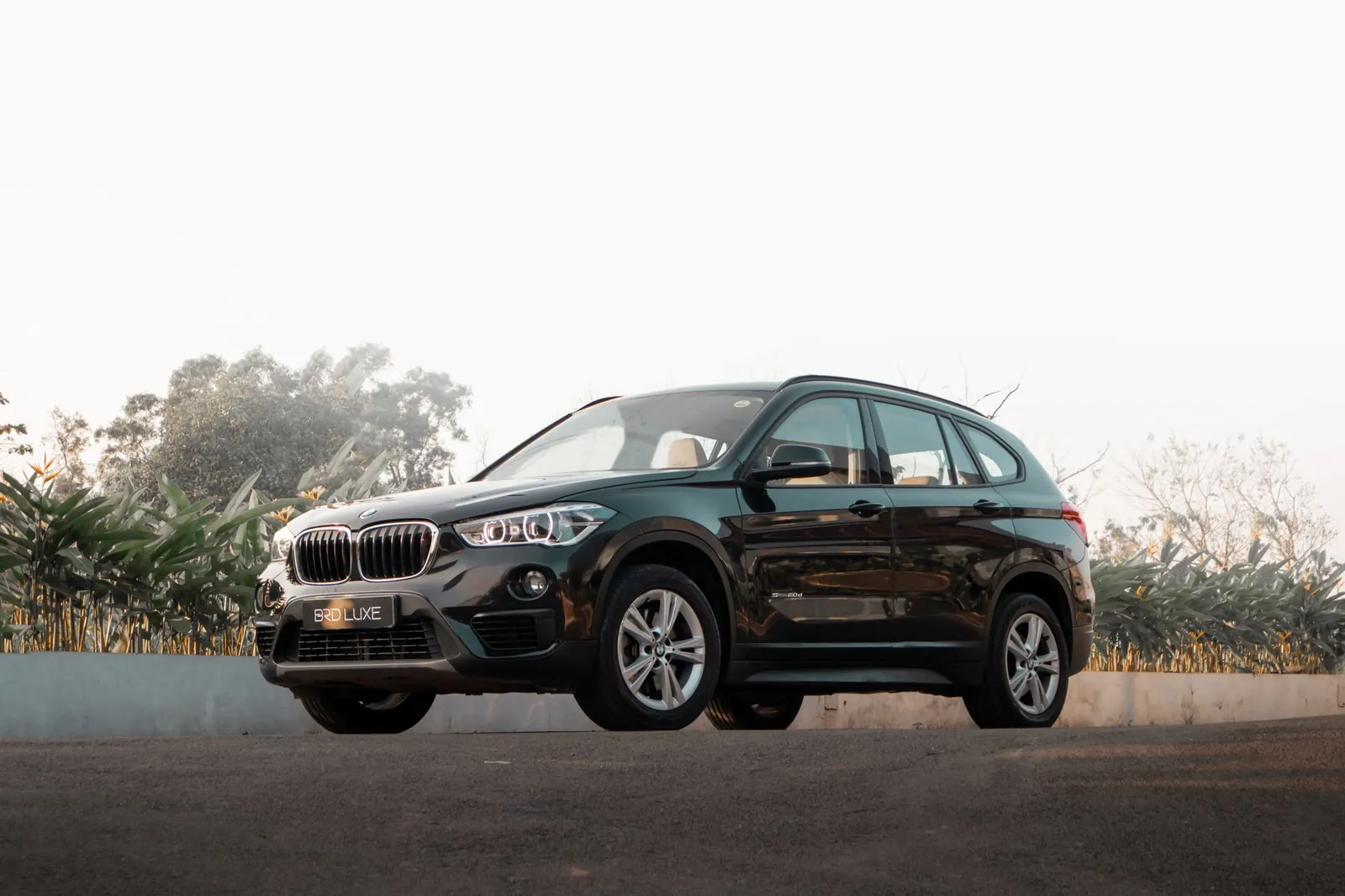
The bmw x1 towing capacity is 4,400 lbs (2,000 kg) for the gasoline and diesel X1 models, but only when the car has the factory tow hitch and you stay within the car’s limits. That figure reflects European-market BMW specifications, not the rating on a US-market X1. The number changes with the model year, the engine, and whether you carry passengers and cargo. Below you’ll find the real limits, the settings that matter, and the cases where the X1 is the wrong car for the trailer.
What X1 towing capacity actually means
The X1 is BMW’s smallest SUV, a compact five-seater built for city driving and light family use. Towing is a secondary job for it, not a design goal like it’s for a pickup. That’s the first thing to accept before you read any number.
The rating itself is a maximum. It assumes a car with the correct factory tow bar, a driver, and no extra weight in the trunk. Add two adults, a full trunk and a roof box, and the weight you can still pull goes down. That’s simple physics, not a BMW rule.
The rating also splits into two figures you have to track. One is the trailer weight. The other is the tongue weight — the downward push the trailer puts on the hitch ball. Both have limits, and passing either one is unsafe.
A common misconception: people see “4,400 lbs” and think any trailer under that number is fine. A trailer’s real weight includes water, propane, gear and food. A camper that reads 3,800 lbs empty often runs past 4,400 lbs once it’s loaded.
BMW publishes towing figures in each model’s owner’s manual and technical data sheet. Check the manual for your exact year and engine, because the figure isn’t the same across every X1 built.
How to set up an X1 for towing
- Find your car’s exact rating. Open the owner’s manual and look for the towing section. Note both the trailer limit and the tongue weight limit for your engine. Don’t use a number from a forum or another year’s model.
- Weigh the trailer loaded, not empty. Fill the water tank, load your gear, then weigh it at a public scale. If it’s over your limit, remove weight or change the trailer.
- Load the trailer for 10–15% tongue weight. For a 3,000 lb trailer, that’s 300–450 lbs on the ball. Too little makes it sway; too much overloads the rear axle.
- Add the factory tow hitch and wiring. BMW’s own hitch is designed for the car, but confirm its rated capacity on the bar’s label. Aftermarket hitches vary, so check the label on the bar itself.
- Check your tire pressures and rear axle load. The manual lists a higher rear tire pressure for towing. Follow it, and confirm the rear axle isn’t over its limit with the trailer attached.
- Fit tow mirrors and test the lights. Run the indicators, brake lights and running lights before you move. A trailer light failure is a common and avoidable stop.
- Drive slower and brake earlier. Keep to a lower speed than you would solo. The X1 is light, and a trailer pushes it around more than a heavier SUV would.
The single judgement call that decides a good trip from a bad one is tongue weight. Get it right and the trailer tracks straight. Get it wrong and you’ll feel sway at highway speed, which is the moment most people realize they loaded it badly.
BMW X1 towing figures by setup
Here are the variations you’ll actually face. Treat each figure as a maximum for that exact setup, with the conditions noted.
| Your situation | What to use or do | Figure that matters | What to watch for |
|---|---|---|---|
| Gasoline X1, factory tow hitch | Standard setup, driver only | 4,400 lbs (2,000 kg) trailer | Add passenger and cargo weight, and the limit drops |
| Diesel X1, factory tow hitch | Same hitch, check manual for your market | Varies by market and model year; check your manual | US buyers rarely get the diesel, so confirm your engine |
| Trailer with no brakes | Keep well under the car’s maximum | Braked trailers carry the full rating | Unbraked trailers have a much lower safe limit |
| Tongue weight | Load 10–15% of trailer weight on the ball, within the car’s stated tongue weight limit | The tongue weight limit in your owner’s manual | Overloading the rear axle is the real risk |
| Roof box or bike rack fitted | Subtract that weight from your payload | Payload shown on the door jamb sticker | Roof load also raises the center of gravity |
| Steep mountain route | Reduce trailer weight and speed | No single number; use judgement | Engine and brakes work harder on long climbs |
| Aftermarket hitch | Check the bar’s own label | Often lower than the BMW factory figure | A weak bar caps your whole setup |
The payload figure on your car’s certification label or vehicle plate is the one that applies to your specific car. Read it there rather than trusting a general number.
Getting the towing details right
Experienced towers start with the scale, not the hitch. They weigh the loaded trailer and the car’s rear axle before the first trip. That takes 20 minutes and settles every argument about whether the setup is legal and safe.
They also load heavy items over the trailer axle, not at the ends. Weight at the back of a trailer causes sway, and weight at the front overloads the tongue. Keeping the mass centered is what makes a small SUV like the X1 feel stable.
The order of work matters too. Hitch first, then wiring, then a light test, then a short low-speed drive, then the highway. Skipping the low-speed test means you discover a problem at 60 mph instead of in a parking lot.
Partway through a trip, check the hitch bolts, the trailer tires and the lights. A loose bolt or a soft trailer tire shows up as a wobble you might blame on the car. Stop and check before you keep driving.
What experienced towers leave alone is the car’s electronics. They don’t add “towing chips” or change the suspension to chase a higher rating. The rating is set by BMW, and no add-on changes it legally or safely.
One more detail: they match the ball height to the trailer coupler. A trailer sitting nose-up or nose-down tows badly. Adjust the hitch head until the trailer sits level when loaded.
Common X1 towing problems and fixes
| What you notice | What it usually means | What to do first |
|---|---|---|
| Trailer sways at speed | Too little tongue weight, or load too far back | Move weight forward and re-check tongue weight |
| Rear of the car sits low | Too much tongue weight or overloaded rear axle | Weigh the rear axle and shift cargo forward in the car |
| Trailer lights don’t work | Wiring connection or a blown fuse | Check the plug, then the car’s fuse box |
| Brakes feel weak on descents | Trailer has no brakes, or you’re going too fast | Slow down and use a lower gear on long descents |
| Grinding or clunking at the hitch | Loose bolts or a worn coupler | Stop and check every hitch bolt before moving |
If the car itself feels unstable even with a light trailer, that’s a sign to stop and have the hitch and suspension checked by a BMW dealer. Don’t keep driving to “see if it settles.”
Rules and limits to confirm first
Towing law is set where you drive, not by BMW. In the US, states publish their own trailer brake rules and weight limits, and many require brakes above a certain trailer weight. Check your state’s department of motor vehicles website for the exact threshold.
In the EU and UK, trailer weights and licence rules come from the driving licence category and the car’s plate. The UK’s Driver and Vehicle Standards Agency publishes the rules for what your licence lets you tow, so check DVSA towing licence rules before you hitch up.
Before you start, confirm five things: your car’s exact rating in the manual, your licence category, your state or country’s brake rules, your insurance cover for towing, and the trailer’s own weight plate. Each has a different source, and guessing any of them can cost you a fine or void your cover.
Two of those five catch people most often. The first is the weight plate on the trailer itself, which is often higher than the load you actually plan to carry. A trailer plated above your X1’s rating is over the limit even when it sits empty.
The second is insurance. Tell your insurer you tow, and get the cover for towing confirmed in writing before you collect a trailer. A policy that excludes towing leaves you uninsured in a crash, whatever the car’s rating says.
If your setup needs a brake controller fitted or the hitch welded, that’s a job for a qualified fitter, not a driveway project.
Keeping the setup safe over time
After each trip, wash the hitch ball and wipe it dry, then give the moving parts a light grease. Dirt on the ball wears the coupler and makes the trailer clunk. Check the hitch bolts with a wrench every few trips, since vibration loosens them slowly.
Store the hitch bar and ball in a dry place, not loose in the trunk where they roll and rust. If your X1 has a detachable tow ball, remove it when you’re not towing and keep the lock clean.
The sign that the setup needs attention again is a new noise, a new wobble, or a trailer that suddenly sits uneven. Any of those means stop and inspect before the next trip. Trailer tires also age even when they look fine, so check the date code on the sidewall and replace them when they’re old or cracked.
Keep a simple log: trailer weight at last weigh-in, tongue weight, and any repairs. It makes the next trip faster and shows a buyer the car was looked after.
When the X1 isn’t the right tow car

The X1 is the wrong choice if your loaded trailer runs near or over 4,400 lbs. A heavier SUV or a pickup carries that load with more margin and less sway. Trying to stretch the X1 past its rating isn’t a setup problem you can fix with gear.
It’s also wrong for long mountain trips with a heavy camper. The small engine and light body work hard on climbs, and you’ll be slow and stressed. A vehicle with a higher rating and more torque suits that job better.
Watch the tongue weight, not just the trailer total. A trailer that sits under 4,400 lbs can still push past what the X1’s rear axle and hitch are rated to carry. Load the heavy items over the trailer’s axle, not at the front.
And it’s wrong if you tow every week for work. Frequent towing wears a compact SUV faster, and a vehicle built for it will last longer. For occasional weekend towing, the X1 does the job well.
If most of your towing is a few weekends a season on flat ground, keep the X1. If the trailer is heavy, the terrain is steep, or the trips are weekly, shop for the bigger vehicle first.
Related guides
- Nissan Frontier Tow Package: Ultimate Guide to Maximum Towing Power
- Honda Passport Tow Package: Ultimate Guide for Powerful Towing
- Toyota Highlander Tow Package: Ultimate Guide to Towing Power
Frequently asked questions
Can a BMW X1 tow a 5,000 lb trailer?
No. The X1’s maximum is 4,400 lbs (2,000 kg) with the factory hitch, so a 5,000 lb trailer is over the limit even before you add gear. You’d need a larger vehicle with a higher rating. Never tow above the figure in your own owner’s manual.
Why is my X1’s towing capacity lower than the brochure says?
Because the brochure figure assumes a specific engine, hitch and load. Your car may have a different engine, no factory hitch, or extra weight from passengers and cargo. Check the owner’s manual and the door jamb sticker for your exact car, not the sales sheet.
How long can I tow with a BMW X1 before it needs a service?
Follow BMW’s service schedule for your model, and have the car checked sooner if you tow often or on hills. Towing puts extra load on the transmission and brakes. The manual’s service section gives the intervals for your car — check it there rather than guessing.
Is it safe to tow with a BMW X1?
Yes, within its rating and with the right hitch, tongue weight and trailer brakes. The risk comes from overloaded trailers, too little tongue weight, or missing trailer brakes. Weigh your setup and stay under every limit, and the X1 tows safely.
What happens if I tow more than the X1’s rating?
You risk brake fade, transmission strain, unstable handling and a crash. You may also break insurance conditions or local law, which can leave you uncovered after an incident. The rating is a safety limit, not a suggestion — stay under it.
Do I need trailer brakes with a BMW X1?
It depends on your trailer’s weight and your local rules. Many places require brakes above a set trailer weight, and a braked trailer is safer on any descent. Check your state or country’s rules and the trailer’s own specification before you tow.
Can I add a tow hitch to a BMW X1 myself?
You can bolt on some aftermarket hitches, but the wiring and coding often need a dealer or specialist. A badly fitted hitch can fail under load. For the full factory rating, have BMW or a qualified fitter install the hitch and check the wiring.
Conclusion
Before you book a trailer, check your own X1’s door-jamb sticker and owner’s manual, since they override anything general. If the figures there look tight for your load, it’s worth pricing a lighter trailer or a bigger tow car rather than pushing your luck.