

If you want your leaf springs to stay strong and rust-free, then using POR-15 on leaf springs is a smart choice you shouldn’t overlook. You might wonder how to properly apply it and why it’s better than regular paint.
This guide will walk you through everything you need to know—how to prepare your leaf springs, the right way to apply POR-15, and how it protects your suspension for the long haul. By the time you finish reading, you’ll have the confidence to give your leaf springs a durable, professional finish that keeps your ride smooth and safe.
Ready to protect your vehicle’s backbone? Let’s dive in!
Why Rust Protection Matters
Rust protection is essential for leaf springs to ensure their strength and durability. Leaf springs face constant pressure and exposure to harsh conditions. Without proper protection, rust can weaken their structure quickly. Rust reduces the lifespan of leaf springs and may lead to costly repairs or replacements.
Applying a rust-resistant coating like POR 15 helps maintain the leaf springs’ performance. This coating forms a strong barrier against moisture and corrosive elements. Protecting leaf springs from rust keeps your vehicle safe and running smoothly.
Rust Risks For Leaf Springs
Leaf springs often face water, mud, and salt on roads. These elements cause metal to rust and corrode. Rust weakens the metal, causing cracks or breaks over time. Damaged leaf springs affect vehicle stability and ride comfort. Rust also spreads quickly if not treated early. Neglecting rust protection leads to frequent replacements and higher costs.
Benefits Of Proper Coating
Proper coating seals the leaf springs from moisture and dirt. POR 15 creates a tough, non-porous finish that does not chip or peel. This finish stops rust from growing underneath. Coating also extends the life of leaf springs by years. It reduces maintenance needs and saves money on repairs. A well-coated leaf spring keeps your suspension strong and reliable.

Credit: por15.com
What Is Por-15
POR-15 is a special rust-preventive coating used on metal surfaces. It is popular for protecting leaf springs in vehicles. Leaf springs often face rust and damage from water and road salt. POR-15 creates a strong barrier against these elements. It seals rust and stops further corrosion.
This coating is different from regular paint. It bonds tightly to metal and rust. This makes it ideal for restoring and protecting old or rusty leaf springs. Many car enthusiasts trust POR-15 for long-lasting results.
Key Features
- Dries to a hard, non-porous finish
- Prevents rust from spreading under the coating
- Can be applied directly over stable rust
- Resistant to chipping, cracking, and peeling
- Highly durable in tough weather conditions
How It Differs From Other Coatings
POR-15 is not a rust converter. Instead, it seals the rust and blocks moisture. Other coatings often sit on top and peel off easily. POR-15 bonds deep into the surface for strong protection.
It does not require a perfect metal surface. You only need to remove loose rust and dirt. Many paints fail when applied over rust. POR-15 locks it in place and stops it from growing.
Preparing Leaf Springs
Preparing leaf springs is a key step before applying POR 15. Proper prep ensures strong adhesion and lasting protection. It helps stop rust and keeps springs in top shape.
Start with cleaning, then move on to removing rust and prepping the surface. These steps create the perfect base for POR 15 coatings.
Cleaning And Degreasing
Clean leaf springs thoroughly to remove dirt and grease. Use a strong degreaser and scrub with a brush. Rinse well and let dry completely. Clean springs help POR 15 stick better and prevent peeling.
Removing Rust And Surface Prep
Remove rust using wire brushes or sandpaper. Focus on all rusty spots and edges. For heavy rust, use a rust remover solution. After rust removal, wipe the surface clean. The spring must be dry and smooth before coating. A well-prepped surface stops rust from returning under the paint.
Applying Por-15
Applying POR-15 on leaf springs protects them from rust and wear. This coating seals the metal with a tough, rust-resistant layer. Proper application ensures long-lasting protection and a clean finish. Follow these steps carefully for the best results.
Tools And Materials Needed
- POR-15 rust preventive coating
- Degreaser or cleaner
- Wire brush or sandpaper
- Metal prep solution
- Protective gloves and mask
- Paintbrush or spray gun
- Clean cloths or rags
- Drop cloth or newspaper
Step-by-step Application Process
- Clean the leaf springs thoroughly with degreaser. Remove all grease and dirt.
- Use a wire brush or sandpaper to remove loose rust and old paint.
- Apply the metal prep solution to etch and neutralize remaining rust.
- Allow the surface to dry completely before coating.
- Put on gloves and mask for safety.
- Apply the first coat of POR-15 evenly with a brush or spray gun.
- Let the first coat dry for at least 2 to 4 hours.
- Apply a second coat for better coverage and protection.
- Allow the final coat to cure for 24 to 48 hours before use.
Curing And Drying Tips
POR-15 is popular for protecting leaf springs from rust. Still, some users want other options. Different products offer various benefits and application methods. Exploring alternatives helps find the best fit for your project and budget.
Other Rust Protection Products
Eastwood Rust Encapsulator coats rusted surfaces to stop spread. It seals rust and prevents moisture entry.
Rust-Oleum Stops Rust provides a primer and topcoat combo. It works well on metal and is easy to apply.
Hammerite Direct to Rust paint covers rust directly. It forms a hard, protective layer and comes in several colors.
Fluid Film is a wax-based rust inhibitor. It penetrates crevices and stays flexible over time.
Pros And Cons Comparison
POR-15 forms a very hard finish that resists chipping. It requires careful surface prep and can be tricky to apply.
Eastwood Rust Encapsulator is simpler to use on rusty surfaces. It may not be as durable as POR-15 on heavy wear parts.
Rust-Oleum offers easy application and good coverage. It needs a clean surface for best results and may need reapplication.
Hammerite is paint-like and user-friendly. It does not fully stop rust under severe conditions.
Fluid Film protects by lubrication and moisture blocking. It is less of a coating and more of a rust inhibitor.
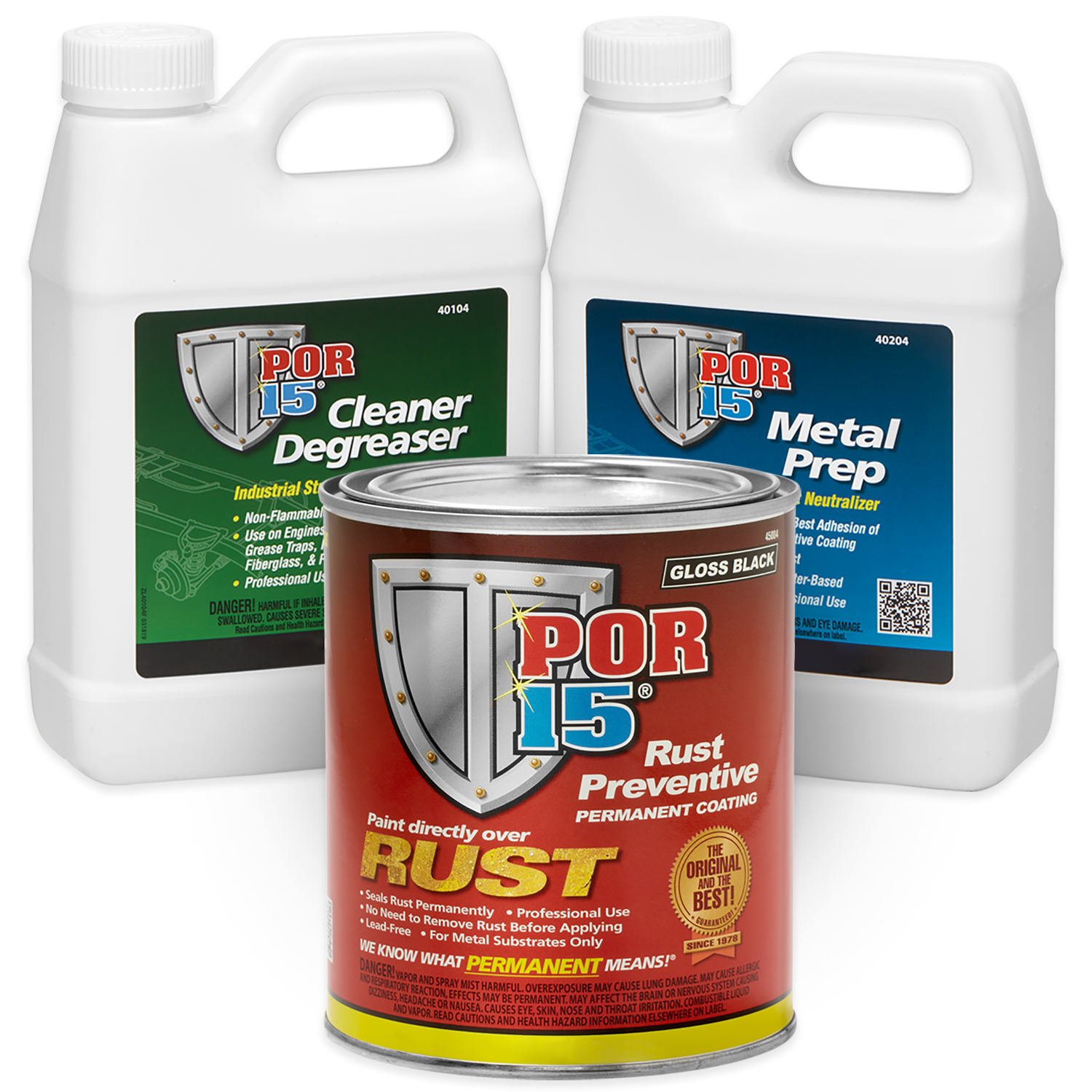
Credit: por15.com
Maintenance After Coating
Applying POR 15 on leaf springs offers strong rust protection and a durable finish. Avoiding common mistakes ensures the coating works well and lasts long. These mistakes often reduce effectiveness and cause peeling or flaking.
Focus on proper steps and techniques to get the best results. Two key areas where errors occur are surface preparation and application methods.
Poor Surface Preparation
Surface preparation is crucial for POR 15 to stick properly. Leaving dirt, grease, or loose rust weakens the bond. Use a cleaner or degreaser to remove all contaminants. Then, etch the surface with a metal prep solution to neutralize rust.
Skipping these steps causes the coating to lift or peel quickly. Also, avoid painting over wet or oily surfaces. Make sure the leaf springs are dry and clean before applying POR 15.
Incorrect Application Techniques
Applying POR 15 incorrectly can ruin the finish. Avoid thick layers that take too long to dry and may crack. Use several thin coats instead of one heavy coat. Allow each coat to dry fully before applying the next.
Do not spray or brush too fast, as this can cause bubbles or uneven coverage. Follow product instructions carefully for best results. Proper curing time is essential to prevent chipping or peeling later on.

Credit: www.youtube.com
Frequently Asked Questions
Can You Spray Paint Your Leaf Springs?
Yes, you can spray paint leaf springs after cleaning and removing rust. Use high-temperature, rust-resistant paint for durability. Apply multiple thin coats and allow proper drying time to prevent chipping and peeling. This protects springs from corrosion and enhances appearance.
Does Por-15 Actually Stop Rust?
POR-15 stops rust by sealing and encapsulating metal surfaces with a hard, non-porous coating. It prevents new rust from forming. Proper surface prep is essential for effective protection.
How To Get Rid Of Rust On Leaf Springs?
Clean leaf springs with a degreaser. Use a rust dissolver or metal prep solution to remove rust. Apply rust encapsulator or high-temp paint to seal and protect. Let it dry fully before reinstallation. This prevents new rust and extends spring life.
How Long Does Por-15 Take To Fully Cure?
POR-15 typically takes 4 to 5 days to fully cure under normal conditions. Ensure proper surface prep and ventilation for best results.
What Is Por 15 And Why Use It On Leaf Springs?
POR 15 is a rust-preventive coating that stops rust and protects leaf springs.
Conclusion
Using POR-15 on leaf springs helps prevent rust and extends lifespan. Clean the springs well before applying the coating for best results. Apply multiple thin coats and allow proper drying time between each. This process creates a tough, protective layer that stops moisture and dirt.
Regular maintenance keeps your suspension strong and reliable. Trusting POR-15 offers lasting protection without complex steps. Your leaf springs stay durable and look good longer. Simple care makes a big difference in vehicle performance.